9/18 – Geopolitical News & Analysis
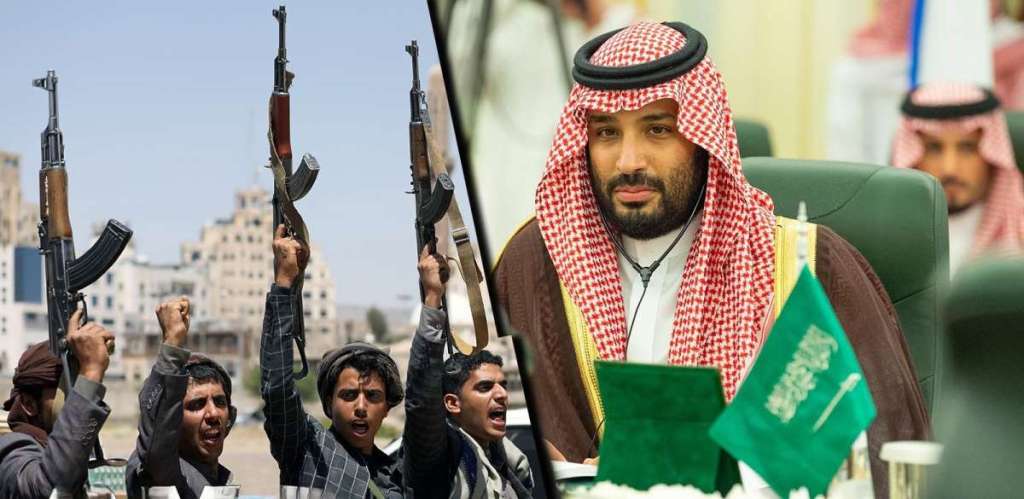
A rapid Houthi offensive in Yemen has opened a new front in the wider Middle East war, threatening Saudi Arabia and placing a second major global energy chokepoint under pressure as shipping through the Strait of Hormuz remains constrained.
In just about a week, the Iran-aligned Houthis have captured the strategic port of Mocha and expanded along Yemen’s Red Sea coast toward the Bab el-Mandeb Strait, marking the country’s most consequential territorial shift in years. The advance gives the group greater ability to threaten shipping between the Indian Ocean and Suez Canal while Iran continues to disrupt the Strait of Hormuz on the opposite side of the Arabian Peninsula.
The result is a growing two-chokepoint risk for global energy markets. Saudi Arabia, which can partially bypass Hormuz by moving oil west toward the Red Sea, is again exchanging strikes with the Houthis as its energy infrastructure and shipping come under threat.
The offensive is also testing regional alliances. Washington has so far resisted Saudi requests for direct military intervention, seeking to preserve its 2025 ceasefire with the Houthis while concentrating resources on the war with Iran. Saudi Arabia has meanwhile turned to China for diplomatic assistance, prompting Beijing to privately press Tehran to help restrain the Houthis. Yemen’s renewed conflict has consequently become intertwined with the wider struggle over Gulf security, global oil flows and the competing interests of Washington, Riyadh, Tehran and Beijing.
From a Frozen Conflict to a Strategic Breakthrough
The Houthis captured Sanaa in 2014, prompting a Saudi-led military intervention the following year and a civil war that failed to produce a decisive military outcome. Fighting declined considerably after the 2022 truce, but Yemen remained divided between Houthi-controlled territory and areas held by the internationally recognized government and associated armed factions.
The period of relative calm appears to have actually strengthened the Houthis. The movement expanded recruitment, domestic weapons production, and its missile and drone capabilities, while the anti-Houthi camp remained fragmented among armed groups with competing political objectives and different regional patrons. Saudi attempts to establish a more coherent command structure have not fully overcome those divisions.
That imbalance became apparent during the latest offensive. Houthi forces rapidly advanced south along the Red Sea coast as government-aligned forces withdrew, allowing the movement to capture Mocha, nearby territory and islands around Bab el-Mandeb.
The territorial gains carry importance far beyond Yemen. Bab el-Mandeb connects the Gulf of Aden to the Red Sea and Suez Canal, with roughly 12 percent of global trade normally passing through the route. Houthi positions are also now extremely close to Djibouti, which hosts military facilities belonging to the United States, China, France, Italy and Japan. Yemen’s battlefield has therefore become directly connected to Red Sea security and the strategic interests of several major powers.
Two Energy Chokepoints Under Pressure
The timing of the Houthi advance is particularly consequential because the Strait of Hormuz is already severely disrupted by the U.S.-Iran war.
Before the conflict, roughly one-fifth of global oil and liquefied natural gas passed through Hormuz. Iran has linked restoration of normal navigation to changes in U.S. policy and is attempting to use control over maritime access as leverage in the wider conflict. The United States, meanwhile, has sought to escort shipping while maintaining military pressure on Iran.
The Houthi advance now threatens the principal western alternative for Gulf energy exports. Saudi Arabia can move crude from its eastern oil fields through its East-West pipeline toward Red Sea terminals, partially bypassing Hormuz. Yet that infrastructure has itself come under attack, while Houthi forces are increasingly capable of threatening Saudi shipping and energy facilities from Yemen.
This creates an unusual concentration of risk around both ends of the Middle East’s maritime energy network. Iran can pressure Hormuz while the Houthis can threaten traffic around Bab el-Mandeb. Neither needs to completely close these waterways to generate global consequences. Persistent risk alone can raise insurance costs, discourage shipping and keep oil prices elevated.
Crude remains above $100 per barrel, while U.S. diesel prices have reached record levels during the disruption. The danger for global markets is therefore not simply the physical loss of oil production but the possibility that exporters lose reliable access to both their eastern and western maritime routes.
The Houthis maintain that their current maritime campaign is focused on Saudi-linked shipping rather than international commerce more broadly. That distinction is difficult to sustain in practice because tankers carrying Saudi crude may be owned, chartered, financed or insured by companies from several countries.
For now, commercial traffic through Bab el-Mandeb has proven more resilient than through Hormuz. The Houthis therefore possess significant leverage over the route without yet attempting to shut it comprehensively.
Saudi Arabia Faces Renewed Houthi Threat
The offensive has revived a confrontation Riyadh spent years trying to contain. Houthi missiles and drones have targeted Saudi territory, oil infrastructure and shipping, while Saudi Arabia has resumed airstrikes against positions inside Yemen.
The two sides have also exchanged competing claims about the fighting. Saudi Arabia said it intercepted a Houthi drone approaching restricted airspace near Mecca, an allegation the Houthis categorically denied. The movement has separately claimed to have shot down a Saudi F-15 near Marib and attacked an Aramco facility at Yanbu, although those claims have not been independently verified.
Marib is itself emerging as another important front. The oil-rich province has resisted previous Houthi offensives and remains an important center for Saudi-backed forces. Renewed pressure there, combined with Houthi gains along the western coastline, raises the possibility of a broader shift in Yemen’s territorial balance.
Saudi Arabia now faces an uncomfortable choice. Renewed large-scale intervention risks repeating an expensive military campaign that previously failed to defeat the Houthis. A negotiated settlement from the current position, however, could consolidate Houthi territorial gains and leave an Iran-aligned armed movement controlling much of Yemen and overlooking one of Saudi Arabia’s most important export corridors.
Washington Keeps Its Distance as China Steps In
The United States has so far chosen not to reopen its own war against the Houthis.
Washington conducted a major bombing campaign against Houthi targets in 2025 before reaching a ceasefire under which the movement agreed to stop attacking U.S. shipping. American and Houthi officials met again in Muscat last weekend, with the movement reportedly indicating that American vessels remain outside its current target set.
That arrangement helps explain why President Donald Trump has criticized the Houthi advance while resisting direct intervention on Saudi Arabia’s behalf. Washington is already heavily committed against Iran and has little incentive to open another front as long as U.S. forces and shipping remain largely unaffected.
The result is an unusual strategic equilibrium. Washington and the Houthis remain adversaries, but both currently benefit from avoiding direct confrontation. The Houthis can pressure Saudi Arabia without inviting another major U.S. bombing campaign, while Washington can concentrate resources on Iran.
For Riyadh, however, the arrangement raises questions about the practical limits of U.S. security commitments. Saudi Arabia is facing attacks from an Iran-aligned movement while its principal security partner maintains direct communication and a separate non-aggression understanding with that same group.
The calculation could change if the Houthis broaden their attacks to international shipping, target U.S. assets or significantly escalate against Saudi territory. For now, Washington appears intent on preventing Yemen from becoming another direct American front.
The situation is unfolding as Trump weighs the next phase of the Iran war itself. He has again raised the possibility of major strikes against Tehran even after suggesting that the conflict may be approaching an end. No substantive U.S.-Iran negotiations have taken place since an interim understanding reached in June collapsed, although the conflict is expected to feature prominently at the upcoming United Nations General Assembly.
China is simultaneously becoming more involved. Saudi Arabia has appealed to Beijing for assistance in restraining the Houthis, and China has privately asked Tehran to use its influence with the movement to prevent further escalation.
Beijing has considerable interests on both sides. China is Iran’s largest trading partner and principal oil customer, accounting for more than 80 percent of Iran’s seaborne oil exports in 2025. At the same time, roughly half of China’s oil imports originate in the Middle East, while annual trade with Gulf Cooperation Council states is around $300 billion.
The simultaneous disruption of Hormuz and the Red Sea therefore threatens Chinese interests regardless of which side gains leverage. Beijing benefits from its relationship with Tehran but also depends heavily on stable Gulf energy supplies and uninterrupted shipping.
Iran reportedly responded to China’s request by linking regional stability to an end to the U.S.-Israeli war. Beijing has not publicly threatened economic consequences, leaving unclear how much of its economic leverage over Tehran it is prepared to use.
Analysis: Yemen Becoming Central to a Wider War
The Houthi breakthrough matters primarily because it connects Yemen’s unresolved civil war to the wider U.S.-Iran confrontation and the global energy crisis. The movement’s rapid advance also exposes the continuing fragmentation of the anti-Houthi camp, while years of relative calm allowed the Houthis to strengthen their military capabilities. Control around Mocha and Bab el-Mandeb now gives those capabilities considerably greater geopolitical significance.
The central risk is the emergence of simultaneous pressure on the Middle East’s two principal maritime energy corridors. Iran’s disruption of Hormuz and the Houthi position around Bab el-Mandeb do not require complete blockades to affect global markets. Intermittent attacks and persistent uncertainty can increase shipping and insurance costs, complicate Saudi efforts to bypass Hormuz through Red Sea infrastructure, and keep oil prices elevated. But this strategy also has limits. Prolonged disruption threatens China, whose economic interests extend far beyond Iran to Gulf energy producers, while broader attacks on international shipping could provoke a larger international response.
The resulting strategic dilemma extends across the region. Saudi Arabia must weigh the costs of another potentially inconclusive intervention against the consequences of accepting a stronger Houthi presence on its southern border. Washington is attempting to preserve its ceasefire with the Houthis while concentrating resources on Iran, but doing so leaves Riyadh confronting an Iran-aligned adversary without direct U.S. military support. China, meanwhile, is being pushed to reconcile its relationship with Tehran with its dependence on Gulf energy and maritime stability. For now, the Houthis have exploited these competing interests effectively, expanding their territorial and economic leverage without reopening direct conflict with Washington. The key question is whether they can preserve that balance or whether further attacks turn Yemen into another direct front in the broader regional war.
 IRinFive
Leave a comment