09/15 – International Relations & Geo-economic News
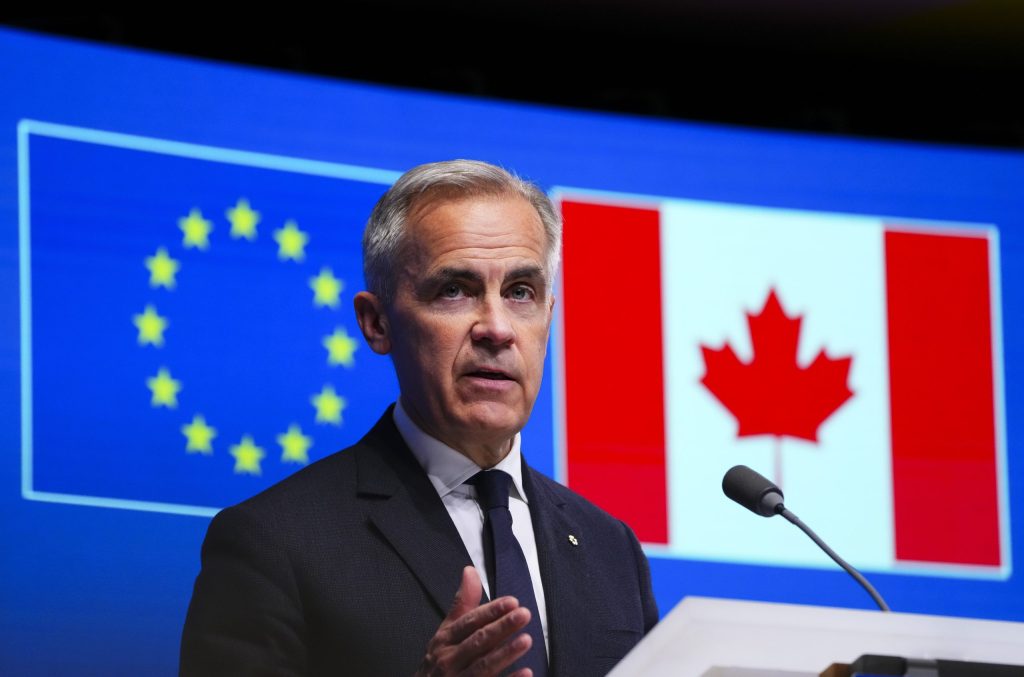
Canadian Prime Minister Mark Carney is accelerating efforts to reduce Canada’s economic dependence on the United States, seeking a deeper relationship with the European Union as an escalating trade dispute with Washington challenges assumptions that have shaped Canadian economic policy for decades.
Carney said Canada intends to begin discussions with the EU on what he has described as a unique alliance. Although the arrangement remains undefined, Ottawa is exploring the most ambitious relationship possible short of membership, potentially expanding cooperation across trade, investment, defense, critical minerals, digital infrastructure, energy, artificial intelligence and Arctic security.
The initiative comes as Carney prepares for a high-profile European tour. He is expected to attend European Commission President Ursula von der Leyen’s State of the European Union address in Strasbourg before addressing the European Parliament himself. He will also travel to Britain and France as Ottawa seeks to present Canada as a reliable economic and strategic partner at a time of significant disruption in its relationship with Washington.
Reports have suggested that Canadian and European officials have discussed some form of EU associate status. No such formal membership category currently exists, and Carney has rejected suggestions that Canada intends to join the bloc. The proposal instead appears to center on closer Canadian participation in selected European initiatives without assuming the political obligations of membership.
Institutional ties are already expanding. The European Parliament announced that it will establish an office in Ottawa alongside the existing EU delegation, intended to facilitate parliamentary exchanges and cooperation on shared strategic priorities, including the Arctic.
Trade War Reshapes Canada’s Strategy
The European pivot has gained urgency following the deterioration of Canada-U.S. relations. The two countries maintain the world’s largest bilateral trading relationship, valued at nearly $900 billion last year, and before the current dispute the United States absorbed roughly three-quarters of Canadian exports.
Trade negotiations collapsed in late August after months of mounting tensions under President Donald Trump. Washington has imposed tariffs on Canadian automobiles, steel, aluminum, lumber, dairy and other goods, including additional 50 percent duties covering approximately CAD 28 billion in Canadian products.
Ottawa has retaliated with tariffs ranging from 15 to 50 percent on approximately CAD 28 billion in American imports, covering products including steel, aluminum, dairy, clothing, household goods and industrial equipment. Canada has nevertheless adjusted some measures where retaliation risked disproportionately damaging domestic industries, highlighting the difficulty of confronting an economy approximately 13 times its size after decades of integrated production.
The dispute has extended beyond conventional trade policy. Trump has threatened restrictions against Canadian aerospace manufacturer Bombardier unless production shifts to the United States and has repeatedly suggested Canada could become an American state. His administration’s rhetoric has reinforced Carney’s argument that Canada must prepare for a structural change in its relationship with Washington rather than assume the current tensions will simply disappear.
Carney has acknowledged that diversification will carry economic costs but argues that continued dependence creates greater long-term vulnerability. Early trade data suggests some adjustment is already underway. The U.S. share of Canadian exports fell to around 66 percent in July from a pre-dispute average of roughly 75 percent.
Canada’s broader economic performance has been mixed. GDP expanded 3.3 percent in the second quarter, while approximately 181,000 jobs were added between April and July. However, around 41,000 jobs were lost in August as new U.S. tariffs took effect and negotiations collapsed.
Canada’s Move Toward Europe
Europe has emerged as a central component of Ottawa’s diversification strategy because much of the institutional foundation already exists. The Comprehensive Economic and Trade Agreement (CETA) has been provisionally applied since 2017 and provides extensive preferential market access between Canada and the EU.
However, Belgium, Bulgaria, Cyprus, France, Greece, Hungary, Ireland, Italy, Poland and Slovenia have yet to complete ratification. Carney is urging those governments to do so, arguing that deeper economic integration would make both Canada and Europe more resilient in an increasingly unstable international environment.
Ottawa and Brussels are simultaneously pursuing cooperation beyond conventional trade. Discussions encompass critical minerals, digital infrastructure, education and Arctic security, while energy, defense and artificial intelligence are also emerging as important areas of collaboration.
The interests are complementary. Europe is seeking more secure supplies of energy and critical minerals while strengthening its defense and technological capacity. Canada possesses extensive natural resources, Arctic geography, advanced research capabilities and access to international markets, but requires greater investment and alternative export destinations to reduce its dependence on the United States.
Carney’s European tour reflects this broader agenda. His visit will conclude with the first trip by a Canadian prime minister to Saint-Pierre and Miquelon, the small French territory off Newfoundland and Labrador, where he will meet French President Emmanuel Macron. Discussions are expected to include AI, energy, defense and critical minerals. The visit also carries geopolitical symbolism as Canada strengthens its European relationships while Washington takes a more confrontational approach toward Ottawa.
Carney is pursuing the same strategy domestically through the Canada Investment Summit in Toronto, which brings together hundreds of representatives from major pension funds, sovereign wealth funds, asset managers and corporations. A prospectus prepared for the summit reportedly identifies 167 potential projects spanning mining, energy, ports, transportation, technology and advanced manufacturing, with minerals, energy and power infrastructure representing the majority.
The strategy reflects a practical requirement of trade diversification. If Canadian producers are to become less dependent on U.S. customers, Canada needs additional ports, pipelines, processing facilities, transportation corridors and other infrastructure capable of connecting domestic production with alternative markets.
Canada can already point to trade agreements with 51 countries providing preferential access to approximately 1.5 billion consumers. Carney is attempting to combine that international access with Canada’s natural resources, skilled workforce, technological capacity and political stability to attract investors increasingly concerned about geopolitical risk.
Execution, however, remains a challenge. Major Canadian projects have historically faced lengthy regulatory reviews and overlapping federal and provincial approval processes. The government has responded by establishing a Major Projects Office and promoting a one-project, one-review approach intended to accelerate projects considered nationally significant.
There are also domestic concerns about the strategy. Critics question whether reliance on foreign institutional investors could increase outside ownership of strategic infrastructure, while labor, Indigenous, housing and climate groups have raised concerns about how investment decisions will be made. The concentration of proposed projects in capital-intensive resource and infrastructure sectors also raises questions about whether they can replace employment lost in manufacturing industries traditionally integrated with the U.S. economy.
Analysis: Canada’s Middle-Power Pivot
Carney’s European initiative increasingly resembles an attempt to redesign Canada’s position in the international economy around the assumption that excessive dependence on the United States has become a strategic vulnerability. For decades, proximity to the world’s largest economy was one of Canada’s greatest advantages, but that concentration also gives Washington considerable leverage when it chooses to use tariffs and market access as instruments of political pressure.
Carney’s response is not economic separation from the United States, which would be unrealistic given the scale and depth of bilateral integration. Instead, the focus is widespread diversification to function as a form of insurance. Europe is particularly attractive because it combines economic scale and political alignment with an existing institutional foundation through CETA. Deeper cooperation in defense, Arctic security, critical minerals, AI and infrastructure could therefore create a substantially more integrated partnership without requiring Canadian membership of the EU.
The challenge is that diversification cannot quickly replicate the geographic advantages and supply chains of the North American economy. CETA’s incomplete ratification also demonstrates that Europe has its own agricultural, regulatory and political barriers. Domestically, Canada’s investment ambitions will depend on whether projects can attract financing and move through federal, provincial, Indigenous and environmental approval processes. The decline in the U.S. share of Canadian exports from roughly three-quarters to about two-thirds is significant, but Canada remains deeply tied to its southern neighbor.
The significance of the current shift is therefore less about replacing the United States with Europe than reducing Canada’s exposure to any single partner. The ultimate test will be whether Carney can translate diplomatic momentum into actual investment, infrastructure and new trade flows. If he can, the current trade war may ultimately accelerate Canada’s transition toward a more autonomous middle-power strategy rather than simply producing a temporary, reactionary change in its relationship with Washington.
 IRinFive
Leave a comment