4/14 – Diplomacy News & Analysis
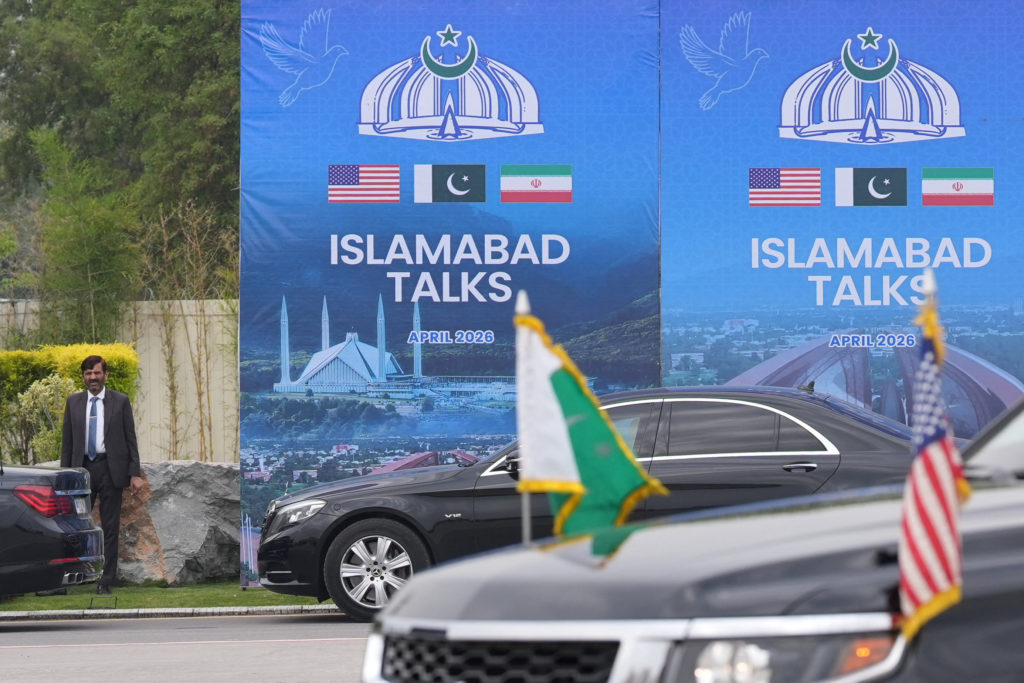
On Saturday, April 11, Vice President JD Vance arrived in Islamabad alongside special envoy Steve Witkoff and Jared Kushner for what was the first direct, face-to-face engagement between the United States and Iran since 2015 and the highest-level discussions between the two countries since the 1979 Islamic Revolution. Iran’s delegation was equally senior, led by Foreign Minister Abbas Araghchi and Parliament Speaker Mohammad Bagher Ghalibaf. Pakistan’s government facilitated the talks at the Serena Hotel, hosting both delegations amid a degree of optimism that a deal was within reach.
Twenty-one hours later, Vance boarded Air Force Two and left. No agreement was reached.
Both sides promptly blamed the other. Vance said Iran had chosen not to accept American terms, framing the core sticking point as Washington’s demand for an unambiguous commitment that Iran would not seek nuclear weapons or the means to build them quickly. Araghchi, in his first public remarks after returning from Pakistan, said the two sides had come within inches of a memorandum of understanding before running into what he described as maximalism, shifting goalposts, and blockade. Iran’s Parliament Speaker said the U.S. delegation had failed to gain the trust of the Iranian side. Pakistan, which had pinned significant diplomatic capital on producing a result, was caught off guard by how abruptly the talks ended. Pakistani officials had believed the two sides were close to a general formula and that further sessions over several days could close the gap. When Vance walked out after less than a day, it came as a genuine shock to Islamabad.
The IEA, meanwhile, reported today that the war has now upended global oil demand to a degree not seen since the COVID-19 pandemic, forecasting a drop of 1.5 million barrels per day in the April-June quarter. Brent crude is nearing $100 per barrel again.
Naval Blockade
Trump’s response to the collapse of the talks was not to propose a second round. It was to announce a full naval blockade of Iranian ports. CENTCOM confirmed the blockade took effect Monday morning at 10 a.m. ET, with U.S. Navy vessels now positioned to intercept any ship that has paid transit tolls to Iran. Trump warned that Iranian vessels approaching U.S. forces would be eliminated. The IRGC responded by threatening to deal harshly and decisively with any military vessels approaching the strait. Iran’s Parliament Speaker posted a map of gas prices near the White House, predicting Americans would soon look back fondly on $4 to $5 per gallon.
The strategic logic behind the blockade is to squeeze Iran’s remaining oil revenue, the only meaningful economic lever Iran retains, until Tehran agrees to terms closer to Washington’s position. But the logic has a significant flaw: the blockade adds a new layer of disruption to a global energy market already in crisis. The IEA has just called this the worst supply disruption in the history of oil markets. Adding a naval interdiction operation to that does not reduce pressure on energy prices; it raises them. U.S. Energy Secretary Chris Wright acknowledged on Monday that prices would likely keep rising until meaningful ship traffic resumes through Hormuz, which he suggested could take several more weeks.
Critically, the blockade has not attracted the international coalition Trump hoped for. The UK flatly declined to join, with Keir Starmer saying Britain’s focus was reopening the strait, not blockading it. No other major power has signed on. A blockade conducted unilaterally by the United States in international waters, without UN authorization and against the objections of allies, sits on deeply contested legal ground and sets a precedent that much of the world finds uncomfortable regardless of how it views Iran.
The Ceasefire Clock
The two-week ceasefire, which brought a brief moment of market relief when announced on April 8, expires on April 22. Eight days remain. The agreement was already shaky before the Islamabad meeting as Israel launched its largest bombardment of Beirut on the first day of the ceasefire, killing over 200 people and displacing thousands, drawing international condemnation from governments and the UN alike.The Strait of Hormuz has not meaningfully reopened. Only three ships transited in the first 24 hours after the ceasefire was announced, and Iran has periodically reimposed traffic restrictions in response to Israeli strikes in Lebanon.
The question now is whether either side has the appetite to resume full-scale hostilities when the ceasefire lapses. The CFR’s analysis suggests Iran likely does not. The ceasefire has given Tehran time to regroup, and Iranian missile forces that survived the bombing campaign are being excavated from underground storage. Iran’s estimate of war damage to its own infrastructure stands at roughly $270 billion. A return to full-scale war would add to that cost at a rate Iran can ill afford. For Washington, the political calculus is similarly unfavorable. Trump’s approval rating is at a second-term low amid a largely unpopular war, gas prices remain well above $4, and the blockade is likely to push them higher before any relief arrives. Administration officials have privately acknowledged that another round of talks is possible and that a ceasefire extension to buy time for further negotiations is not off the table.
Turkiye is now working to bridge the gaps between the two sides, and Geneva and Islamabad are both being discussed as venues for a potential second round.
Analysis:
The Islamabad talks collapsed not because the two sides are irreconcilably far apart, but because neither arrived willing to make the concession the other needed most. Iran wanted a security guarantee that the war was genuinely over, not a temporary pause before the next round of bombing. The U.S. wanted an explicit renunciation of nuclear weapons as a precondition for anything else. Those are not incompatible positions in principle. They are positions that require trust to bridge, and trust is precisely what the past six weeks have destroyed.
Iran’s core argument is not unreasonable on its face. It agreed to a ceasefire. Within hours of that ceasefire taking effect, its closest regional ally, Hezbollah, was subjected to the most intense Israeli bombardment of the entire conflict. Iran was then asked to come to Pakistan and make irreversible concessions on its nuclear program to a partner that had just allowed its ally to bomb Beirut with apparent impunity. Araghchi’s description of the U.S. as shifting goalposts is, by any neutral reading of the past week’s events, not entirely unfair.
This brings the analysis back to a point that cannot be avoided much longer: the U.S. and Iran will not reach a durable settlement while Israel continues to prosecute an expanding war in Lebanon. The ceasefire framework, Iran’s 10-point plan, and every serious diplomatic proposal that has surfaced over the past month have all included a regional halt to hostilities as a core Iranian demand. Washington keeps treating Lebanon as a separate issue, while Tehran keeps insisting it is not. On this specific point, Iran is right. A deal that ends U.S. bombing of Iran while Israeli strikes on Iranian-backed forces as well as civilians in Lebanon continue will not hold, because it asks Iran to make strategic concessions in exchange for relief that is only partial.
The uncomfortable truth is that the path to a real end to this war runs through Jerusalem as much as it runs through Tehran. Trump pressured European allies over Greenland with tariff threats. He pressured Iran to the table with deadlines and infrastructure strikes. He has the leverage to pressure Israel too, in the form of the military hardware, intelligence cooperation, and diplomatic cover that make Israel’s campaigns in Lebanon viable. He has not used it. Until he does, or at minimum until the Lebanon question is incorporated into the diplomatic framework rather than carved out of it, every deal reached between Washington and Tehran will carry within it the seeds of its own breakdown.
The blockade buys time and increases pressure. But pressure without a credible off-ramp is not an effective strategy. It is escalation hoping the other side blinks first. A week remains on the ceasefire clock. The question is whether anyone in Washington is thinking clearly about what happens once we get there or if a sustainable off-ramp can be presented in the lead-up to yet another critical deadline.


Leave a Reply