Forty days into the U.S.-Israeli war on Iran, the closest thing to a diplomatic breakthrough arrived over the weekend in the form of a Pakistani-brokered proposal for a 45-day ceasefire, paired with a commitment to reopen the Strait of Hormuz and begin broader peace negotiations. Pakistan’s army chief spent the night in direct contact with U.S. Vice President JD Vance, special envoy Steve Witkoff, and Iranian Foreign Minister Abbas Araghchi, working to close the gap between the two sides.
Tehran rejected the proposal outright. Through state media and its foreign ministry, Iran made clear it will not accept a temporary ceasefire that it believes would simply give the U.S. and Israel time to regroup and resume the war at a more favorable moment. Instead, Iran put forward a ten-point counter-proposal demanding a permanent end to hostilities, full sanctions relief, compensation for war damages, guarantees against future attacks, a protocol for Hormuz transit fees, and a broader regional settlement that includes Lebanon. The Strait, Iran’s negotiators signaled, will reopen only when the damage caused by the war is compensated through a new legal regime.
The White House, for its part, confirmed the 45-day proposal was one of several ideas under discussion but that Trump had not signed off on it and that Operation Epic Fury was continuing.
Trump’s Deadline and the Threat of Mass Infrastructure Strikes
Trump set a hard deadline of 8 p.m. Tuesday Eastern time for Iran to agree to a deal and begin reopening the Strait, failing which he threatened strikes on every bridge and every power plant in Iran, describing the latter as burning and exploding, never to be used again. At a White House press conference on Monday, he added that the entire country could be taken out in one night, and that night might be tomorrow night. When asked whether targeting civilian infrastructure constituted a war crime, he dismissed the concern, calling Iran’s leaders animals and arguing that the real war crime would be allowing Iran to have nuclear weapons.
Trump simultaneously described Iran’s response to the ceasefire framework as a significant step, even if not good enough. The contradictions were, by now, familiar: maximum rhetorical pressure paired with signals that a deal remains possible. He said he was highly unlikely to postpone the deadline, while also noting that discussions were ongoing and that Iran appeared to be negotiating in good faith in some respects. Iran’s presidential spokesman called the ultimatum language a sign of sheer desperation.
As of Monday, 373 U.S. service members have been wounded in the operation. An Iranian drone strike on Ali Al Salem Air Base in Kuwait overnight injured 15 Americans. Iran’s central military command warned that any further attacks on civilian targets would trigger much more devastating and widespread retaliation.
The Diplomatic Triangle
The three-way mediation effort involving Pakistan, Egypt, and Turkey represents the most serious diplomatic track since the war began. Each party brings different leverage: Pakistan has a direct line to both Washington and Tehran and has been the most active interlocutor throughout. Egypt has longstanding ties with the Gulf states bearing the brunt of Iranian retaliation. Turkey sits at the intersection of NATO membership and genuine relationships with Iran. The fact that all three are now working in concert, and that Pakistan’s army chief is conducting overnight calls at the highest level, suggests the ceasefire push is being treated with real urgency.
The gap between the two sides is narrower than the public rhetoric suggests, but it is still substantive. The U.S. wants a temporary pause that creates space for negotiations, with Hormuz reopened quickly to relieve energy market pressure before the November midterms. Iran wants a permanent commitment before it gives up its most effective lever. The 45-day framework was designed to split that difference, but Iran’s insistence on guarantees against future attack makes the temporary framing unworkable unless Washington provides something more binding than a pause.
The UAE, which has been absorbing Iranian strikes while hosting U.S. forces, publicly stated that any settlement must guarantee ongoing access through Hormuz. Gulf states are watching the deadline closely, aware that a U.S. strike on Iranian power plants could trigger a wave of Iranian retaliation against their own energy infrastructure far worse than what they have already endured.
Analysis:
The next 24 hours are the most consequential of the war so far. Three outcomes are plausible. First, Iran makes a last-minute concession on Hormuz in exchange for a U.S. commitment to permanent negotiations, the deadline passes without a mass infrastructure strike, and both sides declare a fragile win. Second, the deadline passes with no deal and Trump follows through, triggering an Iranian retaliation that escalates the conflict into its most destructive phase yet. Third, the deadline passes, Trump extends it again, and the cycle of ultimatums and deferral continues for another week.
The third outcome has been the pattern so far. But the political cost of another extension is rising. Trump’s approval rating is at a second-term low, gas prices are above $4 nationally, and even some Republicans are beginning to publicly question the trajectory. Another empty deadline would further erode whatever credibility the threats carry, and Iran’s negotiators know it.
Iran’s counter-proposal is not entirely unreasonable as an opening position. Demanding permanent security guarantees before opening a chokehold that is your only real leverage is rational statecraft, not irrationality. The problem is that what Iran is asking for, a permanent end to the war, full sanctions relief, and regional settlements covering Lebanon, is far more than Washington is prepared to offer in the next 24 hours and accept what would be viewed as a strategic defeat for the world’s top military. This is all not even to mention Israel’s position in all this and likely completely opposition to any sort of ceasefire proposal being discussed with a much more maximalist position on collapsing the current Iranian regime. That gap is what makes the coming hours genuinely dangerous.
If strikes on Iranian power plants do happen tonight, the economic fallout globally will intensify sharply. Analysts have already warned that even a ceasefire would take months to translate into lower energy prices, given the physical damage to Gulf refining and shipping infrastructure. Strikes that knock out Iranian electricity grids would extend that timeline considerably and risk a humanitarian crisis inside Iran that further complicates any eventual peace as the war closes in on another critical pivot point.
On February 28, 2026, the United States and Israel launched coordinated strikes against Iran in what the Trump administration named “Operation Epic Fury,” igniting the most significant American military engagement in more than two decades. The seemingly stated objectives (although often unclear) were to dismantle Iran’s nuclear weapons infrastructure, destroy its ballistic missile and drone programs, degrade its naval capacity, and sever its network of regional proxies. The administration initially projected the campaign would be concluded within four to six weeks.
Over one month in, the results are both significant and complicated. Iran’s air defenses have been severely degraded. Supreme Leader Ayatollah Ali Khamenei was killed and has since been succeeded by his son. Several senior Revolutionary Guard commanders and military scientists have been eliminated. Iran’s proxy network, already weakened by Israel’s earlier campaigns against Hezbollah and Hamas, has struggled to mount a coordinated response. By nearly every military measure, the U.S.-Israeli coalition has achieved air superiority and delivered devastating blows to Iranian infrastructure.
Yet Iran’s most effective weapon has not been on the battlefield. It has been the Strait of Hormuz. Within days of the opening strikes, Tehran effectively closed the narrow waterway between Iran and Oman through which roughly 20 million barrels of oil and a major share of global liquefied natural gas flowed daily before the war. That closure has become the central focus of the conflict, and everything else has rotated around it since.
The Strait and the Chokehold
The closure of the Strait of Hormuz has turned what was always understood as a theoretical vulnerability in the global energy system into a concrete, ongoing crisis. Since early March, commercial tanker traffic has collapsed and ordinary commercial shipping has effectively stopped.
The International Energy Agency has characterized the disruption as the largest supply shock in the history of the global oil market, surpassing even the 1973 Arab oil embargo. Gulf producers, unable to export and rapidly running out of storage capacity, have been forced to cut production. Kuwait, which relies on Qatari LNG for a large share of its power generation, faces the prospect of running its electricity infrastructure on liquid fuels through the summer. Iraq, which derives roughly 88 percent of its government budget from oil revenues, faces a growing fiscal crisis for every month that exports remain near zero. The Gulf Cooperation Council’s economic model, built on the assumption of reliable export access, is under severe pressure.
Brent crude, trading around $65 per barrel before hostilities began, surged above $100 and has touched levels close to $120, nearing to the all-time record set in July 2008. U.S. benchmark crude crossed $99 per barrel. At the pump, the national average gasoline price in the United States has risen sharply past $4 per gallon, with prices in Los Angeles County reaching nearly $6 by the end of March. Jet fuel and diesel prices have spiked by $200 and $160 per barrel respectively, according to TotalEnergies. Urea prices are up roughly 50 percent since the start of the war and ammonia around 20 percent, with severe downstream consequences for global fertilizer supply. Brazil, which imports roughly 85 percent of its fertilizer, is particularly exposed. Egypt, itself a fertilizer producer dependent on natural gas, is in a state of near-emergency.
The disruption extends well beyond energy. The strait is also a transit point for sulfur, helium, and a range of industrial inputs. The Houthis’ formal entry into the war on March 28 has added pressure on the Bab-el-Mandeb and Suez Canal route, pushing commercial vessels onto the longer Cape of Good Hope alternative and adding delays throughout global shipping. A concurrent conflict between Afghanistan and Pakistan has closed airspace and trade corridors across Central Asia. The Philippines, which imports 98 percent of its oil from the Middle East, declared a national energy emergency on March 24. Multiple developing economies are rationing fuel or subsidizing energy costs at enormous fiscal expense.
The global economic picture has darkened quickly. Economists have drawn comparisons to the 1973 crisis and warned of stagflation. The eurozone is now projected to grow at just 0.5 percent year-on-year in the second half of 2026 if the conflict continues. European gas storage, which entered the winter at historically low levels of around 30 percent capacity following a harsh 2025-2026 season, has been further squeezed by the suspension of Qatari LNG shipments, pushing Dutch TTF gas benchmarks to nearly double. Europe faces a second energy crisis in four years, but one that is structurally harder to manage than the post-Ukraine shock, because a physical blockade cannot be worked around through rerouting or supplier substitution in the way a sanctions-driven disruption can.
The Ground War Question
As the air campaign rolled into its second month, the prospect of a ground operation began hovering over the conflict in a way that alarmed both allies and domestic critics. Pentagon deployments of additional troops to the region fueled speculation about escalation. Former Defense Secretary James Mattis, speaking at the CERAWeek energy conference in Houston, offered a sobering assessment: Washington did not consult its Gulf Arab allies before going to war, and Trump would be unable to simply declare victory and walk away. The Iranians, Mattis said, have a vote on when this ends.
The case against a ground campaign is straightforward. Air power alone has not forced Iran to reopen the strait, and a land invasion of a country of 90 million people would be a fundamentally different undertaking from anything the U.S. has attempted in recent history. The risk of a prolonged conflict or occupation would far outweigh what the air campaign has cost. Yet without ground forces, the administration has no obvious military lever left to force Hormuz open on its own terms.
Trump’s Escalating Rhetoric and the April 6 Deadline
Throughout March, the president’s posture shifted constantly. He threatened to destroy Iran’s civilian power plants, oil wells, and desalination infrastructure, then announced a five-day pause on strikes against Iranian energy facilities, citing good faith gestures from Tehran, including the passage of several oil tankers through the strait. He then extended that pause by a further ten days, to April 6, citing negotiations he described as going very well. Iranian officials publicly disputed that any formal talks were even underway.
Trump made statements in the same period threatening to bomb Iran back to the Stone Age while simultaneously telling reporters that the U.S. could end the war in two or three weeks, with or without a deal. The gap between these positions, often expressed within hours of each other, created persistent uncertainty about American intentions and gave Iranian officials grounds to question the reliability of any agreement that might emerge.
On April 1, Trump posted on Truth Social that Iran’s president had requested a ceasefire and that the U.S. would only consider it once the Strait of Hormuz was open, free, and clear. Tehran immediately denied that any ceasefire request had been made. That same evening, Trump delivered his first primetime national address on the war.
The April 1 Address
The speech, delivered in under 20 minutes from the White House Cross Hall, was closely watched by markets, allies, and the public as a potential turning point. What it delivered was a contradictory mix of victory claims and escalation warnings that satisfied almost no one outside the president’s core political base.
Trump declared Iran “essentially really no longer a threat,” citing the destruction of its navy, air force, and key command structures. He claimed that B-2 bomber strikes had hit Iran’s nuclear sites so hard that it would take months before anyone could get near the nuclear dust, though significant questions remain about the fate of Iran’s stockpile of near-weapons-grade enriched uranium. He framed the war as a necessary reckoning 47 years in the making, invoking the 1983 Marine barracks bombing and the 2000 USS Cole attack. He also drew comparisons to World War II and Vietnam to argue that at one month, the conflict has been short by historical standards.
Yet in the same speech, Trump promised to hit Iran extremely hard over the next two to three weeks. He maintained that discussions with Tehran were ongoing, though notably absent from the address was any mention of the ceasefire he had claimed Iran requested earlier that day. He did not mention NATO by name, softening his recent threats to consider withdrawing U.S. membership, though he told countries struggling with fuel shortages to either buy oil from the United States or go to the Strait and just take it themselves, arguing the hard part was done. On gas prices, he blamed Iranian attacks on commercial shipping for the spike and insisted the U.S. did not need the strait, a claim that sits uneasily with the administration’s own acknowledgment that prices will not fall meaningfully until traffic resumes.
Bond yields rose across the board in the U.S., UK, Germany, France, Japan, and Canada, signaling a broad sell-off in global debt markets. Analysts noted that markets had priced in a binary outcome from the speech, either a clear path toward winding down or a frank escalation, and instead received something in between, which resolved nothing.
Iran’s foreign ministry responded on April 2, stating that the Iranian people were absolutely determined to continue their defense against what it called ongoing aggression and that they had no choice but to fight back fiercely. Iranian missile attacks on Israeli territory were reported within hours of Trump finishing his address.
The Hormuz Dilemma and the Limits of “Mission Accomplished”
At the core of the administration’s exit pressure is a problem with no clean answer. White House Press Secretary Karoline Leavitt stated publicly that reopening the Strait of Hormuz was not a core objective of Operation Epic Fury, framing the campaign’s goals as destroying Iran’s navy, dismantling its missile and drone programs, and preventing nuclear weapons acquisition. Secretary of State Marco Rubio acknowledged that building a coalition to police the strait was a longer-term goal.
But walking away while the blockade remains in place creates its own serious problems. Oil prices would not fall meaningfully until traffic resumed, undermining the administration’s central promise that pump prices would drop once the U.S. withdrew. CNN reported that senior administration officials privately acknowledged they could not both achieve military objectives quickly and vow to reopen the strait within the same timeline. Defense Secretary Pete Hegseth framed Hormuz as not just a U.S. problem and called on other nations to do their share, signaling a potential handoff of maritime security responsibility to an international coalition. Trump’s own speech reinforced that framing, essentially telling the rest of the world it was their problem now.
The coalition Trump has been calling for has been slow to form. Most NATO allies refused to join the war, and several actively distanced themselves from it. Spain closed its airspace to U.S. aircraft conducting operations against Iran, drawing a sharp response from Rubio. Germany indicated it would not participate in the fighting but could help secure the waterway after a ceasefire. France’s junior army minister stated publicly that NATO operations in the Strait of Hormuz would constitute a breach of international law. The UAE has expressed support for international efforts to restore maritime security within the bounds of international law. UK Prime Minister Keir Starmer announced on April 1 that Britain would host a diplomatic conference on restoring Hormuz access and had secured commitments from 35 nations to work toward a plan.
Russia has stated that any mechanism for managing the strait must include Iran’s direct consent, effectively blocking an outside-imposed settlement. China and Pakistan, with Islamabad serving as a key backchannel between Washington and Tehran, have jointly proposed a five-point plan for restoring regional stability, including provisions on maritime security. That track remains the most credible path to a negotiated outcome, though what a deal acceptable to both sides actually looks like remains unclear.
Public Opinion and the Political Clock
The domestic political picture has become a serious constraint on the administration’s room to maneuver. Polling across Pew Research, Reuters/Ipsos, the Associated Press, Quinnipiac, and Fox News all show roughly 60 percent of Americans disapproving of Trump’s handling of the conflict. Trump’s overall approval rating has fallen to around 36 percent, the lowest of his second term. A Reuters/Ipsos poll found that roughly two-thirds of Americans want the war to end quickly even if U.S. objectives are not fully achieved.
The partisan split is sharp but not monolithic. Around 77 percent of Republicans support the war, with 90 percent of self-identified MAGA voters backing it and only 52 percent of non-MAGA Republicans doing so. Democratic opposition runs at 90 percent. Independents have moved significantly against the conflict over the last month. Rising gas prices are the most direct connection between the battlefield and everyday life, and Republican strategists are privately worried about their impact on November’s midterm elections, where the party is defending a thin Congressional majority. Senate Republicans have so far voted along party lines to block War Powers resolutions that would limit Trump’s ability to continue the campaign, with only Rand Paul crossing the aisle. But several centrist Republicans have begun expressing concern about the cost trajectory, particularly after Hegseth requested $200 billion in additional war funding.
Allied Fractures and the NATO Question
The diplomatic fallout has accelerated fractures within the Western alliance that were already visible before the war began. Most NATO members declined to join the military campaign or allow the use of their bases and airspace for operations against Iran. Several European governments expressed opposition outright. That refusal has prompted Rubio to state publicly that the U.S. will need to reexamine its relationship with NATO once the conflict is over, and Trump himself signaled he was weighing reconsidering U.S. membership in the alliance.
For Europe, the costs of a war it did not endorse, did not join, and cannot easily escape have landed hard. The energy shock has hit European economies at a moment of fragile growth and depleted gas reserves. European policymakers are again confronting the same structural weakness and supply-side shock exposed by Russia’s invasion of Ukraine in 2022
Iran’s Strategy
Iran’s approach throughout has been consistent with its historical playbook: impose costs broadly rather than fight symmetrically. Unable to match U.S.-Israeli air power, Tehran has spread the economic pain of the war through the Hormuz closure, strikes on Gulf Arab energy infrastructure, and missile and drone campaigns against Israel and U.S. regional bases. Iranian strikes have targeted facilities in Bahrain, Kuwait, Israel, and the UAE. The logic is straightforward: make the war expensive enough for enough people that pressure for de-escalation eventually forces Washington to negotiate.
Iran has also selectively allowed ships from friendly nations, including China, India, and Russia, to pass through the strait while blocking vessels with adversarial ties. That selective enforcement shows Tehran retains real control over the waterway even as its broader military has been degraded. Iran’s parliament has moved to formalize tolls on strait transit, a step that, if implemented, would codify Iranian leverage over the waterway as something more permanent than a wartime measure.
Iran’s leadership succession following Khamenei’s death remains a key unknown. How consolidated the new leadership is, what its negotiating limits are, and whether it has both the authority and the appetite to make the concessions required for a deal are questions Washington appears to lack clear answers to. Iranian officials have rejected ceasefire claims and denied formal talks are underway, while simultaneously keeping backchannels through Pakistan open.
Analysis: The Shape of an Unfinished War
Trump’s April 1 address was the most revealing moment of the conflict so far, not for what it announced, but for what it could not resolve. The president declared victory and promised more bombing in the same breath. He claimed the hard part was done while deploying a third aircraft carrier and additional troops to the region. He said discussions were ongoing while making no concrete mention of the ceasefire he had claimed Iran requested hours earlier. The speech was less a strategic update than a reflection of how genuinely difficult and contradictory the administration’s position has become.
The core escalation trap remains unchanged. The U.S. launched a war with a timeline it cannot keep, against a country that found its most effective leverage not in a fight it could win but in a chokehold it can sustain. Declaring victory while Iran retains functional control of the world’s most critical oil shipping lane is a significant strategic problem for the White House, no matter how they present it. But escalating further to force the strait open by military means carries risks that senior defense officials appear privately reluctant to endorse, and the market reaction to the speech confirms that the world does not believe the hard part is, in fact, done.
The most plausible near-term outcome remains a negotiated de-escalation brokered through the Pakistan channel, with Chinese involvement, that allows both sides to claim partial wins. Iran opens the strait to commercial traffic in exchange for a halt to strikes and some form of security guarantees against a future attack. The U.S. declares its core military objectives achieved, pointing to the degradation of Iran’s nuclear program and proxy network. A maritime coalition takes nominal responsibility for monitoring strait access going forward. None of that resolves the underlying tensions, but it creates an exit for parties.
The energy dimension is the most urgent and the most underappreciated in the public debate. Every week the strait remains effectively closed is another week of damage to global supply chains, developing-world sovereign budgets, and the Gulf’s credibility as a reliable energy exporter. Infrastructure destroyed during the conflict, including Iranian oil facilities, Gulf refineries struck in retaliatory attacks, and tanker terminals damaged across the region, will not come back online the day a ceasefire is signed. Markets will rally when hostilities formally end. But oil analysts expect a slow and painful return to pre-war prices. Structural supply damage, elevated shipping insurance premiums, lingering risk perception, and reduced Gulf credibility as a supplier will keep energy costs higher for months, possibly years.
For the United States, the political clock is the sharpest immediate constraint. A war sold as a weeks-long campaign to secure American interests is entering its fifth week with gas prices at multi-year highs, majority public opposition firm, NATO relations visibly strained, and no defined end state. Trump’s attempt in his address to downplay the Hormuz closure by telling Americans the U.S. does not need the strait may be factually defensible in narrow energy-security terms, but it does nothing for the voters paying $5 or $6 per gallon, or for the allies and trading partners whose economies are being squeezed. The gap between what the speech claimed and what markets immediately priced in was itself a measure of American credibility lost.
What the war has already demonstrated, regardless of how it ends, is that the assumptions underpinning Middle Eastern stability were far more fragile than they appeared. The proxy deterrence system, the expectation of guaranteed Gulf energy flows, the belief that a short decisive air campaign could bend a large regional power to American terms, and the reliability of NATO as a backstop for American military decisions have all been tested and proved feeble. The world is now paying for those assumptions in higher fuel prices, fractured alliances, a destabilized Gulf, and a global economy absorbing a supply shock it was not prepared for.
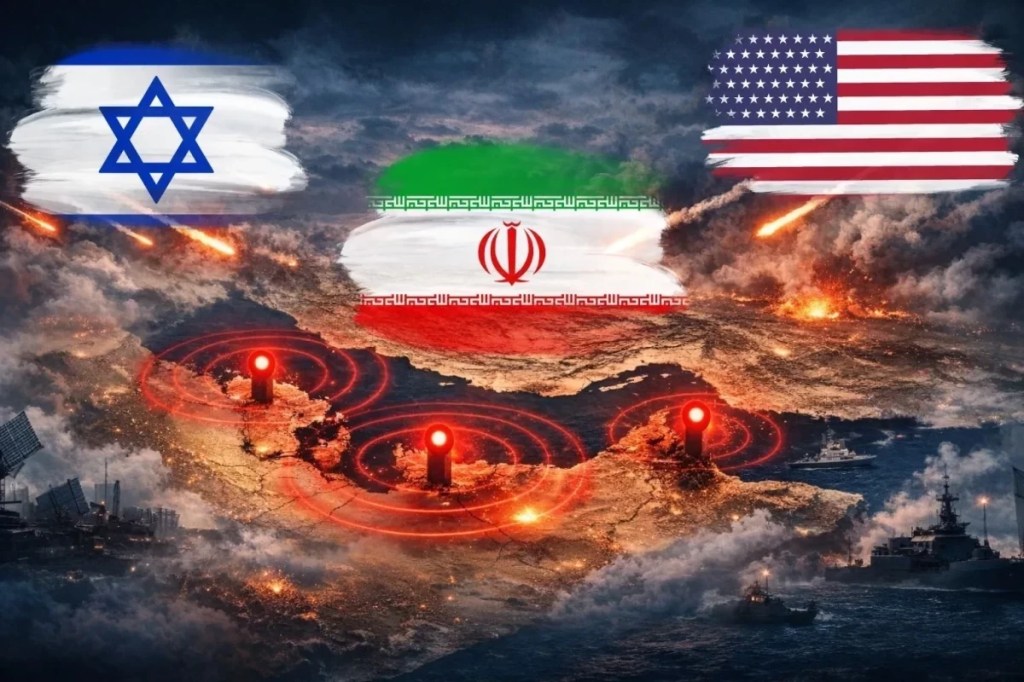
The war between the United States, Israel, and Iran has entered a more volatile stage, with the military balance shifting in some areas even as the wider political and economic fallout continues to deepen. What began on February 28 as a large-scale U.S.-Israeli assault on Iranian military infrastructure and senior leadership has now developed into a multi-front regional conflict stretching from Iran and Israel to the Gulf, Iraq, and Lebanon. The war has already caused heavy casualties, disrupted maritime trade through the Strait of Hormuz, and widened tensions between Washington and several of its traditional allies.
The initial strikes were among the most consequential attacks ever carried out against the Iranian state. According to the Council on Foreign Relations’ conflict tracker, the opening phase targeted senior leadership, major military assets, and strategic facilities, killing Supreme Leader Ali Khamenei and triggering a succession process that elevated his son Mojtaba Khamenei to the top of the political system. The conflict quickly expanded beyond a bilateral exchange. Iran responded with missile and drone attacks on U.S. positions and on energy and civilian infrastructure in Gulf states, while Israel broadened its military campaign against Hezbollah in Lebanon after the group entered the war in support of Tehran.
Context and Leadup to All-Out War
The roots of the conflict lie in a longer nuclear and regional rivalry. Iran’s nuclear program dates back to the 1950s, but the most consequential modern phase began after evidence of undeclared facilities emerged in 2002. Diplomatic efforts led to the 2015 nuclear agreement, which sharply constrained Iran’s stockpile of enriched uranium and centrifuge capacity in exchange for sanctions relief. That framework never resolved wider disputes over ballistic missiles, regional militias, and Iran’s projection of power across the Middle East. The first Trump administration withdrew from the deal in 2018 and restored a maximum-pressure strategy, after which Iran gradually moved beyond the agreement’s limits. Over time, the confrontation widened through tanker incidents, militia attacks, the killing of Qassem Soleimani, and repeated rounds of Israeli and Iranian escalation. (Council on Foreign Relations)
That path accelerated after the October 2023 Hamas attack on Israel and the regional crisis that followed. Iran-backed groups in Iraq, Syria, Lebanon, and Yemen increased attacks on U.S. and Israeli targets, while Israel’s direct exchanges with Iran in 2024 moved the two states from shadow war to overt confrontation. By 2025, Israel had significantly weakened parts of Iran’s regional network, including Hamas and Hezbollah leadership, while the Trump administration returned to office combining a renewed pressure campaign with intermittent attempts at nuclear diplomacy. The turning point came in June 2025, when the International Atomic Energy Agency found Iran in violation of its non-proliferation obligations, Israel launched direct strikes on Iranian nuclear and military sites, and the United States later joined by attacking key locations at Fordow, Isfahan, and Natanz. That earlier round ended in a fragile ceasefire, but it did not settle the core dispute.
The present war is not an isolated eruption but rather the culmination of years of failed deterrence, broken diplomacy, and repeated military signaling. Since February 28, the Trump administration has issued shifting and at times contradictory explanations for what it seeks to achieve. At various points, the White House has described the campaign as an effort to cripple Iran’s military capacity, destroy the infrastructure supporting missile and drone warfare, suppress maritime threats in the Gulf, and prevent any future nuclear breakout. Trump has also suggested the conflict could end soon, even as administration officials and Israeli planners indicate operations may continue for weeks. The president has delayed a planned trip to China in order to focus on the war, highlighting how central the conflict has become to his presidency.
On the battlefield, the U.S.-Israeli coalition appears to have made significant progress against one of Iran’s missile and drone arsenal. Reporting drawn from battlefield assessments indicates that a large share of Iranian launchers have been destroyed or rendered unusable, and that Iranian attack volumes have declined significantly since the opening days of the war. The logic behind their campaign is straightforward. Iranian strategy has long relied on imposing pain rather than winning conventional dominance. By striking U.S. facilities, Gulf energy infrastructure, shipping lanes, and Israeli population centers, Tehran appears to be trying to generate enough economic and political pressure to force Washington and Jerusalem to stop short of their goals. Current assessments suggest that effort has been degraded but not eliminated. Iran is still launching attacks, and even a much smaller number of successful strikes can continue to produce outsized political and global market effects. (New York Post)
Recent reporting also points to the war widening within Iran itself. Combined U.S. and Israeli strikes are now reaching deep into Iranian territory, including eastern sites associated with drone operations and the broader defense industrial base. Targets in and around Tehran have included intelligence and internal security infrastructure, while air defense systems and air bases across the country have also come under sustained attack. Analysts assessing recent strike patterns argue that these operations indicate growing coalition freedom of action inside Iranian airspace and an attempt not only to blunt immediate attacks but also to weaken Iran’s capacity to regenerate them over time. At the same time, information from inside Iran has become harder to verify as the authorities tighten internet restrictions, restrict VPN access, and reportedly target Starlink users while expanding checkpoints and internal surveillance. (New York Post)
The succession inside Iran has added another layer of uncertainty. Mojtaba Khamenei’s rise appears to have been backed by senior figures in the Islamic Revolutionary Guard Corps, suggesting continuity in the regime’s hardline orientation rather than a move toward pragmatic stabilization. Reuters reported on March 17 that Iran’s new supreme leader had rejected proposals aimed at reducing tensions with the United States, demanding instead that Iran’s adversaries first be weakened decisively (Reuters). Separate battlefield and analytical reporting indicates that his political base is closely tied to long-serving IRGC commanders who have historically favored securitization, internal repression, and confrontation with the West.
There is lots of current ambiguity coming out of Iran’s current diplomatic messaging. On the one hand, Iranian officials have signaled they are willing to discuss safe access to the Strait of Hormuz with countries that want maritime transit restored. On the other hand, Tehran has made clear that it does not consider itself close to a ceasefire and is prepared to continue the war. At the same time, Iranian officials have publicly rejected claims by Trump that meaningful negotiations are imminent. Taken together, those positions suggest that Iran is open to transactional arrangements around shipping and third-country access while refusing to frame those discussions as a strategic retreat against the U.S. and Israel. (AP News)
Expanding War, Economic Shock, and Strategic Strain
The Strait of Hormuz has become the conflict’s most consequential global pressure point. Roughly one-fifth of the world’s oil supply normally passes through the waterway, and although the strait is not fully sealed in a legal or physical sense, commercial traffic has sharply contracted under the weight of attacks, mining threats, insurance costs, and continued uncertainty. Reuters reported that Middle Eastern oil exports had fallen by at least 60%, while the UK maritime authorities have recorded more than 20 incidents in and around the strait and nearby waters since the war began (Reuters). Even where no attacks occur for several days, the risk environment remains severe enough to suppress normal shipping patterns. The International Energy Agency has already responded by releasing hundreds of millions of barrels from strategic reserves to soften the shock.
The pattern of maritime disruption has also become more selective. Recent reporting suggests Iran has permitted some tankers linked to countries such as China, India, and Pakistan to transit more safely while continuing to threaten or deter shipping associated with the United States and its partners. That approach fits Tehran’s broader attempt to weaponize access rather than simply close the waterway indiscriminately. It also allows Iran to maximize political leverage by driving wedges between energy importers, Gulf producers, and the America-led coalition. Even if the U.S. Navy ultimately reopens the route operationally, the commercial recovery may lag because markets, insurers, and shipping firms will respond to perceived risk rather than purely military assurances. (Reuters)
The wider regional picture remains volatile. In the Gulf, Iran continues to fire missiles and drones toward energy sites, airports, and other infrastructure. Recent attacks have struck or damaged facilities near Dubai and Fujairah and caused casualties in Abu Dhabi, while Gulf air defense systems in Bahrain, Kuwait, Qatar, Saudi Arabia, and the United Arab Emirates have intercepted many incoming projectiles. In Iraq, militia attacks have continued against sites linked to the United States, including areas near Baghdad International Airport and other infrastructure associated with U.S. interests. Israeli and coalition strikes have in turn hit Iraqi militia targets. These exchanges underline the fact that the war is no longer confined to three states but is now radiating through the full geography of Iran’s regional network. (Reuters)
Lebanon has emerged as another major theater in recent days. Hezbollah resumed attacks across the Israel-Lebanon front in support of Iran, prompting a significant Israeli escalation. Israeli operations now include continued airstrikes and what officials describe as limited and targeted ground action in southern Lebanon aimed at Hezbollah infrastructure and forward positions. Western governments have called for de-escalation as the humanitarian toll rises. Reports indicate that hundreds of thousands have been evacuated from southern Lebanon, while other reporting places the death toll there nearing 1000 and the displacement burden at over a million. What began as a support front has increasingly taken on the characteristics of a separate war layered on top of the Iran conflict.
Humanitarian costs are mounting across the region. Fatalities now number well into the thousands, with Iran suffering the heaviest losses but Lebanon, Israel, Iraq, and Gulf states also affected. U.S. military casualties have risen beyond the earliest reported totals, with CNN reporting approximately 200 U.S. troops injured across seven countries and 13 service members killed in action (AP News). Civilian harm has become a major point of contention, including scrutiny surrounding the strike on an Iranian school that reportedly killed around 150 schoolchildren. Civilian infrastructure, energy systems, airports, and urban neighborhoods have all been drawn into the conflict’s widening footprint.
For Washington, the military campaign is now colliding with harder political questions. Trump has argued that the United States can break Iran’s pressure on Hormuz with or without allies, yet his administration has openly lobbied NATO states and major Asian economies to contribute naval support to the mission. The response has been hesitant at best. Japan and Australia have indicated they are not planning deployments, while several European governments have made clear they do not want to be drawn into a wider war that began without their backing or consultation. France has gone further, explicitly ruling out participation in military operations to reopen the strait during active hostilities. Britain has supported efforts to restore navigation but stopped short of committing to U.S.-led combat operations. The result is that Washington faces the conflict’s biggest energy chokepoint with limited visible allied participation. (Reuters)
The war’s economic impact is increasingly visible. Oil and gas prices have remained elevated, and the rise in U.S. gasoline prices has become a domestic political vulnerability for a president who campaigned heavily on affordability. The current average U.S. gasoline price has risen sharply over the course of the conflict, and analysts say the political danger is less the existence of war itself than the way prolonged disruption could affect daily living costs. A short aerial campaign can be defended politically more easily than a drawn-out conflict that keeps energy expensive, distracts from domestic priorities, and raises the possibility of direct American entanglement with boots on the ground.
This is the central strategic dilemma now facing Trump. If the United States limits itself to air and naval operations and declares success once Iranian launch capacity is sufficiently reduced, Tehran may still retain enough capability to harass shipping, unsettle markets, and claim it outlasted its opponents. If Washington escalates further by using more naval assets or even ground forces to secure chokepoints, terminals, or sensitive infrastructure, it risks entering the kind of long regional military commitment that much of the American public has grown weary of after two decades of Middle East wars. The White House insists the operation is moving in the right direction while military reporting supports the view that Iranian missile and drone capabilities are being steadily degraded. But that does not automatically answer the harder question of whether battlefield success will translate into a stable political end state.
Analysis
The emerging picture is one of tactical progress paired with strategic uncertainty. From a strictly military perspective, the U.S.-Israeli campaign is degrading Iran’s capacity to conduct the mass missile and drone attacks that underpin its coercive doctrine. Launch rates have declined, key infrastructure has been struck, and coalition air operations are extending deeper into Iranian territory with increasing freedom of action. Maritime pressure also suggests that Tehran is under sustained strain, even if its capabilities have not been fully neutralized. On these narrow operational terms, it is premature to characterize the campaign as a failure.
However, the war cannot be evaluated solely through battlefield metrics. Iran does not require conventional parity to impose meaningful costs. Its strategy is asymmetric and political in nature. Even a reduced but persistent capacity to disrupt shipping, target energy infrastructure, and unsettle global markets may be sufficient to sustain leverage. If oil prices remain elevated and maritime risk continues to deter normal trade flows, Tehran can still shape outcomes indirectly by increasing the perceived cost of prolonging the conflict. In that sense, limited but sustained disruption may allow Iran to retain strategic relevance despite clear military setbacks. This dynamic is reinforced by the internal political shift following the rise of Mojtaba Khamenei. The consolidation of power among entrenched IRGC hardliners points toward a more securitized and rigid regime that is less inclined toward rapid de-escalation and more likely to interpret the conflict in existential terms.
A second layer of analysis is geopolitical rather than military. The United States has demonstrated that it can project force decisively, but it has struggled to translate that dominance into broad diplomatic alignment. While many allies share Washington’s concerns regarding Iran’s regional conduct and nuclear ambitions, far fewer are willing to endorse the methods employed in this campaign or participate in securing the Strait of Hormuz. This divergence matters. It suggests that even if the United States and Israel prevail militarily, they may face difficulty shaping the regional order that follows. The conflict therefore becomes a test not only of coercive capability, but of whether overwhelming force can yield an outcome that is economically sustainable, diplomatically supported, and politically durable. At present, none of those conditions appears guaranteed.
An additional layer of risk lies in second-order strategic consequences, particularly for U.S. relationships in the Gulf. While Gulf Cooperation Council states broadly support the weakening of Iran, they are also bearing the brunt of retaliatory strikes against energy infrastructure, logistics hubs, and civilian areas. This creates an imbalance in which the benefits of Iranian degradation are paired with immediate and tangible costs for regional partners. Over time, this could prompt Gulf states to reassess the meaning of U.S. security guarantees if alignment with Washington and Israel consistently translates into exposure rather than insulation. The economic implications extend further. Sustained damage to Gulf infrastructure or prolonged disruption to energy flows could begin to affect global investment patterns, including capital flows from Gulf sovereign wealth funds into key U.S. sectors such as advanced technology and artificial intelligence. While such a shift remains contingent, it represents a non-trivial vulnerability if the conflict escalates or endures.
The most significant strategic inflection point concerns the trajectory of U.S. war aims. If the objective remains limited to degrading Iran’s military capabilities, the current air and naval campaign may prove sufficient over the next few weeks. If, however, the implicit or explicit goal shifts toward absolute regime change, the logic of the conflict changes fundamentally. Airpower alone is unlikely to achieve that outcome, raising the possibility of ground operations. Such a scenario would carry far greater risks. Iran’s geography, population size, and entrenched security apparatus make it a significantly more complex operational environment than previous U.S. interventions in the Middle East. A ground campaign could evolve into a prolonged conflict characterized by insurgency, high casualties, and regional destabilization, including potential refugee flows that would disproportionately affect Europe.
There is also a credible argument that previous diplomatic efforts failed to constrain Iran’s nuclear trajectory or its regional proxy network, leaving military action as the remaining option. From this perspective, decisive intervention may reinforce U.S. credibility in the Gulf, limit Chinese strategic expansion by stabilizing key energy corridors, and signal that Washington remains willing to act where others hesitate. Some analysts further argue that the campaign reflects a broader recalibration of U.S. global posture, one that places less emphasis on European alignment and more on direct strategic outcomes.
Even under this slightly more favorable interpretation, structural risks persist. Iran’s leadership, now more ideologically consolidated and shaped by personal and institutional loss, may be more inclined to pursue escalation through indirect means. The IRGC could prioritize sustained economic disruption, particularly in and around the Strait of Hormuz, not because it can indefinitely close the waterway, but because even intermittent disruption can generate disproportionate global effects. The objective in such a scenario would be to erode international tolerance for the conflict and pressure external actors to push for de-escalation.
Finally, the domestic dimension in the United States introduces an additional constraint. The current trajectory sits uneasily alongside the political narrative that accompanied Trump’s return to office, which emphasized avoiding prolonged foreign entanglements. A conflict that extends in duration, drives up energy prices, and shifts public attention away from domestic economic concerns risks becoming politically costly, particularly as midterm elections approach. Rising fuel prices and broader cost-of-living pressures remain highly salient for voters, and sustained disruption in global energy markets could amplify those concerns.
Taken together, the central issue is no longer whether the campaign is achieving tactical military success. It is whether that success can be translated into a stable and acceptable political outcome before escalation dynamics, economic consequences, and shifting alliance perceptions begin to outweigh the desired military gains.
Iran is currently in the midst of the most lethal wave of domestic unrest the country has seen in decades, following protests that began on December 28 and culminated in a sweeping crackdown, mass arrests, and a severe information blackout. As the internal crisis has intensified, Iran’s confrontation with the United States has also sharpened, with senior Iranian officials warning of a forceful response to any renewed attack and Washington repositioning military assets closer to the region.
What has emerged, through a mixture of government statements, activist reporting, and limited material that has escaped Iran despite communications restrictions, is an undeniable crisis with both domestic and regional consequences. It is also a moment that has revived long running questions about the durability of Iran’s political system, the credibility of any opposition alternative, and the risks of foreign intervention.
The Protest Wave That Began on December 28
The latest unrest was triggered on December 28, initially linked to economic and social grievances that had been building for months. Shopkeepers in central Tehran were among those reported to have played a catalytic role, with strikes and demonstrations spreading in a way that surprised both supporters and skeptics of the protest movement. For nearly two weeks, demonstrations persisted in multiple areas, at times smaller than previous waves such as those in 2022, but sustained enough to pressure the authorities.
Iran has a record of weathering such episodes, including major unrest after the disputed 2009 election and the women led protests of 2022. In those cases, predictions of imminent collapse did not materialize. This time, however, the context was described as significantly more fragile. The country had already experienced a year marked by economic instability, severe inflationary pressure, and the aftereffects of a 12 day war with Israel in June 2025 that underscored Iran’s vulnerability to external strikes and the limits of its deterrence.
Mass Mobilization and Internet Cuts
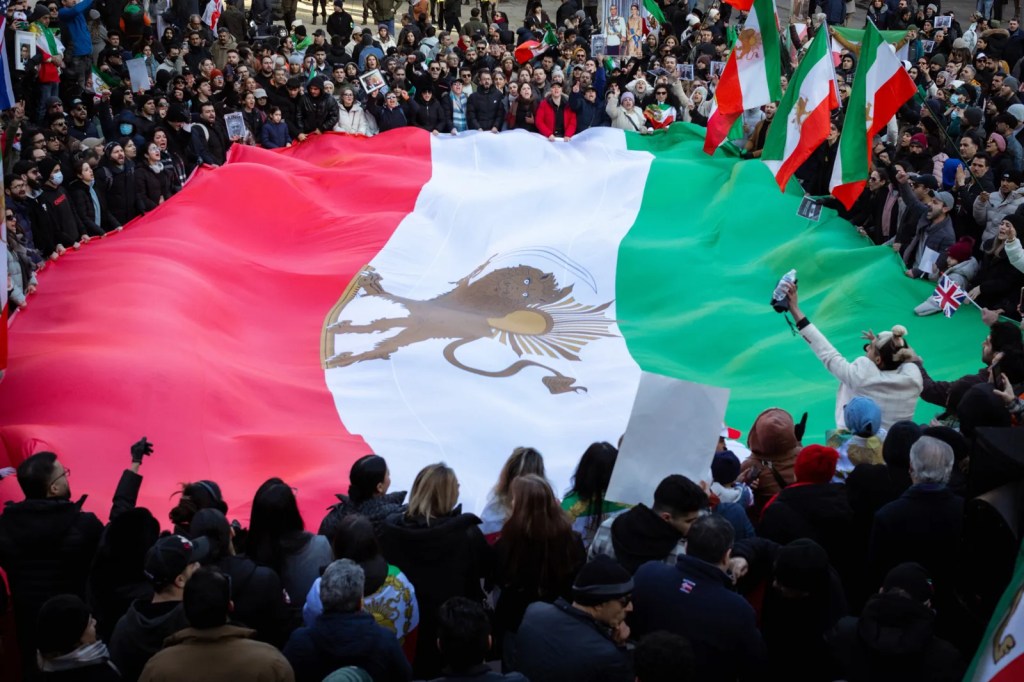
A pivotal moment came around January 8, when an exiled opposition figure, Reza Pahlavi, publicly urged Iranians to mobilize on a larger scale. The appeal appeared to resonate more widely than many observers expected, contributing to a surge in protests that followed. Around the same time, Iranian authorities imposed what was described as an unprecedented communications shutdown.
International monitors and observers characterized the internet restrictions as deeper and more sustained than those seen during prior unrest in 2019 or 2022. Connectivity was reported to have dropped to a minimal fraction of normal levels, leaving families struggling to contact relatives and making it difficult to verify events on the ground. Even in this environment, some videos and images reportedly made it out of the country early in the blackout, though the flow later slowed to a trickle, suggesting either tighter controls or more effective disruption.
Reporting described Iran using a blend of techniques to control information. These included rerouting or manipulating internet connectivity at the national level, blocking or degrading VPN traffic, and relying on a domestic state controlled network that could keep limited services functioning even while cutting broader access. Satellite based workarounds, including the use of smuggled Starlink terminals that are illegal in Iran, were discussed as a partial lifeline, though with reports that access was uneven and increasingly disrupted. Several possible interference methods were raised, including jamming or spoofing signals that satellite systems rely on to function.
Alongside the communications crackdown, the security response reportedly intensified sharply. Accounts described the deployment of multiple security forces, including units linked to the Revolutionary Guards and affiliated militia elements, as well as the use of snipers and live ammunition in some locations. The state has consistently maintained that violence was driven by hostile elements, including armed participants and foreign backed actors, while activist networks and leaked footage have suggested that security forces fired on people who appeared unarmed. With limited independent access, the full scope and sequence of events remains difficult to confirm.
Competing Death Tolls
In recent days, Iranian state television carried what it presented as the first official death toll. The figure was attributed to a statement by the Martyrs Foundation, which said 3,117 people were killed. The statement added that 2,427 of those killed were civilians and members of the security forces, without clarifying how the remaining casualties were categorized.
Activist reporting produced a higher estimate. A US based monitoring group, the Human Rights Activists News Agency, placed the death toll at 4,560, citing a network inside Iran that it says verifies fatalities. Independent verification has been constrained by the ongoing blackout and the absence of open access for international media and outside investigators.
Even with these discrepancies, multiple accounts converged on the conclusion that the death toll is extraordinarily high by modern Iranian standards, exceeding the casualties reported in previous rounds of unrest in recent decades. Comparisons were also drawn to the turmoil surrounding the 1979 revolution, largely due to the combination of scale, severity, and uncertainty about what comes next.
Iran’s Supreme Leader Ayatollah Ali Khamenei, in remarks reported over the weekend, acknowledged that the protests left several thousand dead and blamed the United States, marking one of the clearest signals from the top of the system about the magnitude of casualties.
Mass Arrests, Punishment Threats, and Asset Seizures
The crackdown was not limited to lethal force. By activist estimates, nearly 26,500 people were arrested. Iranian authorities continued to announce arrests in multiple provinces and cities, often describing detainees as organizers or instigators of unrest, or as participants in violent acts against public institutions and religious sites.
Iranian officials also signaled that punishments could be harsh. Statements carried by state media described a two track approach, with severe treatment promised for those labeled as violent “rioters” and potential leniency for individuals portrayed as having been misled by foreign actors. Senior security officials reportedly urged people to turn themselves in within a short time window, promising reduced sentences in exchange.
State television aired confessions from detainees with faces blurred, continuing a long criticized practice that rights groups and foreign observers have described as coercive. At the same time, officials emphasized that they aimed to recoup economic damage from unrest through confiscations. Reports described the seizure of assets from prominent figures alleged to have backed protests, including businesses and cafes, framing these actions as compensation for property damage.
In the background was widespread concern that some detainees could face execution. Iran is already among the world’s most prolific users of capital punishment, and comments from officials contributed to fears that legal proceedings could be accelerated.
Iran’s Foreign Minister Warns the US Against Renewed Military Action
As reporting on casualties and arrests intensified, Iran’s foreign minister, Abbas Araghchi, issued his most explicit warning yet about potential conflict with the United States. In a published opinion article, he argued that the most violent period of unrest was limited in duration and again placed blame on armed demonstrators. He also framed Iran as having exercised restraint during the June 2025 Israel-Iran war, while emphasizing that future restraint should not be assumed.
The core message was that Iran would respond decisively if attacked again, and that a major confrontation would not be short, contained, or limited to Iran. The warning implicitly drew on Iran’s missile capabilities, particularly its short and medium range arsenal that could threaten US bases and interests across the Gulf region.
In practical terms, there were already indications of increased caution. Restrictions were reported on certain movements by US diplomats to bases in Kuwait and Qatar, reflecting concern about retaliation if tensions escalated.
Araghchi’s position came with diplomatic consequences. His invitation to the World Economic Forum in Davos was rescinded in connection with the protest killings, underscoring the reputational impact of the crackdown and the degree to which Iran’s domestic crisis is spilling into international forums.
US Military Movements Add to the Sense of Imminent Risk
Against this backdrop, the United States began repositioning military assets. Ship tracking data showed the USS Abraham Lincoln, which had been operating in the South China Sea, transiting through the Strait of Malacca into the Indian Ocean and heading west. A US Navy official, speaking anonymously, said the carrier and accompanying destroyers were moving in that direction. While US officials did not explicitly state that the group was bound for the Middle East, its location and direction indicated it could enter the region within days.
The context here matters, as the the US recently carried out a major deployment in the Caribbean that culminated in troops seizing Venezuela’s Nicolás Maduro, and that operation was referenced as a benchmark by commentators weighing whether Washington might contemplate a similarly decisive move against a leader it considers hostile.
President Donald Trump’s stance was portrayed as volatile and consequential. He publicly warned Iran against killing protesters and hinted at strong action, while also signaling at points that an attack might not be necessary if violence subsided. One step announced by the US was a tariff policy targeting countries that trade with Iran, alongside a pullback from engagements with Iranian officials after Araghchi floated a revival of nuclear related talks.
At the operational level, the US reportedly began withdrawing some personnel from major regional facilities in Qatar and Bahrain, a move often interpreted as a precaution when strikes are being considered or when retaliation is feared.
Regional governments, especially in Gulf Arab states, were reported to have urged Washington not to attack, reflecting fears that escalation would place their territory and critical infrastructure within the range of Iranian missiles and other retaliatory tools. Iran, for its part, reportedly shut its airspace last week, interpreted as a sign it anticipated potential strikes.
Drivers of Unrest
Beyond the immediate violence, the unrest was repeatedly linked to economic collapse and public hardship. Descriptions emphasized the rapid weakening of the rial, high inflation, rising import costs, and widespread poverty. Employment levels were portrayed as depressed, with hardship affecting both working class households and professionals.
Multiple accounts argued that sanctions have compounded these pressures, particularly those tied to oil exports, while also highlighting internal corruption and the economic influence of the Revolutionary Guards, which are described as controlling major commercial networks spanning key sectors. This combination, in the narrative presented, left the state with limited tools to calm the streets besides force.
Officials reportedly proposed small scale payments or stipends to ease anger, but this was portrayed as inadequate relative to the depth of economic distress.
The Uncertainty of What Comes Next
Although there had been no major protests for several days at the time of the reporting, the lull was not treated as a resolution. Iran’s own history suggests protest cycles can recede and then return with greater intensity. The ongoing communications shutdown has made it difficult to gauge the true level of organizing, morale, and fear across the country.
Iranian authorities signaled that internet restrictions might be eased gradually, while also replacing a top executive at a major telecom provider amid reports that some operators hesitated to enforce shutdown orders. State media also reported actions against domestic outlets that published protest related reporting, and described episodes of satellite broadcast disruption, hinting at a broader contest over information control.
A recurring element in the coverage was the role of Reza Pahlavi as a possible rallying figure, especially given the absence of organized opposition inside Iran after decades of repression. He has presented himself as a transitional leader who would oversee a move toward democratic governance and put major constitutional questions, including the potential restoration of the monarchy, to a referendum.
At the same time, accounts underscored doubts about his ability to unify Iran’s fragmented opposition, particularly among ethnic minorities and non monarchist movements that distrust the legacy of the pre 1979 era or favor decentralization. His practical reach inside Iran was described as uncertain, with skepticism about whether online resonance translates into organizational capacity on the ground.
Several narratives framed the crisis as having consequences far beyond Iran’s borders. Iran’s internal instability raises concerns about refugee flows, regional proxy dynamics, and control over missile and drone stockpiles. The existence of enriched uranium, nuclear expertise, and hardline factions adds another layer of risk, especially if the state fragments or loses cohesion.
For the United States and its partners, the dilemma is acute. Military intervention could trigger Iranian retaliation across the region and produce unpredictable escalation. Doing little could be seen as abandoning red lines tied to mass killings or executions. Taking steps to restore communications, such as facilitating satellite connectivity, was presented as an option with lower immediate military risk, but not necessarily one that would change outcomes quickly given Iran’s control over domestic telecom infrastructure and its capacity to disrupt workarounds.
Analysis:
Based on the events we’ve seen play out over the last few weeks, Iran’s leadership appears determined to treat the protests as an existential threat and to use maximal force to deter future uprisings. Yet the scale of casualties, the breadth of arrests, and the intensity of the blackout suggest not confidence but insecurity. A state that believes it can manage dissent through limited repression typically does not need to sever communications nationwide for weeks or acknowledge thousands of deaths.
At the same time, the opposition landscape remains structurally weak inside the country. Iran’s system has spent decades preventing the emergence of credible, legal, and organized alternatives. That leaves space for symbolic figures abroad and sudden surges of mobilization, but it also increases the danger that if the center weakens, the vacuum is filled by fragmentation rather than a coherent transition.
Foreign intervention, which some voices in Washington have implied and which Tehran is clearly preparing for rhetorically, looks like a high risk accelerator rather than a solution. A limited strike might satisfy demands for punishment or deterrence, but it is unlikely on its own to stop domestic repression and could unify hardliners. A larger strike or an attempt at leadership decapitation could produce regional escalation and leave Iran’s internal succession dynamics unpredictable, particularly in a system where power is distributed across multiple security and clerical figures.
The prospective scenarios moving forward from here could all be costly. One is that the regime survives, hardened by bloodshed, and Iran enters a longer period of stagnation, repression, and isolation. Another is that the state fractures, producing internal conflict in a country with significant ethnic diversity, armed factions, and sensitive military capabilities. A third is a transition driven by insiders, such as factions within the Revolutionary Guards sidelining clerical leadership, which could reduce some forms of ideological rigidity but might deepen militarization unless paired with a viable economic opening and credible political reform.
What stands out most is that the protest movement’s bravery and the state’s severity are now colliding with a regional security environment already primed for escalation. With US forces repositioning and Iranian officials publicly warning of prolonged retaliation, the risk is not only that Iran’s domestic crisis worsens, but that it becomes the trigger for a wider confrontation that neither side can easily contain.
International diplomatic pressure continues to mount on Israel as Britain has joined France in pledging to recognize a Palestinian state by September unless Israel moves swiftly to halt its military campaign in Gaza, end the humanitarian catastrophe by allowing more aid in, and commit to a long-term peace process. This coordinated Western shift marks a significant climax thus far in the nearly two-year-long war between Israel and Hamas, which has resulted in the deaths of over 60,000 Palestinians and a widespread humanitarian crisis that seems to be entering its darkest phase yet.
Humanitarian Catastrophe and Famine
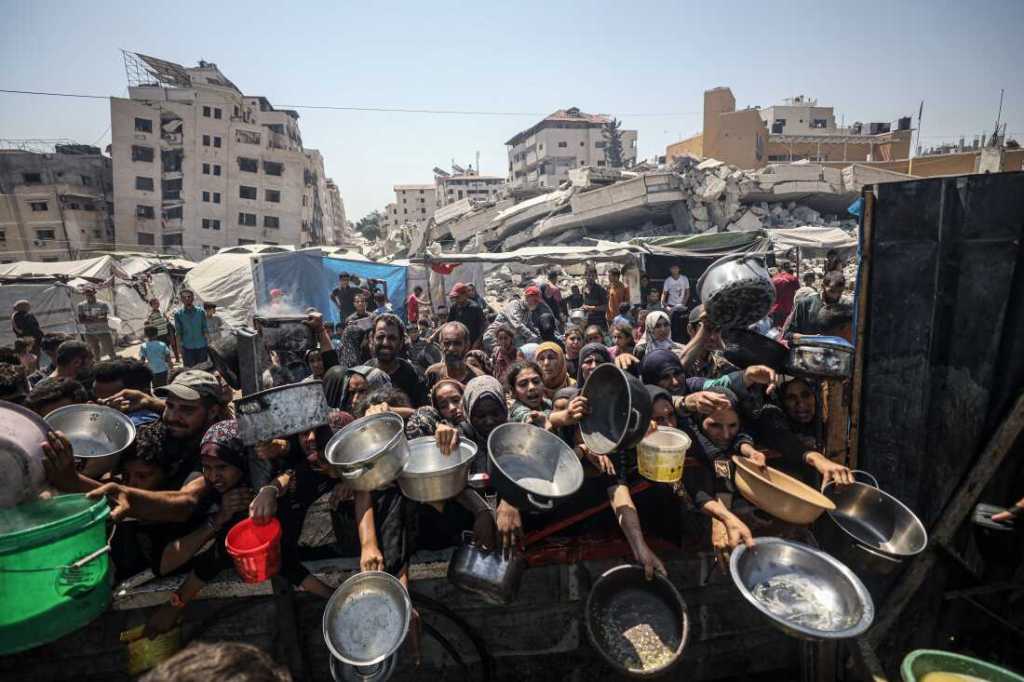
The Gaza conflict, ignited in October 2023 by a Hamas attack on southern Israel that left 1,200 Israelis dead and 251 taken hostage, has since spiraled into a grinding and devastating war. Israel’s military response has razed much of the densely populated Gaza Strip and displaced more than two million people. According to the Integrated Food Security Phase Classification (IPC), Gaza has now crossed famine thresholds, with mounting hunger-related deaths and widespread malnutrition. At least 147 people—88 of them children—have died from starvation, with the toll rising daily. Gaza’s health authorities and global humanitarian agencies are sounding alarms that the situation is at risk of spiraling into a full-blown famine.
Images of starving children have shocked the global community. The United Nations World Food Programme has reported significant difficulties in delivering aid, citing restricted access and lack of coordination from Israeli authorities. Despite Israel claiming that 5,000 aid trucks have entered Gaza in the past two months, major relief organizations argue that food and medical supplies remain severely insufficient and purposefully locked out of the enclave. Meanwhile, Israel maintains that it is not pursuing a policy of starvation, accusing Hamas of stealing aid—a claim the UN has not substantiated and is yet to be proven as fact.
Britain and France Shift Policy Response
UK Prime Minister Keir Starmer announced that Britain would formally recognize a Palestinian state at the United Nations General Assembly in September unless Israel implements several key measures: an immediate ceasefire, an end to plans for annexation of the West Bank, and a credible commitment to a two-state solution. France issued a similar pledge last week, prompting sharp rebukes from Israeli officials.
Israel’s government reacted with outrage. Prime Minister Benjamin Netanyahu denounced the British proposal as a reward for terrorism, asserting that recognizing Palestinian statehood at this stage would only embolden Hamas. Trump, despite claiming neutrality during recent talks with Starmer, later told reporters that he did not believe Hamas should be rewarded with statehood recognition.
Palestinian Authority President Mahmoud Abbas welcomed Starmer’s announcement as a bold and principled move, while UN officials noted that recognition alone would not alleviate the immediate suffering in Gaza nor produce any tangible progress toward peace at this stage.
Stalled Ceasefire Talks and Mounting Civilian Deaths
Despite intermittent talks led by Egyptian, Qatari, and U.S. mediators, efforts to broker a ceasefire have repeatedly broken down. The latest breakdown occurred after both Israel and the United States withdrew from negotiations, accusing Hamas of lacking coordination and refusing to compromise. Hamas demanded guarantees for a permanent ceasefire, Israeli military withdrawal, and an influx of humanitarian aid.
Meanwhile, deadly airstrikes and ground assaults continue. Overnight Israeli attacks on the Nuseirat refugee camp killed at least 30 people, including women and children, while others were gunned down along the Salahudeen Road as they waited for humanitarian aid. Gaza’s death toll has now surpassed 60,000, making this the deadliest conflict involving Israel since the country’s founding in 1948.
Observers argue that Netanyahu has little interest in ending the war or pursuing a two-state solution. His administration has increasingly moved toward permanent occupation of Palestinian territories, advancing controversial plans such as relocating Gaza’s population into a “humanitarian city” in Rafah, a move many critics label as forced displacement or ethnic cleansing.
Defense Minister Israel Katz has spearheaded policies aimed at resettling Palestinians outside Gaza and intensifying military operations in the West Bank, under the justification of preempting future threats. Domestically, Netanyahu’s right-wing Likud party has doubled down on its rejection of Palestinian sovereignty. The Knesset— Israel’s parliament— recently passed laws opposing the creation of a Palestinian state and supporting the annexation of the West Bank. Netanyahu himself boasts of having spent decades blocking Palestinian statehood and has consistently framed such recognition as an existential threat to Israel.
U.S. Caught Between Allies and Interests
While European nations begin to pivot toward recognizing Palestinian statehood, the United States—Israel’s closest and seemingly unwavering ally—remains reluctant to follow suit. President Trump, though having occasionally clashed with Netanyahu on broader Middle East strategy, has mostly remained aligned and compliant with Israeli policy throughout the war.
Since the start of the conflict, the U.S. has provided Israel with at least $22.7 billion in military and humanitarian aid, vastly exceeding the $3.8 billion annual cap set under the existing U.S.–Israel memorandum of understanding. Additionally, Washington has invested substantial diplomatic capital in shielding Israel from sanctions and stalling international recognition of Palestinian statehood.
But this strategy is becoming increasingly untenable. Arab states, which were once open to normalizing relations with Israel, are now demanding Israel commit to recognizing Palestinian sovereignty before proceeding. Trump’s broader ambitions of brokering a regional peace agreement, including normalization with Saudi Arabia, will permanently hang in the balance the longer his administration allows Israel a free pass to do whatever they want in Gaza.
Analysis:
The convergence of mass civilian suffering in Gaza, mounting evidence of famine, and Israel’s hardline stance has created a geopolitical crisis that is forcing Western governments to reassess their Middle East policies. For the United States, continued unconditional support for Israel risks isolating Washington from its Arab partners and European allies alike. It also threatens to undermine Trump’s larger strategic efforts to reposition U.S. military engagement in the region.
Trump’s previous willingness to engage diplomatically with actors like the Houthis in Yemen and Syria’s new leadership suggests he is capable of shifting away from traditional alliances. If he hopes to achieve a lasting regional peace and rehabilitate America’s role as a mediator, he will need to leverage his popularity in Israel to pressure Netanyahu into concessions that include winding down his ethnic cleansing and leveling of the Gaza Strip and eventual recognition of a sovereign Palestinian state.
Netanyahu’s political future and ideological commitments are deeply tied to rejecting Palestinian statehood however, and he is unlikely to change course without substantial external pressure from only the United States, as they are the only guarantor of Israel’s actions that have enough sway to make him act. But if the U.S. fails to influence Israel decisively, the risk is not just the continued suffering of Palestinians but the long-term erosion of America’s credibility and influence in the region, as well as a worldwide questioning of the hegemon’s longtime commitment to humanitarian values.
The growing international pressure for humanitarian intervention and a halt to Israel’s actions in Gaza, symbolized by threatened statehood recognition from Britain and France, signals a tectonic shift in the global consensus. While symbolic in nature, these actions reflect a broader abhorration with Israeli leadership current military doctrine and a desire to re-center the peace process on humanitarian foundations.
Whether this results in meaningful change will depend largely on the United States. For now, the war rages on, the humanitarian crisis deepens, and the vision of a two-state solution remains distant as most of the territory that would make up this so-called Palestinian state lies in rubble.
 IRinFive