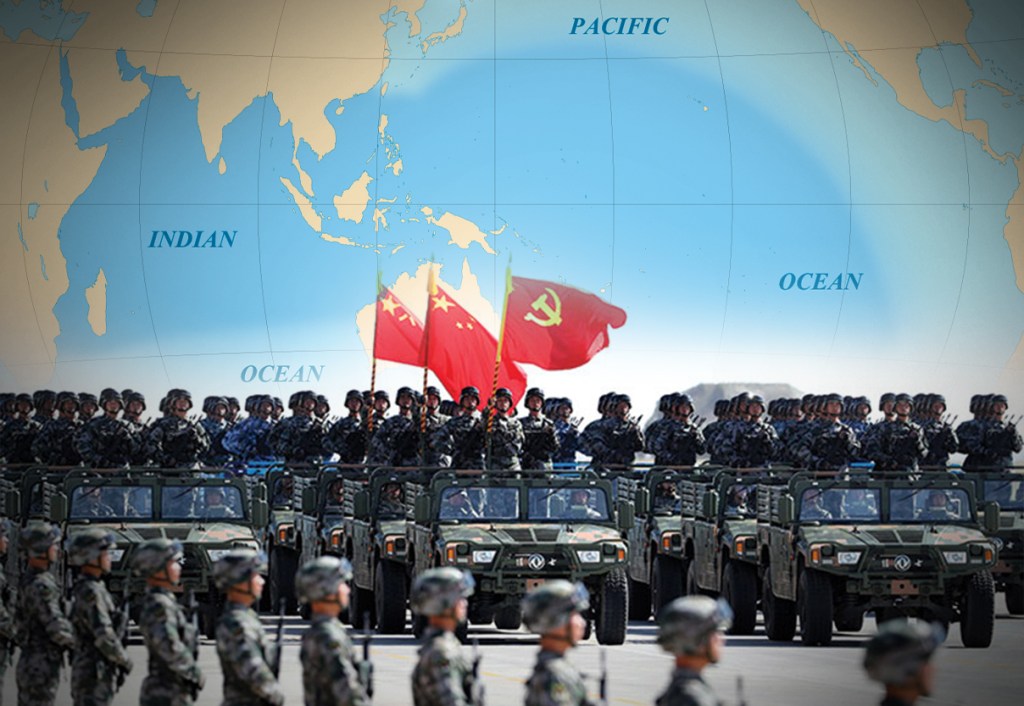
For the first time since the end of the Cold War, America faces a rival that matches and surpasses it in many of the most important strategic industries vital for great power success. China has embarked on the biggest military build up in modern peacetime history, which has resulted in strategic parity via the United States and its Asian allies in the Indo Pacific. A balance of power in the Indo-Pacific where China is approaching strategic parity with the US in several key areas will not produce an equilibrium of stability— which for decades scholars and statesmen have strategized would produce a stabilizing force. A true “balance of power” throughout history and between rival nations often leads to disagreements regarding relative power, which states are more likely to do when they are closely matched. Those disagreements regarding relative power usually end up as a prelude to war, with war acting as the measurement in determining which side is more powerful. Instead, periods of peace throughout the last 200 years have resulted from an imbalance of power where the status quo powers wanting to maintain the system had a disproportionate amount of power relative to the revisionist power trying to revise or remake the system for its own interests. The peace has held in the Indo-Pacific for so long due to the fact that China was weak militarily, while the US and its allies enjoyed disproportionate strength in the Western Pacific, resulting in an imbalance of power, where China could not change the system through strength without facing devastating consequences.
The imbalance of power framework favoring the status quo coalition has led to periods of peace throughout the last 200 years, and American strategists need to look no further than the Congress of Vienna to understand how the U.S. can retain a peaceful and open Indo-Pacific order. After the bloody Napoleonic Wars, the European powers at the time Prussia, Russia, Austria, and Britain formed the Quadruple Alliance which came together to try and create a system revolving around an equilibrium of power where no single state could challenge the others without facing defeat. This coalition of status quo powers were committed to maintaining peace and order and preventing the emergence of disorder and war, a similar objective with regards to the United States and its allies in the Indo-Pacific. Many people believe the peace following the Congress of Vienna resulted from your traditional balance of power theory, where strategic parity between the countries resulted in an equilibrium, thus creating the first real enduring peace in modern European history. I disagree, I believe peace was established and maintained not because of strategic parity, but rather the overwhelming strength of the Quadruple alliance whose combined power would overwhelm any would-be revisionist power trying to change the status quo. Similar to the United States and its allies in the late 20th century, no state in the Western Pacific was able to challenge the combined power of the status quo coalition (United States and its Allies), which resulted in peace because of an imbalance of power favoring the status quo coalition. The peace that stemmed from the Congress of Vienna remained up until that imbalance of power became more balanced with the unification of Germany in 1871. After Germany unified there was a real shift in the balance, similar to China’s huge military build up in the Indo Pacific, which resulted in more parity between a would-be revisionist Germany and the rest of the Quadruple alliance. The emergence of a unified Germany was a prelude to war because for the first time since the Congress convened, a single power had the capabilities and strength to potentially change the status quo on its own. There was no longer an imbalance of power where the Quadruple Alliance had overwhelming capabilities and strength in comparison to any one state trying to revise the order, and instead a balance of power emerged between Germany and the rest of the Quadruple Alliance, creating disagreements about relative power, that reshaped the equilibrium in ways that made future great power war more likely. This situation is analogous to today. China’s rapid military build up has resulted in a more level playing field via the United States and its allies, creating more parity which is leading to increased disagreements and constant provocations in the Indo-Pacific. Like Germany before World War One, China today may see this balance of capabilities as not representing the true balance of power, and may try to change that calculus through war.
American strategists must maintain common sense, and understand that the only way to deter China is to recreate an imbalance of power by pooling together allied capabilities in military power, economic power, and technological innovation to deter China from even thinking it has similar capabilities and strength in comparison to the status quo powers. Similar to what the U.S. and its NATO allies have in Europe, the strategic imbalance of power favoring NATO via Russia has deterred Russia from even contemplating an attack on NATO, because Russia would be met with devastating force. American strategists must understand that if Russia were to successfully invade and take Ukraine that imbalance would become more balanced resulting in more strategic parity between NATO and Russia, potentially resulting in Russia becoming more revisionist and aggressive. The U.S. will need to spend more on defense, while building a coalition of partners in the Indo-Pacific that collectively overwhelm China in all strategic areas necessary for great power competition and success. History shows when facing revisionist authoritarian powers, that order and peace depend on a coalition of status quo powers coming together and pooling their capabilities, resulting in significantly stronger military, economic, and technological potential, thereby creating an imbalance of power in the region, and one in which China would not dare try and disrupt. The moment is now for American strategists to recognize that parity will tempt revisionist powers to try and revise the power balance to their favor, which only an imbalance of power favoring the status quo coalition would deter. The peace in the Indo-Pacific does not depend on equality, but on overwhelming strength in the hands of the status quo powers.
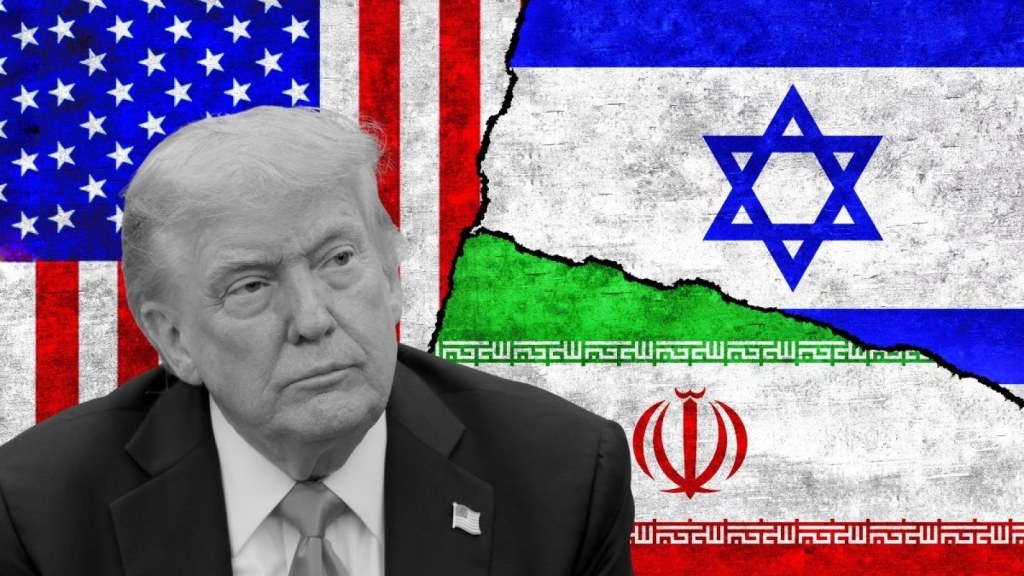
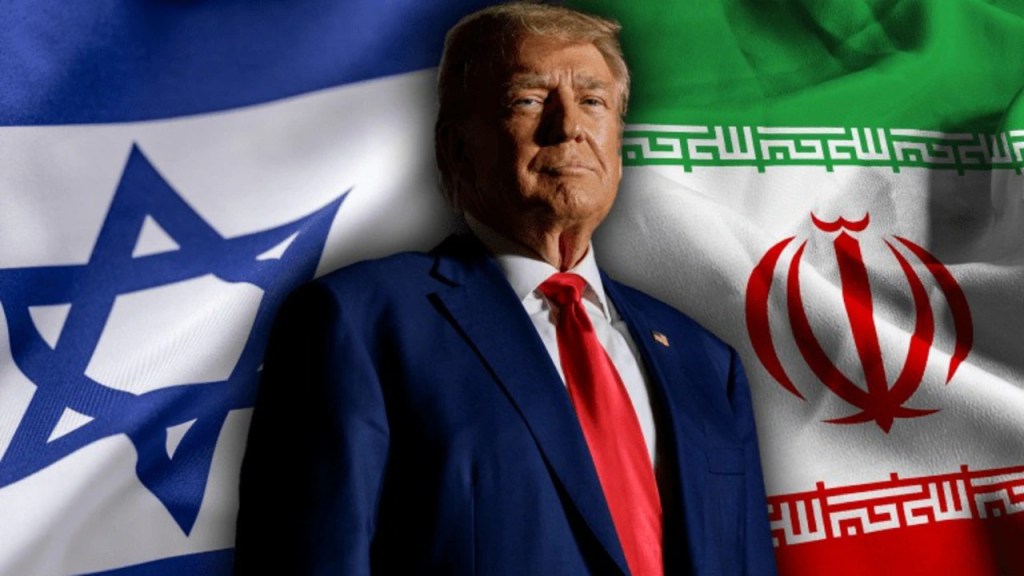
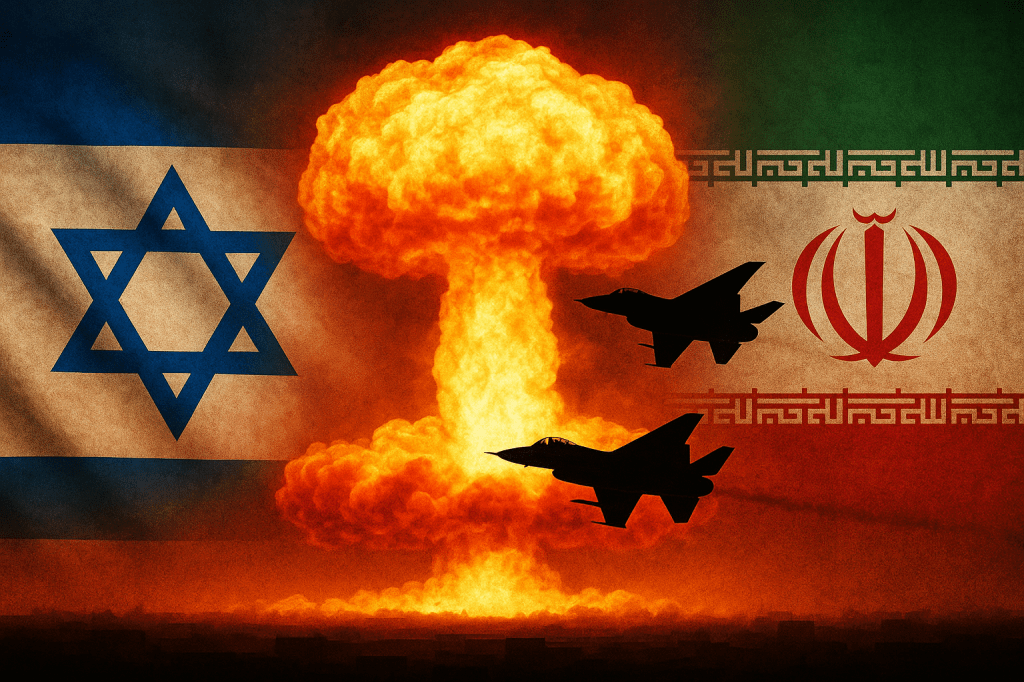
In a wild two-week sequence of military maneuvers, diplomatic messaging, and social media declarations, President Donald Trump has ushered in one of the most volatile and consequential geopolitical moments of the decade. The United States and Israel launched devastating attacks on Iran’s nuclear infrastructure over the weekend in a surprise escalation dubbed “Operation Midnight Hammer.” Then within 72 hours, the world watched as the war pivoted from aerial devastation to a tenuous ceasefire—allegedly brokered through personal calls and online posts by the U.S. president.
The pace and unpredictability of the events—U.S. stealth bombings, Israeli covert operations, Iranian missile retaliation, and Trump’s all-caps diplomacy—have reshaped the contours of Middle East politics and laid bare the contradictions and unpredictability of a new era in American foreign policy.
Operation Midnight Hammer
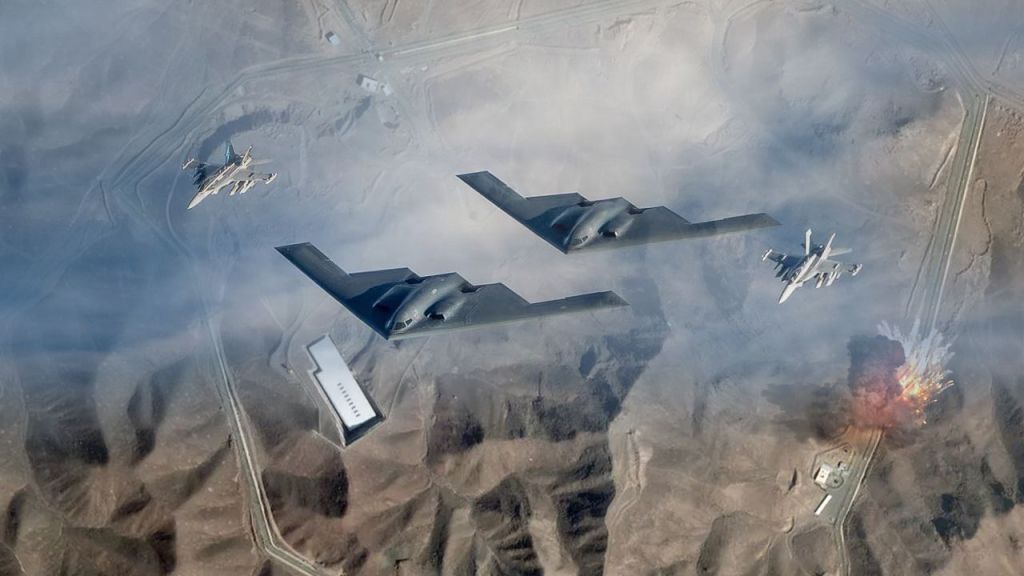
It began late last Friday with a shock assault: a fleet of American B-2 stealth bombers departed on a secret 18-hour flight, armed with 30,000-pound Massive Ordnance Penetrators, struck key Iranian nuclear sites at Fordow, Natanz, and Isfahan. The precision strike was coordinated independently by the Trump administration, bypassing many traditional interagency processes and involving only a tight circle of advisors. Israel, which had already gained air superiority over Iran in the preceding days, failed to penetrate these heavily fortified targets and was banking on U.S. intervention.
Trump boasted that the facilities were “totally destroyed,” a claim met with cautious skepticism. While initial damage assessments from the International Atomic Energy Agency confirmed substantial destruction at surface-level facilities, contradictory claims and early intelligence reports have suggested Iran’s program may only have been set back by several months, not eliminated.
Still, the psychological and strategic impact was immense. Tehran’s underground facilities, once thought impervious and heavily fortified by the regime, had been reached.
Diplomacy in the Shadows
Even before the strikes, the U.S. had warned key Arab intermediaries of the impending operation. Middle East envoy Steve Witkoff, acting under Trump’s direct orders, delivered back-channel messages to Iran’s Foreign Minister Abbas Araghchi after the bombing. His message was blunt: negotiate or face further destruction.
Iran’s immediate response was both measured and calculated. Rather than escalate directly, Tehran launched a missile salvo at Al Udeid Air Base in Qatar, a site with U.S. military presence. Crucially, Iranian officials gave Qatar advance warning, which was then relayed to the United States. American and Qatari forces had time to relocate personnel, and most of the missiles were intercepted. No casualties occurred.
The limited nature of Iran’s response suggested it was signaling restraint—a willingness to save face while avoiding full-scale war.
The Ceasefire Gamble
Just hours after the missile attack, Trump called Emir Tamim bin Hamad al-Thani of Qatar and asked him to contact Tehran. Minutes later, the Iranians agreed to a ceasefire. Trump, known for his brash style, declared victory and an end to the 12-Day War on social media.
Vice President J.D. Vance described the episode as a new American foreign-policy doctrine: clearly defined interests, aggressive negotiation, and overwhelming force. Trump’s supporters hailed the operation as a bold and effective flex of U.S. power. Critics saw chaos disguised as strategy.
For the Trump administration and its supporters, they finally had foreign policy episode in which they could hail their mantra of “peace through strength”.
Yet the truce was tested almost immediately. Four hours before it was scheduled to take effect, Israel bombed central Tehran, killing hundreds, including researchers at the Iranian Ministry of Defense. Minutes before the ceasefire deadline, an Iranian missile struck a residential building in Be’er Sheva, killing four civilians. Despite further Iranian missiles launched just after 7 a.m., Israel held off from further strikes—reportedly after Trump personally called Netanyahu and issued a stern warning: “DO NOT DROP THOSE BOMBS.”
Netanyahu complied. The Israeli military claimed it had “achieved all of its objectives,” and stood down.
A Fragile Calm
As the guns fell silent, Iran declared that it had “shattered the enemy’s strategic goal,” while Trump turned his attention to Europe and the NATO summit. Yet behind the triumphant messaging, uneasiness and doubts remain.
A leaked Defense Intelligence Agency report raised serious concerns about the effectiveness of Operation Midnight Hammer. It suggested that while visible infrastructure was destroyed, Iran’s enriched uranium may have been preserved or relocated, and key components of its program could survive underground.
The Trump administration and Israeli officials rejected the report, calling it speculative and “low confidence.” Still, the episode highlights a recurring dilemma in American foreign policy: the allure of quick victories and displaying a spectacle of victory in the face of long-term uncertainties and settling core roots of conflict.
Analysis:
President Trump’s approach to foreign affairs has long been characterized by improvisation, personal diplomacy, and an instinct for showmanship. The Iran operation is its most vivid expression.
The airstrike, ceasefire, and diplomatic pivot illustrate Trump’s belief in “peace through strength.” But it also reveals a government where key institutions—such as the National Security Council and State Department—are sidelined. Major decisions are executed in tight inner circles, with global ramifications decided through presidential phone calls and tweets.
Supporters point to the ceasefire as proof of effectiveness. After all, Trump neutralized key nuclear sites, avoided U.S. casualties, and forced Iran to de-escalate. But critics argue the success is superficial. Iran’s nuclear ambitions are unlikely to disappear, and its leadership, rattled but not broken, may double down on secrecy and asymmetric tactics. If anything, the displays of this 12-day war and Israel’s open desire for regime change might give the Islamic Republic the justification it needs to make a sprint towards building a nuclear weapon for their own existential deterrence.
The administration now finds itself in a strategic bind: either support Israel’s regional campaign against Iran’s military infrastructure— which is likely to resume— or assume direct responsibility for preventing Iran’s nuclear resurgence. Either path risks a long-term commitment—military, financial, and political—that contradicts Trump’s “America First” ethos.
There’s also the question of what happens if Iran retaliates in ways the U.S. cannot easily preempt: cyberattacks, proxy warfare, or missile strikes on Gulf allies. The comparison to America’s containment of Saddam Hussein in the 1990s is unavoidable and troubling for many Americans.
While Trump has insisted this conflict is over, the truth is murkier. The ceasefire may hold today, but the underlying tensions—nuclear, ideological, and regional—remain unresolved.
Operation Midnight Hammer may represent the most aggressive U.S. action against Iran in decades, but whether it delivers long-term peace or opens a new era of conflict remains uncertain. For now, Trump has achieved his political objective: he struck hard, imposed terms, and walked away with a ceasefire.
But history has shown that such moments rarely endure when heated underlying tensions remain. Whether the current quiet is the beginning of a new regional order or just a pause in a longer war will depend not just on missile barrages and shows of force—but on diplomacy, restraint, and sustained bilateral engagement.
The Middle East, once again, is holding its breath.
This week’s NATO summit in The Hague concluded with a dramatic shift in the alliance’s defense posture. Under strong pressure from U.S. President Donald Trump, NATO members agreed to significantly boost defense spending, pledging to reach 5% of GDP by 2035—more than doubling the current 2% target.
The plan, which divides spending into 3.5% for core military functions and 1.5% for broader efforts like cybersecurity and infrastructure, was hailed by Trump as “a great victory.” NATO Secretary General Mark Rutte, who hosted the summit, praised the agreement as a major step toward strengthening European defense amid growing threats from Russia.
Trump emphasized that this would result in greater purchases of U.S.-made military hardware, effectively tying NATO’s financial commitments to American industrial gains. However, the announcement was not universally embraced. Spain refused to endorse the 5% target, leading Trump to threaten punitive trade actions. “They [Spain] are doing very well… That economy could be blown right out of the water when something bad happens,” Trump warned.
The alliance’s brief communique reaffirmed its commitment to Article 5, NATO’s collective defense clause. Trump, who had previously cast doubt on the clause, stated: “I stand with it. If I didn’t, I wouldn’t be here.”
Diplomatic Tensions Re-Surface
Despite the united front on defense, cracks began to show when French President Emmanuel Macron raised concerns over Trump’s tariff threats and their potential to disrupt transatlantic economic ties. “We can’t say we are going to spend more and then launch a trade war within NATO. It’s an aberration,” Macron declared. The comment highlighted a growing unease over U.S. leadership’s transactional approach to diplomacy.
Mark Rutte, NATO’s new secretary general, downplayed the tension and praised Trump’s ability to move the alliance forward. “He deserves all the praise,” Rutte said, while dismissing concerns over flattery and appeasement.
One of the summit’s noteworthy topics was the future of Ukraine. President Volodymyr Zelensky was notably absent from the main meeting, relegated to the pre-summit dinner. Though he held a private meeting with Trump, Ukraine’s place within NATO remains precarious.
Trump’s administration has continued to resist further sanctions on Russia, despite consistent lobbying from European leaders. Secretary of State Marco Rubio, speaking at the summit, explained the rationale: “If we crush them with sanctions now, we lose our ability to talk to them about a ceasefire.”
This message stood in stark contrast to Rubio’s comments during a closed-door dinner the night before, where he acknowledged Russia’s role in obstructing peace talks. The dissonance has created confusion among NATO foreign ministers, with Poland’s Radosław Sikorski accusing Trump of letting Russia disrespect him by continuing its bombardment of Ukraine despite a supposed ceasefire.
Back in Washington, a bipartisan sanctions bill led by Senator Lindsey Graham has gained over 80 co-sponsors—enough to override a presidential veto. Yet Senate Majority Leader John Thune has indicated that he would not move forward without Trump’s approval. Rubio, meanwhile, has been working with Graham to ensure the bill allows the president flexibility.
European allies, however, remain frustrated. As one diplomat put it, “At a certain point, it’s going to look like Putin is playing Trump for a fool.”
The European Union plans to impose its own expanded sanctions package, targeting Russia’s energy revenue and cutting the Kremlin’s access to oil profits. But without U.S. backing, its effectiveness remains uncertain.
Analysis:
Trump’s push to raise NATO’s defense spending can be seen as a clear political win—he has long criticized European members for freeloading on U.S. military protection. By securing the 5% pledge, he has fundamentally reshaped the alliance’s trajectory and potentially restored deterrence in the face of Russian aggression.
Yet this achievement is tempered by deeper concerns. The transactional nature of Trump’s diplomacy—tying military commitments to trade threats—has unsettled allies and weakened the spirit of unity that defines NATO. Macron’s remarks highlight a deeper anxiety: NATO cannot operate effectively if its members are economically undermining one another.
Moreover, the hesitancy to sanction Russia—couched in rhetoric about preserving diplomatic space—risks sending the wrong signal. While Trump publicly celebrates ceasefire progress between Israel and Iran, Russia’s relentless shelling of Ukraine continues with impunity. The lack of urgency, as some European officials argue, threatens to derail any genuine path to peace.
For Ukraine, the message is murkier. As Trump balances sanctions, diplomacy, and defense industry interests, Kyiv remains locked in a deadly conflict, waiting to see whether its allies’ promises will translate into action.
June 25, 2025 – Geopolitical News & Intelligence Updates
Iran’s Alliance with China, Russia, and North Korea Faces Crucial Test Amid U.S. Strikes
Iran’s alliance with China, Russia, and North Korea, which has already raised concerns for the U.S. and its allies, is now being tested amid increasing pressure from U.S. and Israeli strikes on Iran’s nuclear program and military assets. These countries have helped Iran develop its nuclear capabilities, with China providing crucial infrastructure and technology, Russia offering expertise, and North Korea assisting with underground construction. However, despite their past cooperation, these partners have shown reluctance to offer immediate military support to Iran, particularly in light of the geopolitical risks involved. The ongoing conflict and the recent U.S. actions have complicated the situation for these nations, who must balance their support for Iran with the consequences of defying U.S. sanctions and maintaining relations with other global powers.
The alliance between Iran and its partners, often referred to as a “transactional” coalition, has primarily been driven by a shared opposition to Western sanctions and influence. While Russia and China have provided some military and technological support, their willingness to directly intervene in Iran’s recovery is limited by their own geopolitical interests. Russia, in particular, has a complicated relationship with Israel, further complicating its potential support for Iran. North Korea, with limited resources, is more likely to covertly assist, particularly in rebuilding Iran’s nuclear infrastructure, leveraging its expertise in underground construction.
The reluctance of these countries to offer full-scale support to Iran highlights the pragmatic and often self-interested nature of their alliance. Iran’s nuclear ambitions may continue to face setbacks, as its partners weigh the risks of deeper involvement. The situation also signals broader geopolitical challenges, where these countries must balance their desire to counter Western influence with the need to protect their own strategic interests. The unfolding crisis will test the limits of this axis and could have lasting implications for regional stability and global security.
U.S. Intelligence Contradicts Trump’s Claims on Effectiveness of Strikes on Iran’s Nuclear Program
A preliminary U.S. intelligence report on the recent airstrikes against Iran’s nuclear facilities has revealed that the attacks, while damaging, will only delay Tehran’s nuclear ambitions by a few months, countering claims made by President Trump and his administration. The report, produced by the Defense Intelligence Agency, assessed the damage from the strikes, noting that while some key facilities were disrupted, the underground structures remained intact, and Iran still retains the capacity to enrich uranium. The intelligence report suggests that Iran may have moved sensitive materials from the sites before the strikes and could have other undisclosed enrichment locations.
While the Trump administration has claimed significant success, with Defense Secretary Pete Hegseth asserting that Iran’s nuclear capabilities were “obliterated,” independent experts and the intelligence community suggest a more limited effect. This discrepancy has raised concerns among lawmakers and intelligence officials, with some questioning the alignment of public statements with the actual intelligence. The strikes targeted key Iranian sites such as Natanz, Isfahan, and Fordow, with B-2 bombers using “bunker-buster” bombs and Tomahawk missiles launched from U.S. submarines. Despite claims of significant damage, the International Atomic Energy Agency (IAEA) noted that the full extent of the damage, especially to Fordow’s underground facility, is still unclear.
This report also points to an ongoing debate within the U.S. government about the effectiveness of the airstrikes and the strategic implications of the operation. The situation highlights the complexities of intelligence assessment, with varying opinions on the actual impact of the bombing campaign on Iran’s nuclear capabilities.
Trump’s Strikes on Iran Heighten Global Fears of Nuclear Proliferation
President Trump’s recent military strikes on Iranian nuclear facilities have raised concerns about the broader implications for global nuclear proliferation. While the U.S. and Israel aimed to curb Iran’s nuclear ambitions, the strikes may have unintentionally increased the perception that nuclear weapons are necessary for national security. Countries like North Korea, which successfully pursued nuclear weapons despite international pressure, are seen as more secure and impregnable due to their nuclear deterrence. This has led to fears that Iran may now be more determined to build a nuclear arsenal, despite the risk of further military strikes from the U.S. and Israel.
The strikes have also intensified debates among U.S. allies in the Middle East and Asia about the reliability of the U.S. security umbrella. Countries like South Korea, Japan, and Saudi Arabia, which have historically relied on U.S. protection, are increasingly considering their own nuclear options in light of perceived U.S. disengagement under Trump’s “America First” policy. This shift could lead to a regional arms race, particularly if Iran succeeds in acquiring nuclear weapons, prompting other nations in the Middle East to follow suit.
While nonproliferation efforts have succeeded in some cases, such as in Iraq and Libya, the threat of nuclear proliferation remains a global concern. The recent events highlight the challenges of preventing nuclear weapons development, especially when countries feel vulnerable and perceive their security as uncertain. For U.S. allies, the strikes on Iran have underscored the importance of maintaining strong deterrents and alliances, while also raising questions about the long-term effectiveness of diplomacy in curbing nuclear ambitions.
UK Strengthens Nuclear Deterrent with F-35A Jets Amid Rising Security Concerns
The UK government’s recent decision to purchase 12 F-35A stealth fighter-bombers marks a significant shift in its nuclear posture, reintroducing the country’s air-delivered nuclear weapons capability for the first time since the end of the Cold War. This new addition complements the UK’s existing nuclear deterrent—Trident submarines capable of firing ballistic missiles. The F-35A jets will allow the UK to participate in NATO’s airborne nuclear mission, carrying U.S. B61 bombs stored in Europe. The move strengthens the European component of NATO at a time when concerns over American commitment to defending Europe, particularly from Russia, are rising.
This development follows a broader strategic defense review that highlighted the intensification of global power competition and increasing threats from authoritarian regimes like Russia. The review emphasized the need for greater military readiness and advanced technologies. The decision to invest in F-35A jets, which are seen as more versatile and cost-effective than the UK’s current F-35B fleet, aligns with NATO’s strategic needs but raises questions about the UK’s dependence on U.S. control of nuclear weapons and technology. Critics argue that this reliance may deepen the UK’s vulnerability if the U.S. were to reconsider its support.
The UK’s defense strategy is evolving in response to shifting global dynamics, especially the growing threat from Russia. Prime Minister Keir Starmer has committed to meeting NATO’s 5% defense spending target by 2035, prioritizing military investments amidst domestic economic challenges. Despite these efforts, questions remain about how the government will balance military spending with other domestic priorities in a time of financial strain.
Trump Considers Patriot Missiles for Ukraine
President Trump discussed the possibility of sending additional Patriot air defense systems to Ukraine during a NATO summit in The Hague, following intensified Russian attacks. However, it remains unclear whether the U.S. would donate or sell the systems to Ukraine. Trump noted the limited supply of Patriots, citing their use by Israel and the difficulty in obtaining more. Ukrainian President Volodymyr Zelensky, who met with Trump, expressed that the meeting was “meaningful” but did not provide specifics on future American support or a potential cease-fire.
Zelensky has faced a complicated relationship with Trump, marked by occasional tensions, such as a contentious meeting in February. Despite this, their recent interactions have been more constructive, including a significant minerals deal. The canceled meeting at the G7 summit and Trump’s focus on the Middle East rather than Ukraine have raised concerns in Kyiv, as the shifting U.S. focus could limit diplomatic and military support for Ukraine.
In addition to the potential for more Patriot systems, Ukraine is pushing for U.S. approval of a bipartisan bill imposing additional sanctions on Russia, though Trump has shown reluctance to antagonize Putin. Zelensky hopes Trump’s cautious approach towards Putin is a tactic to bring Russia to the negotiating table and end the war. The uncertainty surrounding U.S. support highlights the challenging situation Ukraine faces as it navigates shifting priorities in Washington.
U.S. President Donald Trump announced a dramatic and unexpected ceasefire between Israel and Iran on Monday. The agreement, reached through a flurry of backchannel diplomacy and high-level conversations involving Israeli Prime Minister Benjamin Netanyahu, Iranian officials, and key intermediaries like Qatar, has brought a temporary reprieve to what Trump dubbed “The 12 Day War.”
Conflict Timeline
The war was sparked by a series of Israeli airstrikes on Iranian nuclear facilities, including the heavily fortified sites at Natanz and Fordow, launched on June 13. These strikes, which followed weeks of rising tensions over Iran’s uranium enrichment program, marked a turning point in the long-simmering conflict between the two adversaries. Israel justified its attacks by alleging Iran was nearing the development of a nuclear weapon.
In response, Iran launched a volley of ballistic missiles toward Israel and later targeted a U.S. air base in Qatar with advance warning. While most missiles were intercepted with the assistance of American air defense systems, dozens of casualties were reported in Israel. Israeli counterstrikes escalated quickly, targeting military and nuclear infrastructure across Iran, including radar sites and missile launchers near Tehran.
The United States initially attempted to stay out of the conflict, though it held secret talks with Tehran aimed at reviving stalled negotiations. But on Saturday, Trump ordered the U.S. military to drop massive bunker-busting bombs on underground nuclear sites in Iran, marking the first direct American military involvement in the war.
Diplomacy Behind the Scenes
According to senior White House officials, the ceasefire agreement came together over a tense weekend of diplomacy. Trump spoke directly with Netanyahu from the Oval Office, while Vice President JD Vance, Secretary of State Marco Rubio, and Special Envoy Steve Witkoff communicated with Iranian negotiators through direct and indirect channels, including the involvement of Qatar’s Prime Minister.
The ceasefire was reportedly contingent on two key conditions: Israel would halt its airstrikes if Iran ceased missile attacks, and Iran would agree to pause all hostilities if Israel did the same. Trump, hoping to avoid further escalation, posted on Truth Social, “This is a War that could have gone on for years, and destroyed the entire Middle East, but it didn’t, and never will!”
Iranian officials confirmed through state channels that they had agreed to a ceasefire, though Supreme Leader Ayatollah Ali Khamenei warned that the Iranian people would never surrender. President Pezeshkian also signaled Iran’s readiness to resume diplomatic negotiations but maintained that Tehran would defend itself if attacked again.
Fragility and Violations
Despite Trump’s celebratory tone, the ceasefire proved shaky already. Within hours of the announcement, missiles were again exchanged. Israel claimed it was responding to an Iranian violation of the truce, striking a radar site north of Tehran. The Iranian side accused Israel of being the first to break the ceasefire. Trump, in a visibly angry public statement, said he was “really unhappy” with Israel’s actions and urged them to “bring your pilots home, now.”
According to the White House, Netanyahu held off further strikes following a tense call with Trump, described as “firm and direct.” Meanwhile, Israeli Defense Minister Israel Katz announced he had ordered “intense strikes” in response to Iran’s alleged aggression.
Vice President Vance called the ceasefire an “important reset moment for the entire region.” Still, neither Israel nor Iran officially confirmed the full terms of the agreement. Observers warned that without a verifiable monitoring mechanism, violations would continue to erode trust.
Analysis:
Trump’s decision to authorize direct U.S. involvement in the conflict, after previously vowing to keep the United States out of foreign wars, stirred anxiety within his “America First” political base. However, the ceasefire—if maintained—may blunt that criticism by allowing Trump to portray himself as both a strong leader and a peacemaker.
On one hand, the ceasefire presents an opportunity for a return to nuclear negotiations and potential regional de-escalation. On the other, the lack of clarity, continued exchanges of fire, and Trump’s public rebukes of Israel raise questions about the long-term viability of the deal and whether the hostilities between Israel and Iran will actually come to an end.
Both nations appear to have used the ceasefire announcement as strategic messaging. Iran’s leadership aims to position itself as dignified and open to talks while preserving its deterrent posture. Israel, meanwhile, maintains a readiness to resume strikes if provoked, and continues to press the case that Iran cannot be trusted to abandon its nuclear ambitions.
The Trump administration’s tightrope walk—between demonstrating resolve, appeasing allies, and avoiding prolonged conflict—may be tested in the coming days. Without a clear enforcement mechanism or mutual trust, the 12-Day War risks becoming a prelude rather than a conclusion.
Ultimately, whether this ceasefire holds may depend less on declarations and more on the quiet calculus of deterrence, domestic politics, and diplomatic brinkmanship. For now, we must continue to wait and observe anxiously.
U.S. Strikes on Iran Spark Uncertainty as Retaliation Threats Loom
Following U.S. airstrikes on Iran’s nuclear facilities, President Trump expressed support for peace, but the situation remains highly volatile. While U.S. officials have signaled a desire for de-escalation, Iran has vowed to retaliate against American interests, and Israeli officials warn of a prolonged conflict. The future of the conflict will largely depend on two factors: the extent of the damage inflicted on Iran’s nuclear capabilities and how Iran chooses to respond. If Iran retaliates by targeting U.S. military bases or other assets in the region, it could trigger a larger regional conflict, a scenario that Trump has previously sought to avoid.
Iran’s potential military responses range from symbolic attacks to more significant strikes against Western targets, including U.S. assets in Iraq, Syria, and Lebanon. One extreme option would be to close the Strait of Hormuz, disrupting global oil supplies and escalating tensions with the U.S. However, Iran’s options are limited, with analysts noting that it is militarily outmatched by both Israel and the U.S. The U.S. could potentially avoid direct involvement if Iran’s retaliation remains limited to Israeli targets. Israel, meanwhile, has set ambitious war goals, including the complete dismantling of Iran’s nuclear and missile programs, with air superiority giving Israel a significant advantage in striking Iranian targets.
While a diplomatic resolution remains unlikely in the short term, the conflict’s future hinges on whether Israel can achieve its objectives and whether Iran will resort to more aggressive actions. The war could drag on if both sides remain entrenched, or it could end with a settlement if Iran faces enough pressure to negotiate. However, if Israel pushes for regime change, the war could intensify, leading to more instability in the region. The situation is fluid, and much will depend on the decisions made by both Israel and Iran in the coming weeks.
Trump’s Military Strike on Iran Sparks Debate Over Presidential War Powers
President Trump’s recent unilateral military strike on Iranian nuclear facilities has reignited the long-standing debate about presidential war powers. While the U.S. Constitution grants Congress the authority to declare war, it also designates the president as commander-in-chief, giving him the power to direct military actions. This has led to numerous instances where presidents, including Trump, have taken military action without congressional approval, citing urgent national security concerns. Critics argue that the strike was unconstitutional, emphasizing that only Congress can declare war.
The War Powers Resolution of 1973, passed after President Nixon’s expansion of the Vietnam War, requires the president to notify Congress within 48 hours of military action and limits troop deployments to 60 or 90 days unless Congress approves continued operations. The Trump administration maintains that it is complying with the law, but some lawmakers have introduced measures to prevent further military engagement with Iran. U.S. officials frame the strike as a part of a broader effort to protect global security and support Israel, citing the U.N. Charter’s provisions for self-defense.
If the conflict remains limited, the legal issues surrounding the strike may fade. However, if military action continues beyond 90 days, the War Powers Resolution could lead to a legal confrontation, as Congress may push for a withdrawal. This ongoing situation highlights the tension between executive authority and legislative oversight in military decisions.
Modern Warfare and the Battle of Timelines: How Covert Operations Are Now Publicized
Israel’s recent airstrikes on Iran have been accompanied by a highly visible, covert operation led by Mossad agents within Iran, marking a shift in how covert military actions are conducted and publicized. In a break from the traditional secrecy of such operations, Israel’s tactical success was not only displayed through powerful airstrikes but also through the release of footage showing Mossad’s involvement, emphasizing Israel’s ability to operate inside Iran with impunity. This publicization of covert operations, now common in conflicts like those in Ukraine, has changed the nature of modern warfare, where the line between covert actions and public propaganda is increasingly blurred.
The growing trend of broadcasting such operations is a response to the changing dynamics of warfare and information control. In the past, intelligence operations were kept under wraps for years or revealed accidentally, but today, social media and real-time technology make it possible for every military action to be captured, shared, and analyzed almost instantly. This new form of warfare—driven by the “battle of timelines”—is used not only to achieve military objectives but also to influence public perception, boost morale, and demoralize adversaries. Israel and Ukraine, for example, strategically publicize their actions to demonstrate capability and to shape both domestic and international opinion.
However, this shift to openness in military operations also brings risks. While it can serve to deter enemies and signal military strength, it can also compromise sources and methods, making future covert operations more challenging. As information spreads rapidly, governments and military organizations must navigate the challenges of maintaining control over sensitive operations in an era of digital transparency. This new paradigm in warfare, where the visibility of operations can be just as important as their execution, has transformed traditional espionage and military strategies, with intelligence agencies and governments forced to adapt quickly to an increasingly open and interconnected world.
NATO Summit to Focus on Defense Spending and Strategic Shifts Amid U.S. Leadership Concerns
As NATO approaches its summit in The Hague, there is a renewed focus on defense spending and military readiness in the wake of President Trump’s leadership and unpredictable foreign policy actions. The upcoming summit will be dominated by discussions on defense budgets, with NATO allies agreeing to increase military spending to 3.5% of GDP, up from the previous target of 2%. The push for higher spending reflects the need to bolster capabilities such as air and missile defense, a 400% increase which has been identified as a top priority. However, there is a debate on the timeline for achieving these targets, with some members calling for a 2032 deadline, while others favor 2035.
European NATO members are increasingly concerned about relying too heavily on American support, especially as the U.S. has reduced its military investment in Europe. The share of NATO’s military spending attributed to the U.S. has declined significantly, prompting European allies to ramp up their own defense capabilities, particularly in equipment. Meanwhile, NATO’s military strategy is evolving, with new concepts like the “Eastern Flank Deterrence Line” being developed to address the growing Russian threat, incorporating modern technologies such as drones and cruise missiles.
At the summit, the U.S. is likely to push for a narrow focus on defense spending, while European leaders want broader discussions on Russia, Ukraine, and the future of the alliance. Despite tensions and differing priorities, NATO’s unity remains critical, and the summit will provide a platform for addressing these complex challenges in a rapidly changing global security environment.
Foreign Involvement Prolongs Sudan’s War as RSF Advances and Humanitarian Crisis Escalates
Sudan’s conflict remains far from over despite the Sudanese Armed Forces (SAF) recapturing Khartoum in March. While some displaced Sudanese have begun returning home, the situation remains dire as the war continues to devastate the country. Recently, the Rapid Support Forces (RSF), the SAF’s main adversary, has made significant gains in Sudan’s borderlands, including advancing into the northern region and overrun the Chevrolet garrison. The RSF has reportedly received support from external actors, notably the Libyan warlord Khalifa Haftar, who has aided in smuggling arms and supplies to the RSF in Darfur. This external involvement complicates the conflict further, as countries like the UAE, Egypt, Russia, Turkey, and Iran have all played roles in supplying weapons and resources to the warring factions.
Haftar’s support for the RSF is particularly significant, as it disrupts the SAF’s ability to supply the besieged Darfur region and hampers its military efforts. This situation has left Sudan vulnerable to continued instability, with the RSF now threatening areas like the Northern region, which had previously remained largely untouched by the war. Egypt’s role remains cautious, as it navigates its strategic interests with the UAE, which supported Egypt financially in 2024, while Turkey, a longtime opponent of Haftar, may increase its backing of the SAF if the situation escalates further.
The humanitarian toll is severe. A recent study estimates that between 12,600 and 58,700 people were killed by violence in Khartoum state alone from April 2023 to June 2024, with many others succumbing to hunger and disease. As foreign interference prolongs the war, the death toll continues to rise, and the prospect of a lasting peace remains uncertain.
In the early hours of June 22nd, the United States launched one of the most extensive aerial operations in recent military history, striking Iran’s core nuclear facilities in Fordow, Natanz, and Isfahan. This action—codenamed Operation Midnight Hammer—was spearheaded by seven U.S. B-2 stealth bombers departing from Whiteman Air Force Base in Missouri. The bombers embarked on a 37-hour round trip, crossing the Atlantic undetected with minimal radio transmission, supported by mid-air refueling tankers and U.S. fighter jets operating as advance decoys. As the bombers approached Iranian airspace, American submarines launched over two dozen Tomahawk cruise missiles, adding to the operation’s massive firepower.
According to U.S. President Donald Trump, the aim was clear: dismantle Iran’s nuclear capabilities. “Iran’s key nuclear enrichment facilities have been completely and totally obliterated,” Trump declared in a televised address, flanked by Vice President JD Vance, Secretary of State Marco Rubio, and Defense Secretary Pete Hegseth. Despite the dramatic tone, U.S. officials maintained the operation was a “precision strike” and emphasized that it did not target Iran’s leadership or civilian infrastructure. The intention, they said, was to neutralize the nuclear threat—not to instigate regime change.
The strikes began as a decoy squadron of bombers headed west over the Pacific, misleading observers into thinking the U.S. was positioning forces in Guam. Meanwhile, the real attack force headed east. Upon nearing Iran, the bombers dropped 14 GBU-57 Massive Ordnance Penetrators (MOPs)—each weighing 30,000 pounds—on Fordow and Natanz, targeting deep underground enrichment facilities. Cruise missiles struck Isfahan, where Iran’s uranium processing and centrifuge production takes place. The operation involved over 125 aircraft and is considered the largest combat deployment of B-2 bombers in history.
Initial Results and Intelligence Assessments
The Pentagon described the operation as a tactical success. General Dan Caine, Chairman of the Joint Chiefs of Staff, noted that Iran’s air defense systems were completely blindsided. “Iran’s fighters did not fly, and their surface-to-air missiles didn’t engage,” Caine said during a Sunday press conference.
Post-strike satellite imagery released by Maxar Technologies revealed multiple craters and collapsed tunnel entrances at Fordow. Analysts believe the strikes may have hit vital points such as the ventilation shafts—key to the operation of Fordow’s centrifuges buried nearly 500 meters into a mountainside.
Experts have long debated whether the MOPs could truly penetrate a facility as fortified as Fordow without nuclear ordnance. However, some like David Albright, former IAEA inspector, had previously suggested that the site’s vulnerability lay in its ventilation systems and tunnel layout. He emphasized that while Iran’s newer IR-6 centrifuges were designed to be more robust than older IR-1s, they remain vulnerable to the shockwaves and vibrations caused by such massive ordnance.
Despite official optimism, definitive assessments of damage remain cautious. The International Atomic Energy Agency (IAEA) stated that while initial evidence suggests significant surface damage, a full evaluation of subterranean destruction is not yet possible due to a lack of on-site access. Iranian media, meanwhile, downplayed the scale of destruction, although they refrained from offering concrete data about the facilities’ current state.
Strategic Context and Escalation Risks
The American intervention came on the heels of Israel’s own strikes on Natanz and Isfahan, which had already degraded much of Iran’s air-defense capabilities. However, Fordow remained untouched until the U.S. joined the effort. Trump’s decision marked a major departure from his previous hints at diplomatic resolution and instead underscored a more aggressive “escalate-to-de-escalate” doctrine.
Within hours of the strike, Iran responded by firing a wave of missiles at Israel. Although most were intercepted, the attack caused significant damage in Tel Aviv and wounded dozens. Iran’s foreign ministry vowed severe retaliation against both the U.S. and its allies, declaring that “Americans in the region—civilian or military—are now legitimate targets.”
Iran’s parliament subsequently endorsed a move to close the Strait of Hormuz, the vital maritime corridor through which a third of the world’s seaborne oil supply passes. The final decision lies with Supreme Leader Ayatollah Ali Khamenei. A closure could send global oil markets into turmoil and would likely trigger further military confrontation.
President Trump’s abrupt decision—carried out without consulting Congress—sparked sharp criticism from Democratic lawmakers who questioned the constitutionality of unilateral military action. Meanwhile, most Republicans expressed support or remained silent, aligning behind the president. Vice President JD Vance, a previously vocal isolationist, publicly defended the strike, stating that it was not a declaration of war but a targeted operation against a nuclear threat.
“This is a reset,” Vance remarked on NBC’s Meet the Press, suggesting the strike could push Iran back to the negotiating table. However, analysts remain divided on whether this will compel diplomacy or entrench hostility.
Global Response and Future Scenarios
The United Nations Security Council convened an emergency session at Iran’s request, but concrete international consensus on the legality or future direction of U.S. action remains elusive. While Israel celebrated the operation as a necessary measure for regional security, European leaders and Chinese officials expressed concern over rising instability.
Experts now weigh several potential outcomes:
De-escalation and Diplomacy: The strike could pressure Iran into renewed talks, especially if it believes its enrichment capacity has been critically degraded. Some Iranian officials have already signaled a preference for restraint, possibly to avoid total confrontation with the U.S.
Retaliation and Regional War: Iran could retaliate through direct or proxy means, targeting U.S. bases or allies like Saudi Arabia or the UAE. Groups like the Houthis and Hezbollah may already be preparing coordinated attacks.
Nuclear Breakout Attempt: If Iran possesses a hidden stash of highly enriched uranium and functioning centrifuges, it may abandon the Nuclear Non-Proliferation Treaty and accelerate a sprint toward a nuclear weapon.
Containment and Stalemate: The conflict may evolve into a long-term standoff where the U.S. and its allies attempt to monitor and restrict Iran’s activities while avoiding direct engagement.
Tehran’s lawmakers have already moved to weaponize one of the world’s most important energy chokepoints. On June 22 the Majles (Iranian parliament) overwhelmingly backed a resolution instructing the Supreme National Security Council to close the Strait of Hormuz—a 21-mile-wide corridor that handles roughly a third of global seaborne oil—until “external aggression” ceases. Although Supreme Leader Ayatollah Ali Khamenei must still give final approval, the parliamentary vote signaled Iran’s readiness to escalate the crisis far beyond missile exchanges.
Washington reacted swiftly— Secretary of State Marco Rubio publicly urged Beijing, whose economy is heavily dependent on Gulf crude, to press Tehran to keep the channel open, warning that an attempted shutdown would be “economic suicide” for Iran and invite an international—potentially U.S-led—response. Energy analysts estimate that even a temporary disruption could spike oil prices by 30–50 percent and rattle global markets, underscoring how Operation Midnight Hammer has pushed the conflict from a clandestine nuclear shadow-war into a confrontation with immediate worldwide economic stakes.
At home, U.S. intelligence has quietly shifted to what officials describe as a “red-alert counter-terror posture.” FBI Director Kash Patel has ordered expanded surveillance of suspected Hezbollah-linked sleeper cells—dormant operatives who live inconspicuously in Western cities until Tehran signals them to act—after intelligence suggested Iran might activate assets in response to Operation Midnight Hammer.
The bureau’s Joint Terrorism Task Forces are re-reviewing travel histories, financial transfers and encrypted social-media chatter tied to known or suspected proxies, while DHS has refreshed threat bulletins warning that Iran remains the “primary foreign-sponsored terror risk” on U-S soil. The stepped-up monitoring builds on measures first tightened when Israel’s Operation Rising Lion began earlier this month and recalls the nationwide dragnet that followed the 2020 strike on General Qasem Soleimani.
Senior officials stress that no specific plot has been confirmed, but Vice-President JD Vance publicly cautioned that “unknown numbers” of individuals who entered the country in recent years remain unaccounted for, underscoring the administration’s concern that any Iranian retaliation could come through covert cells rather than overt military action.
Analysis:
Operation Midnight Hammer delivered an unprecedented blow to Iran’s nuclear infrastructure, but whether it represents a turning point or merely a dramatic act in a longer conflict remains to be seen. From a military perspective, the operation was a showcase of stealth, coordination, and overwhelming force. It demonstrated America’s continued dominance in long-range precision strike capabilities and its ability to bypass even the most fortified defenses.
From a strategic standpoint, the underlying hope behind the U.S. strike is that Iran now recognizes the futility of engaging in a full-scale war against two military powerhouses—America and Israel. The overwhelming force of Operation Midnight Hammer was likely designed to send a clear message: escalation will not end in Tehran’s favor. Given the disparity in conventional firepower, it would be irrational for Iran to launch direct missile attacks on the U.S. mainland—both in terms of capability and consequence. Such a move would provoke an overwhelming retaliatory response, potentially pushing the conflict into existential territory for the Iranian regime.
Yet, the broader picture is more ambiguous. The Iranian regime has endured decades of sanctions, sabotage, and assassination campaigns and has repeatedly shown resilience. Its ability to rebuild, redirect, and retaliate—either openly or through proxies—remains considerable.
Instead, if Iran chooses to respond, it is more likely to do so asymmetrically. U.S. military bases across the Middle East present more accessible targets, and Tehran may resort to leveraging its influence over proxy militias or disrupting global commerce. Iran’s network of regional proxies remains potent, its leadership defiant, and its history steeped in retaliation. If Iran chooses to counter with asymmetric warfare or attempts to weaponize global oil chokepoints like the Strait of Hormuz, Trump’s move may unravel into a broader crisis. Strategic assets like oil tankers, commercial ships, and shipping lanes—especially through the Strait of Hormuz—are vulnerable and hold the potential to inflict global economic shockwaves, pressuring the international community.
What’s arguably more concerning in the near term, however, is the heightened risk of covert retaliation through terrorism in Western cities. Iran has a history of using sleeper cells and proxy groups to carry out deniable operations far from its borders. With tensions at a boiling point, intelligence agencies are now on high alert for possible attacks on soft targets, particularly in urban centers. The threat landscape has shifted—not just on the battlefield, but in the everyday lives of civilians far removed from the Middle East.
For a president who once promised to keep America out of “stupid wars,” the irony is stark: his quest to project strength may have opened a door he long vowed to keep shut. Donald Trump’s decision to greenlight the largest U.S. military action against Iran since the 1979 revolution has jolted the core narrative of his foreign policy brand.
Once proudly cast as the anti-war president who vowed to end America’s entanglements in the Middle East, Trump’s pivot from restraint to escalation raises profound questions about whether Operation Midnight Hammer marks his own “Iraq moment.” Just as the 2003 invasion was justified by the perceived threat of weapons of mass destruction, Trump’s strike is framed around Iran’s estimated week-long “breakout time” to a nuclear weapon. The parallels are hard to ignore: both involved preemptive force against opaque nuclear ambitions, with no clear sense of what follows.
In launching the strikes, Trump stepped into the very terrain he once condemned—choosing bold military action over diplomacy, with ripple effects that could entangle U.S. forces in a prolonged regional conflict. His advisers describe the operation as a “limited and decisive” response, betting that Iran, weakened by internal dissent and economic hardship, will choose containment over escalation. But that assumption rests on a knife’s edge.
Iran’s network of regional proxies remains potent, its leadership defiant, and its history steeped in retaliation. If Iran chooses to counter with asymmetric warfare or attempts to weaponize global oil chokepoints like the Strait of Hormuz, Trump’s move may unravel into a broader crisis. For a president who once promised to keep America out of “stupid wars,” the irony is stark: his quest to project strength may have opened a door he long vowed to keep shut.
As Israeli jets continue pounding strategic sites across Iran and Tehran retaliates with missile salvos, the Israel-Iran conflict already risks rapidly transforming into a costly war of attrition. What began as a high-stakes military campaign with defined objectives might be evolving into an open-ended conflict with spiraling costs, blurred strategic goals, and escalating regional risks.
Israel is now spending hundreds of millions of dollars a day to sustain the war, with its sophisticated missile defense systems and offensive operations pushing the country toward economic strain. The costliest single item is missile interception. Systems like David’s Sling and Arrow 3, developed with U.S. support, cost between $700,000 and $4 million per engagement. As Iran has launched over 400 missiles in recent days, Israel’s air defense has absorbed staggering daily costs—estimated at $200 million daily at its peak.
The expense doesn’t end there. Jet fuel, refueling operations, and ammunition for F-35s flying long sorties into Iranian airspace are contributing heavily to the daily price tag. Bombs such as JDAMs and MK84s, along with logistical support, round out the cost structure. According to analysts, a one-month war could cost Israel up to $12 billion. While Israel’s economy has proven resilient through past conflicts, the scale of this campaign is unprecedented.
The Israeli government is hoping to achieve strategic objectives before resources run thin or international pressure mounts. Prime Minister Netanyahu has set out to dismantle Iran’s nuclear infrastructure and degrade its ballistic missile program. The expectation is that the campaign will last at least two weeks, though many fear it could drag on far longer.
Civilian Impact and Infrastructure Damage
On the home front, the cost is not only economic. Over 5,000 Israelis have been displaced due to missile strikes. Cities like Tel Aviv have seen significant damage to key buildings such as the Mossad headquarters, Israel’s national stock exchange, as well as key ports in the city of Haifa. Missile strikes have also damaged critical infrastructure. Israel’s largest oil refinery was temporarily shut down after being hit, killing three employees and raising concerns about supply stability.
Business closures, limited airport activity, and labor disruptions across essential sectors have deepened the economic blow. While S&P has yet to downgrade Israel’s credit rating, the agency flagged elevated risks. Israeli markets have oddly rallied on expectations of a swift military success—but economists warn the resilience may be temporary.
Air Power Over-Reliance
Israel’s reliance on air power is being tested in real time. Waves of Israeli warplanes have struck targets across western and central Iran in an effort to destroy nuclear sites and degrade Iran’s ability to produce weapons-grade uranium. But military historians and strategic analysts note that no modern conflict has succeeded on air power alone when the adversary is determined to fight back or when strategic aims include political survival.
While Israel’s jet fleet, surveillance drones, and special forces operations are technologically advanced and tactically effective, they may fall short in forcing capitulation from a deeply entrenched regime. Israel cannot deploy a ground invasion into Iran without U.S. support, and the Trump administration has shown reluctance to commit ground forces to any foreign war.
Without U.S. bunker-busting bombs and broader logistical backing, the likelihood of Israel achieving full strategic success diminishes. Fordow, Iran’s underground uranium-enrichment site, may require American munitions to be fully neutralized.
Tehran Holds Out While Bleeding
Despite suffering the most severe military losses in over four decades, including the deaths of senior IRGC figures and architects of Iran’s missile programs, Iran continues to fire missiles into Israeli territory daily. Though Israel’s missile defenses are highly effective, Iran’s strategy appears focused on attrition—delaying Israel, raising its costs, and hoping global opinion shifts.
Tehran’s objective is simple: survival of the regime and preservation of uranium enrichment capabilities. But the leadership understands that prolonged war could erode internal support. Supreme Leader Ayatollah Khamenei’s rule is already on fragile ground, and further pressure could cause a shift in internal power structures. The Islamic Revolutionary Guard Corps (IRGC), already dominant, could consolidate power if Khamenei falls or is taken out, potentially leading to a more militaristic and anti-Western government.
Iran has also communicated through Gulf intermediaries that it remains open to diplomacy—but only if Washington stays out of the military conflict. Tehran’s goal is to prevent escalation into a full-scale war that draws in the United States, thereby shifting the burden entirely onto Israel.
Analysis: Escalating Costs and the American Dilemma
Israeli Prime Minister Netanyahu’s overarching strategy now hinges not only on degrading Iran’s military infrastructure but also on drawing in the United States to help achieve those objectives—financially and militarily. As the cost of war escalates—running into hundreds of millions of dollars daily due to interceptor missiles, aircraft operations, and extensive damage to infrastructure—Israel’s capacity to sustain an extended campaign is increasingly constrained.
The longer this war drags on without direct U.S. involvement, the greater the toll on Israel’s economy, and the more likely it becomes that pressure will mount on Washington to step in. Since last week, Israel has deployed wave after wave of fighter jets into Iranian airspace, testing the strategic limits of what air power alone can achieve. But military history and current logistics suggest that without a ground component or American bunker-busting capabilities, some of Iran’s most fortified assets may remain beyond reach.
The longer the U.S. holds back, the more strained Israel becomes—politically, economically, and militarily. Conversely, if the U.S. joins the conflict, it risks being dragged into yet another prolonged Middle East war with unpredictable costs to its own economy and strategic interests.
As the war between Israel and Iran ragefully deepens, the United States is now inching closer to potential direct involvement. President Trump, after a series of internal deliberations, has allegedly privately approved detailed military strike plans against Iran but has withheld execution for now, reportedly to see whether Tehran backs off its nuclear ambitions.
Iran’s Fordow enrichment site—a heavily fortified underground nuclear facility—has emerged as a prime target. Due to its fortified location beneath a mountain, military planners believe only America’s most advanced bunker-busting bombs could take it out.
Trump, speaking in ambiguous terms, signaled that a major decision may be imminent, stressing that Iran would face serious consequences if it does not comply. At the same time, Iran’s Supreme Leader Ayatollah Ali Khamenei responded defiantly, vowing that his country would not surrender and warning of grave consequences should the U.S. intervene militarily.
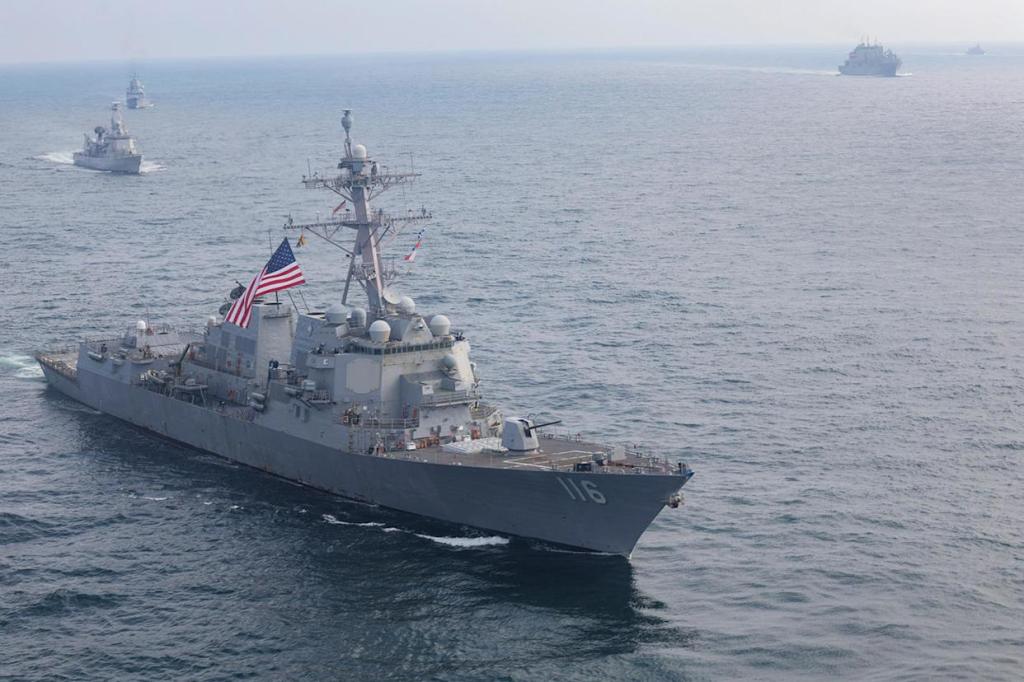
Meanwhile, the U.S. military has quietly ramped up its regional posture. A third Navy destroyer has entered the eastern Mediterranean, while a second aircraft carrier strike group is en route to the Arabian Sea. Though the Pentagon maintains that this force buildup is defensive, the deployment significantly strengthens America’s ability to assist Israel or launch its own attacks, should the President give the order.
The humanitarian toll of the conflict continues to climb. Iran has now suffered over 639 fatalities due to Israeli strikes, according to a prominent Iranian human rights organization. Among the dead are more than 250 civilians and 150 members of Iran’s security forces. Hospitals in Iran remain overwhelmed, with over 1,300 wounded and many still missing or unaccounted for.
On the Israeli side, Iran’s missile retaliation has killed 24 people, while dozens more are being treated for injuries, especially in Tel Aviv and surrounding regions. U.S.-built air defense systems, along with Israel’s Iron Dome, have intercepted a majority of incoming projectiles, but not all.
In response, Israel has intensified its bombardment, targeting Iranian military infrastructure across the country. According to the Israeli military, recent strikes destroyed eight Iranian attack helicopters, 40 missile-related facilities, and command centers believed to house key figures in Iran’s defense establishment.
At the same time, the U.S. Embassy in Tel Aviv has begun organizing evacuation flights for American citizens, underscoring Washington’s expectation that the situation could deteriorate further in the coming days.
Prime Minister Netanyahu has declared that Israel is steadily dismantling Iran’s nuclear weapons capability, moving “step by step” toward its long-stated goal. His forces have targeted not just facilities but also senior leadership figures within Iran’s military hierarchy, killing high-ranking commanders and nuclear scientists. One of the most significant targets hit was Mohammad Bagheri, Iran’s military Chief of Staff.
While Israeli officials continue to avoid overt declarations of regime change, the cumulative effect of their strikes suggests a broader strategy aimed at destabilizing Iran’s military and political leadership.
Trump Balances Pressure and Diplomacy
Within the Trump administration, there is growing confidence that Iran is under immense strain. Though no final decision has been made, Washington is clearly prepared for escalation. Trump has publicly blamed Iran for wasting diplomatic opportunities and warned that further intransigence would bring destruction. Yet, even amid the turmoil, the factions of the administration insist that diplomacy remains an option.
That meeting is now in doubt. Iran accuses the U.S. of enabling Israel’s attack, while American officials deny direct involvement. Nevertheless, the timing of Israel’s airstrikes—just days before the scheduled talks—has raised suspicions that diplomacy may have been a smokescreen to catch Iran off-guard all along and that the U.S. has been in on this from the start.
Senior U.S. diplomats maintain that the door to negotiations is still open, but the chances of a breakthrough are fading rapidly. Some analysts suggest that Israel’s operation has irreparably altered the diplomatic landscape, potentially forcing Iran to abandon talks altogether.
Allies such as Saudi Arabia and the Gulf states have condemned the strikes, fearing regional blowback and potential Iranian retaliation against their infrastructure.
Despite Iran’s weakened state, its ability to respond remains potent. In recent days, Iran has launched multiple waves of drones and missiles, some of which reached Israeli airspace. Tehran also retains the capacity to activate proxies like Hezbollah, the Houthis, and Shiite militias, posing serious risks to American bases, shipping lanes, and allied nations.
Compounding the uncertainty is the possibility that Israel’s current campaign may not be sufficient to permanently halt Iran’s nuclear ambitions. Deep underground sites like Fordow may survive aerial bombardment, while Iran’s scientific expertise and stockpiles of enriched uranium remain largely untouched. Should Israel fall short and the program resume, it may return stronger, more covert, and harder to target.
Analysis:
From Washington’s perspective, Trump faces a delicate balancing act. His administration’s posture must be strong enough to deter further Iranian escalation without crossing a line that leads to an uncontrollable regional war. The ambiguity in U.S. policy—supporting Israel while publicly distancing itself from military action—may serve short-term interests but could become unsustainable if the conflict widens.
This moment, then, marks a dangerous crossroads. The region teeters between a tenuous diplomatic window and a full-blown regional conflict involving the United States and other possible actors. The coming days will reveal whether brutal force or diplomacy will shape the next phase of the Middle East’s most dangerous rivalry.
As Israeli jets continue to pound targets across Iran, diplomatic backchannels have begun to stir in an attempt to de-escalate a war that many now fear could spiral beyond containment. Reports have come out that Iran has been sending urgent signals through Arab intermediaries to both Israel and the United States, expressing a willingness to resume nuclear negotiations—provided Washington does not join the attacks.
Iran’s leadership has conveyed messages through Gulf and European channels, emphasizing that de-escalation and a return to talks are possible if the U.S. refrains from active military involvement. Tehran has specifically urged Israel to keep the conflict contained, signaling that a broader war would be in neither side’s interest. These messages have been received by both Jerusalem and Washington, but have so far had little impact on Israel’s posture and relentless bombardment.
Israel Presses Its Advantage
Israeli Prime Minister Benjamin Netanyahu, buoyed by military momentum and minimal domestic resistance, has given no indication of slowing the campaign. Backed by President Trump, who has signaled approval of Israel’s actions and blamed Iran for failing to seize diplomatic opportunities earlier, Netanyahu has publicly stated that strikes will continue until Iran’s nuclear and ballistic missile capabilities are neutralized.
According to Israeli defense officials, the current operation is designed to last at least two weeks, with a focus on degrading Iran’s military leadership and nuclear infrastructure. Airstrikes have already claimed the lives of senior Iranian military leaders, including key figures in the air force, and inflicted limited damage on several nuclear-related sites. However, analysts caution that destroying Iran’s deeply buried facilities may require larger sustained attacks and possibly American bunker-busting munitions.
Despite these heavy strikes, Iran’s enrichment capabilities remain largely intact. There could at this point be reason to suspect that Israel’s larger goal underpinning this offensive would be to topple Iran’s adversarial government entirely. Netanyahu has not officially called for regime change, but Israeli officials acknowledge it could become a byproduct of prolonged military pressure.
Iran Tries to Balance Deterrence With Diplomacy
Iran has made it clear to Arab interlocutors that it will not cease retaliatory strikes unless Israel halts its attacks. Tehran continues to frame its military responses as necessary to preserve deterrence, even as it considers broader retaliation if diplomacy definitively collapses.
Iranian officials are reportedly betting that Israel lacks a sustainable exit strategy and will eventually have to accept a negotiated solution. They see Israel’s long-term military effectiveness as constrained without U.S. intervention—especially against hardened nuclear sites—and are gambling that Washington will prefer talks over escalation.
Gulf nations, including Saudi Arabia, Oman, and Qatar, are increasingly concerned by the conflict’s trajectory. These states have urged the U.S. to pressure Israel into halting its campaign, warning that the war could engulf the broader region. Their energy infrastructures, located within missile range, are at heightened risk, and any disruption could have profound consequences for global oil markets.
Israel’s calculations appear rooted in a belief that it has a narrow window of opportunity to significantly degrade Iran’s nuclear ambitions before Tehran becomes immune to airstrikes. The strikes aim to inflict maximum disruption now, rather than rely on uncertain diplomatic outcomes. However, Tehran’s resilience and its ability to rebuild or retaliate through proxy forces like Hezbollah, the Houthis, or Shiite militias in Iraq pose longer-term threats that no air campaign can fully eliminate.
Meanwhile, Iran’s strategy seems to be twofold: preserve national dignity by responding to Israeli aggression while keeping open the possibility of diplomatic re-entry. Tehran seeks to avoid direct confrontation with the U.S. military, which it views as potentially decisive, while hoping international pressure forces Israel to stand down.
Analysis:
Netanyahu’s audacious strikes may yield temporary advantage, but they carry enormous risks. Iran’s nuclear knowledge cannot be bombed out of existence. Even if facilities are damaged, the scientific and technical infrastructure remains. Any pause in enrichment today could be reversed tomorrow, and retaliation—whether direct or asymmetric—is a near certainty.
Israel’s persistent refusal to de-escalate its strikes—despite mounting international pressure, rising civilian casualties, and signs of Iranian willingness to resume nuclear talks—appears increasingly driven by a perception in Tel Aviv that the current moment presents a rare and fleeting strategic opportunity to deal a decisive blow to Iran’s regime itself.
While officials publicly frame the operation as necessary to dismantle Iran’s nuclear capabilities, the precision and focus of Israel’s missile campaign—targeting top military leaders, intelligence figures, and key command centers—suggest a broader aim. The nature of these strikes, coupled with Israeli leaders’ escalating rhetoric, implies that regime change, though not officially declared, is a tacit objective.
With Iran’s internal stability already eroded by economic turmoil and weakened regional influence, Israeli strategists may believe that pushing theocratic leadership past a tipping point is achievable now—especially before outside powers, including the U.S., impose constraints or push for diplomatic off-ramps. In this context, Israel’s urgency isn’t just about halting a nuclear program; it’s about rewriting the regional balance of power while the window remains open.
Iran’s current diplomatic overtures are less a sign of surrender than a calculated move to split Israel from the U.S. While Trump has embraced the Israeli operation rhetorically, the ambiguity around deeper U.S. involvement remains a strategic pivot point. Should American forces enter the fray, the region could plunge into a multi-theater war with devastating global implications.


 IRinFive