IRinFive

Category: Geopolitical News & Analysis

  • EU Prepares U.S. Economic Retaliatory Package as Trade Talks Intensify

    7/24 – International Trade News & Updates

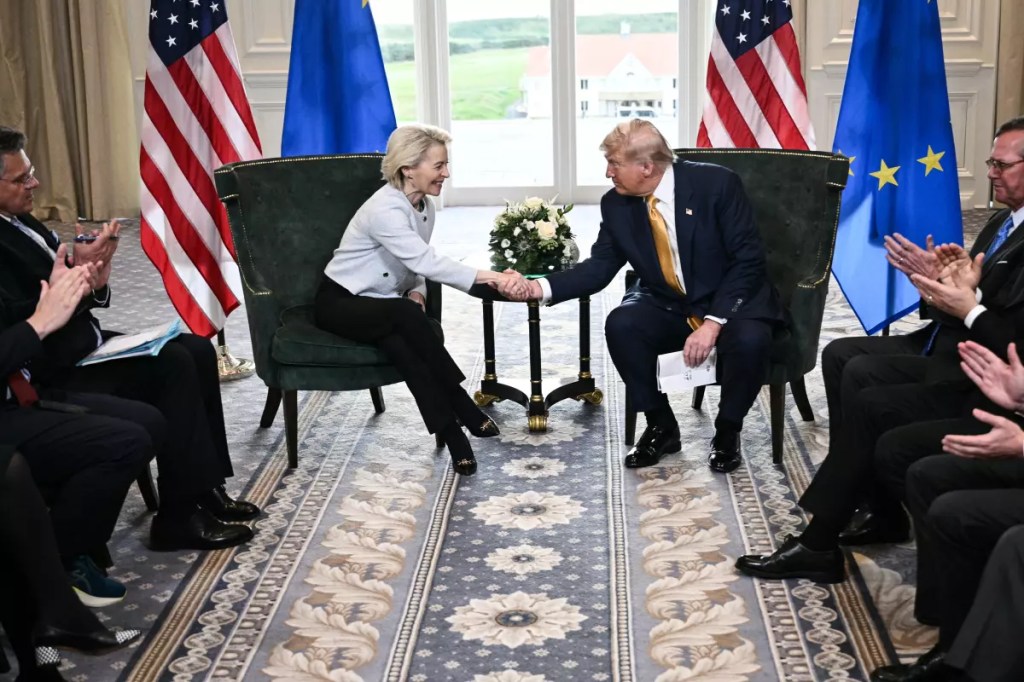
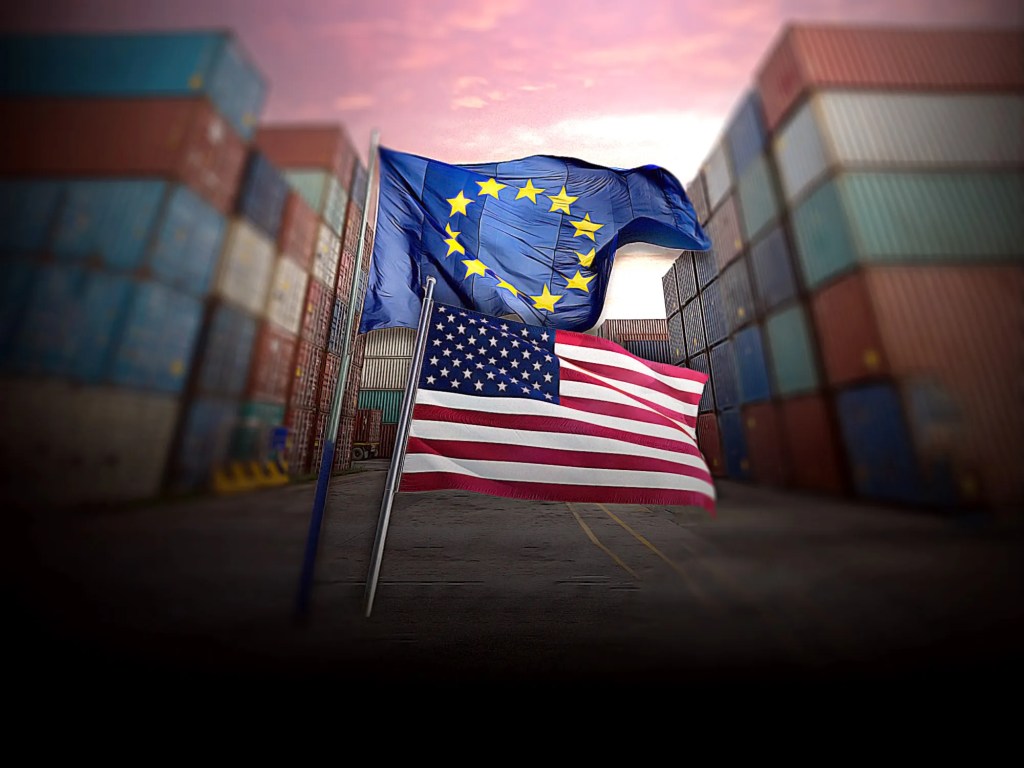
    As transatlantic trade tensions approach a new boiling point, the European Union is finalizing a massive retaliatory tariff package targeting U.S. imports, aimed at countering the sweeping tariffs proposed by President Donald Trump. With just days left before Trump’s self-imposed August 1 deadline for imposing up to 30% tariffs on all European goods, Brussels is preparing its second and most aggressive countermeasure yet—potentially affecting €72 billion worth of American exports.

    The EU’s upcoming tariff list builds on an earlier package worth €21 billion that’s set to go into effect on August 6. The second package—originally proposed at €95 billion—has been scaled back slightly to €72 billion following intense industry lobbying and internal negotiations. Still, it marks a significant escalation in the EU’s response to the U.S.’s increasingly unilateral trade policy.

    The European Commission has secured near-unanimous support from EU member states to enact a sweeping €93 billion retaliatory tariff package on U.S. goods if trade negotiations with the Trump administration collapse. While Hungary objected, the rest of the bloc endorsed a plan that targets a wide array of American exports—from soybeans to aircraft—with tariffs of up to 30 percent.

    These measures are not yet in effect and will remain suspended until at least August 7, allowing time for a deal to be finalized. EU officials say their priority remains a negotiated settlement, with reports indicating that progress is being made this week towards a deal potentially aligning with a 15 percent baseline tariff structure similar to the recent U.S.–Japan agreement.

    Despite the show of unity, there is growing discomfort within Europe’s corporate sectors, particularly among luxury, automotive, and cosmetics industries, which fear being caught in the crossfire. German automakers and French beauty brands, heavily reliant on U.S. consumers, have urged Brussels to avoid escalation, warning that retaliation could provoke even harsher American tariffs.

    Industrial goods make up the bulk of the proposed EU tariffs, with €66 billion in targeted imports, while agri-food and related products account for an additional €6 billion. U.S. aircraft products, passenger vehicles, and medical equipment remain the most heavily affected categories.

    However, under pressure from healthcare, technology, and agri-food sectors, EU negotiators have carved out several key exemptions from the tariff list. These include diagnostic chemicals, wheelchairs, surgical thread, and lab reagents. X-ray devices and other medical appliances have also been spared. In agriculture, soybean seeds—a critical import for European animal feed—have been removed from the list. On the industrial side, some data processing machines and semiconductor manufacturing equipment were withdrawn as well, reflecting concerns about Europe’s dependency on high-tech American imports.

    Nevertheless, leaders like German Chancellor Friedrich Merz and French President Emmanuel Macron especially, have indicated readiness to impose countermeasures if Washington proceeds with its 30 percent tariff threat. With European exports to the U.S. topping €532 billion annually, the economic stakes are high, and the coming days will prove pivotal in determining whether diplomacy or trade conflict prevails.

    French Push for a Firmer EU Stance

    Among EU capitals, Paris has taken the lead in urging the European Commission to hold firm in trade negotiations with Washington. French officials argue that the EU must not appear weak or too eager to cut a deal at any cost, especially as Trump threatens to triple existing tariffs from 10% to 30% on all European imports.

    In recent weeks, French officials have openly urged Brussels to prepare aggressive countermeasures and to show it is willing to “press the red button” if necessary. Trade Minister Laurent Saint-Martin and Industry Minister Marc Ferracci have called for activating instruments like the EU’s Anti-Coercion Instrument, which would allow the bloc to impose further sanctions targeting U.S. services and industries.

    Ferracci is also rallying support from European allies. He is scheduled to meet his German and Italian counterparts in Berlin and Paris to align strategies and discuss a coordinated response. Meanwhile, French President Emmanuel Macron is set to hold a crucial meeting with German Chancellor Friedrich Merz in Berlin, where the rift between French resilience and German pragmatism may come to a meeting point.

    While Germany advocates swift compromise to protect its export-heavy economy, France argues that premature concessions risk setting a dangerous precedent that weakens the EU’s negotiating position.

    EU Trade Commissioner Maroš Šefčovič recently returned from his fourth visit to Washington since February. While talks have intensified, EU diplomats were informed that no final deal had been reached. Behind closed doors, officials acknowledged that the negotiations remain delicate and incomplete.

    Despite the urgency, some EU member states remain hesitant to escalate the confrontation further. Countries with strong ties to the U.S. economy or limited capacity to withstand trade disruptions are wary of retaliatory escalation that could backfire economically.

    The Trump administration continues to signal that unless the EU accepts significant trade concessions, the 30% tariff hike will be imposed as planned. The U.S. has already rolled out similar tariffs against other partners and issued new deals with Japan, the Philippines, Indonesia, and Vietnam in recent weeks—some still lacking clear implementation details.

    Analysis:

    The current clash marks a dramatic and ongoing rupture in the U.S.–EU economic relationship, once grounded in mutual rules and multilateral trade norms. Since returning to office, President Trump has challenged that framework, preferring unilateralism, coercive tariffs, and transactional diplomacy over multilateralism.

    The EU, caught between safeguarding its industries and managing political optics, is now navigating a delicate balancing act. Brussels wants to avoid further escalation that could tip the continent into recession or damage vital supply chains, but also recognizes that constant concessions erode the bloc’s credibility.

    France’s call for firmness reflects growing concern that Europe’s economic sovereignty is under threat—not just from U.S. tariffs but from the political optics of caving under pressure. Germany, focused on economic stability, is reluctant to provoke a full-scale trade war but may be forced to shift if negotiations collapse.

    If Trump’s tariffs take effect on August 1, a new phase of economic conflict will begin—one where retaliatory cycles risk undermining the global trading system further. Should Brussels respond with its full retaliatory package, the impact would extend beyond aircraft and automobiles, spilling into broader sectors and even services.

  • U.S. Announces New Trade Deal with Japan

    7/23 – International Trade News & Analysis

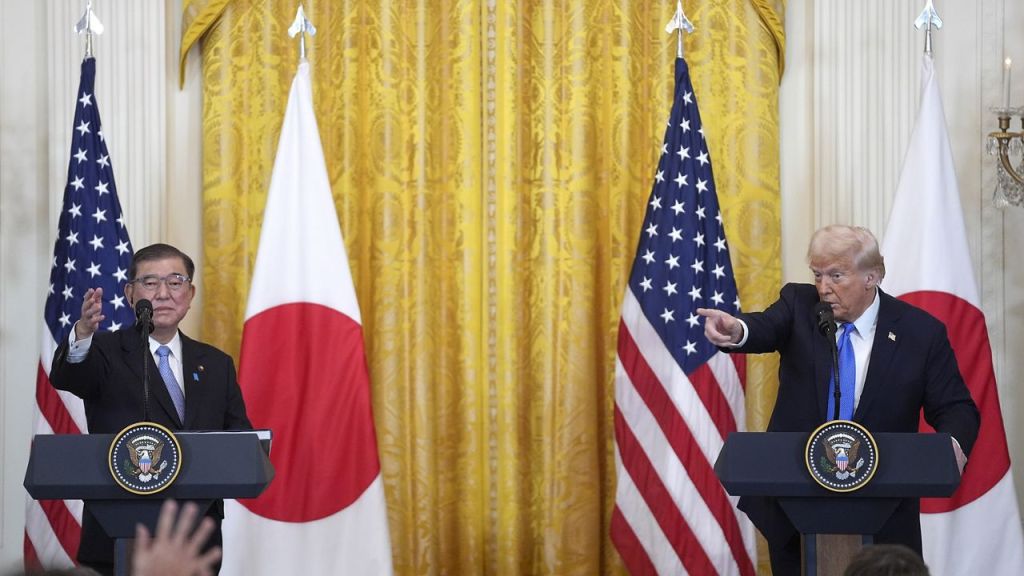
    President Donald Trump on Tuesday announced a high-stakes trade agreement with Japan, marking the largest bilateral trade pact of his administration thus far. The new U.S.–Japan agreement institutes a 15% across-the-board tariff on Japanese goods—down from the initially planned 25% that was to go into effect on August 1. In return, Japan has committed to investing $550 billion into the U.S. economy and easing long-standing barriers on American exports, particularly in sectors that have historically faced protectionism, such as agriculture and automobiles.

    While exact details remain murky, early briefings suggest the agreement will lower the tariff on Japanese vehicles—a key export for Japan—from 25% to 15%. That concession is significant given that autos account for over one-third of Japan’s $148 billion annual exports to the U.S.

    The announcement comes at a politically sensitive time for both leaders. In Japan, Prime Minister Shigeru Ishiba is grappling with fallout from his party’s recent loss of control in the upper house of Parliament. Though the Japanese government has not yet released an official statement detailing the agreement, Trade Minister Ryosei Akazawa met with Commerce Secretary Howard Lutnick earlier in the week and posted a celebratory message online, signaling that Tokyo is on board with the broad outlines of the deal.

    For Trump, the timing is part of a broader effort to wrap up a series of high-profile trade negotiations before his self-imposed August 1 deadline, when a host of punitive tariffs—ranging from 10% to 50%—are scheduled to take effect on more than 50 U.S. trading partners. With agreements now announced with Vietnam, the Philippines, Indonesia, and the United Kingdom, and talks set to resume with the European Union and China, the Japanese deal stands out as a major diplomatic win amid a fast-moving global tariff campaign.

    The announcement sparked a rally on Asian financial markets. Japan’s Nikkei index surged 2.6% to reach a one-year high, while automaker stocks like Toyota and Honda gained over 10% in value. Optimism also spilled over to South Korea’s auto sector amid speculation of a similar U.S. deal with Seoul.

    However, not all U.S. industries are pleased. The American Automotive Policy Council, representing giants like GM, Ford, and Stellantis, criticized the deal for creating tariff disparities. While Japanese vehicles would now face 15% import duties, cars made in Canada and Mexico—many of which contain high U.S. content—remain subject to a 25% tariff. U.S. auto executives argue that such inconsistency undermines domestic manufacturing and disadvantages American workers.

    Furthermore, concerns linger over the broader inflationary impact of Trump’s ongoing tariff policies. General Motors recently posted a 35% drop in quarterly net income, attributing the shortfall to the rising cost of imports. Critics warn that if companies pass tariff-related expenses onto consumers, both business investment and household purchasing power could take a hit.

    The Japan deal fits neatly into a pattern emerging from the Trump administration’s global trade policy playbook: issue a tariff threat, apply political pressure, and then secure investment and market-access concessions. Prior examples include a paused tariff escalation with China, a still-undetailed deal with Vietnam, and new tariff frameworks targeting Indonesia (19%) and the Philippines (19%).

    Analysis:

    The administration is presenting these moves as a blueprint to remake the U.S. economy into a manufacturing-led powerhouse. Treasury Secretary Scott Bessent reiterated this vision in a recent media appearance, arguing that if the U.S. boosts manufacturing while countries like China shift toward more consumption, the global economy will rebalance more sustainably.

    Yet details are sparse, and follow-through remains uneven. For instance, almost three weeks after Trump announced a trade framework with Vietnam, no formal documentation has been released by either government. Observers remain cautious, given Trump’s tendency to unveil bold headlines before negotiating fine print or receiving reciprocal confirmation from foreign capitals.

    Trump’s messaging around the Japan deal was heavy with political symbolism. He emphasized that America was “no longer being taken advantage of,” portraying the agreement as evidence of his ability to command respect and deliver economic wins.

    From a strategic perspective, the deal provides Trump with leverage in ongoing talks with other major trading partners, particularly the European Union and China. The EU has been threatened with 30% tariffs beginning August 1 if a new agreement is not reached. Meanwhile, a separate window for negotiations with China remains open until August 12, with existing tariffs already at 30%.

    The Trump administration is also eyeing additional joint ventures with Japan, including a proposed LNG pipeline in Alaska—a project long favored by the White House but previously met with skepticism from Tokyo. Japanese officials are now reportedly more receptive to such projects as part of a broader effort to stabilize relations and mitigate economic fallout from U.S. trade threats.

    Trump’s trade deal with Japan reflects a distinctive blend of brinkmanship, economic nationalism, and transactional diplomacy. Economically, the agreement may benefit sectors like U.S. agriculture and manufacturing in the short term. But domestically, the uneven treatment of trade partners like Canada, Mexico, and Japan could create friction within American industries. Internationally, the rush to finalize multiple trade deals before August 1 underscores a broader strategy: use tariff deadlines as leverage to extract favorable terms, even if long-term structural reforms remain elusive.

  • Possible Crisis in the Mediterranean

    7/18 – International News & Geopolitics Analysis

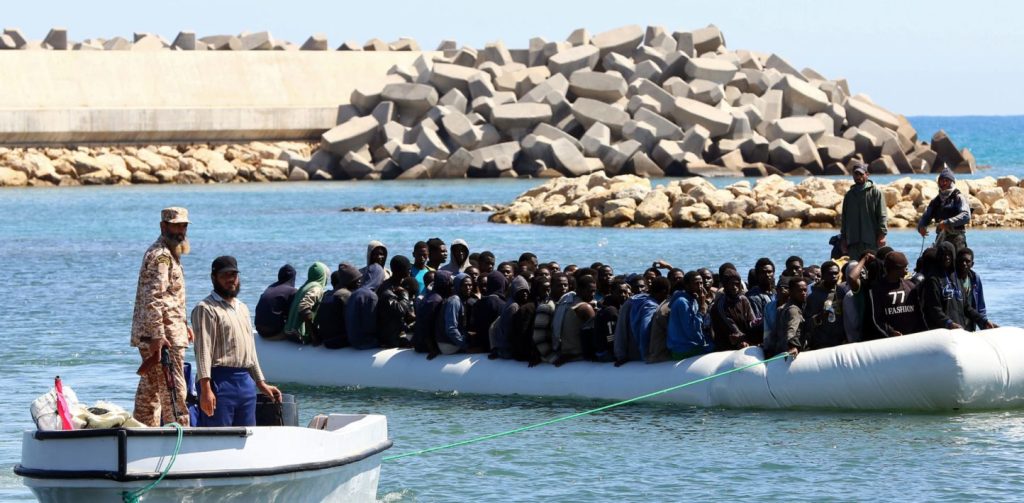
    While Europe remains fixated on Ukraine, a parallel crisis has been rapidly escalating in North Africa—threatening not only European border security but also reshaping the Mediterranean power balance. Libya, once a peripheral concern for many EU leaders, is now emerging as the next major geopolitical flashpoint driven by growing Russian influence, surging migrant flows, and stalled diplomatic efforts.

    Libya’s Resurgence as a Strategic Threat

    Over the past several months, Libya has seen a sharp increase in migrant departures, renewed regional rivalries, and heightened foreign involvement, all of which have brought the fractured North African state back into the realm of Europe’s security concerns.

    Italy and Greece have led the charge in sounding the alarm, warning NATO and EU partners that ignoring Libya could have devastating consequences. Both countries have recently faced major spikes in illegal arrivals from Libya, with Greece receiving nearly 9,000 migrants on the island of Crete since January—almost twice the total from the previous year. These arrivals have accelerated rapidly in recent weeks, prompting Athens to declare an emergency and suspend asylum processing for North African arrivals by sea.

    Meanwhile, Italy is growing increasingly uneasy about a more insidious development: the expanding footprint of Russian influence in eastern Libya. From military cooperation with warlord Khalifa Haftar to ambitions for a Mediterranean naval base in Tobruk, Moscow is quietly leveraging Libya as a new beachhead on NATO’s southern flank.

    Russia’s Expanding Role

    Russia’s strategy in Libya appears to be multifaceted and long-term. After losing its lease at Syria’s Tartus port following the fall of Asad’s regime in Damascus, Moscow is seeking alternative access to the Mediterranean. Libya, with its political fragmentation and proximity to Europe, presents an ideal alternative.

    Recent intelligence and diplomatic assessments suggest Russia is pushing for a permanent naval installation in Tobruk, a strategic port under Haftar’s control. Moreover, Moscow reportedly plans to install missile systems at a southern Libyan base in Sebha—raising concerns that Europe could be within striking range of Russian weaponry from African soil.

    Though most analysts agree that such missile deployments remain a longer-term risk, the immediate reality is that Russia already uses Libyan airfields and bases to support operations across the continent, especially through its rebranded Wagner Group paramilitary successor—the “Africa Corps.” These military platforms allow Russia to sustain logistics across the Sahel and influence arms trafficking, resource extraction, and proxy conflicts.

    Adding to European anxiety is the potential weaponization of migration. Southern European officials fear that Russia may replicate the strategy used along the EU’s eastern borders—where it helped funnel refugees through Belarus into Poland—as a form of hybrid warfare.

    European Diplomacy Flounders

    Despite rising tensions, recent EU efforts to assert influence in Libya have fallen flat. A visit by EU Migration Commissioner Magnus Brunner—accompanied by ministers from Italy, Greece, and Malta—ended in diplomatic humiliation when the delegation was declared unwelcome by Haftar’s forces in Benghazi and promptly expelled.

    The attempt, meant to open dialogue and explore cooperation, instead highlighted Europe’s eroding influence in the region. Officials had hoped to discuss the possibility of replicating Tunisia’s controversial 2023 deal—where the EU paid Tunisian authorities to curb migration. But few believe such an arrangement would work in Libya, where militia dominance, political fragmentation, and competing foreign agendas make coordination nearly impossible.

    At the same time, key European military players like France remain hesitant to engage meaningfully. Despite a recent meeting between Italian Prime Minister Giorgia Meloni and French President Emmanuel Macron, concrete collaboration has failed to materialize. Italian officials acknowledge that while Paris shares general concerns, it does not view Libya with the same urgency. France, still reeling from strategic setbacks in Mali and Niger, is reluctant to draw attention to its declining regional influence just as Russia steps into the vacuum.

    Greece is not only facing a migration emergency—it is also engaged in a simmering geopolitical struggle with Turkey over maritime claims in the Mediterranean. Ankara’s energy exploration deals with Libya’s western government claim maritime zones extending south of Crete—zones that Athens considers illegitimate under international law.

    To assert its position, Greece has deployed warships to patrol near Libyan waters, hoping to deter further encroachment and address the migrant flow. Yet, Greek defense officials remain skeptical about the effectiveness of military patrols, noting that such operations often encourage migrants to jump overboard and trigger rescue obligations. Nonetheless, the moves highlight growing fears that the Mediterranean is becoming a contested zone, where migration, energy, and foreign influence converge.

    Analysis:

    The escalating situation in Libya underscores a widening blind spot in Western security strategy. While Russia’s war in Ukraine continues to dominate headlines and military resources, its quieter push into Libya may be just as consequential. By combining military entrenchment, political manipulation, and migration control, Moscow is gaining leverage on the North African front the West seems reluctant to address.

    For Italy and Greece, the stakes are immediate. Migrant surges threaten social stability, naval tensions with Turkey are intensifying, and the fear of Russian missile deployments looms over the horizon. Yet their warnings are largely going unheeded. EU solidarity appears fragmented, NATO is disengaged, and the U.S. is distracted.

    With the increasing urgency and growing threat of migration, for Europe, allowing an adversarial power to weaponize this phenomenon and ignoring Libya now may come at a high cost later.

  • Trump Loses Patience with Russia, Sends New Weapons to Ukraine

    7/15 – Geopolitical News & Diplomacy Updates

    After months of mixed signals, suspended aid shipments, and cutting Russia the benefit of the doubt, President Donald Trump has taken his most assertive step yet in Ukraine’s defense: announcing a major U.S.-manufactured weapons package that will be financed by European NATO allies and transferred to Ukraine. The move marks a significant evolution in Trump’s approach to the war and introduces a powerful new economic threat—100% tariffs on Russian goods and secondary sanctions on any country continuing to do business with Moscow unless a peace deal is reached within 50 days.

    Only months ago, Trump had entertained the idea of a reset in U.S.-Russia relations, speaking enthusiastically about the “great benefits” of a positive relationship with the Kremlin. But that optimism has eroded in the face of Putin’s escalating attacks and disregard for diplomatic overtures. After repeated delays and attempts to coax Russia into talks, Trump has now adopted a more assertive tone, describing his administration as “very unhappy” with Moscow and labeling the war “Biden’s conflict,” which he now seeks to resolve through intensified pressure and European coordination.

    The turning point came as Trump acknowledged that efforts to negotiate directly with Russia had stalled. Increasing Russian drone and missile strikes on Ukrainian cities and infrastructure only hardened his stance. Observers within both the Republican and Democratic ranks had pushed for tougher secondary sanctions for months, but until now Trump had withheld his support. His change of heart has not only unlocked that bipartisan effort but also may reshape the nature of transatlantic defense cooperation.

    NATO’s Wallet, America’s Arms

    Trump’s solution is characteristically transactional: NATO allies will finance and coordinate the delivery of American-made weapons, including Patriot air defense systems, missiles, and ammunition. The Patriots—urgently requested by Kyiv—could be delivered quickly through a swap system in which existing European-owned Patriots are sent to Ukraine while backfilled with new U.S.-manufactured units.

    The deal marks the first time the U.S. has formally committed to selling weapons to Europe for the explicit purpose of rerouting them to Ukraine, rather than donating them directly. It’s a move that aligns with Trump’s “America First” philosophy, allowing the U.S. defense industry to profit from the conflict while shifting the financial burden to European partners. Key contributors include Germany, the Netherlands, the UK, Canada, Sweden, Finland, Denmark, and Norway.

    For Trump, the political calculus is twofold: support Ukraine without using U.S. taxpayer funds and demonstrate to his base that they are not paying for a war that is vastly unpopular among his MAGA base. This reconfiguration helps Trump claim a win on foreign policy, both economically and diplomatically, while appealing to NATO hardliners and congressional hawks who had grown weary of his previous reluctance.

    Central to the new strategy is a 50-day grace period. If Moscow does not agree to a peace settlement within that window, the U.S. will impose punitive economic measures, including 100% tariffs on Russian imports and secondary sanctions on any country purchasing Russian oil or goods. Although Russian-American trade is modest, the real impact would come from targeting countries like China, India, and Brazil—nations that continue to buy discounted Russian energy and sustain Moscow’s wartime economy.

    A bipartisan bill co-sponsored by 85 senators aims to give Trump the authority to impose up to 500% tariffs on any entity aiding Russia. Though this legislation has languished while waiting for Trump’s approval, his recent comments suggest he may now back it, triggering a major escalation in economic warfare.

    Trump’s announcement also comes at a critical juncture in the military dynamics of the war. Russia has intensified its missile and drone bombardments, seemingly attempting to deplete Ukraine’s air defenses ahead of a possible late summer offensive. In this context, the delivery timeline and volume of promised Patriot systems are crucial.

    The Pentagon has already reversed three suspensions of aid shipments to Ukraine in recent months. Most recently, air defense munitions were halted while sitting in Poland, only to be released after Trump’s direct intervention. U.S. defense production—particularly of PAC-3 interceptors for Patriots—is currently capped at about 500 annually, with plans to expand to 650 by 2027. Meanwhile, European production remains limited, and demand is high globally.

    To expedite deliveries, Trump is encouraging European nations to send Patriots from existing inventories under the assurance that U.S. backfills will follow. However, if allies wait for new systems before acting, the reinforcements may come too late to blunt Russia’s offensive momentum.

    Another option is fast-tracking Ukraine to the front of the manufacturing queue—a controversial move that would delay deliveries to other U.S. allies. Trump has not confirmed whether he is prepared to make such a prioritization.

    Beyond Patriots, there are suggestions Ukraine may receive long-range strike capabilities, such as Tomahawk or JASSM-ER missiles, potentially giving it the ability to target deep inside Russia. Yet these weapons are in limited supply, and their provision would risk further escalation.

    In Kyiv, Trump’s announcement has been met with a mix of hope and caution. While the resumption of weapons support was widely welcomed, concerns remain about the 50-day grace period. Ukrainian lawmakers and officials warn that Putin could use the delay to intensify attacks and solidify positions.

    Trump has not clarified the full extent of future support, nor addressed scenarios in which Russia escalates further. The ambiguity leaves Ukraine exposed to both political and military uncertainty. Still, some Ukrainian officials credit Europe’s behind-the-scenes diplomacy and American congressional pressure for pushing Trump toward a firmer stance.

    Putin has thus far shown no intention of backing down. His goals—annexing Ukrainian territory and preventing Ukraine from aligning with NATO—remain unchanged. Russia has ramped up its missile production, with help from North Korea, and continues to press the frontlines with relentless attacks.

    Whether Trump’s ultimatum changes Putin’s calculus is uncertain. The 50-day deadline, combined with the potential economic shock of secondary sanctions, creates a new variable. But past behavior suggests Putin may try to wait out the clock, betting that Trump’s resolve will falter or that divisions among NATO allies will slow implementation.

  • Trump’s Trade Battle in a Larger Cold War with China

    7/14 – Geopolitical Analysis Piece – Part 2

    The Cold War analogy is no longer metaphorical. Much like the U.S. and Soviet Union once fought via proxies across the globe, today’s U.S.–China economic conflict is being waged through trade partners caught in the crossfire. After initial rounds of tariff warfare and diplomatic sparring, the Trump administration is now targeting countries like Vietnam, Thailand, and Mexico—not for what they do independently, but for how they intersect with China’s export machine.

    On July 7, President Trump sent formal notices to Japan, South Korea, and over a dozen other nations, extending the deadline for bilateral trade talks to August 1. Alongside that extension came tariff warnings: 25% for Japan and South Korea, 36% for Cambodia, and 40% for Myanmar and Laos. The rationale? To prevent Chinese goods from reaching the U.S. through third-party “transshipment.” While China wasn’t explicitly named, no one missed the implication. “Any goods transshipped from elsewhere,” the letter warned, would be penalized under the new regime.

    This approach is reshaping global trade incentives. To gain favor with the U.S.—still the world’s largest consumer market—nations must curtail Chinese participation in their supply chains. That includes allowing U.S. regulators access to Chinese-owned factories and submitting to scrutiny of procurement practices. Britain, for example, secured favorable treatment for aluminum and pharmaceuticals in May, but only by pledging to “secure” its supply chains against Chinese influence.

    This strategic use of bilateral deals to weaken Beijing’s global trade networks is no longer just about direct tariffs—it’s about conditional alliances designed to isolate China without saying so explicitly.

    Behind this pressure campaign is a growing concern in Washington that Chinese exports are being relabelled or disguised to evade U.S. tariffs Products may be minimally altered, repackaged, or simply rerouted through friendlier ports. Vietnamese sweaters, for example, may contain Chinese fabrics. Thai auto parts may include Chinese components. The Trump administration fears such “substantially transformed” goods are merely Chinese products in disguise.

    For countries like Vietnam, this could be economically devastating. Since Trump’s initial trade war, Vietnam’s dependence on Chinese inputs has surged. According to Natixis, China contributed just 6% of the value of Vietnam’s U.S.-bound exports in 2017. By 2022, that figure was 16%. Manufacturers fear they will be punished for their own success in integrating with Chinese supply chains.

    Mineral Wars

    Nowhere is this rerouting strategy more evident than in the trade of critical minerals. When Beijing restricted exports of gallium, germanium, and antimony in late 2023—metals vital for electronics, semiconductors, and military tech—it sparked a quiet but intense supply chain scramble. By mid-2024, U.S. imports of antimony had rebounded to pre-ban levels—only now they were arriving via Thailand and Mexico.

    Shipping data reveals the contours of this workaround. Thai Unipet Industries, a subsidiary of Chinese antimony giant Youngsun Chemicals, sent over 3,300 tons of antimony products to the U.S. between December and May—nearly 27 times what it shipped during the same period a year earlier. Mexico, with only one operational smelter, also became a top exporter. Industry experts confirmed that while paperwork pointed to Thailand and Mexico, the materials still originated in China.

    Some shipments were even relabelled as “iron,” “zinc,” or “art supplies” to avoid detection.

    While Chinese authorities have officially launched a crackdown on such smuggling and re-export tactics, enforcement remains patchy. The export controls themselves are clear, but extraterritorial application—especially for goods routed through foreign intermediaries—has proven difficult. Chinese sellers who fail to vet their end users could face fines, bans, or even prison sentences under Chinese law, but prosecution is rare.

    China’s Counterpressure

    Beijing has taken note of Washington’s indirect pressure. “China will not accept it and will take resolute countermeasures,” the Ministry of Commerce declared in response to the U.S.–Vietnam deal. “Countries must remain on the right side of history.”

    At the core of China’s frustration is the perception that Washington is not just targeting Chinese exports, t’s attempting to dismantle China’s ability to trade with the world by proxy. Xi Jinping’s Cold War strategy had assumed time was on China’s side. But the new American tactic—economic encirclement by way of others—threatens to shift the playing field.

    For now, Xi has responded with patience, not escalation. His administration continues to court the Global South, reform Belt and Road lending, and lure Western influencers to spread curated images of Chinese modernity. But behind the steady hand lies strategic concern. If too many countries begin restricting Chinese inputs under U.S. pressure, Beijing’s position as the world’s factory, and its technological ambitions could suffer.

    Analysis:

    Trump’s trade strategy has evolved from brute-force tariffs to strategic realignment. The U.S. is now using trade agreements, indirect pressure, and regulatory ambiguity to rewire global supply chains. But this tactic comes with costs: rising prices, monitoring enforcement, and growing resentment among countries forced to choose between America’s market power and China’s manufacturing muscle.

    The rerouting of minerals and manufactured goods suggests that trade is proving more fluid than Washington expected. No matter how many letters Trump sends or how many thresholds he defines, economic incentives continue to shape global behavior. Countries will seek workarounds and smugglers will find cracks.

    The modern Cold War between China and the U.S. has reached the proxy conflict stage and is being fought economically across supply chains, legal frameworks, and shipping lanes.

  • Xi Jinping’s Cold War Playbook: China’s Strategic War of Patience

    7/13 – Geopolitical Analysis Piece – Part 1

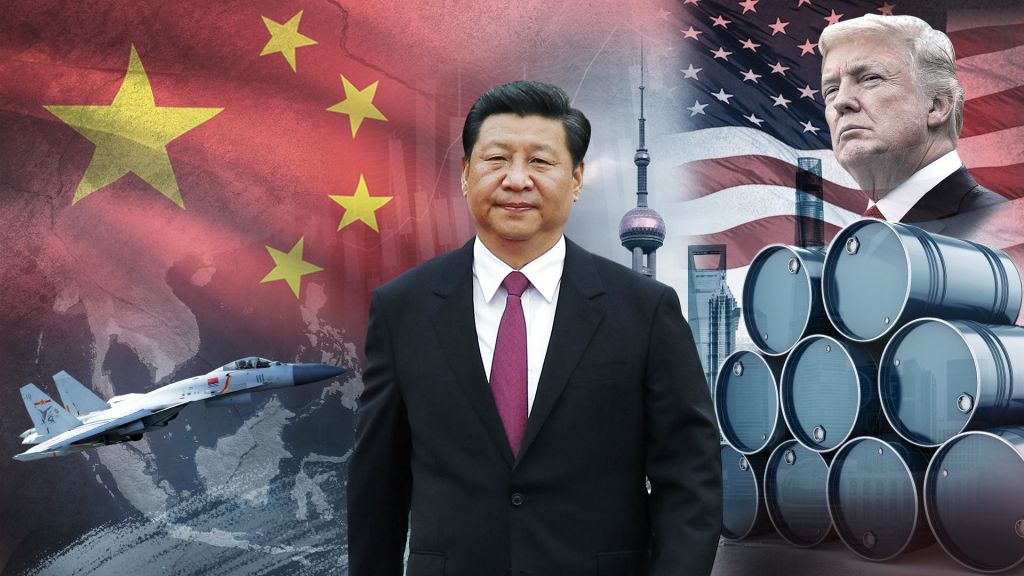
    As President Donald Trump intensifies his economic offensive against China through tariffs, export controls, and diplomatic pressure, Chinese leader Xi Jinping seems to be playing a much longer and more calculated game. For Xi, this is not simply a trade war—it is a full-spectrum Cold War, informed by decades of internal study, historical caution, and strategic design.

    Where Trump sees leverage in economic pain, Xi sees opportunity in endurance. His goal isn’t to win every battle. It is to survive long enough to outlast the United States and win the war by enduring past their decline.

    According to advisers close to the Chinese leadership, Xi is pursuing what he calls a “strategic stalemate”—a scenario in which China doesn’t have to decisively defeat the U.S. but can neutralize American pressure and buy time to catch up economically, technologically, and militarily.

    Learning from the Soviet Collapse

    This doctrine of “strategic patience” has roots in both Chinese revolutionary history and Cold War studies. Xi and his top advisors have spent years studying the mistakes of the Soviet Union. From their perspective, Moscow lost the original Cold War because it exhausted its economy in an arms race, failed to diversify its industries, and allowed ideological disarray to fracture the state from within.

    Xi’s solution: build resilience, avoid direct confrontation, and outlast American pressure. The Chinese leadership increasingly sees this not as a temporary spat, but as a generational conflict.

    The lessons Xi has drawn from Soviet failure are deeply embedded in Beijing’s modern governance. The first is economic: whereas the Soviets focused narrowly on heavy industry and military production, Xi is determined to fortify China’s capacity to produce everything—from microchips to medicine—so that the country cannot be easily crippled by sanctions or technological decoupling.

    The second is geopolitical: where the USSR ended up isolated in a rigid bloc, China is promoting “multialignment”—building diverse partnerships across Asia, Africa, and Latin America to weaken U.S. alliances and resist containment. This is central to the reimagined Belt and Road Initiative, which Xi has recalibrated to make Chinese lending more sustainable and appealing, particularly to Global South nations wary of Western finance.

    Third, Xi is deliberately avoiding a costly arms race. Though China’s defense spending has risen steadily at around 7.2% annually, it remains modest relative to GDP—suggesting a desire to modernize, not overwhelm. Quietly, however, China is expanding its military influence in the Arctic, Pacific, and cyberspace.

    And finally, Xi’s most enduring lesson from the Soviet Union’s fall is ideological control. In a 2013 speech to senior officials, Xi pointed to Gorbachev’s embrace of openness as a fatal mistake. “In the ideological domain, competition is fierce,” he warned, and made clear that no challenges to the Communist Party’s authority would be tolerated. Since then, the centralization of power has only intensified.

    Trump’s Trade War

    The 2018–2019 trade war under Trump’s first term served as the inflection point. Trump’s aggressive use of tariffs, national security justifications, and rhetoric about “making America great again” convinced Xi that the U.S. was not interested in partnership, but in preserving dominance at any cost.

    China’s response came in the form of “dual circulation,” a major economic pivot announced in 2020. The idea: reduce dependency on foreign supply chains and insulate China’s economy while continuing to flood global markets with Chinese goods. It was Cold War logic cloaked in globalization.

    Tensions further escalated under President Biden, whose policies largely continued Trump’s approach. In response, Xi doubled down—expanding ties with Russia, pushing multilateral diplomacy, and deepening China’s presence in emerging markets. Just before the Russian invasion of Ukraine in 2022, China and Russia declared a “no limits” partnership—another Cold War-era signal of alignment.

    But unlike the USSR, China is resisting full isolation. Even as Xi prepares for economic decoupling from the West, he is careful to remain plugged into the global system. Beijing has ramped up charm offensives in Africa, the Middle East, and Southeast Asia while avoiding direct conflict with the EU or U.S.-aligned economies like Japan and South Korea.

    While Trump dismantles institutions like the U.S. foreign aid agency and slashes international broadcasting, China is filling the vacuum. Beijing is now sponsoring trips for Western social media influencers and pushing curated images of Chinese modernity.

    One of the most viral examples came earlier this year, when American content creator IShowSpeed spent 10 days in China. His videos, showcasing high-speed trains, electric cars, and vibrant urban life, garnered hundreds of millions of views and cast China in a positive light—an unexpected but undeniable soft-power win for Beijing.

    Meanwhile, Xi is trying to restore regular “dialogues” with Washington, even as the Trump administration views them as pointless. For Beijing, these talks are not about immediate breakthroughs, but about delaying escalation and maintaining a controlled tempo.

    The Risks of Protracted Struggle

    Despite its methodical approach, China’s long game is not without risks. Domestically, the tightening of political control and state-centered economic policies are dampening private enterprise and innovation. Deflationary trends, youth unemployment, and a fragile property sector have exposed cracks in the Chinese economy. Xi’s efforts to “produce everything” are fueling overcapacity and inefficiencies.

    Yet to Xi, these are manageable sacrifices. The greater aim—surpassing the U.S. in critical technologies, solidifying the party’s control, and reshaping global institutions—is worth the short-term pain.

    Analysis:

    What we are witnessing is a Cold War reimagined. Trump may be throwing punches with tariffs and sanctions, but Xi is waging a war of attrition, drawing lessons from past empires and betting on long-term U.S. exhaustion.

    This asymmetry may explain why U.S. pressure campaigns often yield little in the way of behavioral change. While the Trump administration pivots rapidly—from aggressive decoupling to exploratory trade deals—Xi’s approach is slow, deliberate, and systematized. He is not seeking to defeat America outright—but to erode its dominance over time.

  • Framework for U.S. Negotiation with Iran

    7/11 – Proposed Policy & Diplomatic Analysis Piece

    U.S. diplomats will soon meet their Iranian counterparts to discuss the ensuing Middle Eastern order. U.S. diplomats must be clear eyed regarding the state of Iran’s military, economy, and strategic position, and recognize that now is the time to deliver a final ultimatum to Iran. The Iranian regime is arguably in its weakest position since 1979, and the U.S. should capitalize on this weakness to ensure Iran never poses a serious threat to allies in the region and abroad. The U.S. should use both sticks and carrots in these diplomatic talks, but the sticks should be non-negotiable. Below is a proposed ultimatum prepared by one of our guest associate writers at IRinFive, outlining what they believe is a realistic proposal U.S. diplomats should follow ahead of talks with their Iranian counterparts.

    To the Leadership of the Islamic Republic of Iran:

    The United States, in direct coordination with our allies and partners, offers you a clear and final path forward. This is a choice between isolation and direct confrontation, or integration and prosperity.

    This ultimatum includes four non-negotiable conditions:

    1) Total relinquishment of your nuclear weapons program including highly enriched Uranium, advanced centrifuges, and weaponization efforts. This will be verifiably checked by the IAEA, and there will be zero ambiguity. The U.S. and its allies will not tolerate the pursuit of nuclear weapons.

    2) Cut all ties with regional proxies. This means an end to training, arming, and funding proxies across the region including Hamas, Hezbollah, the Houthis, and Shiite militias in Iraq and Syria. These groups destabilize the Middle East, and fuel conflict in the region, it is time that this stops for good.

    3) Immediately cease all military, industrial, and technological support for Russia’s invasion of Ukraine.

    4) Stop the development and deployment of your long range ballistic missile program. This program will be of no use if you abide by these four conditions, and its existence only causes chaos and uncertainty throughout the region.

    In return, if the Islamic Republic of Iran abides by these four non-negotiables, the United States and its allies will offer full sanctions relief, and access to a civilian nuclear program under strict international safeguards, without the ability to further domestically enrich uranium. The U.S. will provide a security guarantee that ensures Israel will not strike you if you fully comply with the four non-negotiables. Lastly, your people and government will have a pathway to join the global economy, which would give them and your government the ability to build a future of prosperity, hope, and success.

    Appendix:

    Critics may say this ultimatum is not realistic and Iran will never agree to these conditions, but given the position it is in right now, they may well not have much of a choice. Israel has destroyed many of Iran’s advanced air defenses, leaving Israel with full air superiority over the country with little to no threats to its aircraft. Israel has also taken out many of the Iranian senior military officers and scientists, demonstrating a high degree of infiltration in Iran’s government.

    China and Russia, Iran’s biggest international backers have shown zero interest in supporting Iran with additional military capabilities. Iran’s economy has long been devastated by sanctions which have triggered extremely high inflation and unemployment, leading to widespread poverty, and growing public discontent. Lastly Iran’s regional proxies like Hamas, Hezbollah, and the Houthis were nowhere to be seen during Israel’s 12 day war against Iran. Israel has destroyed much of Hamas’ military capabilities, and leaders, with a devastating air and ground campaign. Israel also dismantled and destroyed Hezbollah as a capable fighting force, with an overwhelming display of technological wizardry, taking out thousands of Hezbollah fighters with exploding pagers and walkie talkies, while simultaneously neutralizing Hezbollah’s key leadership including the replacements of deceased leaders. Israel also heavily degraded Hezbollah’s rocket force with a powerful air and ground campaign. Syria under Assad, was used as a conduit to supply weapons from Iran to other proxies in the region. The destruction of Hezbollah in Lebanon meant that it could not support the Assad regime in Syria which was actively being overthrown. With the fall of Assad, Syria, led by a new leader, is looking to shore up relations with Israel and the West, and Iran can no longer send weapons through Syria. This paints a sobering picture of Iran’s regional standing at this time.

    American diplomats must recognize the strategic position the U.S. is currently in vis-à-vis Iran, and demand that failure to meet these conditions will result in a calibrated, and united response from the United States and its allies, with all options on the table. The regional balance of power has changed and now reflects a balance favoring the U.S. and its regional allies. The days of ambiguity are over. It is time this destructive regime changes its ways, or they will face a humiliating and destructive defeat. The choice is theirs.

    – F.J.

  • Trump’s Reversal on Ukraine Weapon Shipments

    7/10 – International News & Foreign Policy Analysis

    In a reversal that has once again highlighted the unpredictability of U.S. foreign policy under President Donald Trump, military aid to Ukraine is back on—just days after being abruptly frozen. The decision, announced during a high-profile White House dinner with Israeli Prime Minister Benjamin Netanyahu earlier this week, appears to mark a partial course correction after mounting criticism and strategic confusion within the administration and among allies.

    “We’re going to send some more weapons. We have to. They have to be able to defend themselves,” Trump told reporters. “They’re getting hit very hard now.” The statement came as Ukraine endured one of the most intense waves of missile and drone attacks in months, with Russian forces pounding cities and military installations in a relentless aerial offensive.

    Within hours, the Pentagon confirmed the move, saying it would deliver “additional defensive weapons” to Ukraine. Although the Department of Defense withheld specifics, the announcement followed Ukrainian President Volodymyr Zelensky’s urgent appeals to Washington for more Patriot missile systems and other air defense assets.

    The Sudden Freeze

    The resumption of aid follows a bewildering sequence of policy shifts that left Kyiv and Europe scrambling for answers. Earlier this month, the U.S. had quietly paused weapons shipments to Ukraine, triggering alarm among NATO allies and prompting speculation about the direction of America’s military support. The move, championed by Defense Secretary Pete Hegseth, was presented as a logistical review aimed at safeguarding U.S. weapons stockpiles. “We can’t give weapons to everybody all around the world,” said Pentagon spokesperson Sean Parnell on July 2.

    But that explanation raised eyebrows. The weapons halted were primarily sourced from commercial production lines, not active-duty U.S. military reserves. Moreover, there was no corresponding pause in arms deliveries to Israel, which recently used up significant air-defense assets during its 12-day war with Iran. Critics noted the clear double standard that seems to follow American foreign policy when it comes to Israel.

    In a call with Zelensky on July 4, the president expressed surprise at the halt in deliveries and vowed to address it. Just three days later, he did—personally overriding the Pentagon and instructing that shipments resume.

    Between Deal-Making and Deterrence

    The president’s about-face is as revealing as it is consequential. Since returning to office in January, Trump has walked a diplomatic tightrope on Ukraine—publicly criticizing Russian aggression while privately mulling over potential negotiations with Vladimir Putin. Until now, his administration had made no new commitments to Kyiv. The aid packages currently reaching Ukraine were approved under President Biden, with a scheduled tapering set through 2028.

    While Trump’s decision to restart deliveries was met with cautious relief in Kyiv and Brussels, officials and analysts remain wary. The U-turn is widely viewed not as a full-throated recommitment to Ukraine’s defense, but rather a move to avoid the optics of collapse. Allowing Ukraine to fall under his watch would be a catastrophic geopolitical blow—one Trump knows could mirror the political fallout Biden faced after Afghanistan.

    The Pentagon’s Dilemma

    The reversal also underscores growing tensions within the U.S. defense establishment. While senior Pentagon officials have been advocating for a recalibration of priorities—shifting attention and resources toward China and the Indo-Pacific—Trump’s political calculus continues to dominate decision-making. Defense Secretary Hegseth, seated beside Trump during the Netanyahu dinner, nodded along as the president announced the resumption of aid, despite having signed off on the halt just days earlier.

    For some, the moment was emblematic of Trump’s personalized approach to foreign policy. “America First,” under Trump, is not necessarily a doctrine—but rather a day-to-day improvisation. The civilian leadership at the Pentagon found itself publicly undermined, a stark reminder that strategic planning can be swept aside by presidential whim.

    Ukraine’s vulnerability is growing. With cities under daily bombardment and ground forces stretched thin, the need for consistent military support has never been greater. Zelensky’s recent conversation with Trump reportedly included talks on joint defense production, long-term procurement, and investments to bolster Ukraine’s ability to “defend the sky.”

    Germany, too, has stepped in, discussing the possibility of procuring Patriot systems for Ukraine to help bridge the gap. Yet the signal from Washington remains inconsistent.

    Trump’s irritation with Putin was notable. “I’m disappointed, frankly, that President Putin hasn’t stopped,” he said—marking a shift from past attempts to flatter or entice the Russian leader. The tone suggests a realization that Putin may be exploiting Trump’s transactional instincts without offering anything meaningful in return.

    But whether that moment of clarity translates into sustained support remains unclear. Trump has proven, time and again, that his foreign policy is shaped less by ideology than by short-term political image management.

    Analysis:

    Trump’s decision to resume arms shipments to Ukraine is best understood as a tactical adjustment rather than a strategic pivot. It was driven by political optics, not a newly discovered commitment to liberal democracy or collective security. It’s a patch, not a plan.

    For Ukraine, the resumed flow of weapons will provide temporary relief. But without long-term funding, clear commitments, or a coherent policy framework from Washington, Kyiv remains dangerously exposed.

    The reality is that Trump’s zig-zagging on Ukraine—suspending aid one week, resuming it the next—undermines the very deterrence it seeks to enforce. Russia is watching. So is China. So are America’s allies in NATO.

    For now, Ukraine survives. But their survival is still far, far from any metric of strategic victory. And Washington’s ambivalence is becoming part of the problem.

  • New Chapter in UK-France Relations

    7/8 – International News & Diplomacy Analysis

    When Keir Starmer met Donald Trump at the White House earlier this year, the British prime minister handed over an invitation from King Charles for a state visit to the United Kingdom. Yet, the first foreign leader to arrive at Windsor Castle won’t be the U.S. president —it will be French President Emmanuel Macron. In a three-day affair rich with pageantry and political symbolism, Macron becomes the first to receive the full state welcome from the British monarch in 2025.

    His visit marks a significant milestone in post-Brexit diplomacy: a formal chilling in cross-Channel relations that had, until recently, grown cold with mutual distrust, geopolitical shocks, and public squabbles.

    In the aftermath of the Brexit vote in 2016, relations between London and Paris hit modern historic lows. British officials viewed Macron as a punitive Europhile eager to make an example of the UK, while France seethed over Britain’s perceived betrayal in the AUKUS submarine pact, which torpedoed a French-Australian deal in favor of Anglo-American defense cooperation.

    Yet by 2023, the tide began to shift. Diplomatic meetings resumed after a five-year hiatus, culminating in a glittering state dinner in Versailles. Macron touted proclamations of their “convergence of destinies,” and King Charles delivered a bilingual speech, signaling goodwill and renewal. This week’s reciprocal gesture—the king hosting Macron at Windsor Castle and Macron addressing Parliament—cements that progress.

    A Strategic Realignment

    At the core of the renewed alliance is a shared strategic agenda. As Europe’s only two nuclear powers and permanent UN Security Council members, France and Britain are reigniting military cooperation. The 15-year-old Lancaster House Treaties, which bind the two countries on mutual defense commitments, will be updated to include a broader European security dimension. Both sides are exploring tighter nuclear coordination—even though France’s deterrent is independent and Britain’s is tied to NATO.

    Macron is also advocating for a stronger joint European posture on Arctic and Baltic security, wary of instability near Russia’s borders. As part of NATO’s forward presence, the UK and France already collaborate in Estonia. Macron and Starmer now want to build on that with increased coordination on Ukraine.

    Macron’s Message to Westminster

    On the ceremonial first day of his visit, Macron became the first European leader since Brexit to address both Houses of the British Parliament. Speaking from the historic Westminster Hall, he called for a new era of Anglo-French leadership in Europe’s defense. “Our two countries have a special responsibility for the security of the continent,” Macron declared, invoking the legacy of Winston Churchill as he appealed for unity in the face of “destabilizing powers” that defy international norms.

    He made an impassioned case for greater European self-reliance, warning against the dangers of overdependence on both the United States and China. Though careful to distinguish between the two, Macron’s comments on “derisking” Europe’s strategic dependencies were unmistakably aimed at recalibrating the continent’s balance of power. His call for “strategic autonomy”— a longtime pillar of his foreign policy—was made not from Brussels or Berlin, but from London, symbolically inviting Britain to reclaim a role in shaping continental security despite its departure from the EU.

    Macron also used the platform to reiterate his support for the UK-French-led “coalition of the willing” to guarantee any potential ceasefire in Ukraine. Labeling it a “signal that Europeans will never abandon Ukraine,” he underscored the urgency of unity in the face of an increasingly fragile international order.

    On the Middle East, he urged European leaders to support an unconditional ceasefire in Gaza and openly backed the recognition of a Palestinian state as “the only path to peace”—a stance that places him ahead of the cautious UK position.

    Addressing one of Britain’s most politically charged issues, Macron pledged increased cooperation to crack down on illegal migration across the Channel, condemning human-smuggling networks as exploitative and inhumane.

    Cracks in the Bromance

    Despite the warmth of official statements and royal ceremony, points of contention remain. One such issue is migration. British officials are increasingly exasperated by France’s handling of migrants departing from its northern coast. Despite new bilateral rules permitting French police to intervene in shallow waters, migrant crossings reached record levels in the first half of 2025. Photos of French officers observing from shore as dinghies depart continue to inflame British public opinion.

    Another point of irritation is Brexit-related trade. During recent UK-EU talks aimed at stabilizing post-Brexit economic ties, France secured extended fishing rights, sparking grumbles in Westminster. France, meanwhile, is displeased that Starmer reached a side deal with Trump to mitigate U.S. tariffs on British goods—an agreement that excludes the EU and leaves Paris exposed.

    “France feels like the UK is freelancing,” said a French official from Macron’s Renew party, accusing Britain of “selling its soul” for favorable treatment from Washington. British diplomats rolled their eyes at the suggestion, but it reflects deeper tensions over Europe’s strategic cohesion and London’s role in it.

    While Starmer and Macron find common ground on Ukraine and European defense, Trump’s looming return to power casts a long shadow over transatlantic diplomacy. Macron reportedly feels that London has bent too far to accommodate Trump’s demands, while UK officials insist its strategy is pragmatic. Behind the scenes, frustrations simmer. French insiders suggest Macron’s approach is more performative, aimed at shaping his legacy as a global statesman in the final stretch of his presidency.

    The friction isn’t merely stylistic, but rather tactical. British officials prioritize firm security guarantees from the U.S., while the French are skeptical those commitments will ever materialize. Paris wants Europe to be more self-reliant. A recent poll by the European Council on Foreign Relations shows 65% of Britons and 62% of French citizens now support a European nuclear deterrent independent of the U.S.

    Despite contrasting personal styles, Starmer and Macron share similar political pressures. Both are facing domestic fatigue, fragile parliamentary control, and growing scrutiny over leadership effectiveness. Their collaboration reflects not just diplomacy, but necessity. They need one another to bolster Europe’s standing and steady the ship in a tide of turbulent geopolitical waters.

    Analysis:

    Macron’s state visit represents a meaningful step forward in Franco-British relations. After nearly a decade of mutual suspicion, policy clashes, and personal slights, the symbolism is meant to be powerful, evoke cross-channel unity, and hopefully lead to substantive policy agreements.

    Joint efforts on Ukraine, nuclear coordination, and European security show a genuine alignment of priorities. Yet underneath the smiles and state dinners lies a fragile partnership still healing from Brexit, still navigating Trump, and still learning how to work together in a fractured world order.

    The deepening Franco-British axis may not signal a wholesale transformation of European power, but it shows that Europe’s two leading military powers are moving closer together at a moment of continental flux. Whether this partnership can withstand the geopolitical tremors of Trump’s foreign policy, ongoing EU tensions, and rising defense costs remains to be seen.

  • International Security Brief

    7/8 – Geopolitical Updates & Analysis

    Trump Shifts Position, Resumes U.S. Military Aid to Ukraine Amid Rising Russian Attacks

    President Trump announced on Monday that the U.S. would resume providing Ukraine with arms to help defend against Russian attacks, marking a shift in his position after months of efforts to draw Russia into peace negotiations. Trump stated that Ukraine “has to be able to defend themselves” and emphasized the urgency of sending more weapons. His comments came just days after reports revealed that the Pentagon had withheld a shipment of arms for Ukraine, which was not a decision Trump directly ordered, according to his conversation with Ukrainian President Zelensky.

    Despite the pause, Trump reassured Zelensky that the U.S. would send as much military aid as possible, highlighting a renewed commitment to Ukraine’s defense. This development follows growing frustrations over the lack of progress in peace talks, particularly after a call between Trump and Russian President Putin, where Putin refused to end the war. The delayed weapons package, which included critical systems like Patriot antimissile interceptors and various munitions, was reportedly a point of concern for Ukraine, the U.S. State Department, and Congress.

    Zelensky, after speaking with Trump, expressed optimism, calling their conversation “maximally productive” and hinting at further U.S. support. The U.S. has already provided Ukraine $66.9 billion in military aid since Russia’s invasion in 2022, but experts suggest that additional military support, including surplus Pentagon equipment or air defense missiles, is crucial for Ukraine’s continued defense. The National Security Council is scheduled to meet to discuss the next steps in arms deliveries to Ukraine.

    Fiber-Optic Drones: Ukraine’s Tactical Edge Over Russia’s Electronic Warfare

    Ukraine has adopted a new generation of fiber-optic drones to counter Russian electronic warfare, offering a tactical advantage in regions where traditional drones are often jammed by Russian electronic systems. These drones, which use a fiber-optic cable to maintain a direct connection between the pilot and the drone, have been instrumental in executing precise attacks in difficult terrain where radio signals can’t reach. The drones are particularly effective in built-up areas, allowing Ukrainian forces to destroy Russian assets such as tanks, military vehicles, and weapon caches that are otherwise difficult to target. These fiber-optic drones are used as part of a broader strategy to counter Russia’s electronic warfare, which has previously rendered many of Ukraine’s conventional drones ineffective.

    Although fiber-optic drones are more effective in certain scenarios, they come with challenges. The cables can snap, get tangled in trees, or be severed by enemy tanks. Additionally, the drones are heavy and have a limited payload capacity. Despite these issues, the demand for these drones is high, and Ukraine’s drone factories are overwhelmed with orders. The cost of producing these drones is also significant, roughly double that of traditional drones, though their effectiveness in specific contexts makes them a valuable asset for Ukraine’s military.

    While the fiber-optic drones have proven successful, they are part of an evolving battlefield. As both sides scramble to produce more drones and disrupt each other’s capabilities, future technological advancements like AI-guided drones could shift the dynamics of the conflict, potentially making current methods obsolete. For now, however, fiber-optic drones represent a game-changing adaptation to modern warfare, particularly in urban and forested environments where conventional drones struggle.

    Trump Seeks Diplomatic Breakthroughs in the Middle East

    President Trump’s recent meeting with Israeli Prime Minister Benjamin Netanyahu reflects a changing dynamic in the Middle East, where opportunities for diplomacy are emerging amidst ongoing conflicts. The U.S. and Israel have been engaged in indirect talks with Hamas regarding a cease-fire in Gaza, while Iran, under pressure from U.S. and Israeli strikes, may be open to resuming nuclear negotiations. Trump’s efforts aim to capitalize on these shifts, particularly with the potential normalization of relations between Israel and Saudi Arabia, although challenges remain, including the long-standing issue of Palestinian statehood and Iran’s nuclear ambitions.

    The Gaza cease-fire, while achievable in the short term, may not be enough to foster broader diplomatic breakthroughs, especially with Saudi Arabia, which demands a resolution to the Palestinian issue before normalization. Additionally, Trump’s efforts to curb Iran’s nuclear program through limited military strikes may have set back its capabilities, but Tehran’s willingness to negotiate remains uncertain. The situation in Gaza, coupled with the need for Israeli flexibility and Arab support, presents significant hurdles to achieving long-term stability in the region.

    Trump’s approach to the Middle East has focused on leveraging military actions and strategic diplomacy to reshape the region, with his vision of peace heavily relying on Netanyahu’s cooperation. However, critics point out that Trump’s lack of a fully integrated strategy, especially regarding long-term solutions for Gaza and a sustainable peace process, may limit the effectiveness of his diplomatic efforts. As Trump seeks to position himself as a peacemaker, the outcome of these diplomatic initiatives will depend on whether key regional actors, including Israel, Hamas, and Iran, are willing to make concessions.

    Countries Near Russia Revoke Mine Ban Amid Growing Security Concerns

    In response to Russia’s increasing use of antipersonnel mines in the ongoing conflict, several countries bordering Russia, including Poland, the Baltic States, and Finland, have announced plans to withdraw from the Ottawa Convention, a global treaty banning the use of such weapons. The treaty, which has been in place for over 25 years, helped reduce the widespread use of mines that have caused significant civilian casualties. These countries argue that reviving the use of antipersonnel mines is necessary to bolster their defense against Russian aggression, with some military leaders insisting that the mines are an effective tool to slow down or deter enemy movements, despite their indiscriminate nature.

    The decision to leave the treaty is controversial and has sparked outrage among anti-mine campaigners, who warn that this move sets a dangerous precedent and undermines decades of progress in reducing civilian harm. Countries like Lithuania, Poland, and Finland are particularly concerned about their security, given the proximity to Russia and the intensified threats since the invasion of Ukraine. Ukraine, which was a member of the treaty, has also reversed its stance and is moving toward formally exiting, citing Russia’s use of mines and the need to defend itself more effectively.

    While some argue that these nations’ decisions reflect genuine security concerns, others, like human rights organizations, fear that the unraveling of the global consensus on landmines could lead to broader instability in international arms control agreements. The situation highlights the complex balance between security needs and humanitarian principles, especially in the face of an aggressive and unpredictable adversary.