IRinFive

Category: Geopolitical News & Analysis

  • Is MAGA Sentiment Sweeping Through the UK? 

    9/21 – International Political Analysis

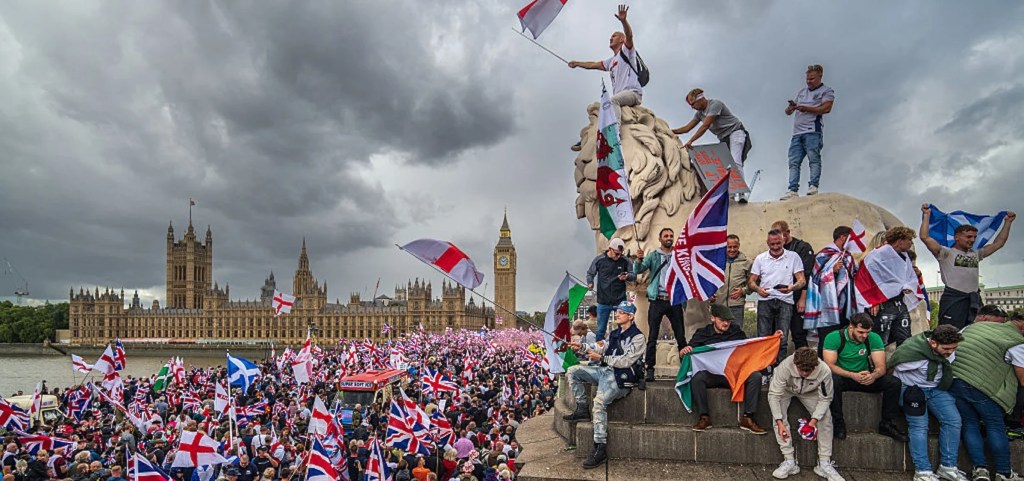
    On September 13, around 150,000 or more demonstrators gathered in the heart of the British capital under the banner of “Unite the Kingdom,” a sprawling protest movement that is captivating right-wing rhetoric, populist anger, and deep national disillusionment. The rally, fronted by Tommy Robinson, a figure long associated with Britain’s radical right, attracted a far broader crowd than expected. Among those who turned out were not only the typical fringe elements of the populus but also ordinary citizens who seem to have had enough with the shortcomings of their government.

    Although marked by some violence that left 26 police officers injured, the demonstration felt more like a populist carnival than a fringe political stunt. American-style slogans and paraphernalia, MAGA caps, “Make Britain Great Again” hats, and images of the late U.S. right-wing influencer Charlie Kirk were seen on display. Religious fervor also pulsed through the event, with evangelical preachers leading thousands in public prayer and crosses being propelled to the top of statues. The rally reached its dramatic climax outside Whitehall, where Elon Musk appeared on towering screens, delivering a provocative message warning the crowd that they must either fight back or perish. 

    This mass mobilization came just days before former U.S. President Donald Trump was scheduled to arrive in the United Kingdom for a second state visit—an unprecedented honor initiated by King Charles and coordinated by Prime Minister Keir Starmer’s government. The visit, replete with royal pageantry and formal diplomacy, is part of a broader strategy by Britain’s leadership to strategically maintain favorable ties with Trump, despite vast ideological divides and domestic opposition to his persona.

    Caught Between Tradition and Turmoil

    Trump’s arrival was reportedly greeted with ceremonial grandeur: carriage rides, military salutes, and a state banquet at Windsor Castle. He reportedly held bilateral talks with Prime Minister Starmer at Chequers, the official countryside retreat. The UK government discussed fresh U.S. investment deals in nuclear energy and artificial intelligence, looking to be presented as wins for working-class Britons.

    Trump’s visit was carefully insulated from the British public. This is likely purposeful and for many reasons as according to polling by YouGov, only 16 percent of Britons hold a favorable opinion of Trump, making him even less popular than Israeli Prime Minister Benjamin Netanyahu. But while Trump himself is disliked, many of the populist grievances that elevated him in the U.S. are taking firm root in Britain.

    The Rise of British MAGA

    The rally on September 13 may have appeared chaotic, but its underlying message was clear: a rejection of the political establishment, fueled by anger over immigration, free speech restrictions, cultural liberalism, and a perceived loss of national identity. Protesters rallied against government efforts on climate policy, demanded mass deportations of undocumented migrants, condemned diversity and inclusion programs, and warned of alleged indoctrination in schools.

    Many in attendance wore slogans and gear bearing the acronym MEGA—Make England Great Again—or its local variant, MBGA—Make Britain Great Again. Even if Donald Trump’s name was not chanted, the ideological qualities of his political movement were unmistakable.

    The British Election Study (BES) recently analyzed public opinion using 34 key indicators aligned with Trump-era MAGA themes: opposition to immigration and foreign aid, skepticism about transgender rights, hostility to government censorship, and support for unrestricted speech. While the percentage of Britons who share MAGA-like views dipped in 2020, that number has since rebounded. As of 2025, 36 percent of the population aligns with most of these positions, up from just over 25 percent five years ago.

    More concerning for Britain’s ruling class is the fact that this group is now significantly more politically engaged and disillusioned. In 2015, such voters gave the Conservative government a net approval rating of +21. In 2025, the same demographic rates the Labour government at –44. Distrust in the state is now endemic, as only 12 percent of Britons say they trust the government to act in the national interest, while nearly half say they “almost never” trust it, (an all-time high).

    Cultural Flashpoints and Political Opportunity

    This populist momentum has materialized in ways that closely mirror America’s own internal conflicts. There is growing outrage over what many perceive as restrictions on free speech, including the controversial categorization of “non-crime hate incidents.” According to the BES, a vast 70 percent of Britons believe people are too easily offended. Meanwhile, environmental skepticism has doubled since 2019, with many now arguing that the UK spends too much on climate change.

    Support for extreme immigration policies is also rising. Reform UK, the successor to the Brexit-era UKIP, has proposed deporting 600,000 migrants within five years. Nearly half the country supports the idea in principle. Reform UK, under the leadership of Nigel Farage, appears to be strategically positioning itself to appeal to MAGA-curious voters while maintaining distance from the extremism associated with figures like Tommy Robinson.

    The absence of official Reform UK representatives at Saturday’s protest was notable. Farage has consistently disavowed Robinson’s more provocative tactics and associations. Yet many attendees expressed that Farage remained the only politician they would consider voting for. The rally’s crowd was made up of a cross-section of society: Christian nationalists, disaffected Brexit campaigners, angry homeowners, and first-time protesters all joined together by a sense of national decline and political betrayal. “Keir Starmer’s a wanker” emerged as the unofficial chant of the day.

    Analysis:

    The effectiveness of the “Unite the Kingdom” rally lay partly in its intentional vagueness. The name allowed disparate movements and grievances to coalesce under a single banner of anti-establishment discontent. This tactic mirrors Trump’s own approach, building a coalition not through coherent policy but through shared resentment and spectacle.

    While the UK still lacks the deep political polarization and embedded conspiracy culture of the United States, that gap is narrowing. The conditions are fertile with economic stagnation, housing unaffordability, strained public services, and a growing cultural divide over immigration and identity have created a population increasingly ready to revolt against the mainstream elites.

    There is likely a deeper undercurrent sweeping through British politics and the Trumpification of Britain is no longer theoretical. It is manifesting in rallies, opinion polls, and a fundamental loss of public trust in democratic institutions. 

    What makes this movement potent is not just its ideology, but its adaptability. Just like in the United States, British populism now speaks the language of decline, nostalgia, and urgency. For some, these beliefs are rooted in genuine economic frustration or cultural alienation. For others, they reflect a deeper fear that traditional British identity is slipping away.

    But unlike in America, where Trump has built an entire party apparatus around himself, Britain’s populist right remains fractured. Farage has yet to fully capitalize on the anger Robinson has mobilized. Whether he does so—or whether a new figure emerges to channel this energy—may determine the outcome of the next election.

    For now, the message from the streets of London is clear. The British public may still dislike Donald Trump, but many have already embraced his worldview and are ready to fight in Britain’s own culture war. 

  • Arab Leaders Gather Following Israeli Strikes in Qatar

    9/17 – Geopolitical News & Diplomacy Analysis

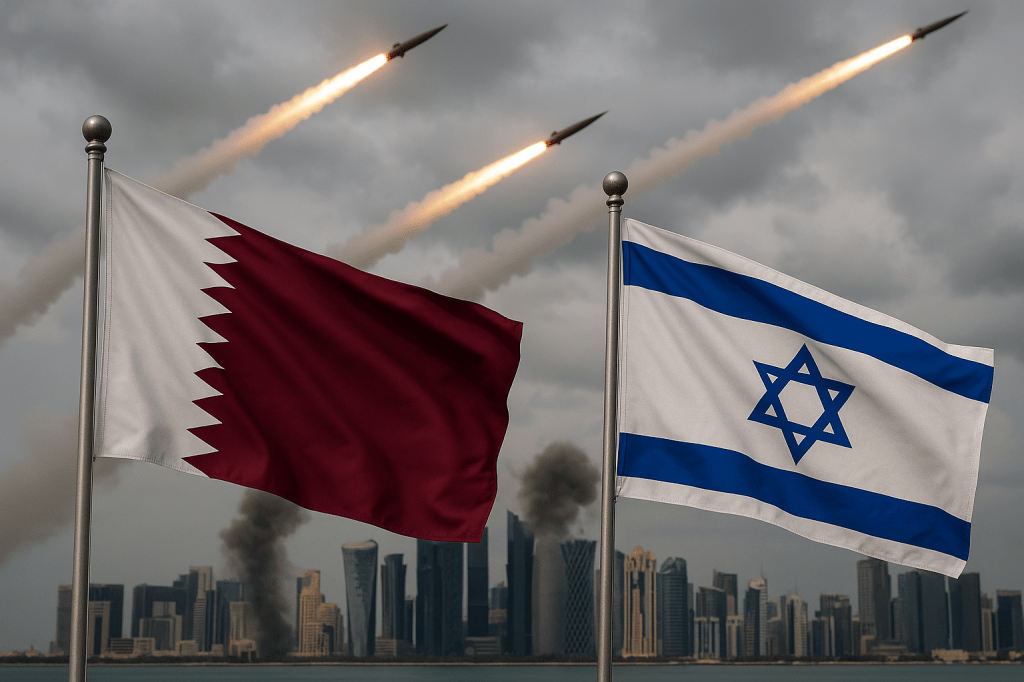
    Leaders from across the Arab and Islamic world gathered in Qatar’s capital on September 15 for an emergency summit, convened in response to a highly controversial Israeli airstrike that targeted Hamas officials in central Doha. The attack, which killed five Hamas members and a Qatari security officer, has sparked outrage throughout the region and elicited sharp rebukes even from close allies of both nations, including the United States.

    Though the summit was intended as a unified condemnation of Israel’s actions and a show of solidarity with Qatar, it also exposed the political limits of Arab and Muslim cooperation. While participants were unanimous in denouncing the Israeli strike as a violation of sovereignty and international law, the question of how to respond remains deeply contentious and unresolved.

    Strikes in Doha Sparks Diplomatic Shockwaves

    The Israeli strike on September 9 marked yet another unprecedented escalation in the Israel-Hamas conflict, as it was carried out not on the battlefield in Gaza, but in the heart of an allied Gulf capital. Israel defended the operation, claiming the Hamas figures were obstructing ceasefire negotiations. Hamas instead described the action as an assassination attempt on its negotiating team. Although several key figures survived, the strike claimed the lives of high-level operatives, including the son of the group’s top negotiator. 

    Qatar, which has hosted Hamas’s political bureau since 2012 and has served as a mediator in indirect peace talks between Israel and Hamas, was left furious. Prime Minister Sheikh Mohammed bin Abdulrahman Al Thani condemned the attack as a breach of international law and an assault on his country’s neutrality. At a pre-summit briefing, he demanded that the global community end its “double standards” and hold Israel accountable for what he described as acts of ethnic cleansing and starvation in Gaza.

    Regional Anger 

    The summit in Doha attracted heads of state and senior officials from across the Islamic world. Iranian President Masoud Pezeshkian, Iraqi Prime Minister Mohammed Shia al-Sudani, and Turkish President Recep Tayyip Erdogan were among the attendees. Palestinian Authority President Mahmoud Abbas also arrived in Doha ahead of the meeting. However, key figures like Saudi Arabia’s Crown Prince Mohammed bin Salman were absent, reflecting the cautious diplomacy many Gulf nations continue to practice despite mounting regional pressure.

    Participants in the summit drafted a resolution condemning Israel’s “hostile acts,” which they claimed threatened any prospects for peace or coexistence. The document referred to Israeli policies as genocidal and called for collective action. Still, the resolution lacked concrete enforcement mechanisms and stopped short of suggesting military retaliation or sweeping diplomatic measures. 

    Iran proposed the formation of an “Islamic NATO” to deter future aggression, but this suggestion was quickly seen as politically unviable, given the longstanding distrust between Iran and many Arab governments.

    Qatar, while angered, lacks the capacity or political incentive to escalate militarily. It has no diplomatic or economic ties with Israel to sever and is instead focusing on legal and diplomatic recourse. It has already secured a unanimous condemnation from the UN Security Council, which emphasized de-escalation and expressed support for Qatar’s sovereignty. 

    U.S. in the Crosshairs

    The Israeli strike has also exposed growing frustration with Washington’s perceived inconsistency. Although President Donald Trump expressed displeasure with the strike, calling for caution, his administration ultimately signaled support for Israel by dispatching Secretary of State Marco Rubio just a couple days later to Jerusalem for high-level talks with Prime Minister Benjamin Netanyahu. Following their meeting, Rubio reiterated that Hamas must be dismantled as an armed entity. 

    This stance left many Arab leaders deeply unsettled. For decades, the Gulf states have relied on American security guarantees in exchange for stable energy markets and strategic cooperation. That understanding has begun to fracture over the past few years, and now, with a U.S. ally striking another ally on sovereign soil, confidence in American commitments is eroding further.

    Diplomats across the Gulf have quietly begun re-evaluating their strategic assumptions. Qatar, the United Arab Emirates, and Saudi Arabia are among the top global buyers of U.S. arms. While the idea of cutting these purchases remains politically and logistically complicated, conversations have intensified about diversifying military suppliers and investing in domestic defense production.

    Despite the anger voiced at the Doha summit, concrete action was elusive. Gulf states have few tools to pressure Israel directly. Qatar has lobbied the United Arab Emirates to downgrade its ties with Israel. So far, Abu Dhabi has taken minor steps, such as summoning Israel’s deputy ambassador and disinviting Israeli firms from upcoming trade events. However, the broader normalization of relations, part of the Abraham Accords, remains largely intact.

    Some Arab states floated the idea of banning Israeli aircraft from their airspace, but the proposal did not make it into the final communique. The lack of consensus has led some analysts to dismiss the summit as symbolic. However, regional diplomats insist that the strike represented a serious breach that cannot be ignored.

    “This was a wake-up call,” said one Gulf official, noting that Israel had attacked a state considered critical to regional mediation and stability. While Gulf governments are limited in their responses, they hope to channel their frustration into increased pressure on Washington.

    Analysis:

    The Doha summit exposed the growing strain between America’s long-standing Gulf allies and its unshakeable commitment to Israel. Gulf leaders are increasingly uneasy with what they see as Washington’s unwillingness to constrain Israeli military behavior, even when it endangers friendly regimes or even their own best interests.

    For some Western-aligned Arab states, the dilemma is clear. They want the benefits of the U.S. security umbrella and close access to American capital and technology. But they are no longer willing to tolerate a perceived carte blanche for Israeli aggression, especially when it undermines regional stability and threatens the legitimacy of their own governments.

    For President Trump, the choice is becoming more difficult to defer. He must navigate a shifting regional dynamic in which traditional U.S. partners are looking for firmer assurances and a recalibration of what the alliance means. As the war in Gaza drags on, and as regional tempers flare, the United States is being asked to prove that its partnerships are not one-sided and solely accommodating exclusively to Israel. 

    From Doha to Riyadh, leaders are signaling that the days of quiet compliance are over. If Washington cannot demonstrate that it is willing to hold Israel accountable when its actions jeopardize broader strategic interests, and other neutral regional allies, it may soon find itself with even fewer friends in a region already in deep turmoil. 

  • Poland Shoots Down Russian Drones, NATO on High Alert

    9/10 – Geopolitical News & Analysis

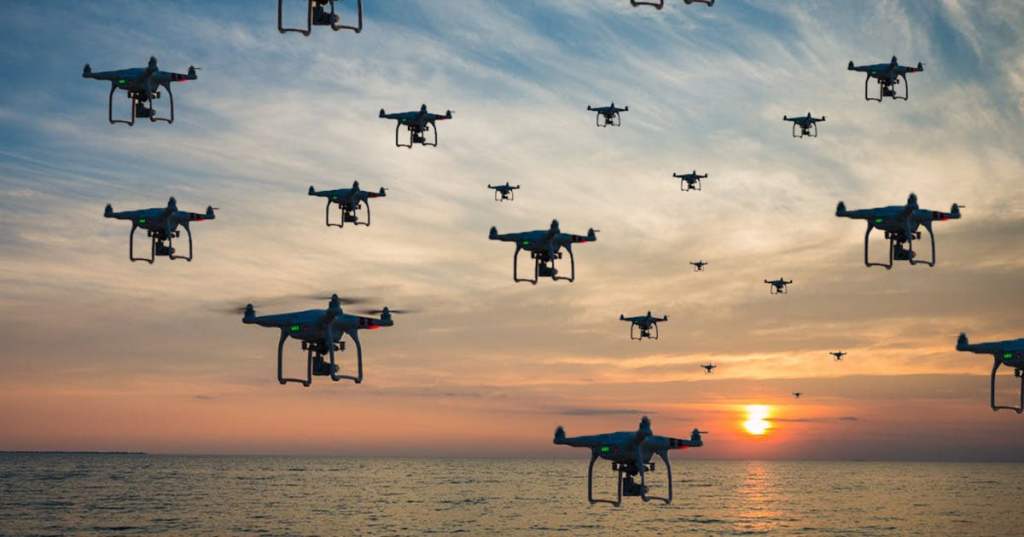
    In one of the most serious breaches of NATO territory since the alliance’s founding in 1949, at least 19 Russian drones entered Polish airspace overnight between September 9 and 10. The incursion, which triggered temporary airport closures and prompted Poland to invoke NATO’s Article 4, marks a major escalation in the ongoing conflict between Russia and Ukraine, with increasingly direct consequences for neighboring NATO states.

    The drones were part of a wider Russian aerial assault on Ukraine, but several crossed deep into Poland, with one crashing over 300 kilometers inside the country. Polish F-16s, supported by Dutch F-35s deployed earlier this month, scrambled to intercept the drones, shooting down around four or five. At least one drone ripped the roof off a residential house in Wyryki-Wola. No casualties were reported.

    Poland’s Prime Minister Donald Tusk addressed parliament hours later, declaring the situation a perilous moment as his country had never been this close to open conflict since WWII. In an emergency meeting, Poland formally requested NATO consultations under Article 4 of its treaty, which allows for emergency dialogue when a member state’s territorial integrity or security is threatened.

    A New Phase of Confrontation

    Drone and missile spillovers into NATO airspace are not new. In recent years, both Romania and Finland have reported Russian airspace violations. In 2022, two Polish civilians were killed by what was later found to be a misfired Ukrainian missile. However, the scale of this latest event dwarfs previous incidents. Polish officials confirmed that the breach involved at least 19 aerial objects, while other reports cited up to 23. For the first time, NATO warplanes directly engaged and destroyed Russian drones over an allied country.

    Multiple Polish airports were closed as a precaution, including Warsaw’s Chopin Airport, which is a vital hub for logistical and diplomatic operations related to Ukraine. Eastern Poland was placed on high alert. A NATO spokesperson confirmed that aircraft from several allied nations — including Italy, Germany, and the Netherlands — participated in the joint defense effort. An Italian surveillance plane and aerial refueler, along with German Patriot missile defense systems, were also deployed.

    Russia Denies Intent

    Moscow has denied responsibility, claiming the drones were not intentionally aimed at Poland and may have veered off course due to electronic warfare systems used by Ukraine. The Belarusian government issued a similar explanation, stating that jamming systems from both Russia and Ukraine might have disrupted the drones’ path.

    However, experts and Western officials are skeptical. Analysts from Polityka Insight and the International Institute for Strategic Studies argue that such a large number of drones — particularly the Gerbera model, often used for reconnaissance or as decoys — could not have simply gone off course by accident. Ukrainian military and electronic warfare specialists have noted that the range of drone spoofing technology is far too limited to explain how debris landed more than 100 kilometers inside Poland.

    Ukrainian President Volodymyr Zelensky stated that over 400 drones and 40 missiles had been launched by Russia into Ukraine during the same night, with at least eight drones appearing to be aimed directly at Poland. NATO Secretary-General Mark Rutte labeled the event “absolutely reckless and dangerous,” saying a full assessment is underway but early indicators suggest the incursion was intentional.

    NATO Response

    Despite the severity of the situation, NATO has refrained from invoking Article 5 — the alliance’s collective defense clause — which would be reserved for a clear armed attack on a member state. The alliance instead responded by convening emergency consultations through Article 4. Rutte emphasized that NATO is prepared to defend every inch of its territory, but cautioned against premature escalation without thorough intelligence assessments.

    Poland has made it clear it is reserving the right to escalate further, but for now, is focusing on strengthening coordination within the alliance. Poland’s defense minister stated that all potentially threatening aerial objects were tracked, intercepted, or neutralized.

    This latest development coincides with Russia’s scheduled “Zapad 2025” military exercises, set to begin on September 12 in Belarus, near Poland’s border. These war games are expected to involve far more than the officially stated 13,000 troops. The last Zapad exercises in 2021 saw 200,000 troops mobilized — and within months, Russia invaded Ukraine.

    In preparation, Poland has already closed its borders with Belarus and activated additional military protocols. Officials say some of the drones even entered Poland directly from Belarus rather than from Russian-occupied Ukrainian territory.

    The incident arrives at a tense geopolitical moment. The European Union has already been discussing expanding sanctions on Russia, including targeting oil shipments via “shadow fleets” and punishing third-party countries buying Russian oil. EU foreign policy chief Kaja Kallas called the drone incursion the most serious violation of European airspace since Russia’s invasion of Ukraine in 2022 and stated that indications point to a deliberate act.

    U.S. President Donald Trump, who hosted Vladimir Putin at a summit in Alaska in August, has publicly expressed interest in pushing forward a second wave of sanctions. This includes the possibility of sanctions targeting nations that facilitate Russian oil trade. For the first time since Trump returned to office in January 2025, coordinated transatlantic measures are under discussion.

    Belgium’s Prime Minister declared that Putin was not interested in diplomacy, calling the drone incursion a mockery of the West. He joined other European leaders in calling for greater support to Ukraine and tougher penalties for the Kremlin. 

    Testing NATO’s Resolve

    This event represents more than just a violation of Polish airspace. Many analysts see it as a direct test of NATO’s unity and response capability. Vladimir Putin has long sought to exploit divisions within the alliance, aiming to weaken its credibility through strategic provocations and military ambiguity.

    Military experts suspect the Gerbera drones used in the incursion may have served multiple purposes — not just to frighten, but to probe NATO’s radar and response times. Ukrainian sources confirmed that these drones are often used to overwhelm and study enemy air defenses. Their use in NATO territory suggests Moscow is expanding its strategy beyond Ukraine’s borders.

    Independent Russian military analyst Yuri Fyodorov stated that such an operation would require approval from the highest levels of the Kremlin, reinforcing the belief that this was not a mistake, but a deliberate provocation sanctioned by Putin himself.

    Analysis: 

    The incursion into Poland’s airspace has shaken assumptions about how insulated NATO members are from Russia’s war in Ukraine. For the first time since the war began, allied warplanes jointly downed Russian weapons over NATO soil. That precedent is both historically significant and strategically unsettling. 

    The response from NATO, while coordinated and cautious, sends a signal of resolve. But it also leaves open the question of what happens next time — especially if the incursion causes casualties, or if Belarus becomes more actively involved in the conflict.

    For now, the skies over Eastern Europe remain tense. Poland is mobilizing, NATO is being tested, and Russia is watching closely as it pedals on with its war in Ukraine.

  • France’s Prime Minister Ousted Amid Budget Crisis Deadlock 

    9/9 – International News & Political Analysis

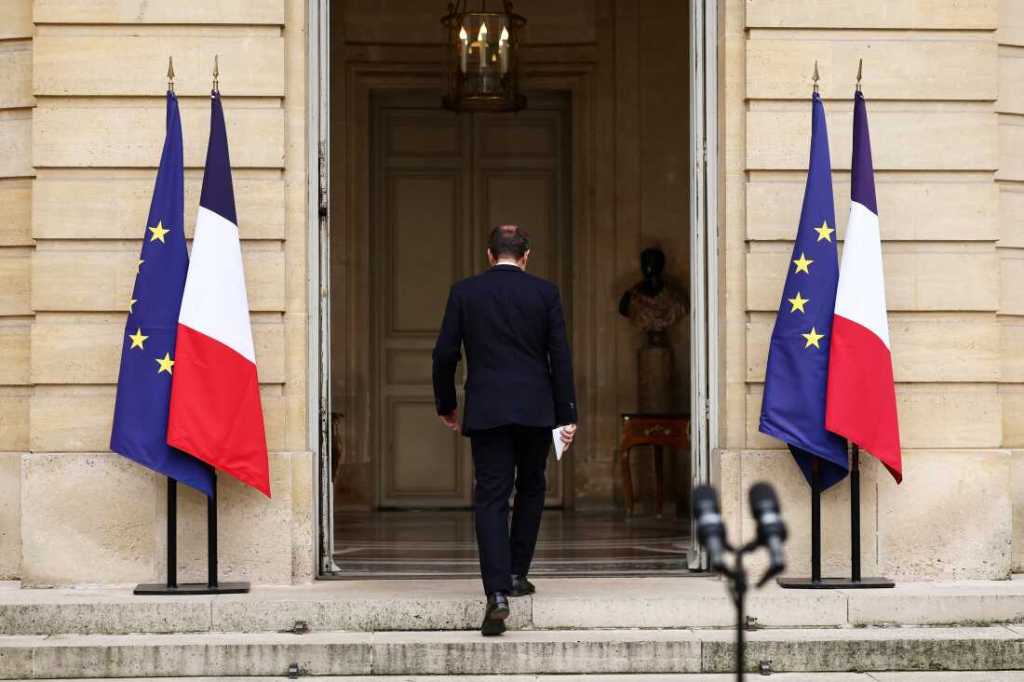
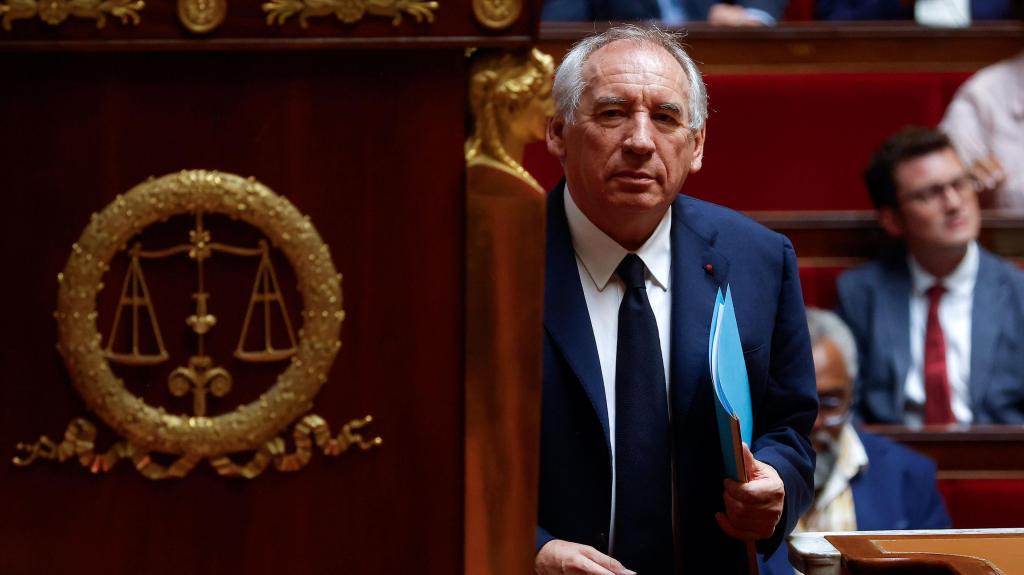
    In yet another one of their political shake-ups, France’s Prime Minister François Bayrou was ousted after a resounding no-confidence vote in parliament on September 8th. This latest collapse marks the fourth prime minister to fall in less than two years, plunging President Emmanuel Macron’s administration, and the country at large, into a deepening fiscal and political spiral.

    At the center of the crisis was Bayrou’s proposed €43.8 billion budget reduction plan for 2026, an ambitious effort aimed at curbing France’s ballooning deficit. Instead of support, the proposal triggered fierce opposition across the political spectrum—from Jean-Luc Mélenchon’s hard-left France Unbowed to Marine Le Pen’s far-right National Rally (RN), and even segments of the center-right Republicans who had previously contributed ministers to Bayrou’s cabinet. With just 194 votes out of 558, Bayrou’s plan was decisively rejected and he handed in his formal resignation today, at the Élysée Palace.

    President Macron has announced that he will yet again choose a new Prime Minister in the coming days. 

    Fiscal Discipline Meets Political Resistance

    Bayrou, a centrist and long-time fiscal conservative, had staked his credibility on delivering one of the most aggressive budget tightening plans in recent French history. The €44 billion in proposed cuts aimed to reduce France’s budget deficit, projected to hit 5.4% of GDP this year, to a more manageable level. He warned that the growing debt load, which now stands at €3.3 trillion (114% of GDP), posed a threat to France’s economic future.

    The political opposition chose not to heed his warnings and instead criticized the austerity plan as either regressive or insufficiently targeted, with Socialist leader Boris Vallaud accusing Bayrou of parroting Macron’s business-friendly policies. Meanwhile, Marine Le Pen described the moment as the inevitable reckoning for decades of mismanagement.

    The immediate fallout has rattled financial markets already wary of France’s trajectory. French 10-year bond yields, once seen as a relatively safe eurozone investment, have surged to levels close to those of Italy, long viewed as the bloc’s most vulnerable large economy. Remarkably, France now pays more to borrow long-term than Greece and Spain—two of the hardest-hit countries during the eurozone’s 2011 debt crisis.

    France’s Political Deadlock and Dismay

    The government’s collapse reflects a broader paralysis within French politics. The current National Assembly is sharply fragmented, and no party commands a clear majority. Macron, having suffered a setback after his last attempt to dissolve parliament in June 2024, appears reluctant to call snap elections again. Polls show that his centrist alliance would be pushed into third place, behind both the RN and the left-wing coalition.

    A recent survey revealed that 63% of French voters would support a return to the polls. But the outcome would likely cement the same impasse: Le Pen’s RN and its allies are projected to lead with 33% in the first round, the left with 25%, and Macron’s centrist bloc a distant third at 15%.

    Ironically, Le Pen herself is currently barred from standing in any election due to a campaign finance embezzlement conviction earlier this year, pending appeal in 2026. Should elections be called, her 29-year-old protégé, Jordan Bardella, is expected to lead the RN into the race for prime minister.

    Uncertainty Breeds Economic Stagnation

    For French households and businesses, the political dysfunction is already having tangible effects. Consumption and investment decisions are stalling as economic actors await clarity.

    This is especially dangerous for France, where slow growth is incompatible with high debt levels. Unlike Greece or Italy who run budget surpluses before interest payments, France has no such cushion. And with German investments poised to surge after years of fiscal restraint, France risks being left behind in the EU’s post-pandemic economic revitalization.

    As one Oxford Economics analyst put it: “France is becoming the new ugly duckling of Europe.” Once a dependable pillar of eurozone financial stability, it is now edging into the uncertain role previously assigned to Italy.

    President Macron faces a difficult choice. He can either call fresh elections and risk further losses, or appoint a new prime minister capable of crafting a budget palatable to an antagonistic parliament. Whispers in political circles suggest a possible pact with the Socialists, who hold 66 seats in the lower house. But their price is steep: a proposed wealth tax of at least 2% annually on fortunes exceeding €100 million.

    Macron is reportedly opposed to such a move, fearing it would undermine France’s image as a business-friendly nation. He had previously positioned France as a startup haven and reduced corporate taxes to attract foreign investment. Reversing that stance would be a dramatic shift, and one his political base may not forgive.

    Still, Macron’s room for maneuver is vanishing. Without a stable government in place, the country will struggle to meet its October 7 deadline to draft the 2026 budget. Finance Minister Eric Lombard has already signaled that any future proposal will be less ambitious than Bayrou’s failed blueprint.

    Protest Movements Loom

    What could escalate France’s crisis from dysfunction to outright chaos? One possibility is a market revolt, as borrowing costs rise and ratings agencies weigh downgrades. Another is mass civil unrest, a familiar feature of France’s volatile political climate.

    Already, two major protest dates have been announced. On September 10, a social media-led campaign titled “Bloquons tout” (“Let’s block everything”) aims to paralyze the country. More traditional labor strikes, coordinated by major unions, are planned for September 18. Although these actions may fizzle without a clear target, France’s history suggests that loosely organized protests can morph into powerful movements, as seen with the Yellow Vests in 2018.

    Analysis:

    France is entering dangerous territory. For decades, its large economy, sophisticated institutions, and central position in the EU granted it a level of financial insulation. That cushion is now eroding quickly. As its political institutions and social services falter along with soaring debt, the country is losing the market’s trust and its own sense of direction to get out of this hole.

    The fall of François Bayrou is just another symptom of a deeper malaise. Macron’s promise to modernize France is colliding with the limits of its institutions, the fatigue of its electorate, and the unforgiving arithmetic of public debt. Without unifying leadership and a credible fiscal plan, the country risks spiraling further into stagnation and potential bankruptcy .

    The clock is ticking on President Macron and whoever is selected to be the next Prime Minister, and inherit one of the most difficult and ill-fated jobs in all of Europe. 

  • Chinese, Indian, and Russian Leaders Unite at SCO Summit

    9/1- Geopolitical News & Diplomacy Analysis

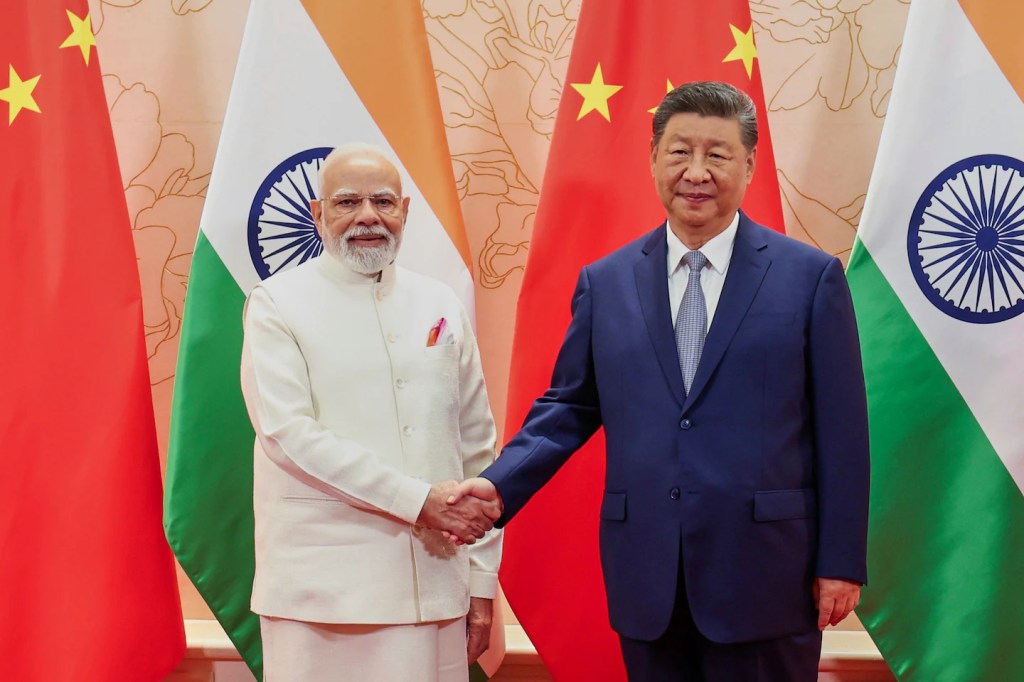
    Chinese President Xi Jinping, Indian Prime Minister Narendra Modi, and Russian President Vladimir Putin came together in the port city of Tianjin for the 2025 Shanghai Cooperation Organization (SCO) summit. With over 20 world leaders in attendance, the summit marks a potential inflection point in the geopolitical landscape, reflecting growing solidarity among Eastern powers representing the Global South amid rising tensions with the West.

    Multipolar Vision and Realigned Alliances

    Launched in 2001 as a political and security bloc to counter Western hegemony, the SCO has grown from six founding members—China, Russia, Kazakhstan, Kyrgyzstan, Uzbekistan, and Tajikistan—to a 10-member coalition, now including India, Pakistan, and Iran, with 16 other nations acting as observers or dialogue partners.

    This year’s summit, one of the most significant since the organization’s founding, took place amid a backdrop of escalating global instability. Washington’s imposition of steep tariffs—particularly a 50% levy on Indian goods in response to New Delhi’s continued purchase of Russian oil—has complicated U.S.-India ties, while Moscow remains heavily sanctioned over its war in Ukraine.

    In this context, the Tianjin summit served as both a geopolitical statement and a diplomatic recalibration. It underscored Beijing’s ambition to lead a new “multipolar world order” and displayed a growing alignment between India and China— two historic rivals.

    Prime Minister Modi’s presence in China, his first visit in seven years, was a headline event. His bilateral meeting with Xi on the sidelines of the summit conveyed a message of tentative rapprochement after years of tension and border clashes.

    According to Indian officials, Modi emphasized the restoration of “peace and stability” along the Line of Actual Control (LAC), stating that both nations had reached an understanding on border management. Though specific details remain undisclosed, the agreement signals an effort to move beyond military standoffs that have frozen ties since 2020.

    President Xi reiterated that the border issue should not dominate the bilateral agenda, encouraging both sides to view each other as “partners, not rivals.” He also expressed the view that the two nations, representing the world’s largest populations and fastest-growing economies, have a duty to shape what he called the “Asian Century.” 

    Resuming direct flights between India and China—a move suspended since 2020—was another symbol of warming ties. Modi further welcomed Chinese commitments to lift export restrictions on critical goods such as rare earth elements, fertilizers, and tunnel-boring machinery, while stressing the need to reduce India’s trade deficit with China, which reached a record $99.2 billion this year.

    Modi’s Strategic Pivot

    Modi’s posture at the summit reflected a nuanced shift in India’s global strategy. As the U.S.-India relationship shakens over sanctions and tariffs, New Delhi is reasserting its doctrine of “strategic autonomy”—engaging with Beijing not as a submissive junior partner but as a peer in the Global South.

    In remarks shared by India’s foreign ministry, Modi clarified that the India-China relationship should not be framed through the lens of third-party influence, a veiled critique of Washington’s framing of India as a “bulwark” against China. Instead, Modi highlighted the importance of mutual respect, non-interference, and partnership on global challenges such as terrorism and fair trade.

    This recalibration appears rooted in pragmatic calculations: With both Washington and Beijing exerting pressure in different forms—one through sanctions, the other through border tensions—New Delhi is hedging its bets. Analysts suggest that Modi’s participation in the SCO summit alongside autocrats like Putin and Xi is a strong signal that India refuses to be boxed into binary alliances.

    President Putin’s appearance was equally symbolic. Arriving in Tianjin to a red carpet welcome, he stood firm in opposition to Western “discriminatory sanctions” on global trade. Russia’s presence, alongside other heavily sanctioned states such as Iran, North Korea, Belarus, and Myanmar, highlighted the SCO’s role as a safe diplomatic space for isolated regimes.

    Putin will remain in China through Wednesday to attend a massive military parade commemorating the end of World War II. Other leaders, including North Korea’s Kim Jong Un, Serbia’s Aleksandar Vučić, and Slovakia’s Robert Fico, are also expected at the parade.

    Putin’s rhetoric emphasized a joint Russian-Chinese front against Western economic coercion, with Beijing echoing similar sentiments through its ambassador to India, who promised that China would “firmly stand with India” against unjust tariffs.

    New Era Symbolism

    The summit itself, while largely ceremonial, carried significant symbolic weight. Hosted in a city blanketed with SCO banners and filled with light shows and public spectacles, the gathering underscored China’s desire to cement itself as a hub of an alternative world order.

    At a formal reception, Xi told leaders that the SCO now bears greater responsibility for regional stability, economic development, and the defense of sovereign interests—particularly in contrast to Western-dominated forums like NATO or the G7.

    Behind closed doors, the leaders discussed common challenges: the rise of protectionism, regional terrorism, and unequal development, with a focus on strengthening multilateral mechanisms to address these issues. Modi called for reforms in global trade norms and proposed deeper coordination in areas like border security and counterterrorism, while also calling out the need for greater economic fairness in international platforms.

    India’s foreign secretary Vikram Misri summarized the Modi-Xi meeting as a milestone for re-establishing “deepening trust” and underscored that strong India-China relations are essential for realizing the vision of an “Asian Century.”

    Despite the progress, deep-rooted tensions persist. India continues to express concern over China’s construction of a mega-dam in Tibet, which could severely disrupt water flows on the Brahmaputra River. Beijing’s long-standing support for Pakistan—India’s arch-rival—adds another layer of complexity to Sino-Indian relations.

    Moreover, India’s hosting of the exiled Dalai Lama remains a sore point for Beijing, which regards him as a separatist threat. These issues, coupled with the unresolved border demarcations and the massive trade imbalance, represent structural challenges that will test the durability of this renewed diplomatic effort.

    Analysis:

    This SCO summit reflects a critical juncture in global geopolitics. For decades, the West—particularly the United States—banked on India as a democratic counterweight to China. But that strategy appears to be unraveling. Washington’s punitive tariffs have accelerated India’s pivot toward self-reliance and multipolar diplomacy.

    What’s emerging is not a simple alliance between autocracies, but a more complex network of relationships based on national interest, regional autonomy, and strategic diversification. India’s rapprochement with China signals that it will not allow itself to be a pawn in a new Cold War between the U.S. and China.

    Instead, nations like India are carving out space in the emerging “multipolar” world not by choosing sides, but by balancing them. The West may now need to revisit its assumptions about partnership, power, and influence in the 21st century that will not be characterized by the bipolar Cold War nature it operated in throughout the previous century. 

    The United States and its Western allies must prepare themselves for more of these summits and the proliferation of diplomatic ties between autocratic nations aiming to form a counterweight to the longstanding neoliberal world order.  

  • U.S.-India Trade Relations Hit New Low as Trump Doubles Tariff Rate on Indian Goods

    8/8 – International Trade News & Analysis

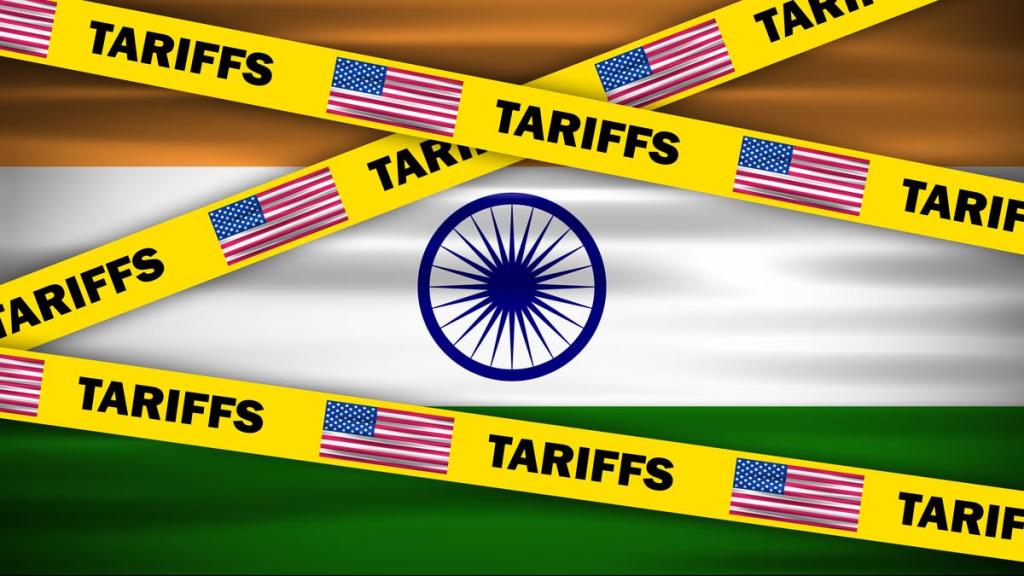
    U.S. President Donald Trump announced a 25% increase in tariffs on Indian imports, targeting the country’s continued purchase of Russian oil — a move that now threatens to disrupt nearly $87 billion worth of bilateral trade, undercut India’s economic momentum, and inject renewed volatility into global markets. Trump’s renewed use of aggressive trade tactics has thrust U.S.-India relations into their most contentious state in over a decade.

    The tariffs, set to take effect 21 days after August 7, raise duties on certain Indian goods to as high as 50% — among the steepest faced by any U.S. trading partner. This move marks a stark reversal from the cooperative tone set during the Trump-Modi meeting earlier this year. India, which has remained the largest buyer of Russian oil since 2022, currently imports around 2 million barrels per day of discounted Russian crude — nearly 40% of its total oil supply. The oil has enabled Indian refiners to boost profits by converting it into high-margin fuels for export, helping to keep their own domestic fuel prices relatively stable amid global volatility. 

    For three years, this approach went largely unchallenged by the West. But Trump’s frustration with Moscow’s refusal to agree to a Ukraine ceasefire has prompted a shift. By imposing new tariffs, he’s signaling an intent to apply economic pressure on Russia indirectly — by squeezing the markets and buyers that keep its oil revenues afloat.

    Collapse of Trade Talks

    According to U.S. and Indian officials, the trade fallout stems from five rounds of inconclusive negotiations that failed to bridge major divides. The U.S. had demanded greater access to India’s agriculture and dairy sectors, while India sought concessions on tech and manufacturing. The breaking point, however, was India’s refusal to scale back its Russian oil purchases — which hit a record $52 billion in 2024.

    Analysts suggest that both sides underestimated each other’s red lines. Indian negotiators misread Trump’s tolerance for strategic hedging, while the U.S. side overplayed its leverage, failing to account for India’s growing geopolitical independence and energy constraints.

    With a population of 1.4 billion and surging energy demand, India argues that its purchases are driven by market necessity, not political allegiance. Officials in New Delhi condemned the tariffs,  highlighting that many countries, including China, continue to import Russian oil.

    Yet it is India — not China — that has borne the brunt of Trump’s latest economic retaliation, though the White House has hinted that China may soon face similar measures. Treasury Secretary Scott Bessent warned that the expiration of the U.S.-China tariff ceasefire on August 12 could trigger a new wave of duties.

    The economic impact on India could be substantial. Roughly 55% of India’s exports to the U.S. are now exposed to steep new tariffs. Exporters fear a dramatic decline in competitiveness, especially against regional rivals like Vietnam, Bangladesh, and Japan, who now enjoy a substantial pricing advantage. 

    Some Indian officials have floated potential relief measures for exporters, such as subsidized credit and loan guarantees, but acknowledge these are only short-term solutions. With Indian GDP growth already expected to fall below the central bank’s forecast of 6.5%, the added pressure from falling exports could push growth below 6% this year.

    India’s Dilemma

    India now faces a delicate balancing act. While it has historically respected U.S. sanctions — as seen during Trump’s first term when it halted Iranian oil imports — this time may be different. The White House has reportedly demanded that India reduce Russian oil imports to zero, but such a robust transition is unlikely.

    Indian refiners have already reduced orders from Russia by up to 50%, according to industry estimates, but replacing the remaining supply won’t be easy. Middle Eastern producers have limited spare capacity and are tied up in long-term contracts with East Asian buyers. Meanwhile, African and Latin American options are more expensive or logistically complicated.

    Even if India manages to secure alternative sources, the loss of discounted Russian oil — which trades $5 to $10 cheaper per barrel than global benchmarks — will erode refining margins and raise fuel costs at home. This could trigger inflationary pressures, undercut India’s manufacturing competitiveness, and strain government subsidies.

    Compounding matters, Prime Minister Modi is preparing for a long-anticipated visit to China, his first in over seven years, raising speculation about a strategic pivot in response to Washington’s hardline stance. A more assertive China, meanwhile, could capitalize on the U.S.-India rift by offering more favorable terms to countries disillusioned with Trump’s economic nationalism.

    Global Oil Markets Risk

    Trump’s strategy aims to dry up Russia’s oil revenues to force a settlement in Ukraine, but the unintended consequences may ripple far beyond the Kremlin. By pressuring India and potentially China, the administration risks triggering a realignment in global energy markets, higher oil prices, and retaliatory trade measures.

    Preventing Russian oil from reaching global markets could send crude prices soaring above $80 per barrel, with knock-on effects for inflation and consumer spending. The Trump administration is reportedly considering waivers or phased restrictions to avoid a 2018-style repeat, when sanctions on Iran caused price shocks and forced a softening of U.S. policy.

    Analysis: The Fragility of Politicized Trade Policy

    The Trump administration’s strategy exposes the volatility of tying economic policy too closely to shifting foreign policy goals. Weaponizing trade for geopolitical leverage can backfire — eroding trust with long-term partners, destabilizing supply chains, and pushing neutral actors into the orbit of rival powers like China.

    Trump’s tariff offensive against India underscores a growing trend in U.S. foreign policy: the use of economic tools as instruments of geopolitical coercion. While such tactics may yield short-term gains — as in pushing allies to reconsider their Russia ties — they come at a cost.

    When trade becomes hostage to political goals, the stability and predictability of international commerce is undermined. Countries that once viewed the U.S. as a reliable economic partner may now turn elsewhere, lured by less conditional arrangements from China or other emerging players.

    Moreover, consumers and businesses ultimately bear the brunt of such tariffs, as costs rise and supply chains adjust. Instead of cultivating long-term cooperation, these moves risk isolating Washington and diminishing its influence in the very regions it seeks to lead.

  • U.S. Trade Deficit Narrows as China Trade Gap Hits 21-Year Low

    8/7 – International Relations News & Trade Analysis

    The U.S. trade landscape is undergoing a dramatic transformation as sweeping tariffs introduced by President Donald Trump reshape global commerce. According to the latest data from the Commerce Department, the U.S. trade deficit narrowed sharply in June—fueled by a steep decline in consumer goods imports and a record-low trade gap with China. These developments point to the far-reaching effects of Trump’s aggressive trade strategy, which has altered the flow of goods across borders and added new pressure on longstanding trade relationships.

    In June, the total U.S. trade deficit shrank by 16% to $60.2 billion, the narrowest level since September 2023. This followed an earlier report showing the goods-only deficit dropped 10.8% month-over-month. Imports totaled $337.5 billion, down significantly from $350.3 billion in May, while exports dipped modestly to $277.3 billion.

    This sharp contraction in the trade gap contributed heavily to the unexpected rebound in U.S. gross domestic product (GDP) in the second quarter. The economy expanded at an annualized rate of 3.0%, rebounding from a 0.5% contraction in Q1. The growth was largely driven by reduced imports after businesses and consumers had previously rushed to purchase goods before the imposition of new tariffs. While the headline GDP number is encouraging, analysts caution that underlying economic activity remains uneven, with signs of strain emerging beneath the surface.

    The economic shift is being driven by a surge in tariff rates implemented by the Trump administration. Following multiple delays, Trump announced that a sweeping package of tariffs—ranging from 10% to 41%—will take effect starting August 7. These duties apply to imports from dozens of countries, including strategic allies and economic competitors. Yale’s Budget Lab estimates that the average overall U.S. tariff rate has soared to 18.3%, marking the highest level since 1934. Prior to Trump’s return to office, that figure hovered between 2% and 3%.

    The administration has aggressively pursued what it calls “reciprocal tariffs” as part of a broader strategy to reduce the U.S. trade deficit and revitalize domestic manufacturing. Notices issued to trading partners in late July have made clear that the White House intends to push forward with its plans, leaving businesses bracing for higher import costs and supply chain disruptions.

    One of the most striking outcomes of the administration’s trade policy is the historic narrowing of the trade gap with China. In June, the U.S. trade deficit with China fell by roughly one-third to $9.5 billion—the lowest level recorded since February 2004. This marks the fifth consecutive month of contraction, with the bilateral gap shrinking by 70% (or $22.2 billion) over that period.

    Chinese exports to the U.S. have been particularly affected. Imports from China fell to $18.9 billion, the lowest since 2009, as existing tariffs—now standing at 30% on most Chinese goods—continue to suppress inbound trade. In addition to existing duties, the Trump administration has signaled that it is preparing to impose new tariffs targeting pharmaceuticals, semiconductors, and chips—products that are critical to both China’s industrial base and U.S. consumption.

    Trade Negotiations Make Progress as August Deadline Looms

    The reduction in trade activity with China comes as both sides push to avoid a new escalation. Recent talks in Sweden between U.S. and Chinese negotiators have reportedly made progress toward resolving outstanding disputes. Treasury Secretary Scott Bessent stated last week that the two countries are nearing a potential deal, which would extend a truce on tariff escalations for an additional three months.

    President Trump confirmed the positive momentum in an interview with CNBC, stating that the two sides are “getting very close” to finalizing an agreement. He noted that a meeting with Chinese President Xi Jinping is likely to take place before the end of the year—contingent on a successful deal.

    Both sides are facing an August 12 deadline, after which current tariff rates could expire and revert to more than 100%, effectively triggering a renewed trade embargo. This snapback provision, built into earlier agreements, is intended to compel both nations to follow through on commitments but also raises the stakes for a diplomatic breakthrough.

    Analysis: 

    The Trump administration’s trade policy is producing visible shifts in global commerce. The narrowing U.S. trade deficit and reduced reliance on Chinese imports suggest that the tariffs are achieving some of their intended objectives—at least on paper. By pushing companies to diversify sourcing and reduce dependency on foreign goods, the administration is laying the groundwork for a more protectionist economic model.

    However, this strategy is not without significant risks. The surge in tariffs has increased input costs for manufacturers, strained supply chains, and generated uncertainty in global markets. While GDP rebounded in Q2, the sustainability of this growth remains questionable if business confidence and consumer purchasing power are eroded by prolonged inflation or external retaliatory measures.

    The falling trade deficit with China—while politically symbolic—could also have longer-term consequences. Reduced bilateral trade may hinder cooperation in other critical areas such as climate policy, global finance, and security. Moreover, should talks collapse in the final days before the August 12 deadline, the return of massive tariffs could disrupt global supply chains, unsettle global markets, and rekindle fears of a broader trade war.

    Whether the Trump administration’s brazen approach can deliver durable economic advantages or create new strategic vulnerabilities will depend on the success of ongoing negotiations and the resilience of domestic industries to adapt to a high-tariff world.

  • China’s Critical Minerals Clampdown Exposes Fragile U.S. Defense Industry Supply Chains

    8/4 – Geoeconomics & National Security Analysis

    The People’s Republic of China has recently moved to tighten its grip on global supplies of critical minerals, leaving Western defense manufacturers scrambling to keep production on track. From drone parts to jet fighter engines, the U.S. military’s reliance on rare earths and specialty metals—of which China dominates both production and processing—has become a clear strategic vulnerability. The unfolding mineral squeeze is reshaping industrial priorities and escalating tensions at a time when Washington is already engaged in complex trade negotiations with Beijing. 

    Earlier this year, amid deteriorating trade relations, China implemented stricter export controls on rare earth elements and other vital materials, significantly slowing shipments to Western defense contractors. Although some flows resumed in June after the Trump administration made concessions in ongoing trade talks, Beijing has maintained tight restrictions on any minerals deemed connected to military applications. As a result, U.S. manufacturers have been forced to delay orders, seek alternative suppliers, and pay staggering premiums for materials that were previously routine components of their supply chains.

    One U.S. drone motor manufacturer supplying the Pentagon reported up to two-month delivery delays after being cut off from Chinese magnet shipments. Prices for essential rare earths like samarium—used in high-temperature jet engine magnets—have skyrocketed, in one case being offered at sixty times normal rates. These bottlenecks are already inflating the cost of defense systems and worrying contractors across the board.

    Supply Chain Choke Points and Chinese Leverage

    China currently supplies approximately 90% of the world’s rare earth elements, and its dominance extends to germanium, gallium, and antimony—minerals essential for night vision, bullet hardening, guidance systems, and infrared targeting. In December, Beijing further escalated its restrictions, banning the sale of germanium and gallium to U.S. buyers, compounding the supply crunch..

    Complicating matters is China’s requirement that companies requesting export licenses provide detailed documentation—including product designs, manufacturing photos, and buyer lists—to prove that rare earths won’t be used in military applications. Western firms have refused to comply, resulting in stalled shipments and even formal denials. 

    Meanwhile, smaller defense startups—often lacking the capital and supply-chain expertise to stockpile or diversify—are especially vulnerable. Analysts estimate that over 80,000 parts used in U.S. weapons systems depend on critical minerals now under Chinese control.

    U.S. Counter-Strategy

    In response to growing concerns, the Pentagon has begun bolstering domestic production of rare earths and other niche materials. Among the most significant moves was the U.S. government’s $400 million investment in MP Materials, a key rare-earth mining and magnet manufacturing firm operating in North America. The aim is to ramp up local production capacity for use in F-35 jets and cruise missiles, reducing exposure to foreign supply chain disruptions.

    Other government efforts include a $14 million grant to a Canadian company for germanium production and the creation of the Critical Minerals Forum, an initiative to support projects that enhance mineral supply resilience across the U.S. and its allies. The Defense Department is also requiring all contractors to eliminate Chinese-sourced rare-earth magnets from their products by 2027—a move that has accelerated industry-wide investment in alternative sources.

    Major defense firms that previously relied on subcontractors to source these materials are now taking direct control, recognizing that unless they intervene, they may not secure the inputs required to meet Pentagon demands. 

    China’s intent to enforce its mineral embargo is more than rhetorical. Earlier this year, the United States Antimony Corporation tried shipping 55 metric tons of Australian-mined antimony to its smelter in Mexico via a Chinese port—something it had done without issue in the past. But in April, Chinese customs detained the shipment in Ningbo for three months, eventually releasing it only on the condition that it be rerouted to Australia instead of the U.S. When it arrived, the company found its security seals broken and had to assess whether the material had been tampered with.

    This incident highlights how China is actively weaponizing its mineral control as part of a broader strategy to limit U.S. military and technological capabilities. Industry insiders say shipping and logistics firms were stunned by the seizure, calling it unprecedented.

    Analysis: 

    Beijing’s grip on critical minerals has exposed a critical strategic vulnerability for the U.S. defense sector. The events of 2025 have made clear that decades of outsourcing, coupled with global dependence on Chinese processing capabilities, have created fragile supply chains unfit for prolonged geopolitical tension.

    Although the Biden and Trump administrations have each attempted to address the issue with various incentives and trade agreements, the speed at which China can choke access to vital materials has far outpaced Western efforts to reduce reliance. For all the investments being poured into domestic mining and magnet production, the reality is that scaling such capacity will take years, not months.

    The current mineral bottleneck is more than an economic challenge—it is a matter of national security. The Pentagon’s reliance on Chinese minerals for everything from satellite components to drone motors highlights the urgent need for diversification and long-term planning. As some industry executives note, unless the defense sector builds and secures its own upstream resources, it risks a future in which adversaries can halt production lines with a single regulatory notice.

    Beijing appears determined to use this leverage strategically. Its insistence on vetting end-users and blocking defense applications signals an understanding of the stakes involved. The rare earths dispute is no longer just about trade—it’s about who controls the material backbone of modern warfare.

    As tensions between the U.S. and China persist, the minerals conflict could well be a precursor to broader decoupling in critical technologies. For now, Western defense firms find themselves in a predicament to either build a resilient supply chain or continue to live at the mercy of a geopolitical rival.

  • Trump’s Unveils New Set of Global Tariffs on U.S. Trading Partners

    8/1 – Global Trade News & Analysis

    President Donald Trump has once again signed an executive order imposing renewing and sweeping new tariffs on imports from over 60 countries. Framed as “reciprocal” and justified under emergency powers, the tariffs range from 10% to as high as 50%, signaling an aggressive escalation in Trump’s ongoing campaign to reorient the U.S. global trade system in favor of American producers.

    This latest round of tariffs comes after months of threats, deadline extensions, and last-minute negotiations. Although some countries managed to negotiate reduced rates or temporary reprieves, other key allies and major economies will now face significant financial pressure. 

    The New Tariff Map

    Canada: One of the harshest targets of the new tariffs, Canada will face a 35% levy on numerous exports starting August 1. The increase includes a fentanyl-linked penalty—up from a previous 25%—citing Ottawa’s alleged failure to cooperate on curbing narcotics inflows. The announcement came with no exemptions, prompting strong reactions from Canadian leaders, who promised to protect domestic industries and expand export options elsewhere.

    Brazil: Subject to a 50% tariff, Brazil’s treatment is tied not just to trade imbalances but also to personal political tensions—specifically the prosecution of former president and Trumpian ally Jair Bolsonaro. However, the order carved out exclusions for aircraft, energy products, and orange juice. These partial exemptions likely reflect the intertwined supply chains that connect Brazil and the U.S. in key sectors.

    India and Taiwan: India faces a 25% tariff amid deadlocked negotiations over access to its agricultural sector. Tensions have also been heightened by Trump’s criticism of India’s ongoing oil trade with Russia. Taiwan, on the other hand, has been hit with a 20% tariff, though its leadership framed the move as temporary and expressed hope for a revised deal in the near future. 

    South Korea and Japan: Goods from these longstanding U.S. allies will be subject to a 15% tariff. While this is substantially lower than the top-tier rates, it nonetheless triggered market panic, especially in South Korea, where their stock index fell nearly 4%. These countries had managed to reach partial agreements in the lead-up to the tariff rollout, but pressure on their export economies remains significant.

    Switzerland: Facing a 39% levy, Switzerland is among the most heavily targeted economies. Officials in Bern have said they will seek a negotiated resolution, with officials notably shocked by the announcement and highlighting the severity of the impact on their export-dependent economy.

    China: Though not among the hardest hit in this latest round, China continues to face high tariffs—currently set at 30%—following a series of tit-for-tat escalations earlier this year that saw rates peak at 145%. With a deadline of August 12 looming for a comprehensive trade agreement, both Washington and Beijing are scrambling to avert another escalation.

    European Union: Exports from the EU will face a 15% baseline tariff, matching the rate agreed upon in the bloc’s recent controversial trade deal with Trump. Though viewed as a compromise, it still places European exporters at a disadvantage compared to post-Brexit Britain, which secured a more favorable 10% rate. 

    United Kingdom: Benefiting from faster and more direct negotiations, British exports will be hit with only a 10% tariff. This outcome has led to renewed introspection in Brussels, where many officials now question whether Brexit offered unexpected leverage in trade talks with Washington.

    The announcement of the tariffs triggered an immediate downturn in global markets. Wall Street benchmarks fell sharply, while Asia-Pacific markets recorded their worst week in months. The U.S. dollar weakened against key currencies such as the yen, reflecting investor anxiety over the long-term implications of a potential global trade war.

    Compounding fears was new economic data from the U.S. Commerce Department showing rising prices across several consumer categories. Durable goods and home furnishings saw their steepest increases since early 2022, while clothing, footwear, and recreational products also recorded significant price hikes. These figures suggest the tariffs are already pushing up consumer costs, adding inflationary pressure to an already sensitive economy.

    Legal Powers and Pushback

    Trump’s justification for the sweeping tariffs rests on the 1977 International Emergency Economic Powers Act (IEEPA), which he invoked to declare an emergency over the U.S. trade deficit. The same legal mechanism has been used to support tariffs linked to the U.S. fentanyl crisis. This use of emergency powers is under legal scrutiny, with federal appeals court judges raising questions about its validity.

    Critics argue that the emergency justification circumvents the usual checks and balances that regulate trade policy. Yet for now, the administration continues to use the IEEPA to underpin its aggressive international posture, with further trade actions reportedly in the works.

    While some countries avoided worst-case outcomes by negotiating compromises, others were blindsided by sudden rate hikes or ran out of time. Among those spared, Mexico received a 90-day extension on increased tariffs after a direct call between Trump and President Claudia Sheinbaum. As a result, 85% of Mexico’s exports that comply with the USMCA will temporarily avoid the 30% hike. However, Mexican steel, aluminum, and autos still face steep duties, and a 25% fentanyl-related tariff remains in place. 

    Analysis: 

    Trump’s tariff offensive is a bold gamble aimed at reasserting U.S. dominance in global trade. By hitting both adversaries and allies with steep levies, the administration is making clear that even longstanding partnerships offer no protection from its new economic doctrine. Supporters argue that the moves are long overdue, designed to correct trade deficits and revive American industry. Trump himself has framed the policy as a defense of national economic security.

    Nevertheless the collateral damage will be hard to ignore. Supply chains are being disrupted, consumer prices are rising, and international goodwill is fraying. For many countries, even those spared the harshest penalties, the message is clear: cooperate quickly or face the consequences.

    The contrasting treatment of the U.K. and the EU also reveals a political undercurrent. Trump’s affinity for bilateral over multilateral negotiations—and his apparent personal preference for leaders like Britain’s Keir Starmer who will appease him directly—suggests that smaller, more flexible partners may fare better in future dealings with Washington. 

    We are still early into Trump’s presidency however, and must keep in mind that the longer-term costs of this strategy are difficult to ignore. The tariffs may achieve temporary leverage, but they risk alienating global partners, inviting retaliation, and undermining the multilateral trade order that has long underpinned the global economy which the United States has steered. 

    In reshaping the global trade landscape through tariffs, Trump has effectively bet that America’s economic gravity can force the rest of the world to fall in line. Whether that bet pays off—or backfires—will depend not just on market data, but on the durability of international trust and the resilience of U.S. alliances, as well as developments we are yet to see in domestic U.S. industry this administration is hedging so heavily on reviving. 

  • Initial Takeaways from the US-EU Trade Deal

    7/31 – International Trade Analysis

    The United States and the European Union recently announced a broad transatlantic trade deal that will significantly reshape economic relations between the two powers. While touted as a stabilizing move lowering threatened tariffs in uncertain global times, the deal has triggered widespread backlash in Europe for its lopsided structure, with critics accusing Brussels of capitulating to U.S. demands.

    The agreement, struck between President Donald Trump and European Commission President Ursula von der Leyen, imposes a baseline 15% tariff on most EU exports to the U.S. while committing the EU to vast purchases of American energy and increased investment in U.S. industries. By contrast, post-Brexit Britain secured a more favorable deal earlier this year, locking in a 10% tariff rate on most goods, fueling critical questions about the EU’s negotiating leverage.

    Effect on Sectors

    A key feature of the deal is a massive EU commitment to purchase $750 billion worth of U.S. energy over three years—including oil, liquefied natural gas, and nuclear fuel—equivalent to roughly $250 billion annually. Von der Leyen framed the move as a step toward ending EU reliance on Russian imports. However, energy experts have criticized the agreement as unrealistic, noting that it would require a tripling of current U.S. energy exports to Europe and a near-complete redirection of U.S. global energy flows.

    Critics also argue that Brussels lacks the mechanisms to enforce these purchases, which would need to be carried out by private firms rather than governments. This has led many analysts to conclude that the commitment is more symbolic than practical and difficult to implement at scale.

    Meanwhile, European industrial sectors are bracing for impact. German carmakers, long the backbone of Europe’s export economy, stand to lose heavily despite some concessions. While the EU will eliminate its 10% car import tariff, U.S. tariffs will remain at 15%, and vehicles produced in Mexico will continue facing a 25% duty. Industry experts warn of job losses as companies shift production to the U.S. to avoid tariffs—potentially costing up to 70,000 European jobs, according to Germany’s Center Automotive Research.

    One area of mutual relief is the aviation sector. The deal establishes zero-for-zero tariffs on all aircraft and component parts, providing breathing room for both Boeing and Airbus amid a fragile post-pandemic recovery. With aviation supply chains deeply globalized, avoiding renewed tariffs was crucial. The arrangement also prevents financial pressure on U.S. airlines operating Airbus fleets and transatlantic leasing firms.

    However, ambiguity remains in the pharmaceutical sector. While von der Leyen suggested the deal included drugs, Trump denied this. Brussels later clarified that tariffs remain at zero for now but could rise to 15% following the outcome of a U.S. national security investigation. Generics manufacturers, operating on thin profit margins, have raised alarms about the potential costs, while countries like Ireland—heavily invested in pharmaceuticals—are calling the agreement a surrender.

    In semiconductors, the EU secured a win by exempting chip equipment from tariffs. Dutch firm ASML, a global leader in chip printing machines, saw its stock rise following the announcement. Yet von der Leyen’s pledge to continue purchasing U.S. AI chips signals continued EU dependence on American tech, frustrating advocates of European technological sovereignty.

    While some sectors saw concessions, the EU successfully defended its digital regulatory autonomy. Despite pressure from U.S. tech giants and Trump’s administration, Brussels refused to make commitments on data governance or digital taxation. The Digital Markets Act (DMA) and Digital Services Act remain untouched, preserving the EU’s ability to regulate Big Tech.

    On defense, Trump claimed the deal included large-scale EU purchases of U.S. military equipment. But EU officials dismissed this, noting that arms procurement wasn’t negotiated and remains a national competence. Still, rising European defense budgets—especially post-NATO summit—may indirectly benefit American arms manufacturers.

    Agriculture remains a murky area. While von der Leyen hinted at zero-for-zero tariffs for select “non-sensitive” U.S. agricultural products like nuts, pet food, and bison, core exports such as beef will continue to face tariffs. Talks remain ongoing about where key goods like wine and spirits will fall under the final framework.

    Steel and aluminum discussions remain unresolved, with current 50% tariffs still in place. Trump and EU officials hinted at reviving quota systems reminiscent of past U.S. administrations. The two sides also agreed to explore a “ring fence” to block steel imports from China and other countries accused of unfair production practices. If successful, such a strategy could hit Chinese exporters hardest, while preserving limited access for European specialty products.

    Reactions Across Europe

    The agreement has ignited political discord and rebuke across the EU. French President Emmanuel Macron has been particularly vocal, arguing that the bloc failed to assert its economic strength and should have responded to Trump’s threats with countermeasures. He praised negotiators for salvaging short-term stability but lamented what he called a strategic failure. French Prime Minister François Bayrou echoed this, labeling the agreement a “dark day” and accusing the Commission of caving in to the U.S..

    France has since urged Brussels to invoke the EU’s Anti-Coercion Instrument to retaliate against the U.S. if necessary, especially to protect sectors like wine and spirits. Behind closed doors, French officials have criticized von der Leyen for lacking an aggressive posture during negotiations.

    By contrast, German Chancellor Friedrich Merz and Italian Prime Minister Giorgia Meloni welcomed the deal as necessary to protect their manufacturing-based, export-heavy economies from a potentially disastrous trade war. Merz had pushed for a quick resolution, dismissing notions that a better deal could have been achieved.

    U.K. Outpaces EU in Trade Diplomacy

    Adding insult to injury, Britain’s separate agreement with the U.S.—reached earlier this year—secured a lower tariff rate of 10% and fewer financial obligations. Prime Minister Keir Starmer’s government attributed the better terms to the U.K.’s independence from EU trade policy and its fast-track approach to talks with Trump. European commentators noted that Trump has consistently shown more enthusiasm for bilateral deals with Britain than for engaging with the EU bureaucracy.

    French and EU officials had previously dismissed the UK–U.S. trade pact as superficial. But in light of the Brussels deal, some are now rethinking that stance. Officials like the Swedish Trade Minister admitted that von der Leyen’s deal might have been the best outcome available, though he emphasized it brought little economic benefit for Europe.

    Analysis:

    Though branded as a stabilizing agreement, the Trump–von der Leyen trade pact has exposed deep rifts within the EU and revealed the bloc’s limited leverage in direct negotiations with Washington. From industrial losses and energy commitments to political backlash and diplomatic embarrassment, the EU emerges from this deal with bruised credibility and few tangible wins.

    While the avoidance of an all-out trade war offers some necessary relief, the cost of that peace has been steep: massive energy payments, job losses in key sectors, technological dependence, and the perception of European submission to U.S. economic power. In contrast, the UK—long maligned for Brexit—has seemingly reaped a short-term reward simply by operating outside of the EU’s constraints.

    This comes as yet another signal of the European Union’s pitfalls in trying to operate as a unified, open-market bloc in our new era of contentious geopolitical trade. The juxtaposition of this submissive trade agreement compared to the UK’s quicker and more beneficial bilateral terms offers yet another indicative win for the euro-skeptic members across Europe who believe the EU is not built to last. 

    The broader concern is that this trade episode reflects a weakening of Europe’s global standing, not just in its dealings with Washington but in its ability to chart an independent economic future. If the EU wishes to reclaim its influence, future negotiations must be conducted with greater unity, strategy, and resolve—less about appeasement and more about asserting the value of its enormous single market.