1/22 – International Relations & Geopolitics News
Iran is currently in the midst of the most lethal wave of domestic unrest the country has seen in decades, following protests that began on December 28 and culminated in a sweeping crackdown, mass arrests, and a severe information blackout. As the internal crisis has intensified, Iran’s confrontation with the United States has also sharpened, with senior Iranian officials warning of a forceful response to any renewed attack and Washington repositioning military assets closer to the region.
What has emerged, through a mixture of government statements, activist reporting, and limited material that has escaped Iran despite communications restrictions, is an undeniable crisis with both domestic and regional consequences. It is also a moment that has revived long running questions about the durability of Iran’s political system, the credibility of any opposition alternative, and the risks of foreign intervention.
The Protest Wave That Began on December 28
The latest unrest was triggered on December 28, initially linked to economic and social grievances that had been building for months. Shopkeepers in central Tehran were among those reported to have played a catalytic role, with strikes and demonstrations spreading in a way that surprised both supporters and skeptics of the protest movement. For nearly two weeks, demonstrations persisted in multiple areas, at times smaller than previous waves such as those in 2022, but sustained enough to pressure the authorities.
Iran has a record of weathering such episodes, including major unrest after the disputed 2009 election and the women led protests of 2022. In those cases, predictions of imminent collapse did not materialize. This time, however, the context was described as significantly more fragile. The country had already experienced a year marked by economic instability, severe inflationary pressure, and the aftereffects of a 12 day war with Israel in June 2025 that underscored Iran’s vulnerability to external strikes and the limits of its deterrence.
Mass Mobilization and Internet Cuts
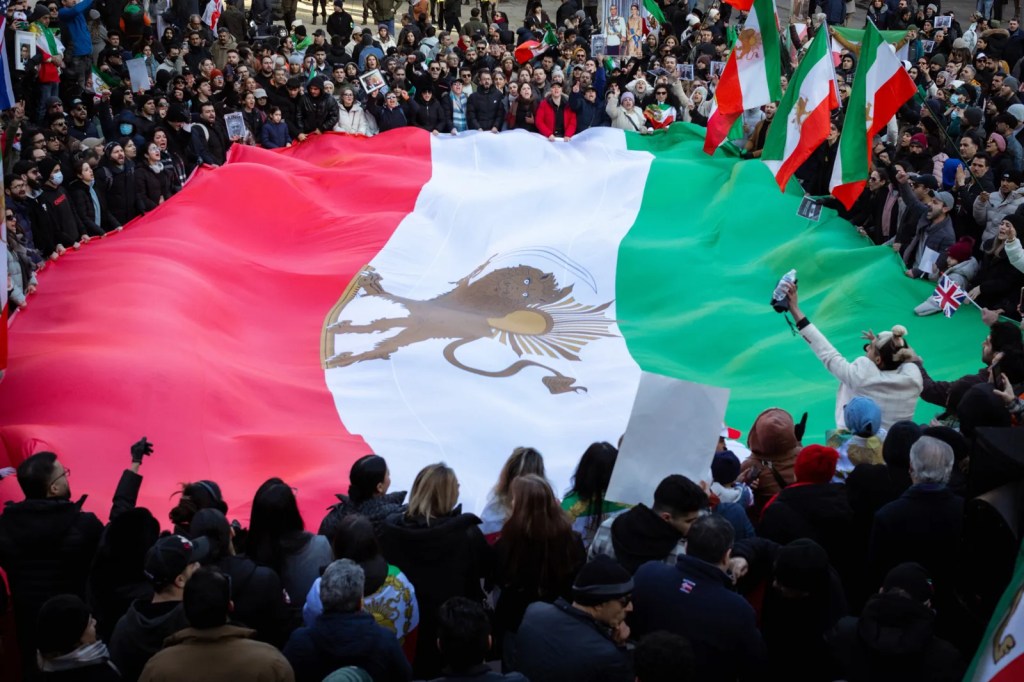
A pivotal moment came around January 8, when an exiled opposition figure, Reza Pahlavi, publicly urged Iranians to mobilize on a larger scale. The appeal appeared to resonate more widely than many observers expected, contributing to a surge in protests that followed. Around the same time, Iranian authorities imposed what was described as an unprecedented communications shutdown.
International monitors and observers characterized the internet restrictions as deeper and more sustained than those seen during prior unrest in 2019 or 2022. Connectivity was reported to have dropped to a minimal fraction of normal levels, leaving families struggling to contact relatives and making it difficult to verify events on the ground. Even in this environment, some videos and images reportedly made it out of the country early in the blackout, though the flow later slowed to a trickle, suggesting either tighter controls or more effective disruption.
Reporting described Iran using a blend of techniques to control information. These included rerouting or manipulating internet connectivity at the national level, blocking or degrading VPN traffic, and relying on a domestic state controlled network that could keep limited services functioning even while cutting broader access. Satellite based workarounds, including the use of smuggled Starlink terminals that are illegal in Iran, were discussed as a partial lifeline, though with reports that access was uneven and increasingly disrupted. Several possible interference methods were raised, including jamming or spoofing signals that satellite systems rely on to function.
Alongside the communications crackdown, the security response reportedly intensified sharply. Accounts described the deployment of multiple security forces, including units linked to the Revolutionary Guards and affiliated militia elements, as well as the use of snipers and live ammunition in some locations. The state has consistently maintained that violence was driven by hostile elements, including armed participants and foreign backed actors, while activist networks and leaked footage have suggested that security forces fired on people who appeared unarmed. With limited independent access, the full scope and sequence of events remains difficult to confirm.
Competing Death Tolls
In recent days, Iranian state television carried what it presented as the first official death toll. The figure was attributed to a statement by the Martyrs Foundation, which said 3,117 people were killed. The statement added that 2,427 of those killed were civilians and members of the security forces, without clarifying how the remaining casualties were categorized.
Activist reporting produced a higher estimate. A US based monitoring group, the Human Rights Activists News Agency, placed the death toll at 4,560, citing a network inside Iran that it says verifies fatalities. Independent verification has been constrained by the ongoing blackout and the absence of open access for international media and outside investigators.
Even with these discrepancies, multiple accounts converged on the conclusion that the death toll is extraordinarily high by modern Iranian standards, exceeding the casualties reported in previous rounds of unrest in recent decades. Comparisons were also drawn to the turmoil surrounding the 1979 revolution, largely due to the combination of scale, severity, and uncertainty about what comes next.
Iran’s Supreme Leader Ayatollah Ali Khamenei, in remarks reported over the weekend, acknowledged that the protests left several thousand dead and blamed the United States, marking one of the clearest signals from the top of the system about the magnitude of casualties.
Mass Arrests, Punishment Threats, and Asset Seizures
The crackdown was not limited to lethal force. By activist estimates, nearly 26,500 people were arrested. Iranian authorities continued to announce arrests in multiple provinces and cities, often describing detainees as organizers or instigators of unrest, or as participants in violent acts against public institutions and religious sites.
Iranian officials also signaled that punishments could be harsh. Statements carried by state media described a two track approach, with severe treatment promised for those labeled as violent “rioters” and potential leniency for individuals portrayed as having been misled by foreign actors. Senior security officials reportedly urged people to turn themselves in within a short time window, promising reduced sentences in exchange.
State television aired confessions from detainees with faces blurred, continuing a long criticized practice that rights groups and foreign observers have described as coercive. At the same time, officials emphasized that they aimed to recoup economic damage from unrest through confiscations. Reports described the seizure of assets from prominent figures alleged to have backed protests, including businesses and cafes, framing these actions as compensation for property damage.
In the background was widespread concern that some detainees could face execution. Iran is already among the world’s most prolific users of capital punishment, and comments from officials contributed to fears that legal proceedings could be accelerated.
Iran’s Foreign Minister Warns the US Against Renewed Military Action
As reporting on casualties and arrests intensified, Iran’s foreign minister, Abbas Araghchi, issued his most explicit warning yet about potential conflict with the United States. In a published opinion article, he argued that the most violent period of unrest was limited in duration and again placed blame on armed demonstrators. He also framed Iran as having exercised restraint during the June 2025 Israel-Iran war, while emphasizing that future restraint should not be assumed.
The core message was that Iran would respond decisively if attacked again, and that a major confrontation would not be short, contained, or limited to Iran. The warning implicitly drew on Iran’s missile capabilities, particularly its short and medium range arsenal that could threaten US bases and interests across the Gulf region.
In practical terms, there were already indications of increased caution. Restrictions were reported on certain movements by US diplomats to bases in Kuwait and Qatar, reflecting concern about retaliation if tensions escalated.
Araghchi’s position came with diplomatic consequences. His invitation to the World Economic Forum in Davos was rescinded in connection with the protest killings, underscoring the reputational impact of the crackdown and the degree to which Iran’s domestic crisis is spilling into international forums.
US Military Movements Add to the Sense of Imminent Risk
Against this backdrop, the United States began repositioning military assets. Ship tracking data showed the USS Abraham Lincoln, which had been operating in the South China Sea, transiting through the Strait of Malacca into the Indian Ocean and heading west. A US Navy official, speaking anonymously, said the carrier and accompanying destroyers were moving in that direction. While US officials did not explicitly state that the group was bound for the Middle East, its location and direction indicated it could enter the region within days.
The context here matters, as the the US recently carried out a major deployment in the Caribbean that culminated in troops seizing Venezuela’s Nicolás Maduro, and that operation was referenced as a benchmark by commentators weighing whether Washington might contemplate a similarly decisive move against a leader it considers hostile.
President Donald Trump’s stance was portrayed as volatile and consequential. He publicly warned Iran against killing protesters and hinted at strong action, while also signaling at points that an attack might not be necessary if violence subsided. One step announced by the US was a tariff policy targeting countries that trade with Iran, alongside a pullback from engagements with Iranian officials after Araghchi floated a revival of nuclear related talks.
At the operational level, the US reportedly began withdrawing some personnel from major regional facilities in Qatar and Bahrain, a move often interpreted as a precaution when strikes are being considered or when retaliation is feared.
Regional governments, especially in Gulf Arab states, were reported to have urged Washington not to attack, reflecting fears that escalation would place their territory and critical infrastructure within the range of Iranian missiles and other retaliatory tools. Iran, for its part, reportedly shut its airspace last week, interpreted as a sign it anticipated potential strikes.
Drivers of Unrest
Beyond the immediate violence, the unrest was repeatedly linked to economic collapse and public hardship. Descriptions emphasized the rapid weakening of the rial, high inflation, rising import costs, and widespread poverty. Employment levels were portrayed as depressed, with hardship affecting both working class households and professionals.
Multiple accounts argued that sanctions have compounded these pressures, particularly those tied to oil exports, while also highlighting internal corruption and the economic influence of the Revolutionary Guards, which are described as controlling major commercial networks spanning key sectors. This combination, in the narrative presented, left the state with limited tools to calm the streets besides force.
Officials reportedly proposed small scale payments or stipends to ease anger, but this was portrayed as inadequate relative to the depth of economic distress.
The Uncertainty of What Comes Next
Although there had been no major protests for several days at the time of the reporting, the lull was not treated as a resolution. Iran’s own history suggests protest cycles can recede and then return with greater intensity. The ongoing communications shutdown has made it difficult to gauge the true level of organizing, morale, and fear across the country.
Iranian authorities signaled that internet restrictions might be eased gradually, while also replacing a top executive at a major telecom provider amid reports that some operators hesitated to enforce shutdown orders. State media also reported actions against domestic outlets that published protest related reporting, and described episodes of satellite broadcast disruption, hinting at a broader contest over information control.
A recurring element in the coverage was the role of Reza Pahlavi as a possible rallying figure, especially given the absence of organized opposition inside Iran after decades of repression. He has presented himself as a transitional leader who would oversee a move toward democratic governance and put major constitutional questions, including the potential restoration of the monarchy, to a referendum.
At the same time, accounts underscored doubts about his ability to unify Iran’s fragmented opposition, particularly among ethnic minorities and non monarchist movements that distrust the legacy of the pre 1979 era or favor decentralization. His practical reach inside Iran was described as uncertain, with skepticism about whether online resonance translates into organizational capacity on the ground.
Several narratives framed the crisis as having consequences far beyond Iran’s borders. Iran’s internal instability raises concerns about refugee flows, regional proxy dynamics, and control over missile and drone stockpiles. The existence of enriched uranium, nuclear expertise, and hardline factions adds another layer of risk, especially if the state fragments or loses cohesion.
For the United States and its partners, the dilemma is acute. Military intervention could trigger Iranian retaliation across the region and produce unpredictable escalation. Doing little could be seen as abandoning red lines tied to mass killings or executions. Taking steps to restore communications, such as facilitating satellite connectivity, was presented as an option with lower immediate military risk, but not necessarily one that would change outcomes quickly given Iran’s control over domestic telecom infrastructure and its capacity to disrupt workarounds.
Analysis:
Based on the events we’ve seen play out over the last few weeks, Iran’s leadership appears determined to treat the protests as an existential threat and to use maximal force to deter future uprisings. Yet the scale of casualties, the breadth of arrests, and the intensity of the blackout suggest not confidence but insecurity. A state that believes it can manage dissent through limited repression typically does not need to sever communications nationwide for weeks or acknowledge thousands of deaths.
At the same time, the opposition landscape remains structurally weak inside the country. Iran’s system has spent decades preventing the emergence of credible, legal, and organized alternatives. That leaves space for symbolic figures abroad and sudden surges of mobilization, but it also increases the danger that if the center weakens, the vacuum is filled by fragmentation rather than a coherent transition.
Foreign intervention, which some voices in Washington have implied and which Tehran is clearly preparing for rhetorically, looks like a high risk accelerator rather than a solution. A limited strike might satisfy demands for punishment or deterrence, but it is unlikely on its own to stop domestic repression and could unify hardliners. A larger strike or an attempt at leadership decapitation could produce regional escalation and leave Iran’s internal succession dynamics unpredictable, particularly in a system where power is distributed across multiple security and clerical figures.
The prospective scenarios moving forward from here could all be costly. One is that the regime survives, hardened by bloodshed, and Iran enters a longer period of stagnation, repression, and isolation. Another is that the state fractures, producing internal conflict in a country with significant ethnic diversity, armed factions, and sensitive military capabilities. A third is a transition driven by insiders, such as factions within the Revolutionary Guards sidelining clerical leadership, which could reduce some forms of ideological rigidity but might deepen militarization unless paired with a viable economic opening and credible political reform.
What stands out most is that the protest movement’s bravery and the state’s severity are now colliding with a regional security environment already primed for escalation. With US forces repositioning and Iranian officials publicly warning of prolonged retaliation, the risk is not only that Iran’s domestic crisis worsens, but that it becomes the trigger for a wider confrontation that neither side can easily contain.
 IRinFive
Leave a comment