6/6 – Economic & Geopolitical Analysis Piece
As the Ukraine war grinds on and ceasefire prospects flutter, President Vladimir Putin’s unwillingness to engage seriously with peace proposals—most notably from U.S. President Donald Trump—can be traced not only to territorial ambitions, but to the very structure of Russia’s wartime economy. Despite diplomatic overtures from Trump, who has grown visibly irritated by the lack of progress, Russia continues to push westward on the battlefield, showing little interest in negotiations that would bring the conflict to a close. The consequences of Russia’s militarized growth model, and the uncertainty surrounding its potential demobilization, point to a broader geopolitical standoff with implications that extend well beyond Ukraine.
A War-Fueled Economic Revival
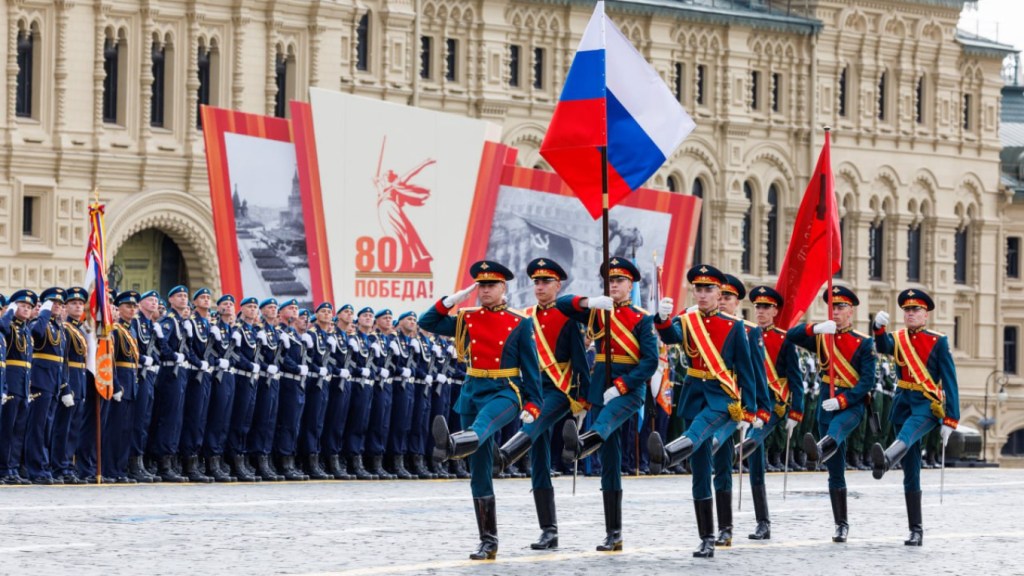
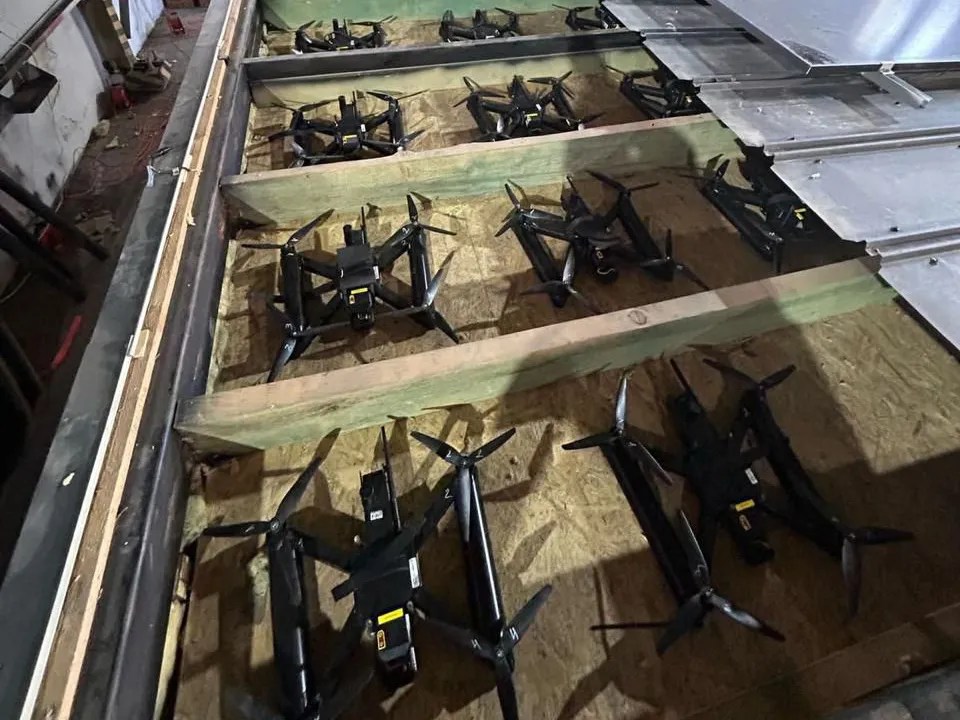
After failing to capture Kyiv in the war’s early months, Putin reshaped Russia’s economy into one singularly geared for prolonged military engagement. Defense spending surged, and state-run factories were retooled to run around the clock, churning out tanks, howitzers, and ammunition in record numbers. The Kremlin offered bonuses equaling up to a year’s salary to entice new recruits. At one point, more than a thousand Russians were signing up each day, revitalizing an army battered by early losses.
This militarized economy not only stabilized the war effort but became a new engine for Russian growth. Defense plants provided steady employment in economically depressed regions, raised wages to outcompete enlistment bonuses, and fueled consumer spending in provincial towns far removed from Moscow and St. Petersburg. The war economy created a level of economic redistribution not seen since the fall of the Soviet Union.
But this rapid mobilization also made Russia more dependent on the war’s continuation. Entire sectors of the economy—defense manufacturing, logistics, and raw materials—have become so deeply intertwined with military procurement that scaling them back could unleash widespread unemployment and social discontent. Experts warn that even if Putin were inclined to end the war, dismantling the military-industrial machine he has built would be an enormous economic and political challenge.
Over the past month, Russia has captured more than 100 square miles of Ukrainian territory, signaling a shift in battlefield momentum after a period of stalemate. These gains have bolstered Putin’s confidence, giving him leverage to delay or dismiss peace talks without fear of losing ground. Despite mounting pressure from European leaders and repeated appeals from Trump, Russia has not meaningfully engaged in negotiations.
According to regional analysts, Putin’s preference to “slow-walk” any peace process reflects a belief that time is on his side—militarily, economically, and diplomatically. His success on the battlefield allows him to maintain the perception of strength at home while avoiding the domestic turbulence that a sudden military drawdown could trigger.
The stakes are higher than ever for the Kremlin. Peace would not only halt the territorial advance but also necessitate the demobilization of hundreds of thousands of soldiers—many of whom joined under short-term contracts and may have few opportunities in civilian life. In a country where economic growth outside the defense sector has stagnated, this transition could be volatile.
Trump’s Waning Patience
President Trump, once praised for his willingness to maintain a working relationship with Putin, has become increasingly vocal about the Russian leader’s refusal to cooperate. In recent public statements and social media posts, Trump expressed frustration with the rising death toll and the stalemate in negotiations. He has described Putin as “out of control” and indicated that the Russian president’s continued aggression could no longer be excused under the guise of strategic patience.
Trump’s failure to broker a deal so far has complicated his broader Middle East and European strategies. His peace overtures—framed as part of a wider effort to bring stability and reduce U.S. military entanglements—have been undermined by Putin’s stonewalling and by growing instability in other regions. While Trump remains committed to ending the Ukraine conflict, the tools available to him are limited, and domestic political backlash against his past affinity for Putin is starting to mount.
Russia’s Neighbors on Edge
As Russia’s military continues to advance, fears are growing in neighboring countries that the Kremlin’s ambitions may not stop in Ukraine. In Estonia, military officials are openly discussing contingency plans for a potential conflict on NATO soil. In Kazakhstan, analysts watch closely for signs that Russia might assert influence over the northern regions, home to significant ethnic Russian populations.
This regional anxiety is fueled by historical precedent. After World War II, Soviet authorities feared their own demobilized veterans and, under Stalin, often sent them to labor camps to neutralize any potential domestic unrest. Today’s Kremlin faces a similar conundrum: returning tens of thousands of war-hardened soldiers to an economy unable to absorb them could destabilize the regime.
For many in the region, the continued operation of Russia’s war machine raises the unsettling possibility that peace in Ukraine might simply redirect Russian military focus elsewhere.
A Fragile Economic Balancing Act
Analysts argue that the very success of Russia’s war economy now makes peace less economically feasible. The arms industry, having received billions in state support, has little incentive to scale down. Entire towns and regions depend on factory work linked to the defense sector. Demilitarization would likely result in job losses, wage cuts, and economic contraction in areas already vulnerable to social unrest.
Efforts to compensate by expanding arms exports have met with limited success. Russia, once the world’s second-largest weapons exporter, has lost ground in Asia and Africa, where customers increasingly seek higher-quality Western or Chinese alternatives. Moreover, many of Russia’s previous clients depend on loans and favorable credit terms—tools the Kremlin can no longer offer with the same flexibility due to sanctions and internal fiscal constraints.
Unlike the U.S. post-World War II, whose military innovations fueled civilian technologies like the internet, Russia’s war-driven growth has little spillover into the broader economy. Civilian sectors are suffering from labor shortages as workers flock to military and factory jobs. Inflation is rising on basic goods like food, with shortages reported in various sectors.
With oil prices also in decline, the sustainability of Russia’s economic model is under threat. While the defense sector remains artificially buoyant through government spending, the longer-term outlook is grim without structural reform or a pivot to peacetime production.
The Political Risk of Demobilization
The Kremlin’s challenge isn’t merely logistical or economic—it’s deeply political. The influx of short-term military contracts, large signing bonuses, and wartime mobilization has altered the social contract in many parts of Russia. If peace arrives, the state will face enormous pressure to either absorb these soldiers into civilian jobs or maintain their incomes—both costly and complex tasks.
A poorly managed demobilization risks unrest. Armed men returning to civilian life with reduced incomes, few prospects, and psychological trauma represent a volatile group. Historical analogies to the post-WWII Soviet Union offer a grim reminder of how governments once dealt with such populations through repression and exile.
The Kremlin today, while authoritarian, is more sensitive to public sentiment than its Soviet predecessor. Analysts believe Putin is aware of the risks. He faces a delicate balancing act: sustain a costly war indefinitely, or manage an equally perilous return to peace.
Putin’s hesitance to end the Ukraine war is not merely about geopolitical objectives or historical grievances—it is rooted in the very fabric of Russia’s wartime economy. The defense industry now underpins employment, regional stability, and economic growth. Demobilization, even if politically desired, would be economically painful and socially destabilizing.
President Trump’s peace efforts, while persistent, clash with the hard realities of Russia’s internal incentives. Without a clear path for economic transition or a strategy for post-war reintegration, Moscow has little reason to abandon a conflict that currently sustains its domestic order.
But this is a dangerous calculus. The longer Russia depends on war as a source of growth and unity, the harder it will be to pivot back to peace. And for neighboring states and global powers alike, the implications of a permanently militarized Russia may prove far more destabilizing than the conflict in Ukraine itself.
The world now watches not just for signs of battlefield change, but for a glimpse of how—or if—Putin plans to stop the machine he has built.

 IRinFive