11/16 – Geopolitical News & Analysis
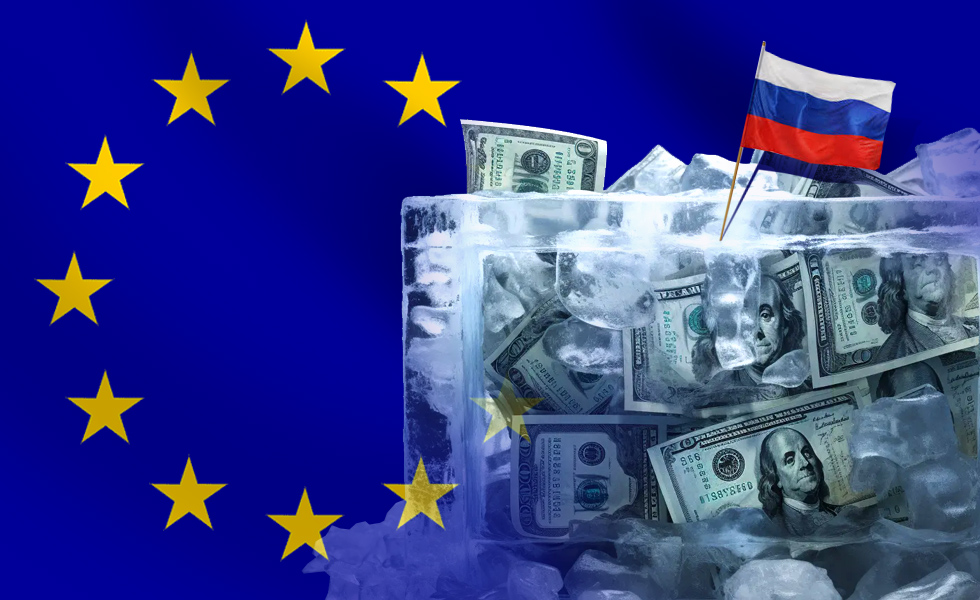
European leaders remain at a critical juncture in determining how to sustain Ukraine’s war-torn economy and military effort. The European Commission’s proposal to use profits from frozen Russian state assets to finance a €140 billion reparations-style loan has become a central legal, political and financial test. A recent round of meetings with senior Belgian officials, who oversee the jurisdiction in which most of the assets are held through the clearinghouse Euroclear, saw no breakthrough, leaving the matter unresolved ahead of a decisive summit in December.
Ukraine’s financial strain continues to intensify nearly four years into the conflict. American assistance, once a substantial component of Kyiv’s budgetary support, has halted under the current U.S. administration. International borrowing options have largely been exhausted, pushing Ukraine’s fiscal deficit to roughly 20 percent of GDP and raising public debt to around 110 percent. Without new funding, Ukraine risks running out of money by late winter or early spring. The Commission estimates that Ukraine will require at least €100 billion in external support this year to maintain government operations, sustain military activity, and stabilise infrastructure heavily damaged by Russian attacks. Officials warn that Ukraine’s ability to pay soldiers, repair energy facilities and uphold essential public functions will be severely weakened if financing is not secured in time.
To bridge this rapidly growing gap, the Commission has proposed using the profits generated from frozen Russian central bank assets, rather than the assets themselves, to back a large-scale loan for Ukraine. More than €200 billion in Russian reserves are immobilised at Euroclear. Under the plan, profits and investment income from these funds would be transferred to a collective EU mechanism that could service long-term loans or reconstruction programs. Repayment obligations for Ukraine would begin only after Russia ends the war and accepts responsibility for reparations, at which point deductions from the frozen assets could occur. The design is intended to maintain compliance with international law while making Russia indirectly contribute to the financial burden of the conflict.
Belgium, however, has emerged as the most cautious member state. As the home of Euroclear and the jurisdiction hosting most of the Russian assets, Belgium faces considerable legal risk. Prime Minister Bart De Wever has emphasised that Belgium cannot support the plan without strong legal guarantees, extensive risk-sharing among member states, and assurances that it will not be held liable in the event of lawsuits brought by Russia or affiliated entities. De Wever raised these concerns during the October European Council meeting, noting that a court ruling in Russia’s favour could otherwise leave Belgium solely responsible for repayment.
Belgium is particularly worried about the fragility of the EU’s sanctions regime, which requires unanimous renewal every six months. Brussels fears that a dissenting member state such as Hungary or Slovakia could block renewal in the future, unfreeze the assets and obligate Euroclear to return them. The Belgian government is also calling for an arrangement that distributes financial risk proportionally across all EU members. Although the Commission has proposed that national guarantees be issued in line with each country’s economic size, Belgium wants automatic and immediate compensation if legal challenges succeed.
The failed attempt to secure a compromise at the late-week meeting last Friday reinforced the stalemate. Belgian officials have expressed concern that the Commission has not yet provided the full range of alternative financing models requested by EU leaders in October. They insist that all viable options must be developed and evaluated before any decision is reached. While they describe their stance as constructive rather than obstructionist, they note that time is running short and the issue must be resolved collectively.
The Commission is continuing to warn that any further delay could leave Ukraine severely underfunded at a crucial stage of the war. Although Brussels has been able to provide nearly €5.9 billion in short-term support through existing instruments, this falls far short of Ukraine’s long-term needs. Without agreement on the frozen-asset mechanism, the EU may be forced to rely on less comprehensive tools such as short-term bridge loans, bilateral contributions, or expanded joint borrowing. Diplomats privately concede that none of these options would provide the magnitude or stability offered by the proposed €140 billion loan.
Analysis:
The dispute highlights the EU’s broader challenge of balancing moral responsibility, legal integrity and financial prudence. The Commission views the frozen assets as an opportunity to fund Ukraine without placing the burden directly on European taxpayers while reinforcing the principle that Russia must ultimately pay for the damage it has inflicted. Belgium, by contrast, sees substantial legal uncertainty and is concerned that Euroclear, given its role in global finance, could face legal threats that could undermine confidence in the European financial system.
Meanwhile, the debate is unfolding against a wider geopolitical backdrop. With reliance on U.S. support diminishing, European leaders are acutely aware that sustaining Ukraine has become a test of Europe’s strategic autonomy and its ability to fund major security commitments independently. Maintaining Ukraine’s war effort and reconstruction is projected to cost around $390 billion over the next four years, an amount equivalent to roughly 0.4 percent of the combined GDP of NATO’s European members. Analysts argue that while the cost is substantial, it remains within the EU’s collective economic capacity. At the same time, Russia continues to face mounting economic pressures with slow growth, high inflation and elevated interest rates.
As the December European Council summit approaches, leaders recognise that the next steps will likely shape both Europe’s internal cohesion and its external credibility. The Commission is expected to present a detailed set of options, including refinements to the frozen-asset mechanism, an expanded borrowing framework, and interim funding solutions that could operate until a comprehensive plan is in place. Should no agreement be reached, the EU risks entering 2026 without a stable financing model for Ukraine at a moment when its needs are most dire.
The outcome of the forthcoming summit will not only determine the pathway for Ukraine’s immediate financial support but will also set a broader precedent for how the EU uses economic instruments during conflicts. Whether through the frozen asset proposal or an alternative mechanism, the decision will reveal how far Europe is prepared to adapt its financial and legal frameworks to meet the demands of an evolving security environment.
 IRinFive
Leave a comment