8/4 – Geoeconomics & National Security Analysis
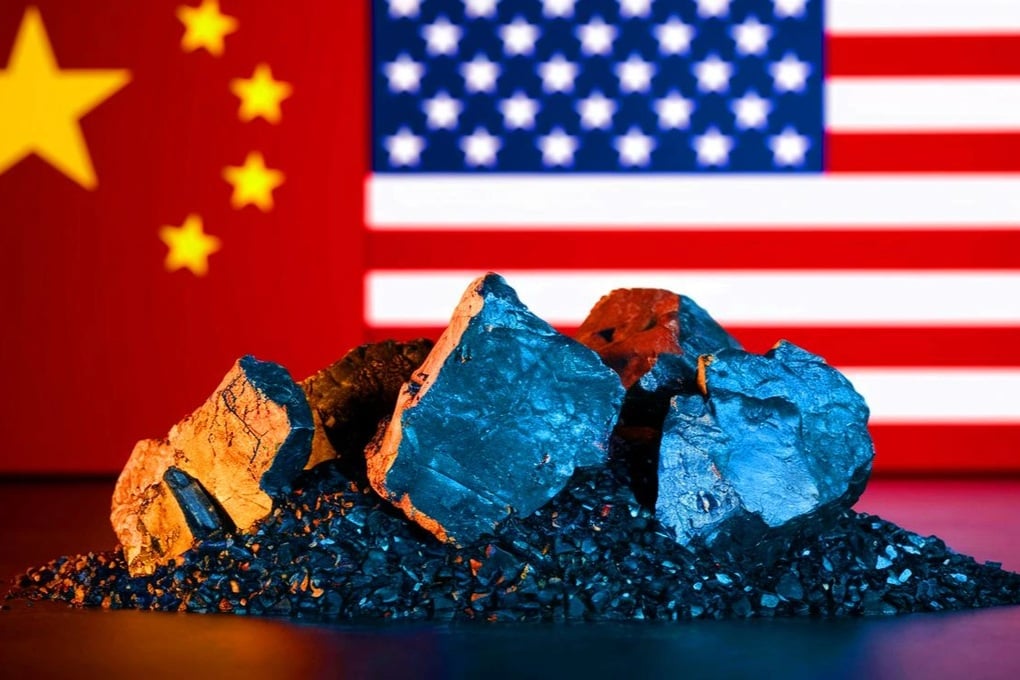
The People’s Republic of China has recently moved to tighten its grip on global supplies of critical minerals, leaving Western defense manufacturers scrambling to keep production on track. From drone parts to jet fighter engines, the U.S. military’s reliance on rare earths and specialty metals—of which China dominates both production and processing—has become a clear strategic vulnerability. The unfolding mineral squeeze is reshaping industrial priorities and escalating tensions at a time when Washington is already engaged in complex trade negotiations with Beijing.
Earlier this year, amid deteriorating trade relations, China implemented stricter export controls on rare earth elements and other vital materials, significantly slowing shipments to Western defense contractors. Although some flows resumed in June after the Trump administration made concessions in ongoing trade talks, Beijing has maintained tight restrictions on any minerals deemed connected to military applications. As a result, U.S. manufacturers have been forced to delay orders, seek alternative suppliers, and pay staggering premiums for materials that were previously routine components of their supply chains.
One U.S. drone motor manufacturer supplying the Pentagon reported up to two-month delivery delays after being cut off from Chinese magnet shipments. Prices for essential rare earths like samarium—used in high-temperature jet engine magnets—have skyrocketed, in one case being offered at sixty times normal rates. These bottlenecks are already inflating the cost of defense systems and worrying contractors across the board.
Supply Chain Choke Points and Chinese Leverage
China currently supplies approximately 90% of the world’s rare earth elements, and its dominance extends to germanium, gallium, and antimony—minerals essential for night vision, bullet hardening, guidance systems, and infrared targeting. In December, Beijing further escalated its restrictions, banning the sale of germanium and gallium to U.S. buyers, compounding the supply crunch..
Complicating matters is China’s requirement that companies requesting export licenses provide detailed documentation—including product designs, manufacturing photos, and buyer lists—to prove that rare earths won’t be used in military applications. Western firms have refused to comply, resulting in stalled shipments and even formal denials.
Meanwhile, smaller defense startups—often lacking the capital and supply-chain expertise to stockpile or diversify—are especially vulnerable. Analysts estimate that over 80,000 parts used in U.S. weapons systems depend on critical minerals now under Chinese control.
U.S. Counter-Strategy
In response to growing concerns, the Pentagon has begun bolstering domestic production of rare earths and other niche materials. Among the most significant moves was the U.S. government’s $400 million investment in MP Materials, a key rare-earth mining and magnet manufacturing firm operating in North America. The aim is to ramp up local production capacity for use in F-35 jets and cruise missiles, reducing exposure to foreign supply chain disruptions.
Other government efforts include a $14 million grant to a Canadian company for germanium production and the creation of the Critical Minerals Forum, an initiative to support projects that enhance mineral supply resilience across the U.S. and its allies. The Defense Department is also requiring all contractors to eliminate Chinese-sourced rare-earth magnets from their products by 2027—a move that has accelerated industry-wide investment in alternative sources.
Major defense firms that previously relied on subcontractors to source these materials are now taking direct control, recognizing that unless they intervene, they may not secure the inputs required to meet Pentagon demands.
China’s intent to enforce its mineral embargo is more than rhetorical. Earlier this year, the United States Antimony Corporation tried shipping 55 metric tons of Australian-mined antimony to its smelter in Mexico via a Chinese port—something it had done without issue in the past. But in April, Chinese customs detained the shipment in Ningbo for three months, eventually releasing it only on the condition that it be rerouted to Australia instead of the U.S. When it arrived, the company found its security seals broken and had to assess whether the material had been tampered with.
This incident highlights how China is actively weaponizing its mineral control as part of a broader strategy to limit U.S. military and technological capabilities. Industry insiders say shipping and logistics firms were stunned by the seizure, calling it unprecedented.
Analysis:
Beijing’s grip on critical minerals has exposed a critical strategic vulnerability for the U.S. defense sector. The events of 2025 have made clear that decades of outsourcing, coupled with global dependence on Chinese processing capabilities, have created fragile supply chains unfit for prolonged geopolitical tension.
Although the Biden and Trump administrations have each attempted to address the issue with various incentives and trade agreements, the speed at which China can choke access to vital materials has far outpaced Western efforts to reduce reliance. For all the investments being poured into domestic mining and magnet production, the reality is that scaling such capacity will take years, not months.
The current mineral bottleneck is more than an economic challenge—it is a matter of national security. The Pentagon’s reliance on Chinese minerals for everything from satellite components to drone motors highlights the urgent need for diversification and long-term planning. As some industry executives note, unless the defense sector builds and secures its own upstream resources, it risks a future in which adversaries can halt production lines with a single regulatory notice.
Beijing appears determined to use this leverage strategically. Its insistence on vetting end-users and blocking defense applications signals an understanding of the stakes involved. The rare earths dispute is no longer just about trade—it’s about who controls the material backbone of modern warfare.
As tensions between the U.S. and China persist, the minerals conflict could well be a precursor to broader decoupling in critical technologies. For now, Western defense firms find themselves in a predicament to either build a resilient supply chain or continue to live at the mercy of a geopolitical rival.
 IRinFive
Leave a comment