7/25 – International News & Analysis
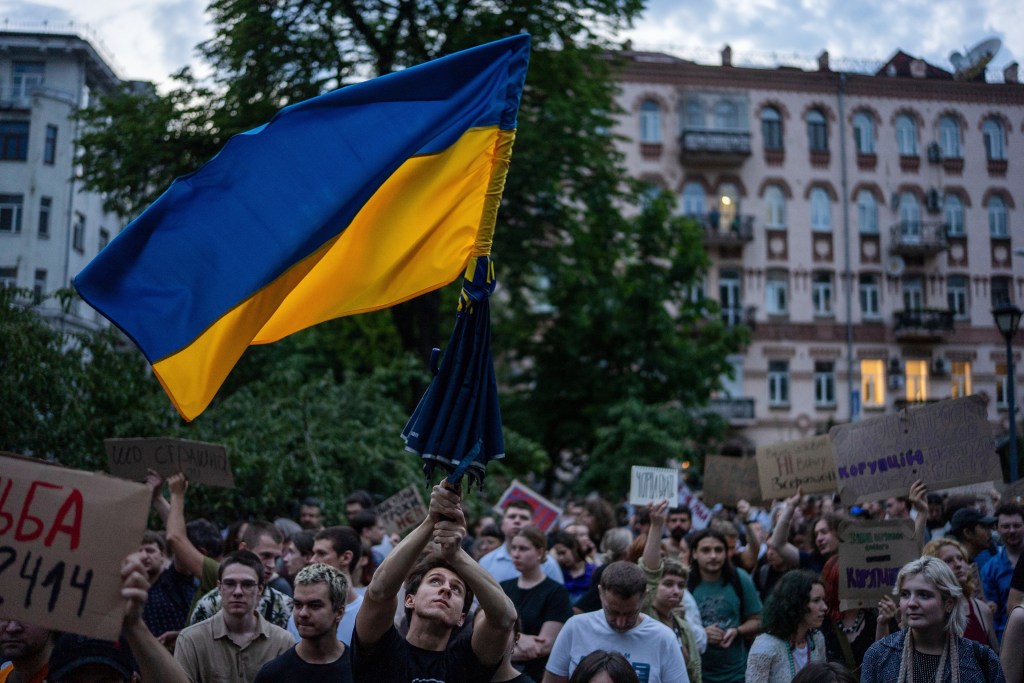
President Volodymyr Zelenskyy has signed into law a controversial bill that strips Ukraine’s flagship anti-corruption agencies of their independence, triggering the largest domestic protests since Russia’s 2022 full-scale invasion. The move, defended by Zelenskyy as a wartime safeguard against alleged Russian infiltration, has sent shockwaves through Ukrainian civil society, fueled rare public rebuke from Western allies, and raised grave concerns over Ukraine’s democratic backsliding.
On July 22, the Verkhovna Rada — Ukraine’s parliament — passed legislation that grants sweeping powers to the country’s prosecutor general, a presidential appointee, over the National Anti-Corruption Bureau (NABU) and the Specialized Anti-Corruption Prosecutor’s Office (SAPO). Within hours, Zelenskyy signed the bill into law, sparking outrage from anti-corruption watchdogs, war veterans, students, civil society, and international donors.
The law empowers the prosecutor general to reassign or quash investigations initiated by NABU and SAPO—agencies specifically created in 2015 under EU and U.S. guidance to investigate and prosecute corruption free from political interference. Under the new legislation, their independence is effectively dissolved, and oversight is returned to the presidential administration.
Despite curfews and wartime restrictions on assembly, protests erupted across Ukraine. Hundreds rallied in Kyiv, Odesa, Lviv, and Dnipro. Protesters included civilians, law students, veterans, and even soldiers on leave—many disillusioned by what they view as a betrayal of the very values they are fighting to defend.
The Justification and the Fallout
Zelenskyy has insisted that the reform is necessary to root out Russian infiltration within the anti-corruption agencies. His team pointed to the recent arrests of NABU officials allegedly compromised by Moscow. But critics say these claims are unsubstantiated and amount to a pretext for a political power grab. Even European Commission officials labeled the rationale “deeply concerning,” warning that undermining judicial independence would derail Ukraine’s EU accession hopes.
Adding to the alarm, Ukraine’s domestic intelligence agency (SBU) raided NABU and SAPO offices shortly after the law passed. Simultaneously, efforts were made to block the appointment of an IMF-endorsed candidate to head the State Bureau of Economic Security—again on vaguely defined “national security” grounds. Civil society activists argue that such actions increasingly mirror the authoritarian tactics Ukraine claims to oppose.
Until now, the West has largely muted criticism of Zelenskyy, wary of emboldening Moscow or undermining Ukraine’s war effort. But this latest episode proved a tipping point.
European Commissioner for Enlargement Marta Kos publicly warned that the law jeopardizes Ukraine’s EU future. G7 ambassadors in Kyiv issued a rare joint statement urging the Ukrainian government to uphold rule-of-law standards. Ursula von der Leyen, president of the European Commission, demanded clarification from Zelenskyy. Defense Commissioner Andrius Kubilius warned that in war, trust in leadership is paramount—and easy to lose.
Centralization of Power
Civil society experts say Law No. 12414 is not an isolated development but part of a broader pattern under Zelenskyy’s wartime leadership. Since the invasion, the president has increasingly concentrated authority in the hands of a narrow circle of advisers, led by his powerful chief of staff Andriy Yermak.
Recent government reshuffles removed key independent officials, including Foreign Minister Dmytro Kuleba and Armed Forces Commander Valery Zaluzhny, further fueling accusations of “CEO-style” governance that sidelines institutional checks and balances. This vacuum of accountability, critics say, could embolden authoritarian tendencies that jeopardize the country’s long-term stability.
NABU and SAPO were established not just as symbols of reform but as vital mechanisms for securing Western military and financial aid. Their independence is a benchmark of democratic credibility. If Ukraine backslides into a model resembling the pre-2014 oligarchic system, it risks losing not only institutional integrity but also the moral high ground in its existential struggle against Russia.
Analysis:
Support for Ukraine in the West is already under strain. With U.S. leadership shifting and European governments grappling with economic fatigue, politicians need continued justification to fund the war. A Ukraine perceived as sliding into autocracy undermines that case—and plays directly into Moscow’s narrative that democracy is a myth in post-Soviet space.
Under mounting domestic and international pressure, Zelenskyy pledged on Wednesday to introduce new legislation ensuring the independence of NABU and SAPO. But observers remain skeptical. The president’s vague assurances, coupled with the speed of the original bill’s passage, leave many doubting his sincerity. The Kyiv Independent’s editorial summed up the mood bluntly: “Zelenskyy just betrayed Ukraine’s democracy — and everyone fighting for it.”
NABU chief Semen Kryvonos and SAPO head Oleksandr Klymenko confirmed that their institutions are now vulnerable to political interference. Eighteen MPs who voted for the law are themselves reportedly under NABU investigation, raising further questions about the motivations behind the legislation.
Zelenskyy’s decision to override institutional safeguards may offer short-term control, but it risks long-term harm. It weakens the legitimacy of his presidency, alienates Ukraine’s most loyal international backers, and fractures the trust of the very citizens holding the frontlines.
Russia does not need a battlefield victory to destabilize Ukraine. It only needs to watch the country undermine its own institutions from within. As seen in countries like Georgia, democratic erosion from internal missteps can achieve what external forces cannot.
 IRinFive
Leave a comment