7/23 – International Trade News & Analysis
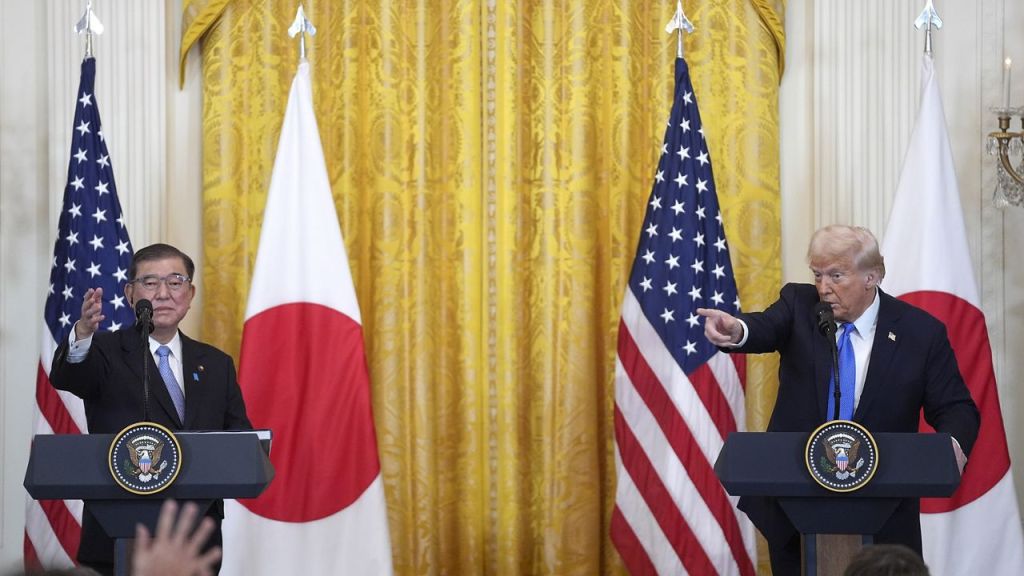
President Donald Trump on Tuesday announced a high-stakes trade agreement with Japan, marking the largest bilateral trade pact of his administration thus far. The new U.S.–Japan agreement institutes a 15% across-the-board tariff on Japanese goods—down from the initially planned 25% that was to go into effect on August 1. In return, Japan has committed to investing $550 billion into the U.S. economy and easing long-standing barriers on American exports, particularly in sectors that have historically faced protectionism, such as agriculture and automobiles.
While exact details remain murky, early briefings suggest the agreement will lower the tariff on Japanese vehicles—a key export for Japan—from 25% to 15%. That concession is significant given that autos account for over one-third of Japan’s $148 billion annual exports to the U.S.
The announcement comes at a politically sensitive time for both leaders. In Japan, Prime Minister Shigeru Ishiba is grappling with fallout from his party’s recent loss of control in the upper house of Parliament. Though the Japanese government has not yet released an official statement detailing the agreement, Trade Minister Ryosei Akazawa met with Commerce Secretary Howard Lutnick earlier in the week and posted a celebratory message online, signaling that Tokyo is on board with the broad outlines of the deal.
For Trump, the timing is part of a broader effort to wrap up a series of high-profile trade negotiations before his self-imposed August 1 deadline, when a host of punitive tariffs—ranging from 10% to 50%—are scheduled to take effect on more than 50 U.S. trading partners. With agreements now announced with Vietnam, the Philippines, Indonesia, and the United Kingdom, and talks set to resume with the European Union and China, the Japanese deal stands out as a major diplomatic win amid a fast-moving global tariff campaign.
The announcement sparked a rally on Asian financial markets. Japan’s Nikkei index surged 2.6% to reach a one-year high, while automaker stocks like Toyota and Honda gained over 10% in value. Optimism also spilled over to South Korea’s auto sector amid speculation of a similar U.S. deal with Seoul.
However, not all U.S. industries are pleased. The American Automotive Policy Council, representing giants like GM, Ford, and Stellantis, criticized the deal for creating tariff disparities. While Japanese vehicles would now face 15% import duties, cars made in Canada and Mexico—many of which contain high U.S. content—remain subject to a 25% tariff. U.S. auto executives argue that such inconsistency undermines domestic manufacturing and disadvantages American workers.
Furthermore, concerns linger over the broader inflationary impact of Trump’s ongoing tariff policies. General Motors recently posted a 35% drop in quarterly net income, attributing the shortfall to the rising cost of imports. Critics warn that if companies pass tariff-related expenses onto consumers, both business investment and household purchasing power could take a hit.
The Japan deal fits neatly into a pattern emerging from the Trump administration’s global trade policy playbook: issue a tariff threat, apply political pressure, and then secure investment and market-access concessions. Prior examples include a paused tariff escalation with China, a still-undetailed deal with Vietnam, and new tariff frameworks targeting Indonesia (19%) and the Philippines (19%).
Analysis:
The administration is presenting these moves as a blueprint to remake the U.S. economy into a manufacturing-led powerhouse. Treasury Secretary Scott Bessent reiterated this vision in a recent media appearance, arguing that if the U.S. boosts manufacturing while countries like China shift toward more consumption, the global economy will rebalance more sustainably.
Yet details are sparse, and follow-through remains uneven. For instance, almost three weeks after Trump announced a trade framework with Vietnam, no formal documentation has been released by either government. Observers remain cautious, given Trump’s tendency to unveil bold headlines before negotiating fine print or receiving reciprocal confirmation from foreign capitals.
Trump’s messaging around the Japan deal was heavy with political symbolism. He emphasized that America was “no longer being taken advantage of,” portraying the agreement as evidence of his ability to command respect and deliver economic wins.
From a strategic perspective, the deal provides Trump with leverage in ongoing talks with other major trading partners, particularly the European Union and China. The EU has been threatened with 30% tariffs beginning August 1 if a new agreement is not reached. Meanwhile, a separate window for negotiations with China remains open until August 12, with existing tariffs already at 30%.
The Trump administration is also eyeing additional joint ventures with Japan, including a proposed LNG pipeline in Alaska—a project long favored by the White House but previously met with skepticism from Tokyo. Japanese officials are now reportedly more receptive to such projects as part of a broader effort to stabilize relations and mitigate economic fallout from U.S. trade threats.
Trump’s trade deal with Japan reflects a distinctive blend of brinkmanship, economic nationalism, and transactional diplomacy. Economically, the agreement may benefit sectors like U.S. agriculture and manufacturing in the short term. But domestically, the uneven treatment of trade partners like Canada, Mexico, and Japan could create friction within American industries. Internationally, the rush to finalize multiple trade deals before August 1 underscores a broader strategy: use tariff deadlines as leverage to extract favorable terms, even if long-term structural reforms remain elusive.
 IRinFive
Leave a comment