7/15 – Geopolitical News & Diplomacy Updates
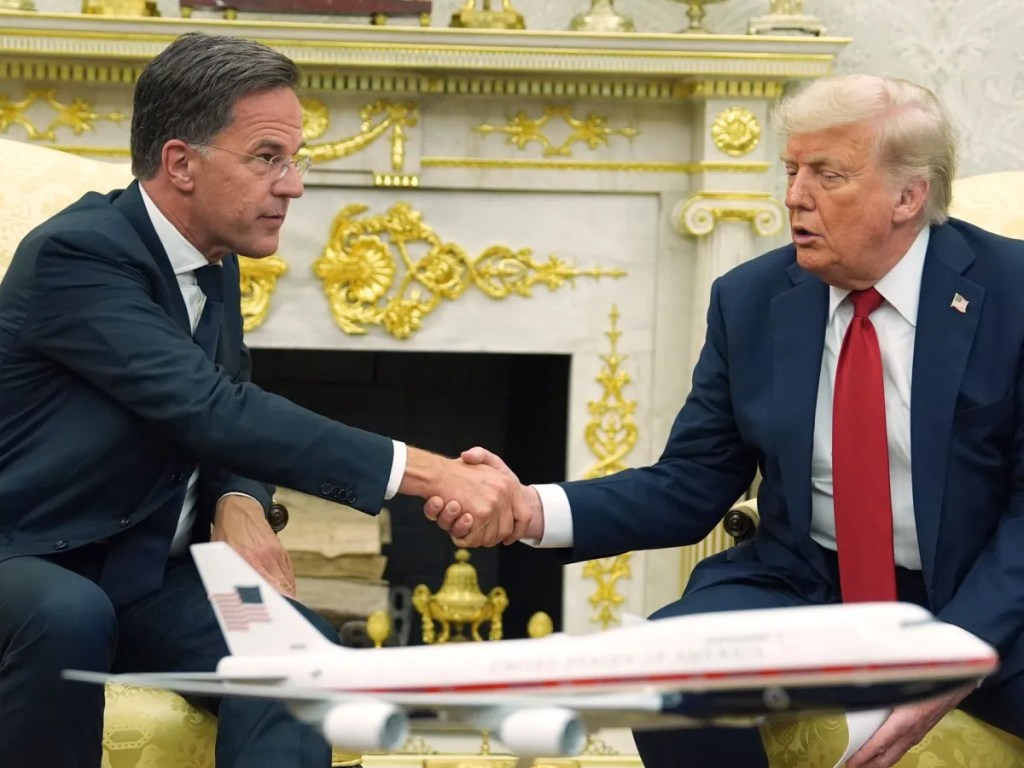
After months of mixed signals, suspended aid shipments, and cutting Russia the benefit of the doubt, President Donald Trump has taken his most assertive step yet in Ukraine’s defense: announcing a major U.S.-manufactured weapons package that will be financed by European NATO allies and transferred to Ukraine. The move marks a significant evolution in Trump’s approach to the war and introduces a powerful new economic threat—100% tariffs on Russian goods and secondary sanctions on any country continuing to do business with Moscow unless a peace deal is reached within 50 days.
Only months ago, Trump had entertained the idea of a reset in U.S.-Russia relations, speaking enthusiastically about the “great benefits” of a positive relationship with the Kremlin. But that optimism has eroded in the face of Putin’s escalating attacks and disregard for diplomatic overtures. After repeated delays and attempts to coax Russia into talks, Trump has now adopted a more assertive tone, describing his administration as “very unhappy” with Moscow and labeling the war “Biden’s conflict,” which he now seeks to resolve through intensified pressure and European coordination.
The turning point came as Trump acknowledged that efforts to negotiate directly with Russia had stalled. Increasing Russian drone and missile strikes on Ukrainian cities and infrastructure only hardened his stance. Observers within both the Republican and Democratic ranks had pushed for tougher secondary sanctions for months, but until now Trump had withheld his support. His change of heart has not only unlocked that bipartisan effort but also may reshape the nature of transatlantic defense cooperation.
NATO’s Wallet, America’s Arms
Trump’s solution is characteristically transactional: NATO allies will finance and coordinate the delivery of American-made weapons, including Patriot air defense systems, missiles, and ammunition. The Patriots—urgently requested by Kyiv—could be delivered quickly through a swap system in which existing European-owned Patriots are sent to Ukraine while backfilled with new U.S.-manufactured units.
The deal marks the first time the U.S. has formally committed to selling weapons to Europe for the explicit purpose of rerouting them to Ukraine, rather than donating them directly. It’s a move that aligns with Trump’s “America First” philosophy, allowing the U.S. defense industry to profit from the conflict while shifting the financial burden to European partners. Key contributors include Germany, the Netherlands, the UK, Canada, Sweden, Finland, Denmark, and Norway.
For Trump, the political calculus is twofold: support Ukraine without using U.S. taxpayer funds and demonstrate to his base that they are not paying for a war that is vastly unpopular among his MAGA base. This reconfiguration helps Trump claim a win on foreign policy, both economically and diplomatically, while appealing to NATO hardliners and congressional hawks who had grown weary of his previous reluctance.
Central to the new strategy is a 50-day grace period. If Moscow does not agree to a peace settlement within that window, the U.S. will impose punitive economic measures, including 100% tariffs on Russian imports and secondary sanctions on any country purchasing Russian oil or goods. Although Russian-American trade is modest, the real impact would come from targeting countries like China, India, and Brazil—nations that continue to buy discounted Russian energy and sustain Moscow’s wartime economy.
A bipartisan bill co-sponsored by 85 senators aims to give Trump the authority to impose up to 500% tariffs on any entity aiding Russia. Though this legislation has languished while waiting for Trump’s approval, his recent comments suggest he may now back it, triggering a major escalation in economic warfare.
Trump’s announcement also comes at a critical juncture in the military dynamics of the war. Russia has intensified its missile and drone bombardments, seemingly attempting to deplete Ukraine’s air defenses ahead of a possible late summer offensive. In this context, the delivery timeline and volume of promised Patriot systems are crucial.
The Pentagon has already reversed three suspensions of aid shipments to Ukraine in recent months. Most recently, air defense munitions were halted while sitting in Poland, only to be released after Trump’s direct intervention. U.S. defense production—particularly of PAC-3 interceptors for Patriots—is currently capped at about 500 annually, with plans to expand to 650 by 2027. Meanwhile, European production remains limited, and demand is high globally.
To expedite deliveries, Trump is encouraging European nations to send Patriots from existing inventories under the assurance that U.S. backfills will follow. However, if allies wait for new systems before acting, the reinforcements may come too late to blunt Russia’s offensive momentum.
Another option is fast-tracking Ukraine to the front of the manufacturing queue—a controversial move that would delay deliveries to other U.S. allies. Trump has not confirmed whether he is prepared to make such a prioritization.
Beyond Patriots, there are suggestions Ukraine may receive long-range strike capabilities, such as Tomahawk or JASSM-ER missiles, potentially giving it the ability to target deep inside Russia. Yet these weapons are in limited supply, and their provision would risk further escalation.
In Kyiv, Trump’s announcement has been met with a mix of hope and caution. While the resumption of weapons support was widely welcomed, concerns remain about the 50-day grace period. Ukrainian lawmakers and officials warn that Putin could use the delay to intensify attacks and solidify positions.
Trump has not clarified the full extent of future support, nor addressed scenarios in which Russia escalates further. The ambiguity leaves Ukraine exposed to both political and military uncertainty. Still, some Ukrainian officials credit Europe’s behind-the-scenes diplomacy and American congressional pressure for pushing Trump toward a firmer stance.
Putin has thus far shown no intention of backing down. His goals—annexing Ukrainian territory and preventing Ukraine from aligning with NATO—remain unchanged. Russia has ramped up its missile production, with help from North Korea, and continues to press the frontlines with relentless attacks.
Whether Trump’s ultimatum changes Putin’s calculus is uncertain. The 50-day deadline, combined with the potential economic shock of secondary sanctions, creates a new variable. But past behavior suggests Putin may try to wait out the clock, betting that Trump’s resolve will falter or that divisions among NATO allies will slow implementation.
 IRinFive
Leave a comment