7/10 – International News & Foreign Policy Analysis
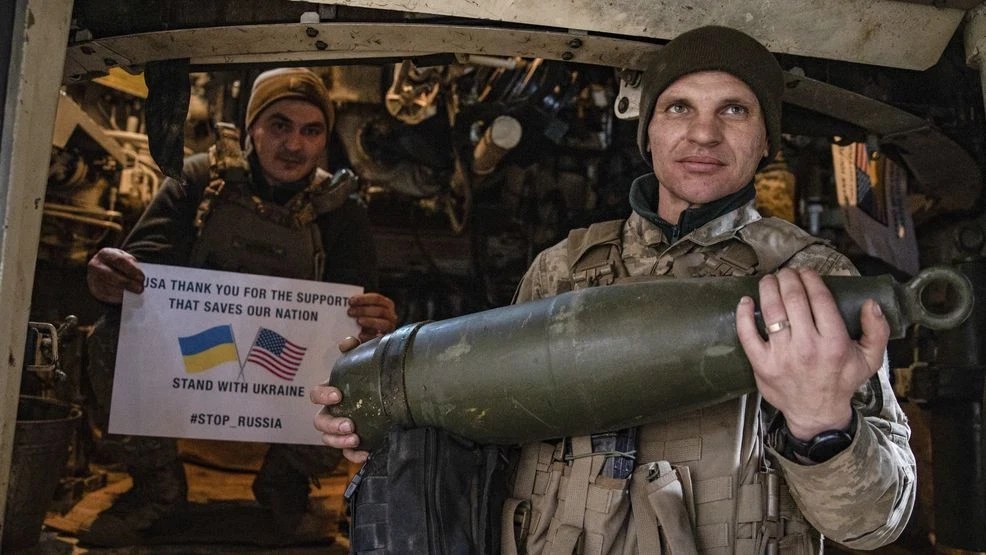
In a reversal that has once again highlighted the unpredictability of U.S. foreign policy under President Donald Trump, military aid to Ukraine is back on—just days after being abruptly frozen. The decision, announced during a high-profile White House dinner with Israeli Prime Minister Benjamin Netanyahu earlier this week, appears to mark a partial course correction after mounting criticism and strategic confusion within the administration and among allies.
“We’re going to send some more weapons. We have to. They have to be able to defend themselves,” Trump told reporters. “They’re getting hit very hard now.” The statement came as Ukraine endured one of the most intense waves of missile and drone attacks in months, with Russian forces pounding cities and military installations in a relentless aerial offensive.
Within hours, the Pentagon confirmed the move, saying it would deliver “additional defensive weapons” to Ukraine. Although the Department of Defense withheld specifics, the announcement followed Ukrainian President Volodymyr Zelensky’s urgent appeals to Washington for more Patriot missile systems and other air defense assets.
The Sudden Freeze
The resumption of aid follows a bewildering sequence of policy shifts that left Kyiv and Europe scrambling for answers. Earlier this month, the U.S. had quietly paused weapons shipments to Ukraine, triggering alarm among NATO allies and prompting speculation about the direction of America’s military support. The move, championed by Defense Secretary Pete Hegseth, was presented as a logistical review aimed at safeguarding U.S. weapons stockpiles. “We can’t give weapons to everybody all around the world,” said Pentagon spokesperson Sean Parnell on July 2.
But that explanation raised eyebrows. The weapons halted were primarily sourced from commercial production lines, not active-duty U.S. military reserves. Moreover, there was no corresponding pause in arms deliveries to Israel, which recently used up significant air-defense assets during its 12-day war with Iran. Critics noted the clear double standard that seems to follow American foreign policy when it comes to Israel.
In a call with Zelensky on July 4, the president expressed surprise at the halt in deliveries and vowed to address it. Just three days later, he did—personally overriding the Pentagon and instructing that shipments resume.
Between Deal-Making and Deterrence
The president’s about-face is as revealing as it is consequential. Since returning to office in January, Trump has walked a diplomatic tightrope on Ukraine—publicly criticizing Russian aggression while privately mulling over potential negotiations with Vladimir Putin. Until now, his administration had made no new commitments to Kyiv. The aid packages currently reaching Ukraine were approved under President Biden, with a scheduled tapering set through 2028.
While Trump’s decision to restart deliveries was met with cautious relief in Kyiv and Brussels, officials and analysts remain wary. The U-turn is widely viewed not as a full-throated recommitment to Ukraine’s defense, but rather a move to avoid the optics of collapse. Allowing Ukraine to fall under his watch would be a catastrophic geopolitical blow—one Trump knows could mirror the political fallout Biden faced after Afghanistan.
The Pentagon’s Dilemma
The reversal also underscores growing tensions within the U.S. defense establishment. While senior Pentagon officials have been advocating for a recalibration of priorities—shifting attention and resources toward China and the Indo-Pacific—Trump’s political calculus continues to dominate decision-making. Defense Secretary Hegseth, seated beside Trump during the Netanyahu dinner, nodded along as the president announced the resumption of aid, despite having signed off on the halt just days earlier.
For some, the moment was emblematic of Trump’s personalized approach to foreign policy. “America First,” under Trump, is not necessarily a doctrine—but rather a day-to-day improvisation. The civilian leadership at the Pentagon found itself publicly undermined, a stark reminder that strategic planning can be swept aside by presidential whim.
Ukraine’s vulnerability is growing. With cities under daily bombardment and ground forces stretched thin, the need for consistent military support has never been greater. Zelensky’s recent conversation with Trump reportedly included talks on joint defense production, long-term procurement, and investments to bolster Ukraine’s ability to “defend the sky.”
Germany, too, has stepped in, discussing the possibility of procuring Patriot systems for Ukraine to help bridge the gap. Yet the signal from Washington remains inconsistent.
Trump’s irritation with Putin was notable. “I’m disappointed, frankly, that President Putin hasn’t stopped,” he said—marking a shift from past attempts to flatter or entice the Russian leader. The tone suggests a realization that Putin may be exploiting Trump’s transactional instincts without offering anything meaningful in return.
But whether that moment of clarity translates into sustained support remains unclear. Trump has proven, time and again, that his foreign policy is shaped less by ideology than by short-term political image management.
Analysis:
Trump’s decision to resume arms shipments to Ukraine is best understood as a tactical adjustment rather than a strategic pivot. It was driven by political optics, not a newly discovered commitment to liberal democracy or collective security. It’s a patch, not a plan.
For Ukraine, the resumed flow of weapons will provide temporary relief. But without long-term funding, clear commitments, or a coherent policy framework from Washington, Kyiv remains dangerously exposed.
The reality is that Trump’s zig-zagging on Ukraine—suspending aid one week, resuming it the next—undermines the very deterrence it seeks to enforce. Russia is watching. So is China. So are America’s allies in NATO.
For now, Ukraine survives. But their survival is still far, far from any metric of strategic victory. And Washington’s ambivalence is becoming part of the problem.
 IRinFive
Leave a comment