7/4 – International Security Analysis
Last month, June the world witnessed two bold and technologically sophisticated military operations carried out by Ukraine and Israel which reshaped the nature of modern conflict. On June 1, Ukraine’s Operation Spider’s Web dealt a massive blow to Russia’s air power by targeting strategic bombers deep inside Russian territory. Less than two weeks later, Israel launched Operation Rising Lion, a calculated strike that dismantled Iran’s air defenses and enabled follow-up attacks on its nuclear infrastructure. In both cases, the successful use of low-cost, AI-enabled drones demonstrated the increasing power of uncrewed systems and signaled a broader transformation in the way war is fought.
Precision Over Price
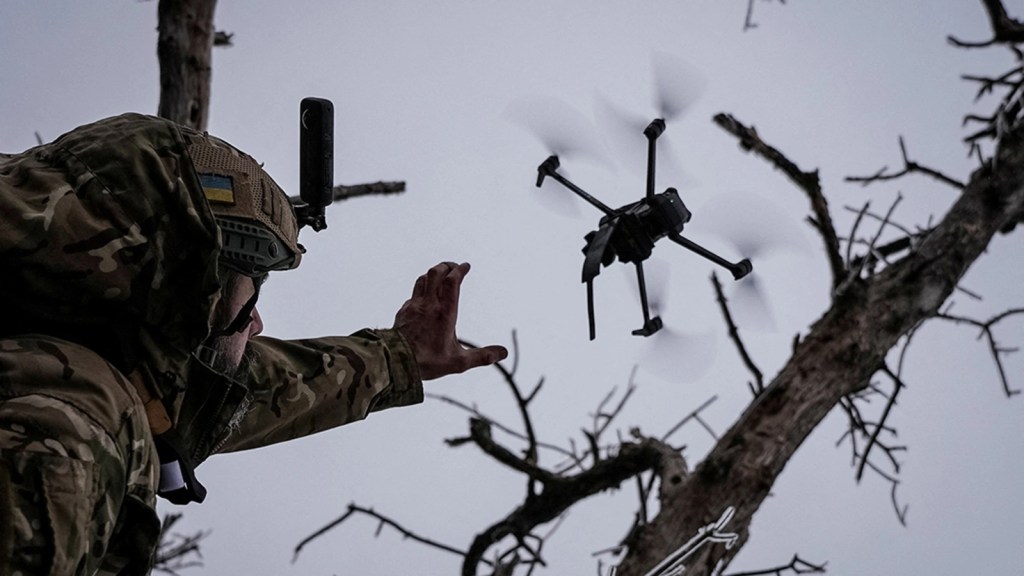
Both Ukraine and Israel exploited the advantages of cheap, scalable drone technology to inflict disproportionate damage on heavily fortified adversaries. Ukraine deployed hundreds of one-way drones, smuggled across thousands of miles, to cripple Russian bomber fleets at air bases. Israeli operatives similarly smuggled components into Iran, assembling drones on-site to cripple its air defenses.
These operations illustrate the growing importance of “precise mass”—the concept of using large numbers of inexpensive, accurate systems to overwhelm superior, costlier technologies. Ukrainian officials estimate that drones now account for 70% of frontline casualties in their war against Russia. The contrast in cost-efficiency is stark. Ukraine’s quadcopters, priced at under $1,000 each, destroyed or disabled assets worth hundreds of millions of dollars, including long-range bombers and early warning aircraft.
The Israeli strike similarly showcased how low-cost drones can clear paths for more expensive, manned aircraft to execute precision strikes. By neutralizing Iran’s air defenses, Israeli and U.S. fighter jets were able to bomb strategic targets unopposed.
Neither Russia nor Iran has strayed away from utilizing similar technology however. Moscow retaliated with an intense wave of drone attacks aimed at exhausting Ukraine’s air defenses, while Tehran launched its own retaliatory barrage of drones and missiles toward Israeli targets. Although most were intercepted, the scale of the Iranian response raised concerns in both Israeli and U.S. defense circles about depleting interceptor stockpiles.
This dynamic—low-cost, high-volume attacks against high-value systems—presents a new strategic reality. Economically and logistically, legacy systems are far more difficult to replace than their cheaper counterparts. Ukraine is now manufacturing millions of drones annually, while Russia may take years to rebuild its bomber fleet. Iran’s robust drone program, while extensive, remains hampered by its lack of an effective modern air force, underscoring the need for a balanced approach to military investment.
The Importance of Traditional Military Strength
Despite the growing role of drones, recent U.S. military action underscores that traditional systems still hold significant value. Operation Midnight Hammer, the June 22 strike on Iranian nuclear sites, mobilized over 125 U.S. aircraft, including seven B-2 stealth bombers equipped with bunker-busting ordnance. The mission demonstrated that certain targets, such as Iran’s deeply buried Fordow and Natanz facilities, can only be neutralized using the immense payload and precision offered by legacy platforms.
Israel’s air campaign also followed this hybrid strategy— as drones disabled defenses, allowing piloted jets to penetrate Iranian airspace and deliver massive payloads. While drones can initiate attacks and gather intel, only advanced aircraft can carry the tons of ordnance needed for such strategic objectives.
The Pentagon faces a fundamental dilemma. Despite rising awareness of the power of precise mass, U.S. defense spending remains tilted toward expensive legacy platforms: F-35 fighters, aircraft carriers, and tanks. In 2023, the U.S. allocated just $500 million to the Replicator Initiative—its main effort to develop scalable drone technology—barely 0.05% of the defense budget.
Critics, including tech leaders like Eric Schmidt and Elon Musk, argue this is woefully inadequate. Schmidt, the former Google CEO, has called tanks obsolete in drone-centric warfare. Musk has derided continued investment in manned fighter jets as a waste of resources. The evidence increasingly supports their view: costly, slow-to-produce systems are being outpaced by nimble, expendable drones.
Military thinkers are now advocating for a balanced force architecture that pairs inexpensive uncrewed systems with a reduced number of legacy platforms. This high-low mix would allow the U.S. to field large volumes of versatile drones while preserving the strategic punch of stealth bombers and submarines. The model resembles modern combined arms warfare, where different systems work in concert to maximize effectiveness.
Analysis: The Future of Military Power
The operations in Ukraine and Iran mark a turning point. These modern conflicts signal that the era of uncrewed warfare is not merely coming— but that it’s already here. Nations that fail to adapt risk strategic irrelevance. Ukraine and Israel have demonstrated how low-cost systems can destroy high-value assets and shift the balance of power. Their actions provide a template for modern conflict.
Yet a full abandonment of legacy systems would be equally shortsighted. Certain strategic goals—such as destroying underground nuclear facilities—still require the unique capabilities of stealth aircraft and high-yield ordnance. The key lies in integration.
For the United States, this means accelerating investment in drones and autonomous platforms, while reconfiguring the defense budget to reflect modern needs. It must embrace a new doctrine of flexible, scalable, and precise warfare. That includes revisiting the Replicator Initiative with greater urgency, developing autonomous naval and aerial platforms, and reinforcing cyber and AI-driven targeting systems.
Maintaining their heavyweight advantage in state-of-the-art military equipment will remain vital for the U.S., however allocating a higher fraction of their unmatched military budget toward building out a massive unmanned fleet seems a logical military initiative based on the perceived development of global warfare.
Failing to act risks not just battlefield losses, but the erosion of deterrence—the bedrock of U.S. global influence. In the age of precise mass, agility is strength. The future belongs to those who can combine innovation with tradition, and who are willing to reimagine and adapt with the changing foundations of military power.
 IRinFive
Leave a comment