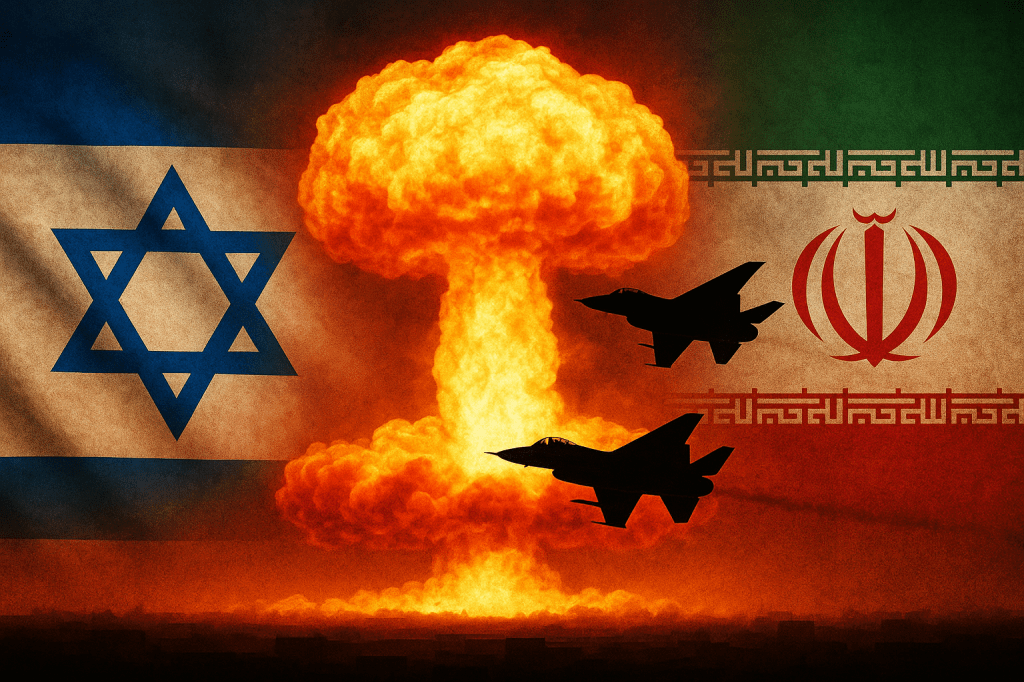
6/22 – Geopolitical Analysis Piece
As Israeli jets continue pounding strategic sites across Iran and Tehran retaliates with missile salvos, the Israel-Iran conflict already risks rapidly transforming into a costly war of attrition. What began as a high-stakes military campaign with defined objectives might be evolving into an open-ended conflict with spiraling costs, blurred strategic goals, and escalating regional risks.
Israel is now spending hundreds of millions of dollars a day to sustain the war, with its sophisticated missile defense systems and offensive operations pushing the country toward economic strain. The costliest single item is missile interception. Systems like David’s Sling and Arrow 3, developed with U.S. support, cost between $700,000 and $4 million per engagement. As Iran has launched over 400 missiles in recent days, Israel’s air defense has absorbed staggering daily costs—estimated at $200 million daily at its peak.
The expense doesn’t end there. Jet fuel, refueling operations, and ammunition for F-35s flying long sorties into Iranian airspace are contributing heavily to the daily price tag. Bombs such as JDAMs and MK84s, along with logistical support, round out the cost structure. According to analysts, a one-month war could cost Israel up to $12 billion. While Israel’s economy has proven resilient through past conflicts, the scale of this campaign is unprecedented.
The Israeli government is hoping to achieve strategic objectives before resources run thin or international pressure mounts. Prime Minister Netanyahu has set out to dismantle Iran’s nuclear infrastructure and degrade its ballistic missile program. The expectation is that the campaign will last at least two weeks, though many fear it could drag on far longer.
Civilian Impact and Infrastructure Damage
On the home front, the cost is not only economic. Over 5,000 Israelis have been displaced due to missile strikes. Cities like Tel Aviv have seen significant damage to key buildings such as the Mossad headquarters, Israel’s national stock exchange, as well as key ports in the city of Haifa. Missile strikes have also damaged critical infrastructure. Israel’s largest oil refinery was temporarily shut down after being hit, killing three employees and raising concerns about supply stability.
Business closures, limited airport activity, and labor disruptions across essential sectors have deepened the economic blow. While S&P has yet to downgrade Israel’s credit rating, the agency flagged elevated risks. Israeli markets have oddly rallied on expectations of a swift military success—but economists warn the resilience may be temporary.
Air Power Over-Reliance
Israel’s reliance on air power is being tested in real time. Waves of Israeli warplanes have struck targets across western and central Iran in an effort to destroy nuclear sites and degrade Iran’s ability to produce weapons-grade uranium. But military historians and strategic analysts note that no modern conflict has succeeded on air power alone when the adversary is determined to fight back or when strategic aims include political survival.
While Israel’s jet fleet, surveillance drones, and special forces operations are technologically advanced and tactically effective, they may fall short in forcing capitulation from a deeply entrenched regime. Israel cannot deploy a ground invasion into Iran without U.S. support, and the Trump administration has shown reluctance to commit ground forces to any foreign war.
Without U.S. bunker-busting bombs and broader logistical backing, the likelihood of Israel achieving full strategic success diminishes. Fordow, Iran’s underground uranium-enrichment site, may require American munitions to be fully neutralized.
Tehran Holds Out While Bleeding
Despite suffering the most severe military losses in over four decades, including the deaths of senior IRGC figures and architects of Iran’s missile programs, Iran continues to fire missiles into Israeli territory daily. Though Israel’s missile defenses are highly effective, Iran’s strategy appears focused on attrition—delaying Israel, raising its costs, and hoping global opinion shifts.
Tehran’s objective is simple: survival of the regime and preservation of uranium enrichment capabilities. But the leadership understands that prolonged war could erode internal support. Supreme Leader Ayatollah Khamenei’s rule is already on fragile ground, and further pressure could cause a shift in internal power structures. The Islamic Revolutionary Guard Corps (IRGC), already dominant, could consolidate power if Khamenei falls or is taken out, potentially leading to a more militaristic and anti-Western government.
Iran has also communicated through Gulf intermediaries that it remains open to diplomacy—but only if Washington stays out of the military conflict. Tehran’s goal is to prevent escalation into a full-scale war that draws in the United States, thereby shifting the burden entirely onto Israel.
Analysis: Escalating Costs and the American Dilemma
Israeli Prime Minister Netanyahu’s overarching strategy now hinges not only on degrading Iran’s military infrastructure but also on drawing in the United States to help achieve those objectives—financially and militarily. As the cost of war escalates—running into hundreds of millions of dollars daily due to interceptor missiles, aircraft operations, and extensive damage to infrastructure—Israel’s capacity to sustain an extended campaign is increasingly constrained.
The longer this war drags on without direct U.S. involvement, the greater the toll on Israel’s economy, and the more likely it becomes that pressure will mount on Washington to step in. Since last week, Israel has deployed wave after wave of fighter jets into Iranian airspace, testing the strategic limits of what air power alone can achieve. But military history and current logistics suggest that without a ground component or American bunker-busting capabilities, some of Iran’s most fortified assets may remain beyond reach.
The longer the U.S. holds back, the more strained Israel becomes—politically, economically, and militarily. Conversely, if the U.S. joins the conflict, it risks being dragged into yet another prolonged Middle East war with unpredictable costs to its own economy and strategic interests.
 IRinFive
Leave a comment