6/19 – International News & Geopolitical Analysis
As the war between Israel and Iran ragefully deepens, the United States is now inching closer to potential direct involvement. President Trump, after a series of internal deliberations, has allegedly privately approved detailed military strike plans against Iran but has withheld execution for now, reportedly to see whether Tehran backs off its nuclear ambitions.
Iran’s Fordow enrichment site—a heavily fortified underground nuclear facility—has emerged as a prime target. Due to its fortified location beneath a mountain, military planners believe only America’s most advanced bunker-busting bombs could take it out.
Trump, speaking in ambiguous terms, signaled that a major decision may be imminent, stressing that Iran would face serious consequences if it does not comply. At the same time, Iran’s Supreme Leader Ayatollah Ali Khamenei responded defiantly, vowing that his country would not surrender and warning of grave consequences should the U.S. intervene militarily.
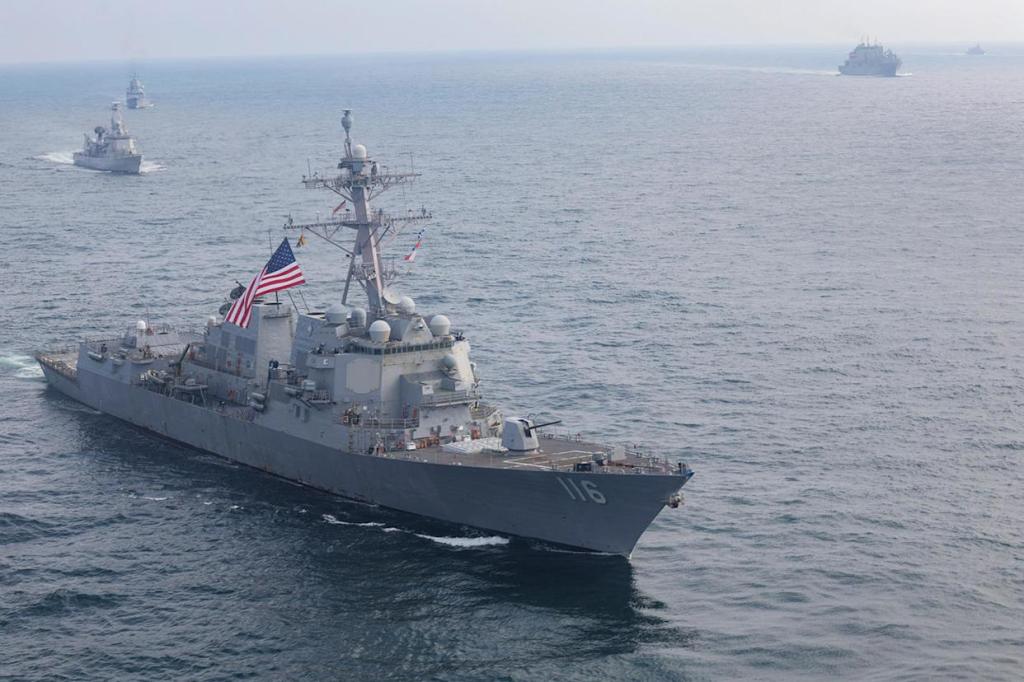
Meanwhile, the U.S. military has quietly ramped up its regional posture. A third Navy destroyer has entered the eastern Mediterranean, while a second aircraft carrier strike group is en route to the Arabian Sea. Though the Pentagon maintains that this force buildup is defensive, the deployment significantly strengthens America’s ability to assist Israel or launch its own attacks, should the President give the order.
The humanitarian toll of the conflict continues to climb. Iran has now suffered over 639 fatalities due to Israeli strikes, according to a prominent Iranian human rights organization. Among the dead are more than 250 civilians and 150 members of Iran’s security forces. Hospitals in Iran remain overwhelmed, with over 1,300 wounded and many still missing or unaccounted for.
On the Israeli side, Iran’s missile retaliation has killed 24 people, while dozens more are being treated for injuries, especially in Tel Aviv and surrounding regions. U.S.-built air defense systems, along with Israel’s Iron Dome, have intercepted a majority of incoming projectiles, but not all.
In response, Israel has intensified its bombardment, targeting Iranian military infrastructure across the country. According to the Israeli military, recent strikes destroyed eight Iranian attack helicopters, 40 missile-related facilities, and command centers believed to house key figures in Iran’s defense establishment.
At the same time, the U.S. Embassy in Tel Aviv has begun organizing evacuation flights for American citizens, underscoring Washington’s expectation that the situation could deteriorate further in the coming days.
Prime Minister Netanyahu has declared that Israel is steadily dismantling Iran’s nuclear weapons capability, moving “step by step” toward its long-stated goal. His forces have targeted not just facilities but also senior leadership figures within Iran’s military hierarchy, killing high-ranking commanders and nuclear scientists. One of the most significant targets hit was Mohammad Bagheri, Iran’s military Chief of Staff.
While Israeli officials continue to avoid overt declarations of regime change, the cumulative effect of their strikes suggests a broader strategy aimed at destabilizing Iran’s military and political leadership.
Trump Balances Pressure and Diplomacy
Within the Trump administration, there is growing confidence that Iran is under immense strain. Though no final decision has been made, Washington is clearly prepared for escalation. Trump has publicly blamed Iran for wasting diplomatic opportunities and warned that further intransigence would bring destruction. Yet, even amid the turmoil, the factions of the administration insist that diplomacy remains an option.
That meeting is now in doubt. Iran accuses the U.S. of enabling Israel’s attack, while American officials deny direct involvement. Nevertheless, the timing of Israel’s airstrikes—just days before the scheduled talks—has raised suspicions that diplomacy may have been a smokescreen to catch Iran off-guard all along and that the U.S. has been in on this from the start.
Senior U.S. diplomats maintain that the door to negotiations is still open, but the chances of a breakthrough are fading rapidly. Some analysts suggest that Israel’s operation has irreparably altered the diplomatic landscape, potentially forcing Iran to abandon talks altogether.
Allies such as Saudi Arabia and the Gulf states have condemned the strikes, fearing regional blowback and potential Iranian retaliation against their infrastructure.
Despite Iran’s weakened state, its ability to respond remains potent. In recent days, Iran has launched multiple waves of drones and missiles, some of which reached Israeli airspace. Tehran also retains the capacity to activate proxies like Hezbollah, the Houthis, and Shiite militias, posing serious risks to American bases, shipping lanes, and allied nations.
Compounding the uncertainty is the possibility that Israel’s current campaign may not be sufficient to permanently halt Iran’s nuclear ambitions. Deep underground sites like Fordow may survive aerial bombardment, while Iran’s scientific expertise and stockpiles of enriched uranium remain largely untouched. Should Israel fall short and the program resume, it may return stronger, more covert, and harder to target.
Analysis:
From Washington’s perspective, Trump faces a delicate balancing act. His administration’s posture must be strong enough to deter further Iranian escalation without crossing a line that leads to an uncontrollable regional war. The ambiguity in U.S. policy—supporting Israel while publicly distancing itself from military action—may serve short-term interests but could become unsustainable if the conflict widens.
This moment, then, marks a dangerous crossroads. The region teeters between a tenuous diplomatic window and a full-blown regional conflict involving the United States and other possible actors. The coming days will reveal whether brutal force or diplomacy will shape the next phase of the Middle East’s most dangerous rivalry.
 IRinFive
Leave a comment