6/16 – Geopolitical News & Analysis
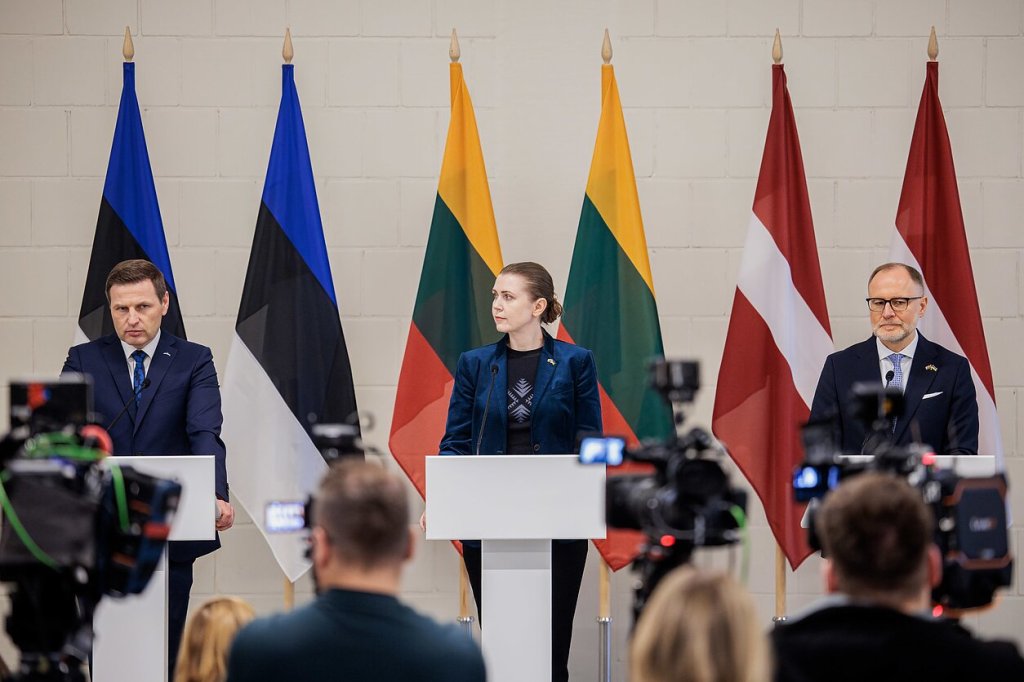
In a coordinated response to rising regional security concerns, the Baltic nations of Lithuania, Latvia, and Estonia signed a landmark agreement on Friday committing to joint planning for mass evacuations. This trilateral initiative underscores the growing unease across Eastern Europe as Russia, under President Vladimir Putin, continues its military aggression against Ukraine and signals broader ambitions that deeply worry neighboring states.
The new agreement formalizes the intention of the three Baltic states to unify their approach to crisis response and evacuation logistics in the event of an emergency triggered by regional instability or military aggression. The coordinated plan includes data-sharing mechanisms on evacuation capacities, the status of critical border crossings, and the identification of safe evacuation corridors. A key element of the pact is the focus on protecting vulnerable populations, ensuring no one is left behind in the event of a large-scale civilian movement.
The Baltic interior ministers emphasized the need for precise protocols and fast, reliable information exchange. Officials believe these procedures will help avoid disorganized responses and widespread panic should a crisis unfold. Their goal is to create a robust framework that can be activated swiftly, mitigating chaos and maximizing civilian protection.
This development comes ahead of the upcoming “Zapad 2025” military exercises — joint war games scheduled for September between Russia and Belarus in Belarusian territory. These drills have become a source of anxiety among NATO members and regional leaders, many of whom recall that similar exercises in 2021 preceded Russia’s full-scale invasion of Ukraine. Observers fear that Zapad 2025 may serve as a smokescreen for yet another round of military escalation.
The Baltic evacuation agreement is part of a broader European initiative to bolster civil protection and resilience in the face of mounting threats. In late May, a separate joint declaration was issued by the interior and civil protection ministers from eight EU countries, including the three Baltic states, alongside Belgium, Luxembourg, the Netherlands, Finland, and Sweden. This wider coalition called for urgent investment in national and EU-level preparedness.
Their statement highlighted the crucial role of civil protection in modern security strategy. It argued that military readiness alone is insufficient for ensuring national security; countries must also develop robust systems to preserve internal order and respond swiftly to both conventional and unconventional threats. These could range from cyberattacks and disinformation campaigns to sabotage of critical infrastructure or mass displacement caused by war.
The ministers emphasized that building resilience is not just about state capacity but also about empowering citizens to be part of the response. Public education campaigns, transparent communication strategies, and well-rehearsed emergency procedures are all necessary components of a resilient civil society.
In contrast to the more measured pace of broader EU civil preparedness initiatives, the Baltic pact reflects the urgency felt by countries on NATO’s eastern flank. For them, the threat is not hypothetical; it is grounded in historical memory and present-day proximity to an increasingly assertive Russia.
 IRinFive
Leave a comment