6/10 – International Economic News & Analysis
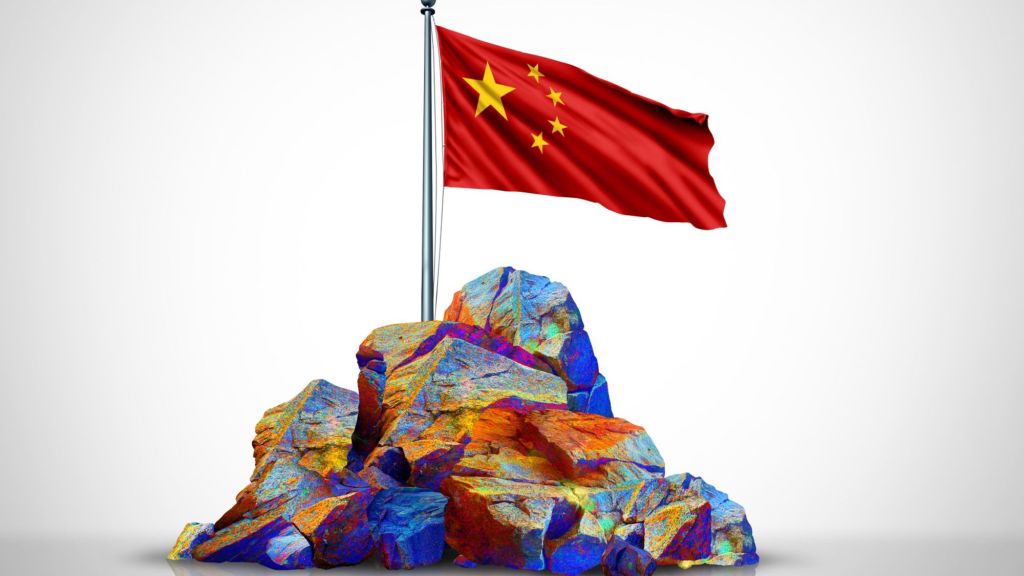
Rare earth elements—crucial for everything from electric vehicles to smartphones, aircraft, and military hardware—have become the latest leverage point in China’s strategic playbook. The world’s largest producer of rare earths, China controls approximately 90% of global supply. In retaliation for U.S. tariffs imposed by President Donald Trump, Beijing’s latest measures restrict the export of rare earths and related magnet materials, impacting countries worldwide and sending shockwaves through Europe’s industrial landscape.
Although initially viewed as a bilateral issue between Washington and Beijing, the export curbs apply globally. European factories have not been spared as several parts plants across the EU have already suspended output, while companies warn of looming shutdowns if supply does not resume. The disruption highlights how deeply embedded China’s mineral production is in global manufacturing systems.
As global trade tensions escalate, a new crisis is brewing in Europe’s industrial core. China’s abrupt suspension of rare earth exports in April has begun to severely disrupt supply chains vital to automotive production and broader high-tech manufacturing. With only a small fraction of export licenses granted since the ban, European automakers and suppliers are scrambling to secure alternatives as the geopolitical stakes rise.
Mercedes-Benz has not yet experienced production issues but is now actively consulting top-tier suppliers on building strategic stockpiles of rare earth materials. The company’s production chief, Joerg Burzer, confirmed that they are creating buffers to cushion against worsening shortages. Meanwhile, BMW confirmed that while parts of its supply chain have been affected, its plants continue to operate normally.
Others are not as fortunate. CLEPA, the European Association of Automotive Suppliers, revealed that several production lines have already halted due to supply shortfalls. According to the group, only about one in four license applications submitted since April have been approved, and many were rejected on bureaucratic technicalities. The organization warned that further outages are likely unless export permissions are expedited or new sources of supply are secured.
Volkswagen has reported no immediate impact but is closely monitoring the situation. Likewise, Swedish airbag manufacturer Autoliv remains unaffected but has mobilized a task force to proactively manage potential disruption.
Another Wake-Up Call for Europe
EU officials have acknowledged the severity of the crisis and are working to respond. Trade Commissioner Maros Sefcovic recently met with his Chinese counterpart to push for clarity on export policies. Separately, Industrial Strategy Commissioner Stephane Sejourne emphasized the need for Europe to diversify its critical mineral supply, stating the bloc’s overdependence on China is unsustainable. Brussels is now backing at least 13 mining and processing projects outside the EU to reduce reliance on Chinese sources.
Germany’s ZVEI electrical and digital industry association reported that many companies only have weeks—or, at best, a few months—of stockpiled rare earths left. As political uncertainty drags on, some European firms are taking matters into their own hands by seeking side deals within China, underscoring frustration with government inaction.
Facing pressure, automakers and component suppliers are accelerating the development of magnet-free technologies. BMW, for instance, has introduced rare-earth-free motors in its newest EV generation. However, even these designs still require rare earths for smaller electric components, highlighting how difficult it is to fully decouple from China. Other manufacturers like General Motors, ZF, and BorgWarner are also working on rare earth–reduced technologies, though cost and scalability remain significant hurdles.
This technological pivot is not purely reactive—it is strategic. Reducing dependence on Chinese-controlled materials aligns with broader efforts to localize supply chains, ensure production continuity, and align with clean energy targets. But time is not on the industry’s side. New designs and mining operations take years to develop and approve, and the immediate shortage threatens manufacturing schedules within months.
Trump’s Trade Pressure and Xi’s Retaliation
At the heart of the issue is a deteriorating trade relationship between the U.S. and China. President Trump’s sweeping tariffs—some reaching up to 145% at points—were initially imposed to shrink the U.S. trade deficit and revive domestic manufacturing. But after market turmoil, he partially scaled back the tariffs, only for China to retaliate using its grip on the critical minerals market.
Trump has publicly accused Beijing of undermining the fragile truce struck last month, calling Chinese President Xi Jinping a difficult negotiator. For Trump, who seeks to project strength amid a tumble in political approval a few months in, restoring American leverage while stabilizing markets has become a delicate balancing act. But China’s export curbs demonstrate that Beijing has potent tools of its own—tools that can wreak havoc on Western industries within weeks.
Analysis:
This rare earth crisis is not just another chapter in the U.S.-China trade war; it is a turning point in global industrial policy. It reveals the fragility of globalization in a world where key resources are controlled by adversarial powers. As the West accelerates its green energy and electrification efforts, it remains startlingly vulnerable to supply disruptions from a single country.
Europe’s delayed response and lack of domestic extraction capacity leave it dangerously exposed. Policymakers have long known the risks of rare earth dependence but failed to invest adequately in alternatives. The current scramble may finally jolt the EU into action, but the transition will not be swift. Until then, companies will operate under a constant threat of shortage and shutdown.
China, for its part, is sending a clear message: it will not remain passive while being economically pressured by Western tariffs. By weaponizing its mineral dominance, it is signaling that economic coercion is a two-way street.
 IRinFive
Leave a comment