6/8 – International Diplomacy Analysis
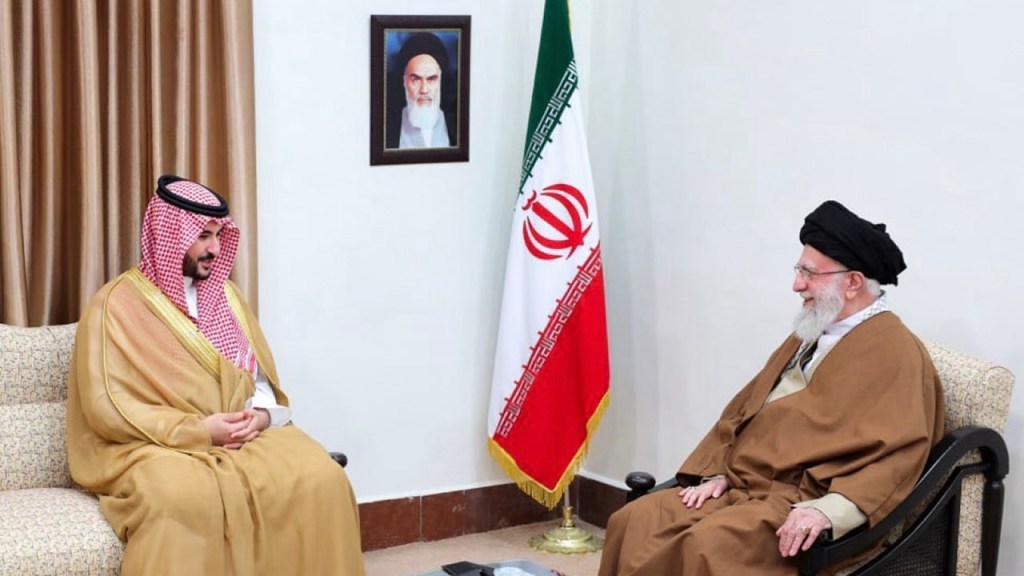
In a high-stakes diplomatic maneuver, Saudi Arabia recently dispatched Defense Minister Prince Khalid bin Salman to Tehran with an urgent and confidential message: Iran should take U.S. President Donald Trump’s offer to negotiate a nuclear agreement seriously or risk a regional conflict involving Israel.
The meeting, held on April 17 in Tehran’s presidential compound, included key Iranian figures such as President Masoud Pezeshkian, Armed Forces Chief of Staff Mohammad Bagheri, and Foreign Minister Abbas Araqchi. The visit marked the first by a senior Saudi royal to Iran in over 20 years and underscored the gravity of the message being delivered. King Salman bin Abdulaziz, deeply concerned about regional stability, personally tasked his son with urging Iranian leadership to act swiftly, cautioning that Trump’s tolerance for protracted negotiations was limited.
This Saudi initiative came shortly after Trump publicly confirmed ongoing nuclear talks with Tehran, despite being flanked at the time by Israeli Prime Minister Benjamin Netanyahu, who had sought American backing for a military campaign against Iranian nuclear sites. Trump’s announcement unsettled Israel but suggested the U.S. administration saw a diplomatic route as still viable—if not urgently necessary.
Against the backdrop of intensifying unrest in Gaza and Lebanon and with Iran’s regional allies facing repeated setbacks, Saudi Arabia framed its warning within a broader regional calculus. Prince Khalid stressed to Iranian officials that a diplomatic solution was preferable to escalating military action, which could further destabilize the Middle East and directly threaten Saudi Arabia’s Vision 2030 economic transformation agenda.
According to multiple Gulf and Iranian sources familiar with the closed-door discussions, Iranian leaders signaled a desire for a deal—primarily as a way to ease the crushing economic burden of Western sanctions. However, they expressed deep skepticism about Trump’s erratic negotiation style. Tehran remains wary of U.S. demands that swing unpredictably between allowing some uranium enrichment and insisting on a full dismantling of its nuclear infrastructure.
President Pezeshkian reportedly reiterated Iran’s interest in a negotiated outcome but emphasized that Tehran would not abandon its enrichment rights solely to appease American demands. Iranian negotiators remain engaged in indirect talks with Washington, having already participated in five rounds aimed at resolving the decades-long nuclear standoff. A tentative offer was floated—where Iran might pause uranium enrichment in exchange for access to frozen assets and recognition of its right to civilian nuclear activity—but Iranian state media later denied such a deal was under consideration.
This shift in regional dynamics reflects a larger transformation. Over the past two years, Iran’s influence has eroded sharply. Its proxies, including Hamas and Hezbollah, have suffered significant losses. Its once-firm grip on the Assad regime in Syria has eroded with his ousting and the country’s uncertain change of leadership. These losses, combined with sustained economic sanctions, have left Tehran more diplomatically vulnerable than at any point in the last decade.
Sensing this vulnerability, Riyadh has attempted to reposition itself as a pragmatic power broker rather than a belligerent adversary. Prince Khalid’s visit followed a 2023 Chinese-brokered détente that restored diplomatic ties between Iran and Saudi Arabia after years of proxy conflict and mutual suspicion. While the thaw has allowed for increased diplomatic dialogue, mutual distrust remains entrenched.
During the meeting in Tehran, Prince Khalid conveyed Riyadh’s willingness to avoid military confrontation. He even offered assurances that Saudi airspace or territory would not be used for any Israeli or U.S. military strikes against Iran. However, he also made clear that continued aggression by Iranian proxies, such as the Houthis in Yemen, could prompt harsh retaliatory measures—not necessarily from Saudi Arabia, but from Washington or Tel Aviv.
Trump’s approach to Iran has been marked by volatility and public pressure campaigns, blending threats of military force with sudden openness to talks. His recent visit to the Gulf region last month not only reaffirmed Saudi Arabia’s leadership role among Sunni states but also further isolated Iran’s Shi’ite alliances. As Trump worked to strengthen ties with new Sunni leaders, such as Syria’s Ahmed al-Sharaa, he simultaneously warned Netanyahu not to undermine the nuclear negotiations.
White House officials have maintained a hard line, insisting that Trump’s posture is forcing all actors—friends and foes alike—to take his red lines seriously. Yet, this hardline stance has injected uncertainty into diplomatic efforts. With time-sensitive discussions still underway, the possibility of diplomacy giving way to confrontation remains a real and looming risk.
Analysis:
Saudi Arabia’s bold move to warn Iran directly marks a significant departure from past strategy, one traditionally marked by back-channel maneuvering and proxy confrontation. This suggests a growing recognition in Riyadh that direct diplomacy—though risky—is now essential to avoid conflict that could derail its economic modernization efforts and overall regional stability.
Iran, despite its public defiance, appears cornered. Militarily weakened, economically battered, and diplomatically isolated, it faces limited options. However, deep mistrust of Trump’s consistency and the U.S.’s historical record on Middle Eastern commitments complicates Tehran’s decision-making calculus.
For the broader region, this may be a rare inflection point. The Saudi message to Iran underscores a shared understanding—even among rivals—that any further escalation could ignite a chain reaction too catastrophic for anyone to control.
Whether Trump’s high-stakes nuclear deal gamble results in a breakthrough or a breakdown will depend not just on Iran’s willingness to compromise, but on the consistency of U.S. policy and Israel’s willingness to stand down.
 IRinFive
Leave a comment