6/7 – International Economic News & Monetary Analysis
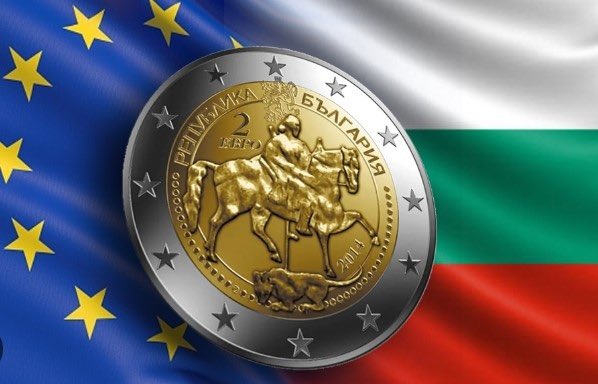
Bulgaria is poised to become the 21st member of the eurozone on January 1, 2026. The European Commission and European Central Bank (ECB) have formally approved the country’s accession, recognizing its efforts to meet stringent convergence criteria after years of setbacks. At surface level, this move aims at strengthening Bulgaria’s institutional integration into the European Union at a moment of heightened geopolitical tension on the EU’s eastern border.
Bulgaria first committed to joining the eurozone when it became an EU member in 2007. Since then, progress has been delayed by political instability, inflation volatility, and persistent concerns over corruption and governance. Now, after nearly two decades of preparation and fiscal reform, the European Commission confirmed that Bulgaria has met all economic requirements—most notably curbing inflation, which fell to an average of 2.7% over the 12 months ending in April. Despite a temporary spike to 4% earlier this year following the removal of pandemic-era support and VAT changes, EU officials have deemed the inflationary impact as short-lived.
The country also boasts one of the EU’s lowest public debt levels, at just 24.1% of GDP, well below the 60% threshold mandated for euro adoption. Its labor market is praised for being flexible and efficient, and its currency—the lev—has long been pegged to the euro, smoothing the eventual transition.
For EU leaders, Bulgaria’s accession sends a strong message about the bloc’s resilience and cohesion, especially in the face of external pressures from Russia and internal populist currents. “Joining the euro area is the best investment Bulgaria can make in its future,” said European Commission Vice President Valdis Dombrovskis, highlighting the benefits of macroeconomic stability, investor confidence, and increased access to cheaper credit.
Bulgaria’s eurozone accession comes at a strategically sensitive time. With Russia’s ongoing war in Ukraine and intensifying efforts to reassert influence over Eastern Europe, euro adoption binds Bulgaria more firmly to the EU’s political and financial institutions. It also provides the Balkan nation with additional protection in times of economic shocks—offering currency stability, access to European Central Bank mechanisms, and increased credibility with international investors.
Prime Minister Rosen Zhelyazkov celebrated the milestone as a culmination of years of “strict fiscal discipline” and a key marker of Bulgaria’s European identity. Bulgaria will now gain a seat on the ECB’s Governing Council, giving it an albeit small but present voice in eurozone monetary policy—a significant shift for a country long on the periphery of the EU’s decision-making core.
Yet, the decision is definitely not without its critics. Some observers have warned that the move may strain Bulgaria’s competitiveness if not supported by long-term structural reforms. The ECB’s own report advised that Bulgaria must adopt policies to prevent excessive credit growth, avoid macroeconomic imbalances, and ensure that wage growth stays aligned with productivity to maintain its attractiveness to foreign investors.
Public Skepticism and Populist Backlash
While the government and Brussels celebrate the euro’s arrival, the Bulgarian public remains deeply divided. A recent Eurobarometer poll showed that 50% of Bulgarians oppose joining the euro—up from 46% just a few months earlier. Many citizens, especially pensioners and low-income earners in rural areas, fear the change will bring inflation, higher prices, and reduced purchasing power.
Protests against euro adoption have erupted across the country. Thousands rallied in Sofia, led by the far-right pro-Russian Revival Party, chanting slogans like “No to Euro Colonialism.” Their concerns mirror those seen in other countries that adopted the euro, where some merchants exploited the transition to raise prices during the conversion period. These fears are compounded in Bulgaria, where trust in public institutions remains fragile due to a prolonged period of political instability.
Bulgaria has held seven national elections in just four years, with a string of short-lived coalition governments unable to maintain lasting momentum on reforms. President Rumen Radev, who holds an independent mandate, has proposed a referendum on euro membership—a move government officials have condemned as sabotage.
Governance and Rule of Law Concerns
Beyond economic data, Bulgaria still faces serious institutional challenges. The country remains under scrutiny for its weak rule of law, political corruption, and ineffective public administration. It has yet to establish a strong track record in prosecuting high-level corruption cases, and the latest EU rule-of-law report criticized the independence of several regulatory agencies.
Adding to these concerns, Bulgaria remains on the Financial Action Task Force’s (FATF) “gray list” for inadequate money laundering controls—placing it alongside nations like Syria, Venezuela, and Yemen. Although this designation does not directly affect eurozone eligibility, it underscores the importance of continued reform. The ECB has called on Bulgaria to make further progress in strengthening its anti-money laundering framework and counter-terrorism financing efforts.
A Transition Still Fraught with Challenges
Finance Minister Temenuzhka Petkova has acknowledged the risks of price manipulation and promised strict monitoring of merchant behavior during the switchover. Efforts are underway to educate the public, including dual price displays in shops and a planned information campaign to ease the transition.
Central bank governor Dimitar Radev emphasized that the technical infrastructure for the euro adoption is largely in place. What remains, he noted, is bringing public perception and trust in line with institutional readiness.
For now, Bulgaria remains the EU’s poorest member by income. With an average monthly salary of just over €1,400, the transition to the euro will be closely watched by citizens who already feel economically vulnerable. While business leaders, such as hotel owners in tourist hubs like the Black Sea and numerous ski resorts throughout the mountains, welcome the expected boost in investment and tourism, everyday Bulgarians remain wary.
Analysis:
Bulgaria’s accession to the eurozone represents more than a currency change—it’s a bold step toward deeper EU integration at a time when the continent is being tested by war, populism, and economic uncertainty. For Brussels, it symbolizes a vote of continued confidence in the European project. For Sofia, it marks the culmination of a decade-long quest for legitimacy, modernization, and financial stability.
Yet, success is not guaranteed. The euro will not resolve Bulgaria’s deep-rooted problems of governance, inequality, or institutional weakness. In fact, if the transition leads to economic disruption or rising prices, it may only deepen public disillusionment with the EU.
The challenge now for Bulgarian leaders is twofold: first, to deliver a smooth, transparent conversion that safeguards citizens from inflation and financial abuse; and second, to continue the institutional reforms necessary to earn the public’s trust and prove that euro adoption is more than just a symbolic gesture.
For Europe, Bulgaria’s move is a reminder that enlargement and integration are ongoing processes—ones that require not just economic metrics, but political will, societal resilience, and credible governance. Whether this moment marks a turning point for Bulgaria or just another phase in its turbulent political journey will depend on how leaders manage the opportunities—and the risks—of this historic transition.
 IRinFive
Leave a comment