6/5 – Geopolitical Warfare Analysis
On June 1, 2025, Ukraine executed a coordinated, long-range drone strike operation deep inside Russian territory, known as Operation Spider Web. This action resulted in the reported destruction or disabling of approximately 20 aircrafts within Russia’s strategic bomber fleet, including key platforms such as the Tu-95 and Tu-22M3, along with support assets like the A-50 airborne early warning system. This was not a singular tactical success, but rather a significant strategic event with far-reaching implications for regional security, deterrence dynamics, and the future conduct of modern warfare.
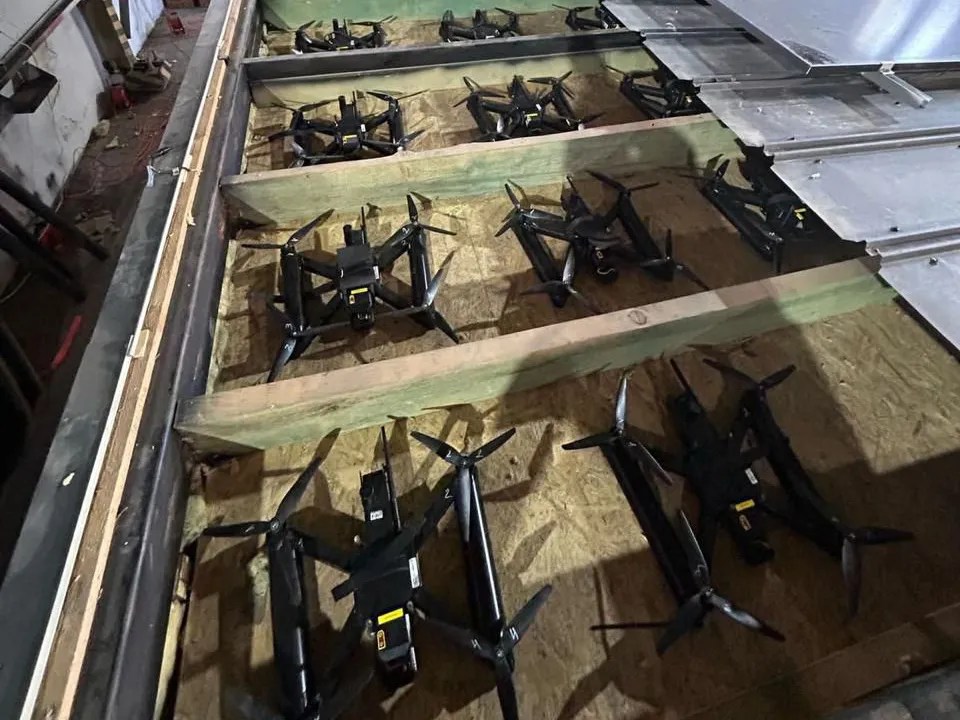
The operation was reportedly the product of more than a year of planning by Ukraine’s Security Service (SBU). The drones, assembled from commercially available components, were smuggled into Russia and deployed from within the country, thereby bypassing traditional air defenses. Crucially, the drones functioned without satellite navigation, relying instead on inertial and visual guidance systems making them resilient to electronic jamming and effectively invisible to conventional counter-UAV systems. Their targets—five airbases, including those in the Siberian interior housed aircraft critical to Russia’s long-range nuclear deterrent. Ukraine’s drones managed to damage over 20 key aircraft and completely destroyed around 10. Some of these include Russia’s nuclear-capable bombers, representing a setback of both operational and symbolic magnitude for the Russian military establishment.
The operational implications of this event are manifold. First, the degradation of Russia’s long-range bomber fleet alters the structure and balance of its nuclear triad. These platforms play a dual role in both strategic signaling and actual warfighting capability. While Russia maintains a large arsenal of intercontinental ballistic missiles and submarine-launched systems, the bomber leg of the triad offers unique flexibility. Its partial neutralization may influence Russia’s military doctrine, especially with regard to first-use scenarios or escalatory deterrence strategies.
Second, the operation reaffirms the transformative impact of asymmetric warfare. Ukraine has demonstrated that with sufficient innovation and determination, relatively low-cost, low-signature technologies can inflict outsized damage on a technologically superior adversary. This development compels a reevaluation of how strategic airpower can be protected, particularly in non-forward areas once considered secure by geography and distance. Traditional air defense systems designed to counter high-altitude or high-speed threats appear ill-suited to detect or interdict dispersed, ground-launched micro-drone swarms.
Third, the psychological and political effects of the operation are not to be underestimated. The image of strategic bombers destroyed while parked in hardened air bases across the Russian interior has been widely circulated, with implications for both domestic morale in Russia and broader perceptions of Russian military competence. The strike demonstrates not just a tactical lapse but a systemic vulnerability, and one that may shape the Kremlin’s strategic posture in the months to come.
In addition to military considerations, Operation Spider Web also poses questions for diplomacy and crisis stability. The attack occurred in the run-up to renewed negotiations in Istanbul, and undeniably raises the temperature of the war. Any action that affects nuclear-capable systems carries inherent escalation risks. Whether Russia perceives this as a red-line crossing or not will depend on its reading of Ukrainian intent and international response, particularly from NATO and other key actors.
Ukraine’s Operation Spider Web constitutes a key moment in the Russia-Ukraine conflict. It reflects the growing importance of unconventional warfare and highlights vulnerabilities in even the most hardened defense postures. While the tactical brilliance of the strike is evident, its long-term significance will depend on how both sides, and the international community, adapt to the new realities it reveals. For policymakers, the imperative is to anticipate rather than react, to innovate rather than fortify, and to recognize that the strategic balance in modern conflict is no longer measured solely in megatons or battalions, but also in code, circuitry, and creativity.
 IRinFive
Leave a comment