10/5 – International News & Geopolitical Analysis
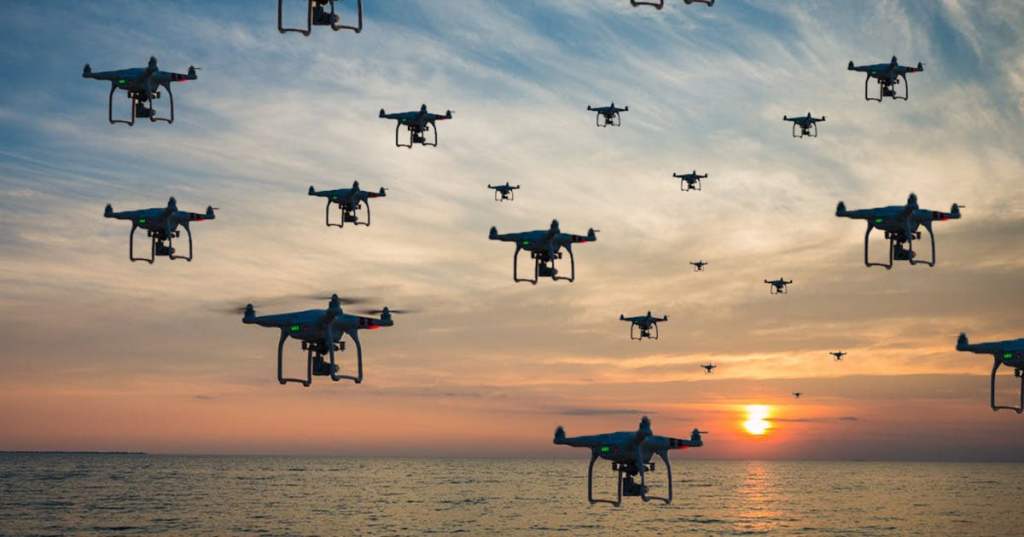
In recent weeks, a wave of mysterious unmanned aerial vehicle incursions over Europe and NATO airspace has set off alarm bells among governments, military planners and the public. Although many questions remain unanswered, the sequence of events, rising tensions, and evolving responses paint a striking picture of a new front in hybrid warfare.
Timeline of Incursions and Responses:
Drone swarm over Poland marks first direct NATO-Russia confrontation
On the night of September 9 into September 10, as Russia launched an aerial assault on Ukraine, between 19 and 23 drones penetrated Polish airspace via Belarus. NATO and Polish forces scrambled jets; up to four drones were confirmed shot down—primarily by Dutch F-35s—with debris recovered in multiple regions. Poland closed airspace over several major airports, including Warsaw’s Chopin. In reaction, Warsaw invoked Article 4 of the NATO Treaty, calling for consultations among allies.
Polish Prime Minister Donald Tusk labeled the incursion a large-scale provocation and vowed that Poland would defend its skies. In the weeks prior, debris and incursion patterns had been seen repeatedly in eastern Poland, but this was the first time NATO jets directly engaged.
In response, NATO launched Operation Eastern Sentry, deploying air and naval assets from multiple nations to reinforce the alliance’s eastern flank. In parallel, NATO’s prior Baltic Sentry mission (launched after sabotage in the Baltic Sea) was reinforced.
Escalating incursions in the Baltics and Romania
On September 13, Romania reported a Russian drone breach near the Danube; Romanian F-16s and German Eurofighters pursued the intruder until it vanished from radar. Two days later, on September 19, three Russian warplanes entered Estonian airspace, prompting Italian F-35s to escort them out. Estonia said this level of violation was unprecedented.
Denmark, Norway, and Germany see airspace disruptions
Between September 22 and 28, a cluster of drone sightings—some over military bases, some over airports—disrupted operations in Denmark and Norway. Copenhagen Airport was shut for roughly four hours after large drones appeared in controlled airspace. Oslo also briefly restricted runway use that evening.
Multiple drones were also spotted near Danish military installations, including Karup Air Base, the country’s largest. Danish authorities described the operator as a “professional actor” behind coordinated flights, though they declined to confirm any one nation’s involvement.
In Germany, recent days have brought sightings over Munich and Frankfurt airports, an ammunition depot in northern Germany, and a police airborne unit base near Gifhorn. Munich Airport was twice forced to shut down operations within 24 hours, stranding more than 11,000 passengers across the two nights.
The German Defense Ministry also confirmed drone sightings near the Erding military base—home to drone research—at about the time of Munich’s first closure. Meanwhile, in northern Germany’s Schleswig-Holstein region, drones were sighted over a power plant, university hospital, shipyard, and oil refinery. Authorities in the region said flying objects of various shapes and sizes were involved.
In the past few days, Germany reported further drone activity, exacerbating fears that the September incidents were part of a broader pattern. Munich Airport reopened after being shut twice in less than 24 hours due to new drone sightings, leaving many flights canceled or delayed.
German Interior Minister Alexander Dobrindt, speaking amid a summit in Munich, pledged to equip police with an anti-drone defense unit and promised legislation to make it easier to request military support to shoot down drones. He warned of a drone “arms race.”
Elsewhere, Belgium reported about 15 drones hovering over its Elsenborn military zone and adjacent areas. German interior ministries confirmed drone activity over naval headquarters, energy infrastructure, and strategic military installations.
In Denmark, newly reported drone activity over military installations led to a temporary ban on civilian drone flights during the upcoming EU summit period, with penalties proposed for violations. NATO began augmenting surveillance over the Baltic Sea under a “Baltic Sentry” approach, with Germany lending support via deployment of an air defense frigate.
In response to mounting pressure, European defense ministers agreed to accelerate the development of a so-called “drone wall” along borders with Russia and Ukraine—a multilayered network of sensors, tracking systems, jammers, intercept systems, and automated responses. EU Commission President Ursula von der Leyen announced billions in funding for a drone defense alliance coordinated with Ukraine.
Sweden urged the EU to streamline procurement standards to acquire defense drones more rapidly, while reinforcing that anti-drone capabilities should remain under national (not EU) control in line with NATO alignment.
Russia rejects Accusations of Involvement
The Kremlin has denied intentional wrongdoing. Russian officials have claimed that drones targeted Ukrainian military facilities and that allegations of airspace violations aimed to stoke tension. Kremlin spokespersons dismissed accusations as “unfounded” and warned that unfounded rhetoric risks escalation.
Most European leaders treat these incursions as deliberate provocations. Ukrainian officials argue Russia is expanding its war and testing Western resolve. The German defense minister expressed confidence the routes were intentional, not navigational errors.
Some analysts caution that not all incursions may be deliberate. In the absence of GPS or in case of signal jamming, drones could drift off course. The Russian military is known to deploy low-cost decoy drones to saturate defenses or confuse detection systems.
Strategic and Political Impacts
The incursion event over Poland marked the first direct NATO engagement with Russian drones inside Alliance airspace since the full-scale invasion of Ukraine in 2022. NATO’s triggering of consultations under Article 4 underscores how seriously allies regard these violations.
European leaders at a summit in Copenhagen adopted a firmer stance. French President Emmanuel Macron called for strategic ambiguity and warned that any drone incursions risk being destroyed. He also supported the idea of targeting Russia’s shadow fleet of tankers involved in sanctions evasion. Danish Prime Minister Mette Frederiksen called Russia a threat to all of Europe and urged that the continent stop treating the war as Ukraine’s alone.
German Chancellor Friedrich Merz emphasized unity and resolve. Polish Prime Minister Tusk warned against illusions about Russia’s intentions and reiterated Poland’s determination to defend itself. British Prime Minister Keir Starmer likewise called for increased sanctions and support for Ukrainian air defenses.
Beyond security risks, analysts note the drone wave carries psychological weight. Public anxiety over unseen aerial threats evokes Cold War fears and amplifies perceptions of a creeping war on Europe’s doorstep. The pattern of drone overflights—sometimes unexplained, sometimes near critical facilities—creates uncertainty and forces nations to assume worst-case intent.
European defense planning now faces urgency. The “drone wall” initiative seeks to embed a cross-border network capable of early detection, neutralization, and interception of unmanned threats. Some proposals estimate a multibillion-euro cost and a three- to four-year development timeline, although some leaders hope parts can be deployed sooner. Ukraine, leveraging battlefield experience, has begun sharing drone warfare expertise with Denmark and other European partners, strengthening collective capabilities.
Countries like Germany are considering legal and structural changes: expanding police authority to request military support, legislating easier authorization to shoot drones down, and developing dedicated counter-drone units. Sweden is pressing for streamlined procurement of counter-drone systems while maintaining national control over deployment decisions.
Analysis:
The recent spat of drone incursions is more than a set of isolated incidents. It signals the arrival of a persistent low-intensity aerial front in Europe’s security landscape as one that blends espionage, provocation, and psychological pressure. For Russia, employing such aerial probes offers a method to test NATO’s defenses, measure response times and rules of engagement, and generate uncertainty.
While NATO and EU nations are responding with greater coordination and strategic resolve, a number of serious challenges remain:
- Attribution and escalation risk – Even when Russia is the prime suspect, direct attribution is difficult. False flag risks and ambiguity complicate decisions to intercept or engage. The balance between restraint and deterrence is delicate.
- Defense readiness gap – Many nations lack mature counter-drone systems. Intercepting small, low-radar drones at scale requires new sensors, AI tracking, electronic warfare tools, and rules for rapid authorization. The “drone wall” is ambitious, as systemic hurdles and cross-border coordination will be a formidable task.
- Alliance coherence under strain – While leaders have expressed unity, differing threat perceptions among states, varying legal authorities, and defense industrial capacity gaps may slow harmonization. Some nations may be more cautious about shooting down drones, especially if attribution remains unproven.
- Psychological warfare – Unpredictability is part of the tactic. Repeated unclaimed or unexplained overflights sow fear, erode public confidence, and force resource-intensive vigilance. Even a drone that goes unengaged can achieve disruption.
- Escalation vectors – If any drone is armed or mistaken for a manned aircraft, the risk of miscalculation escalates dramatically. Thus, Europe must calibrate its rules of engagement carefully—clear, credible deterrence without inadvertent escalation.
Given these dynamics, Europe must move fast and try to enact a united front. The drone threats may force NATO’s eastern flank to become a testing ground for a new era of aerial conflict. The incumbents of 20th-century air defense must adapt to the 21st-century warfare that is faster, more distributed, and more autonomous. Europe is confronting a new form of aerial contest and will soon be pressured to start making moves as escalations grow.

 IRinFive