IRinFive

Tag: war

  • Europe Compromises on €90 Billion Ukraine Funding Loan as Plan to Use Seized Russian Assets Fails 

    12/22 – International Relations News & Diplomacy Analysis

    As 2025 draws to a close, the European Union finds itself confronting simultaneous pressures from a more transactional United States, an increasingly assertive China, and a war in Ukraine that has entered a more precarious financial and military phase. With American funding sharply reduced following Donald Trump’s return to the White House, Ukraine has been forced to rely more heavily on Europe to sustain its war effort against Russia. That shift has exposed unresolved questions about Europe’s willingness, unified cohesion, and capacity to act as a strategic power.

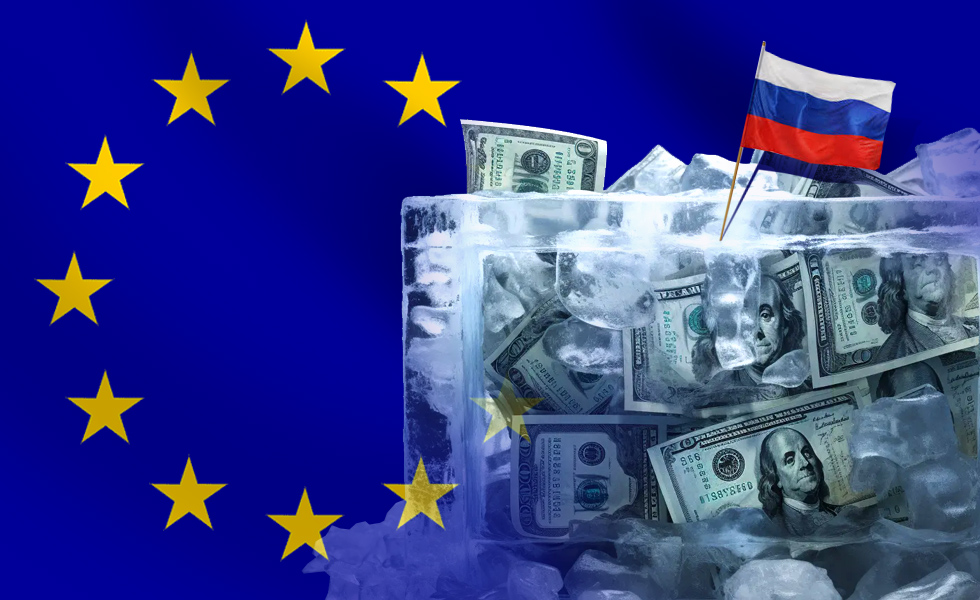
    Those tensions came to a head at a pivotal European Union summit in Brussels earlier this week, where leaders debated how to secure long-term financing for Ukraine. In recent months, the European Commission, led by Ursula von der Leyen, had advanced an ambitious proposal to use frozen Russian sovereign assets held in the EU as collateral for a large-scale loan to Kyiv. The plan envisioned mobilizing up to €210 billion in frozen Russian funds to underpin a €90 billion financing package that would keep Ukraine solvent and militarily supplied for more than a year. Beyond its financial utility, the proposal was designed to send a strategic signal to Moscow that Europe could sustain Ukraine’s resistance well into the future while imposing direct costs on the aggressor.

    The initiative quickly gained backing from several of Europe’s most powerful political figures, most notably Friedrich Merz, who argued that using Russian assets would strengthen Ukraine while sparing European taxpayers. However, despite weeks of negotiations, the proposal collapsed during the summit after overnight talks failed to resolve legal and political obstacles. The most significant resistance came from Belgium, where roughly €185 billion of the frozen Russian assets are held. Belgian Prime Minister Bart De Wever warned that repurposing those assets could expose his country to international legal challenges and targeted retaliation from Moscow.

    European leaders attempted to offer Belgium guarantees against potential financial and political consequences, but these assurances raised further legal questions that proved impossible to resolve under EU rules requiring unanimity. As discussions dragged into the early morning hours, it became clear that the reparations-based loan could not command the consensus needed to proceed.

    Faced with the risk that Ukraine could run out of money as early as April of next year, EU leaders pivoted to a fallback option. At approximately 3 a.m. in Brussels, the bloc agreed to jointly borrow €90 billion on international markets and lend it to Ukraine over the next two years. The borrowing will be backed by the EU budget, meaning that member states will ultimately bear the financial responsibility. Hungary, Slovakia, and the Czech Republic will not participate in the scheme, effectively turning the effort into a coalition of 24 willing countries rather than a fully unified bloc.

    For Ukraine, the immediate effect is largely the same. The funds are expected to prevent a fiscal collapse in Kyiv and to sustain basic state functions and defense spending through 2026. Ukraine’s leadership publicly welcomed the decision, emphasizing that the agreement significantly bolsters the country’s resilience at a moment of utmost need. International observers also noted that failure to reach any deal would have sent a damaging signal to both Kyiv and Moscow. 

    Nevertheless, the compromise carries important consequences. By abandoning the use of Russian assets, Europe has placed the financial burden squarely on its own taxpayers while forgoing an opportunity to directly weaken Russia’s financial position. Russian President Vladimir Putin responded by asserting that the EU stepped back because using the assets would have undermined trust in the euro zone and triggered serious repercussions, particularly among countries that store reserves in Europe.

    The funding debate unfolded against a broader backdrop of strategic anxiety. The EU has long depended on American military power for its security and relied heavily on U.S. financial support for Ukraine since Russia’s full-scale invasion in 2022. With that support now reduced, Europe has increased its contributions but not enough to fully fill the gap. According to the International Monetary Fund, Ukraine faces a projected financing shortfall of roughly €72 billion next year without sustained external aid.

    Data from the Kiel Institute highlight the uneven nature of Europe’s support. While countries such as Germany, France, and the United Kingdom have increased absolute contributions, Nordic states continue to lead when measured as a share of GDP. By contrast, Italy and Spain have contributed relatively little. Public opinion trends also raise concerns as polling in major European economies suggests growing fatigue among voters, with significant portions of the electorate in Germany and France favoring cuts to financial assistance for Ukraine.

    The divisions visible in the Ukraine funding debate were mirrored elsewhere at the summit. EU leaders also failed to finalize a long-delayed free trade agreement with Mercosur, the South American bloc that includes Brazil and Argentina. Supporters of the deal argue that it would help diversify Europe’s trade relationships away from China and the United States. Negotiations have stretched on for 25 years now, and Commission officials had hoped to finalize the agreement before the end of the year.

    Opposition from European farming interests and political hesitation once again derailed progress. French President Emmanuel Macron pressed for additional protections for European farmers, while Italian Prime Minister Giorgia Meloni withheld support at a critical moment. As a result, von der Leyen canceled a planned trip to Brazil to sign the agreement. Brazilian President Luiz Inácio Lula da Silva had previously warned that continued delays could cause his government to abandon the deal altogether, though last-minute assurances from Rome appear to have temporarily eased tensions.

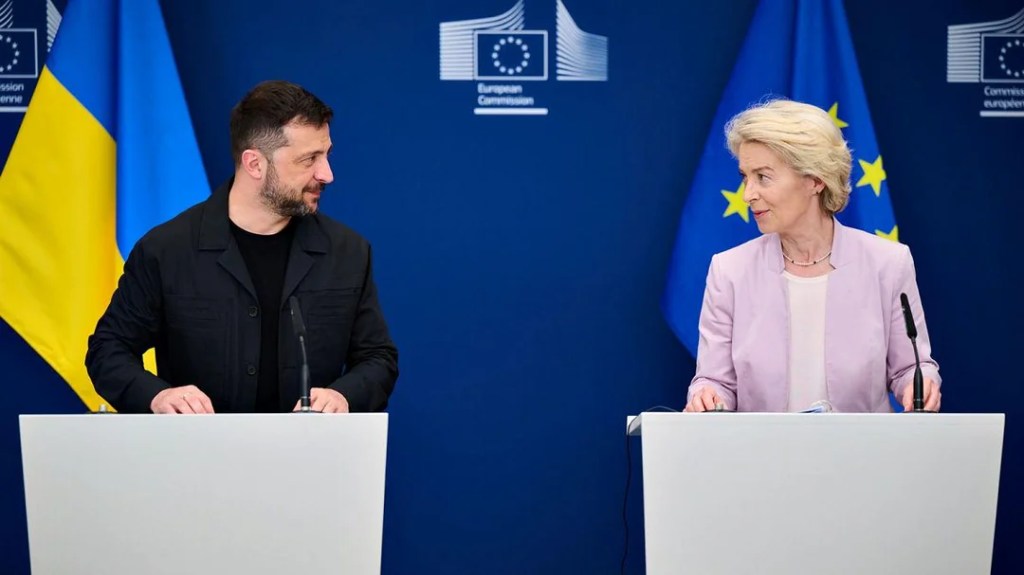
    By the summit’s conclusion, European Council President António Costa declared that the EU had delivered on its commitments to Ukraine. German Chancellor Merz echoed that sentiment, arguing that Europe had demonstrated its sovereignty and resolve. Ukrainian President Volodymyr Zelensky, who traveled to Brussels to advocate for the reparations loan, returned home with substantial financial support but without the stronger political message he had hoped Europe would send to Russia.

    Analysis:

    The EU’s decision to jointly borrow €90 billion for Ukraine averts an immediate financial crisis in Kyiv and prevents a potentially catastrophic failure of European credibility. In practical terms, the outcome may be close to the best Ukraine could reasonably expect heading into 2026, especially given declining American involvement and growing political fatigue within Europe itself.

    Yet the manner in which the decision was reached underscores deeper structural weaknesses. Months of public disagreement, followed by a last-minute retreat from an ambitious plan endorsed by the bloc’s most powerful leaders, reinforces perceptions of European indecision and dividedness. The inability to leverage frozen Russian assets, despite their clear strategic value, reflects legal caution, political fragmentation, and an enduring reluctance to fully confront the consequences of great-power conflict.

    Europe can plausibly claim that it has stepped into a void left by the United States. It cannot yet claim that it has seized the geopolitical moment. By choosing the path of least resistance, the EU secured short-term stability over a large reshape of the strategic balance. As the war drags on and financial needs resurface within a year, the same questions about burden-sharing, political will, and strategic purpose are likely to return with even greater urgency.

  • Is America Moving Towards Regime Change in Venezuela? 

    12/9 – International Relations News & Geopolitical Analysis

    Since early September, the United States has pursued a rapidly intensifying campaign of air strikes against vessels it claims are involved in maritime drug trafficking across the Caribbean Sea and eastern Pacific Ocean. What began as targeted interdictions has evolved into a sprawling military effort that has already destroyed more than 20 boats and killed at least 87 people, prompting growing concerns across Latin America and beyond. Officials in Washington insist the strikes are part of a larger strategy to dismantle drug-smuggling networks. Yet the scale of the military deployment, the geographic reach of operations, and the administration’s increasingly direct threats against Venezuela’s government have fueled speculation that the campaign is intended to pave the way for coercive regime change in the South American nation. 

    Military Build-Up & Escalations at Sea 

    The first major signs of escalation emerged in late August, when the United States began quietly shifting personnel and assets to the Caribbean. Air force teams arrived in Puerto Rico to refurbish a long-abandoned naval base and restore its airstrip. By mid autumn, warships, bombers, fighters, and surveillance aircraft were circulating throughout waters overseen by the Pentagon’s Southern Command. On November 11th, the navy announced that the USS Gerald R. Ford, the world’s largest aircraft carrier, had arrived in the region accompanied by three destroyers. Observers immediately noted that this represented the largest American maritime concentration in the Caribbean since the Cuban missile crisis.

    The operational tempo heightened further as aircraft executed a steady rhythm of reconnaissance flights, dry-run strike simulations, and maritime interdictions. The White House framed these actions as part of a broadened mandate to confront “narco-terrorist” groups. 

    The first lethal strike occurred on September 2nd when American forces hit a Venezuelan boat in the Caribbean, killing 11 people believed by Washington to be members of the Venezuelan gang Tren de Aragua. From that point forward, the tempo accelerated. Four separate vessels were destroyed in the eastern Pacific on October 27th, taking 14 lives and marking the deadliest day of the campaign.

    In total, 22 confirmed strikes have been carried out across both bodies of water. The most recent attack, on December 4th, killed four men aboard a vessel in the eastern Pacific that the administration said was carrying narcotics to the United States. The government has described the broader mission as “Operation Southern Spear” and has entrusted many of the strikes to Joint Special Operations Command, which controls elite units including Delta Force and the Navy SEALs.

    The administration argues that these operations qualify as lawful armed conflict. President Trump has officially designated the targeted cartels as foreign terrorist organizations and treats boat crews as enemy combatants. Legal scholars across the political spectrum dispute this characterization, warning that the administration’s approach bypasses domestic and international law. 

    Controversies surrounding the issue have escalated further after the Washington Post reported that commanders overseeing the September 2nd strike observed two survivors clinging to wreckage. According to the report, Admiral Frank Bradley ordered a second missile strike that killed the unarmed men. International law prohibits the killing of individuals who are out of combat and pose no threat. The allegation has triggered accusations of war crimes and strained cooperation with allies. 

    A Broader Strategic Objective

    Although the administration continues to insist that the primary target is drug trafficking, the scope of American deployments suggests a more expansive objective. Over 15% of the United States Navy is now positioned in the region, including more than 10k sailors and the world’s most advanced carrier group. Pilots have been conducting simulated strike missions on Venezuelan targets. The arrival of an American destroyer in Trinidad and Tobago in late October, only 11 km from Venezuelan shores, further underscored the proximity of military assets to Caracas.

    President Trump has even warned international airlines to treat Venezuelan airspace as fully closed. He has also stated that the United States will conduct strikes on Venezuelan territory “very soon” and confirmed that he has authorized covert action activities inside the country. On October 15th he publicly acknowledged these covert missions. Several senior officials have hinted that the introduction of land strikes is under review.

    The design appears reminiscent of the war on terror approach. The administration’s language closely resembles the rhetoric once used against jihadist organizations. Hegseth has argued that drug trafficking groups have killed more Americans than al-Qaeda and should be treated accordingly. 

    The Venezuela Question

    Analysts suggest that the acceleration of operations coincides with renewed interest in removing Venezuelan President Nicolás Maduro from power. While the administration is unlikely to launch a traditional ground invasion, it appears committed to coercive pressure backed by targeted strikes. Officials believe that sustained military action may persuade Maduro’s inner circle or the armed forces to negotiate terms of exit. To reinforce this message, American envoys have quietly circulated offers of amnesty and assurances aimed at Venezuelan military leaders, promising support for modernization if a new government takes power and avoiding any wholesale purge of the officer corps.

    The administration’s strategy also aligns with a revived interpretation of the Monroe Doctrine. The second Trump Administration’s National Security Strategy, released last week, declares that the United States will enforce a “Trump Corollary” aimed at preventing adversarial influence in the Western Hemisphere. Officials highlight Venezuela, Cuba, and Nicaragua as the last hostile governments in the region and justify a more forceful posture to remove openings for Russian and Chinese involvement. 

    A Shift in Global Priorities

    The prioritization of the Western Hemisphere raises broader strategic questions. Resources channeled into the Caribbean and Pacific must come from somewhere, and the United States is already stretched across Europe, the Indo Pacific, and the Middle East. A more assertive hemispheric stance risks pulling attention away from longstanding security architectures in Europe and the Indo Pacific that have anchored American influence since the end of WWII.

    Despite these concerns, the administration believes the domestic political costs are low. The president’s calculus appears guided by the belief that the public will tolerate foreign operations as long as American casualties remain minimal. The success of a previous lightning strike operation, known as Operation Midnight Hammer in Iran, has reinforced confidence in high intensity but low footprint military action.

    Analysis: 

    The unfolding campaign represents a profound shift in American foreign and security policy. For decades, maritime drug interdiction was treated primarily as a matter for law enforcement and international policing partnerships. The current approach reframes narcotics trafficking as a theater of armed conflict, with implications that stretch well beyond counternarcotics efforts.

    Several elements signal a long term change. The deployment of an aircraft carrier strike group, the renovation of military infrastructure in Puerto Rico, and the integration of special operations units suggest an operational presence that is more than temporary. The decision to apply counterterrorism tactics to criminal groups risks blurring the distinction between combatants and civilians, creating significant humanitarian and legal challenges. The conduct and legality of the strikes have already provoked controversy that could intensify if land targets in Venezuela are hit. 

    A conventional ground invasion of Venezuela remains highly unlikely, as it would seem contradictory and optically inconsistent with the president’s “America First” messaging, which emphasizes avoiding prolonged foreign entanglements and maintaining an image of restraint and a broker of peace across the world. Instead, the administration seems to recognize and believe that, as long as American casualties are avoided, the public is willing to tolerate assertive displays of military power abroad.

    At the geopolitical level, the administration’s embrace of a resurrected Monroe Doctrine marks a decisive return to sphere-of-influence thinking. This orientation prioritizes dominance in the Western Hemisphere as essential to American security and strategic identity. The intention appears to be the restoration of a regional order in which no adversarial powers can gain footholds. Whether such a doctrine is sustainable in a multipolar world is uncertain. It could also undermine existing alliances and create new vulnerabilities as attention shifts away from Europe and Asia.

    Most significantly, the administration seems convinced that decisive action against Venezuela will demonstrate American resolve and deter rivals. Yet historical precedent suggests caution. Efforts to force political regime change from abroad often produce unpredictable outcomes, and the humanitarian and political cost to Venezuelans could be severe. While the administration argues that the present circumstances differ from past interventions, the long term consequences of covert operations and targeted strikes remain difficult to forecast. 

    America now stands at a moment where tactical military success risks evolving into a far broader regional confrontation. Whether this strategy will reshape regional dynamics or unleash a cycle of escalation will depend on choices made in the coming weeks.

  • Europe’s Financial Crossroads: The Frozen Russian Assets Debate and Ukraine’s Funding Crisis

    11/16 – Geopolitical News & Analysis

    European leaders remain at a critical juncture in determining how to sustain Ukraine’s war-torn economy and military effort. The European Commission’s proposal to use profits from frozen Russian state assets to finance a €140 billion reparations-style loan has become a central legal, political and financial test. A recent round of meetings with senior Belgian officials, who oversee the jurisdiction in which most of the assets are held through the clearinghouse Euroclear, saw no breakthrough, leaving the matter unresolved ahead of a decisive summit in December.

    Ukraine’s financial strain continues to intensify nearly four years into the conflict. American assistance, once a substantial component of Kyiv’s budgetary support, has halted under the current U.S. administration. International borrowing options have largely been exhausted, pushing Ukraine’s fiscal deficit to roughly 20 percent of GDP and raising public debt to around 110 percent. Without new funding, Ukraine risks running out of money by late winter or early spring. The Commission estimates that Ukraine will require at least €100 billion in external support this year to maintain government operations, sustain military activity, and stabilise infrastructure heavily damaged by Russian attacks. Officials warn that Ukraine’s ability to pay soldiers, repair energy facilities and uphold essential public functions will be severely weakened if financing is not secured in time.

    To bridge this rapidly growing gap, the Commission has proposed using the profits generated from frozen Russian central bank assets, rather than the assets themselves, to back a large-scale loan for Ukraine. More than €200 billion in Russian reserves are immobilised at Euroclear. Under the plan, profits and investment income from these funds would be transferred to a collective EU mechanism that could service long-term loans or reconstruction programs. Repayment obligations for Ukraine would begin only after Russia ends the war and accepts responsibility for reparations, at which point deductions from the frozen assets could occur. The design is intended to maintain compliance with international law while making Russia indirectly contribute to the financial burden of the conflict.

    Belgium, however, has emerged as the most cautious member state. As the home of Euroclear and the jurisdiction hosting most of the Russian assets, Belgium faces considerable legal risk. Prime Minister Bart De Wever has emphasised that Belgium cannot support the plan without strong legal guarantees, extensive risk-sharing among member states, and assurances that it will not be held liable in the event of lawsuits brought by Russia or affiliated entities. De Wever raised these concerns during the October European Council meeting, noting that a court ruling in Russia’s favour could otherwise leave Belgium solely responsible for repayment.

    Belgium is particularly worried about the fragility of the EU’s sanctions regime, which requires unanimous renewal every six months. Brussels fears that a dissenting member state such as Hungary or Slovakia could block renewal in the future, unfreeze the assets and obligate Euroclear to return them. The Belgian government is also calling for an arrangement that distributes financial risk proportionally across all EU members. Although the Commission has proposed that national guarantees be issued in line with each country’s economic size, Belgium wants automatic and immediate compensation if legal challenges succeed. 

    The failed attempt to secure a compromise at the late-week meeting last Friday reinforced the stalemate. Belgian officials have expressed concern that the Commission has not yet provided the full range of alternative financing models requested by EU leaders in October. They insist that all viable options must be developed and evaluated before any decision is reached. While they describe their stance as constructive rather than obstructionist, they note that time is running short and the issue must be resolved collectively.

    The Commission is continuing to warn that any further delay could leave Ukraine severely underfunded at a crucial stage of the war. Although Brussels has been able to provide nearly €5.9 billion in short-term support through existing instruments, this falls far short of Ukraine’s long-term needs. Without agreement on the frozen-asset mechanism, the EU may be forced to rely on less comprehensive tools such as short-term bridge loans, bilateral contributions, or expanded joint borrowing. Diplomats privately concede that none of these options would provide the magnitude or stability offered by the proposed €140 billion loan.

    Analysis: 

    The dispute highlights the EU’s broader challenge of balancing moral responsibility, legal integrity and financial prudence. The Commission views the frozen assets as an opportunity to fund Ukraine without placing the burden directly on European taxpayers while reinforcing the principle that Russia must ultimately pay for the damage it has inflicted. Belgium, by contrast, sees substantial legal uncertainty and is concerned that Euroclear, given its role in global finance, could face legal threats that could undermine confidence in the European financial system.

    Meanwhile, the debate is unfolding against a wider geopolitical backdrop. With reliance on U.S. support diminishing, European leaders are acutely aware that sustaining Ukraine has become a test of Europe’s strategic autonomy and its ability to fund major security commitments independently. Maintaining Ukraine’s war effort and reconstruction is projected to cost around $390 billion over the next four years, an amount equivalent to roughly 0.4 percent of the combined GDP of NATO’s European members. Analysts argue that while the cost is substantial, it remains within the EU’s collective economic capacity. At the same time, Russia continues to face mounting economic pressures with slow growth, high inflation and elevated interest rates. 

    As the December European Council summit approaches, leaders recognise that the next steps will likely shape both Europe’s internal cohesion and its external credibility. The Commission is expected to present a detailed set of options, including refinements to the frozen-asset mechanism, an expanded borrowing framework, and interim funding solutions that could operate until a comprehensive plan is in place. Should no agreement be reached, the EU risks entering 2026 without a stable financing model for Ukraine at a moment when its needs are most dire.

    The outcome of the forthcoming summit will not only determine the pathway for Ukraine’s immediate financial support but will also set a broader precedent for how the EU uses economic instruments during conflicts. Whether through the frozen asset proposal or an alternative mechanism, the decision will reveal how far Europe is prepared to adapt its financial and legal frameworks to meet the demands of an evolving security environment.

  • Drone Incursions of EU Airspace Continue, Raising Concerns over Russian Security Threat 

    10/5 – International News & Geopolitical Analysis

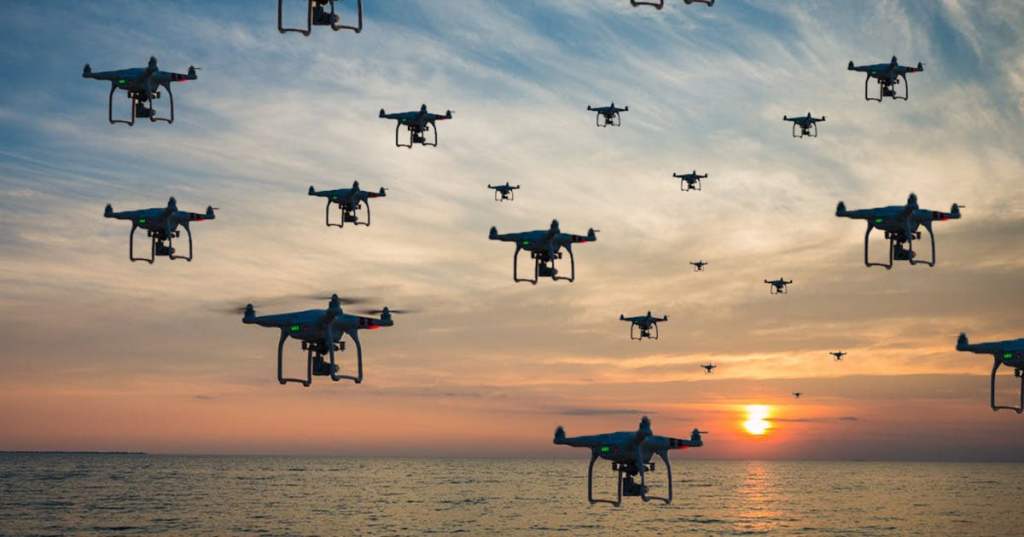
    In recent weeks, a wave of mysterious unmanned aerial vehicle incursions over Europe and NATO airspace has set off alarm bells among governments, military planners and the public. Although many questions remain unanswered, the sequence of events, rising tensions, and evolving responses paint a striking picture of a new front in hybrid warfare.

    Timeline of Incursions and Responses:

    Drone swarm over Poland marks first direct NATO-Russia confrontation

    On the night of September 9 into September 10, as Russia launched an aerial assault on Ukraine, between 19 and 23 drones penetrated Polish airspace via Belarus. NATO and Polish forces scrambled jets; up to four drones were confirmed shot down—primarily by Dutch F-35s—with debris recovered in multiple regions. Poland closed airspace over several major airports, including Warsaw’s Chopin. In reaction, Warsaw invoked Article 4 of the NATO Treaty, calling for consultations among allies. 

    Polish Prime Minister Donald Tusk labeled the incursion a large-scale provocation and vowed that Poland would defend its skies. In the weeks prior, debris and incursion patterns had been seen repeatedly in eastern Poland, but this was the first time NATO jets directly engaged. 

    In response, NATO launched Operation Eastern Sentry, deploying air and naval assets from multiple nations to reinforce the alliance’s eastern flank. In parallel, NATO’s prior Baltic Sentry mission (launched after sabotage in the Baltic Sea) was reinforced. 

    Escalating incursions in the Baltics and Romania

    On September 13, Romania reported a Russian drone breach near the Danube; Romanian F-16s and German Eurofighters pursued the intruder until it vanished from radar. Two days later, on September 19, three Russian warplanes entered Estonian airspace, prompting Italian F-35s to escort them out. Estonia said this level of violation was unprecedented. 

    Denmark, Norway, and Germany see airspace disruptions

    Between September 22 and 28, a cluster of drone sightings—some over military bases, some over airports—disrupted operations in Denmark and Norway. Copenhagen Airport was shut for roughly four hours after large drones appeared in controlled airspace. Oslo also briefly restricted runway use that evening. 

    Multiple drones were also spotted near Danish military installations, including Karup Air Base, the country’s largest. Danish authorities described the operator as a “professional actor” behind coordinated flights, though they declined to confirm any one nation’s involvement. 

    In Germany, recent days have brought sightings over Munich and Frankfurt airports, an ammunition depot in northern Germany, and a police airborne unit base near Gifhorn. Munich Airport was twice forced to shut down operations within 24 hours, stranding more than 11,000 passengers across the two nights. 

    The German Defense Ministry also confirmed drone sightings near the Erding military base—home to drone research—at about the time of Munich’s first closure. Meanwhile, in northern Germany’s Schleswig-Holstein region, drones were sighted over a power plant, university hospital, shipyard, and oil refinery. Authorities in the region said flying objects of various shapes and sizes were involved. 

    In the past few days, Germany reported further drone activity, exacerbating fears that the September incidents were part of a broader pattern. Munich Airport reopened after being shut twice in less than 24 hours due to new drone sightings, leaving many flights canceled or delayed. 

    German Interior Minister Alexander Dobrindt, speaking amid a summit in Munich, pledged to equip police with an anti-drone defense unit and promised legislation to make it easier to request military support to shoot down drones. He warned of a drone “arms race.” 

    Elsewhere, Belgium reported about 15 drones hovering over its Elsenborn military zone and adjacent areas. German interior ministries confirmed drone activity over naval headquarters, energy infrastructure, and strategic military installations. 

    In Denmark, newly reported drone activity over military installations led to a temporary ban on civilian drone flights during the upcoming EU summit period, with penalties proposed for violations. NATO began augmenting surveillance over the Baltic Sea under a “Baltic Sentry” approach, with Germany lending support via deployment of an air defense frigate. 

    In response to mounting pressure, European defense ministers agreed to accelerate the development of a so-called “drone wall” along borders with Russia and Ukraine—a multilayered network of sensors, tracking systems, jammers, intercept systems, and automated responses. EU Commission President Ursula von der Leyen announced billions in funding for a drone defense alliance coordinated with Ukraine.

    Sweden urged the EU to streamline procurement standards to acquire defense drones more rapidly, while reinforcing that anti-drone capabilities should remain under national (not EU) control in line with NATO alignment.

    Russia rejects Accusations of Involvement 

    The Kremlin has denied intentional wrongdoing. Russian officials have claimed that drones targeted Ukrainian military facilities and that allegations of airspace violations aimed to stoke tension. Kremlin spokespersons dismissed accusations as “unfounded” and warned that unfounded rhetoric risks escalation. 

    Most European leaders treat these incursions as deliberate provocations. Ukrainian officials argue Russia is expanding its war and testing Western resolve. The German defense minister expressed confidence the routes were intentional, not navigational errors. 

    Some analysts caution that not all incursions may be deliberate. In the absence of GPS or in case of signal jamming, drones could drift off course. The Russian military is known to deploy low-cost decoy drones to saturate defenses or confuse detection systems.

    Strategic and Political Impacts

    The incursion event over Poland marked the first direct NATO engagement with Russian drones inside Alliance airspace since the full-scale invasion of Ukraine in 2022. NATO’s triggering of consultations under Article 4 underscores how seriously allies regard these violations. 

    European leaders at a summit in Copenhagen adopted a firmer stance. French President Emmanuel Macron called for strategic ambiguity and warned that any drone incursions risk being destroyed. He also supported the idea of targeting Russia’s shadow fleet of tankers involved in sanctions evasion. Danish Prime Minister Mette Frederiksen called Russia a threat to all of Europe and urged that the continent stop treating the war as Ukraine’s alone. 

    German Chancellor Friedrich Merz emphasized unity and resolve. Polish Prime Minister Tusk warned against illusions about Russia’s intentions and reiterated Poland’s determination to defend itself. British Prime Minister Keir Starmer likewise called for increased sanctions and support for Ukrainian air defenses. 

    Beyond security risks, analysts note the drone wave carries psychological weight. Public anxiety over unseen aerial threats evokes Cold War fears and amplifies perceptions of a creeping war on Europe’s doorstep. The pattern of drone overflights—sometimes unexplained, sometimes near critical facilities—creates uncertainty and forces nations to assume worst-case intent. 

    European defense planning now faces urgency. The “drone wall” initiative seeks to embed a cross-border network capable of early detection, neutralization, and interception of unmanned threats. Some proposals estimate a multibillion-euro cost and a three- to four-year development timeline, although some leaders hope parts can be deployed sooner. Ukraine, leveraging battlefield experience, has begun sharing drone warfare expertise with Denmark and other European partners, strengthening collective capabilities. 

    Countries like Germany are considering legal and structural changes: expanding police authority to request military support, legislating easier authorization to shoot drones down, and developing dedicated counter-drone units. Sweden is pressing for streamlined procurement of counter-drone systems while maintaining national control over deployment decisions. 

    Analysis:

    The recent spat of drone incursions is more than a set of isolated incidents. It signals the arrival of a persistent low-intensity aerial front in Europe’s security landscape as one that blends espionage, provocation, and psychological pressure. For Russia, employing such aerial probes offers a method to test NATO’s defenses, measure response times and rules of engagement, and generate uncertainty. 

    While NATO and EU nations are responding with greater coordination and strategic resolve, a number of serious challenges remain:

    1. Attribution and escalation risk – Even when Russia is the prime suspect, direct attribution is difficult. False flag risks and ambiguity complicate decisions to intercept or engage. The balance between restraint and deterrence is delicate.
    2. Defense readiness gapMany nations lack mature counter-drone systems. Intercepting small, low-radar drones at scale requires new sensors, AI tracking, electronic warfare tools, and rules for rapid authorization. The “drone wall” is ambitious, as systemic hurdles and cross-border coordination will be a formidable task.
    3. Alliance coherence under strainWhile leaders have expressed unity, differing threat perceptions among states, varying legal authorities, and defense industrial capacity gaps may slow harmonization. Some nations may be more cautious about shooting down drones, especially if attribution remains unproven.
    4. Psychological warfareUnpredictability is part of the tactic. Repeated unclaimed or unexplained overflights sow fear, erode public confidence, and force resource-intensive vigilance. Even a drone that goes unengaged can achieve disruption.
    5. Escalation vectorsIf any drone is armed or mistaken for a manned aircraft, the risk of miscalculation escalates dramatically. Thus, Europe must calibrate its rules of engagement carefully—clear, credible deterrence without inadvertent escalation.

    Given these dynamics, Europe must move fast and try to enact a united front. The drone threats may force NATO’s eastern flank to become a testing ground for a new era of aerial conflict. The incumbents of 20th-century air defense must adapt to the 21st-century warfare that is faster, more distributed, and more autonomous. Europe is confronting a new form of aerial contest and will soon be pressured to start making moves as escalations grow.

  • Poland Shoots Down Russian Drones, NATO on High Alert

    9/10 – Geopolitical News & Analysis

    In one of the most serious breaches of NATO territory since the alliance’s founding in 1949, at least 19 Russian drones entered Polish airspace overnight between September 9 and 10. The incursion, which triggered temporary airport closures and prompted Poland to invoke NATO’s Article 4, marks a major escalation in the ongoing conflict between Russia and Ukraine, with increasingly direct consequences for neighboring NATO states.

    The drones were part of a wider Russian aerial assault on Ukraine, but several crossed deep into Poland, with one crashing over 300 kilometers inside the country. Polish F-16s, supported by Dutch F-35s deployed earlier this month, scrambled to intercept the drones, shooting down around four or five. At least one drone ripped the roof off a residential house in Wyryki-Wola. No casualties were reported.

    Poland’s Prime Minister Donald Tusk addressed parliament hours later, declaring the situation a perilous moment as his country had never been this close to open conflict since WWII. In an emergency meeting, Poland formally requested NATO consultations under Article 4 of its treaty, which allows for emergency dialogue when a member state’s territorial integrity or security is threatened.

    A New Phase of Confrontation

    Drone and missile spillovers into NATO airspace are not new. In recent years, both Romania and Finland have reported Russian airspace violations. In 2022, two Polish civilians were killed by what was later found to be a misfired Ukrainian missile. However, the scale of this latest event dwarfs previous incidents. Polish officials confirmed that the breach involved at least 19 aerial objects, while other reports cited up to 23. For the first time, NATO warplanes directly engaged and destroyed Russian drones over an allied country.

    Multiple Polish airports were closed as a precaution, including Warsaw’s Chopin Airport, which is a vital hub for logistical and diplomatic operations related to Ukraine. Eastern Poland was placed on high alert. A NATO spokesperson confirmed that aircraft from several allied nations — including Italy, Germany, and the Netherlands — participated in the joint defense effort. An Italian surveillance plane and aerial refueler, along with German Patriot missile defense systems, were also deployed.

    Russia Denies Intent

    Moscow has denied responsibility, claiming the drones were not intentionally aimed at Poland and may have veered off course due to electronic warfare systems used by Ukraine. The Belarusian government issued a similar explanation, stating that jamming systems from both Russia and Ukraine might have disrupted the drones’ path.

    However, experts and Western officials are skeptical. Analysts from Polityka Insight and the International Institute for Strategic Studies argue that such a large number of drones — particularly the Gerbera model, often used for reconnaissance or as decoys — could not have simply gone off course by accident. Ukrainian military and electronic warfare specialists have noted that the range of drone spoofing technology is far too limited to explain how debris landed more than 100 kilometers inside Poland.

    Ukrainian President Volodymyr Zelensky stated that over 400 drones and 40 missiles had been launched by Russia into Ukraine during the same night, with at least eight drones appearing to be aimed directly at Poland. NATO Secretary-General Mark Rutte labeled the event “absolutely reckless and dangerous,” saying a full assessment is underway but early indicators suggest the incursion was intentional.

    NATO Response

    Despite the severity of the situation, NATO has refrained from invoking Article 5 — the alliance’s collective defense clause — which would be reserved for a clear armed attack on a member state. The alliance instead responded by convening emergency consultations through Article 4. Rutte emphasized that NATO is prepared to defend every inch of its territory, but cautioned against premature escalation without thorough intelligence assessments.

    Poland has made it clear it is reserving the right to escalate further, but for now, is focusing on strengthening coordination within the alliance. Poland’s defense minister stated that all potentially threatening aerial objects were tracked, intercepted, or neutralized.

    This latest development coincides with Russia’s scheduled “Zapad 2025” military exercises, set to begin on September 12 in Belarus, near Poland’s border. These war games are expected to involve far more than the officially stated 13,000 troops. The last Zapad exercises in 2021 saw 200,000 troops mobilized — and within months, Russia invaded Ukraine.

    In preparation, Poland has already closed its borders with Belarus and activated additional military protocols. Officials say some of the drones even entered Poland directly from Belarus rather than from Russian-occupied Ukrainian territory.

    The incident arrives at a tense geopolitical moment. The European Union has already been discussing expanding sanctions on Russia, including targeting oil shipments via “shadow fleets” and punishing third-party countries buying Russian oil. EU foreign policy chief Kaja Kallas called the drone incursion the most serious violation of European airspace since Russia’s invasion of Ukraine in 2022 and stated that indications point to a deliberate act.

    U.S. President Donald Trump, who hosted Vladimir Putin at a summit in Alaska in August, has publicly expressed interest in pushing forward a second wave of sanctions. This includes the possibility of sanctions targeting nations that facilitate Russian oil trade. For the first time since Trump returned to office in January 2025, coordinated transatlantic measures are under discussion.

    Belgium’s Prime Minister declared that Putin was not interested in diplomacy, calling the drone incursion a mockery of the West. He joined other European leaders in calling for greater support to Ukraine and tougher penalties for the Kremlin. 

    Testing NATO’s Resolve

    This event represents more than just a violation of Polish airspace. Many analysts see it as a direct test of NATO’s unity and response capability. Vladimir Putin has long sought to exploit divisions within the alliance, aiming to weaken its credibility through strategic provocations and military ambiguity.

    Military experts suspect the Gerbera drones used in the incursion may have served multiple purposes — not just to frighten, but to probe NATO’s radar and response times. Ukrainian sources confirmed that these drones are often used to overwhelm and study enemy air defenses. Their use in NATO territory suggests Moscow is expanding its strategy beyond Ukraine’s borders.

    Independent Russian military analyst Yuri Fyodorov stated that such an operation would require approval from the highest levels of the Kremlin, reinforcing the belief that this was not a mistake, but a deliberate provocation sanctioned by Putin himself.

    Analysis: 

    The incursion into Poland’s airspace has shaken assumptions about how insulated NATO members are from Russia’s war in Ukraine. For the first time since the war began, allied warplanes jointly downed Russian weapons over NATO soil. That precedent is both historically significant and strategically unsettling. 

    The response from NATO, while coordinated and cautious, sends a signal of resolve. But it also leaves open the question of what happens next time — especially if the incursion causes casualties, or if Belarus becomes more actively involved in the conflict.

    For now, the skies over Eastern Europe remain tense. Poland is mobilizing, NATO is being tested, and Russia is watching closely as it pedals on with its war in Ukraine.

  • Protests Erupt in Ukraine as Zelenskyy Passes Bill Centralizing Power

    7/25 – International News & Analysis

    President Volodymyr Zelenskyy has signed into law a controversial bill that strips Ukraine’s flagship anti-corruption agencies of their independence, triggering the largest domestic protests since Russia’s 2022 full-scale invasion. The move, defended by Zelenskyy as a wartime safeguard against alleged Russian infiltration, has sent shockwaves through Ukrainian civil society, fueled rare public rebuke from Western allies, and raised grave concerns over Ukraine’s democratic backsliding.

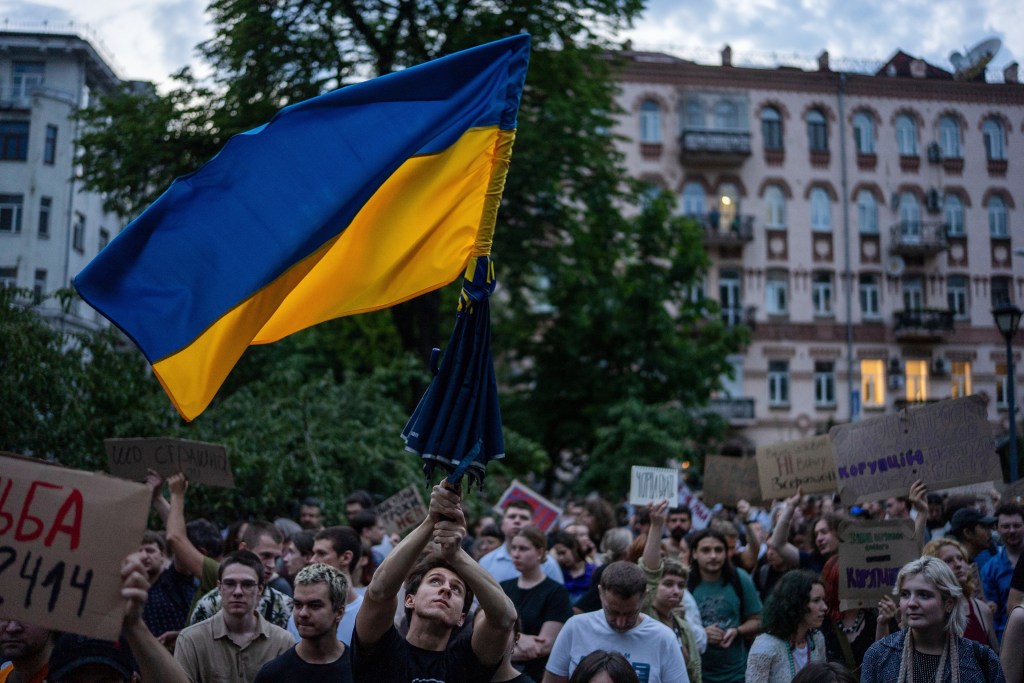
    On July 22, the Verkhovna Rada — Ukraine’s parliament — passed legislation that grants sweeping powers to the country’s prosecutor general, a presidential appointee, over the National Anti-Corruption Bureau (NABU) and the Specialized Anti-Corruption Prosecutor’s Office (SAPO). Within hours, Zelenskyy signed the bill into law, sparking outrage from anti-corruption watchdogs, war veterans, students, civil society, and international donors.

    The law empowers the prosecutor general to reassign or quash investigations initiated by NABU and SAPO—agencies specifically created in 2015 under EU and U.S. guidance to investigate and prosecute corruption free from political interference. Under the new legislation, their independence is effectively dissolved, and oversight is returned to the presidential administration.

    Despite curfews and wartime restrictions on assembly, protests erupted across Ukraine. Hundreds rallied in Kyiv, Odesa, Lviv, and Dnipro. Protesters included civilians, law students, veterans, and even soldiers on leave—many disillusioned by what they view as a betrayal of the very values they are fighting to defend.

    The Justification and the Fallout

    Zelenskyy has insisted that the reform is necessary to root out Russian infiltration within the anti-corruption agencies. His team pointed to the recent arrests of NABU officials allegedly compromised by Moscow. But critics say these claims are unsubstantiated and amount to a pretext for a political power grab. Even European Commission officials labeled the rationale “deeply concerning,” warning that undermining judicial independence would derail Ukraine’s EU accession hopes.

    Adding to the alarm, Ukraine’s domestic intelligence agency (SBU) raided NABU and SAPO offices shortly after the law passed. Simultaneously, efforts were made to block the appointment of an IMF-endorsed candidate to head the State Bureau of Economic Security—again on vaguely defined “national security” grounds. Civil society activists argue that such actions increasingly mirror the authoritarian tactics Ukraine claims to oppose.

    Until now, the West has largely muted criticism of Zelenskyy, wary of emboldening Moscow or undermining Ukraine’s war effort. But this latest episode proved a tipping point.

    European Commissioner for Enlargement Marta Kos publicly warned that the law jeopardizes Ukraine’s EU future. G7 ambassadors in Kyiv issued a rare joint statement urging the Ukrainian government to uphold rule-of-law standards. Ursula von der Leyen, president of the European Commission, demanded clarification from Zelenskyy. Defense Commissioner Andrius Kubilius warned that in war, trust in leadership is paramount—and easy to lose.

    Centralization of Power

    Civil society experts say Law No. 12414 is not an isolated development but part of a broader pattern under Zelenskyy’s wartime leadership. Since the invasion, the president has increasingly concentrated authority in the hands of a narrow circle of advisers, led by his powerful chief of staff Andriy Yermak.

    Recent government reshuffles removed key independent officials, including Foreign Minister Dmytro Kuleba and Armed Forces Commander Valery Zaluzhny, further fueling accusations of “CEO-style” governance that sidelines institutional checks and balances. This vacuum of accountability, critics say, could embolden authoritarian tendencies that jeopardize the country’s long-term stability.

    NABU and SAPO were established not just as symbols of reform but as vital mechanisms for securing Western military and financial aid. Their independence is a benchmark of democratic credibility. If Ukraine backslides into a model resembling the pre-2014 oligarchic system, it risks losing not only institutional integrity but also the moral high ground in its existential struggle against Russia.

    Analysis:

    Support for Ukraine in the West is already under strain. With U.S. leadership shifting and European governments grappling with economic fatigue, politicians need continued justification to fund the war. A Ukraine perceived as sliding into autocracy undermines that case—and plays directly into Moscow’s narrative that democracy is a myth in post-Soviet space.

    Under mounting domestic and international pressure, Zelenskyy pledged on Wednesday to introduce new legislation ensuring the independence of NABU and SAPO. But observers remain skeptical. The president’s vague assurances, coupled with the speed of the original bill’s passage, leave many doubting his sincerity. The Kyiv Independent’s editorial summed up the mood bluntly: “Zelenskyy just betrayed Ukraine’s democracy — and everyone fighting for it.”

    NABU chief Semen Kryvonos and SAPO head Oleksandr Klymenko confirmed that their institutions are now vulnerable to political interference. Eighteen MPs who voted for the law are themselves reportedly under NABU investigation, raising further questions about the motivations behind the legislation.

    Zelenskyy’s decision to override institutional safeguards may offer short-term control, but it risks long-term harm. It weakens the legitimacy of his presidency, alienates Ukraine’s most loyal international backers, and fractures the trust of the very citizens holding the frontlines.

    Russia does not need a battlefield victory to destabilize Ukraine. It only needs to watch the country undermine its own institutions from within. As seen in countries like Georgia, democratic erosion from internal missteps can achieve what external forces cannot.