IRinFive

Tag: politics

  • Britain & France Threaten to Recognize Palestinian Statehood as Israel Starves Out Gaza

    7/30 – International News & Geopolitical Analysis

    International diplomatic pressure continues to mount on Israel as Britain has joined France in pledging to recognize a Palestinian state by September unless Israel moves swiftly to halt its military campaign in Gaza, end the humanitarian catastrophe by allowing more aid in, and commit to a long-term peace process. This coordinated Western shift marks a significant climax thus far in the nearly two-year-long war between Israel and Hamas, which has resulted in the deaths of over 60,000 Palestinians and a widespread humanitarian crisis that seems to be entering its darkest phase yet.

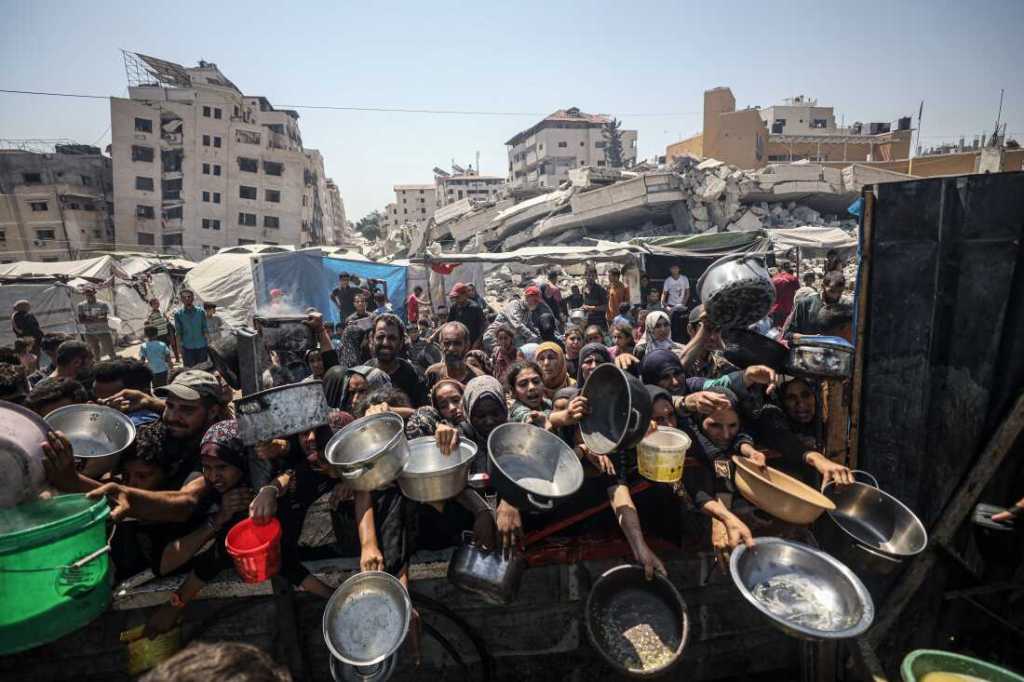
    Humanitarian Catastrophe and Famine

    The Gaza conflict, ignited in October 2023 by a Hamas attack on southern Israel that left 1,200 Israelis dead and 251 taken hostage, has since spiraled into a grinding and devastating war. Israel’s military response has razed much of the densely populated Gaza Strip and displaced more than two million people. According to the Integrated Food Security Phase Classification (IPC), Gaza has now crossed famine thresholds, with mounting hunger-related deaths and widespread malnutrition. At least 147 people—88 of them children—have died from starvation, with the toll rising daily. Gaza’s health authorities and global humanitarian agencies are sounding alarms that the situation is at risk of spiraling into a full-blown famine.

    Images of starving children have shocked the global community. The United Nations World Food Programme has reported significant difficulties in delivering aid, citing restricted access and lack of coordination from Israeli authorities. Despite Israel claiming that 5,000 aid trucks have entered Gaza in the past two months, major relief organizations argue that food and medical supplies remain severely insufficient and purposefully locked out of the enclave. Meanwhile, Israel maintains that it is not pursuing a policy of starvation, accusing Hamas of stealing aid—a claim the UN has not substantiated and is yet to be proven as fact.

    Britain and France Shift Policy Response

    UK Prime Minister Keir Starmer announced that Britain would formally recognize a Palestinian state at the United Nations General Assembly in September unless Israel implements several key measures: an immediate ceasefire, an end to plans for annexation of the West Bank, and a credible commitment to a two-state solution. France issued a similar pledge last week, prompting sharp rebukes from Israeli officials.

    Israel’s government reacted with outrage. Prime Minister Benjamin Netanyahu denounced the British proposal as a reward for terrorism, asserting that recognizing Palestinian statehood at this stage would only embolden Hamas. Trump, despite claiming neutrality during recent talks with Starmer, later told reporters that he did not believe Hamas should be rewarded with statehood recognition.

    Palestinian Authority President Mahmoud Abbas welcomed Starmer’s announcement as a bold and principled move, while UN officials noted that recognition alone would not alleviate the immediate suffering in Gaza nor produce any tangible progress toward peace at this stage.

    Stalled Ceasefire Talks and Mounting Civilian Deaths

    Despite intermittent talks led by Egyptian, Qatari, and U.S. mediators, efforts to broker a ceasefire have repeatedly broken down. The latest breakdown occurred after both Israel and the United States withdrew from negotiations, accusing Hamas of lacking coordination and refusing to compromise. Hamas demanded guarantees for a permanent ceasefire, Israeli military withdrawal, and an influx of humanitarian aid.

    Meanwhile, deadly airstrikes and ground assaults continue. Overnight Israeli attacks on the Nuseirat refugee camp killed at least 30 people, including women and children, while others were gunned down along the Salahudeen Road as they waited for humanitarian aid. Gaza’s death toll has now surpassed 60,000, making this the deadliest conflict involving Israel since the country’s founding in 1948.

    Observers argue that Netanyahu has little interest in ending the war or pursuing a two-state solution. His administration has increasingly moved toward permanent occupation of Palestinian territories, advancing controversial plans such as relocating Gaza’s population into a “humanitarian city” in Rafah, a move many critics label as forced displacement or ethnic cleansing.

    Defense Minister Israel Katz has spearheaded policies aimed at resettling Palestinians outside Gaza and intensifying military operations in the West Bank, under the justification of preempting future threats. Domestically, Netanyahu’s right-wing Likud party has doubled down on its rejection of Palestinian sovereignty. The Knesset— Israel’s parliament— recently passed laws opposing the creation of a Palestinian state and supporting the annexation of the West Bank. Netanyahu himself boasts of having spent decades blocking Palestinian statehood and has consistently framed such recognition as an existential threat to Israel.

    U.S. Caught Between Allies and Interests

    While European nations begin to pivot toward recognizing Palestinian statehood, the United States—Israel’s closest and seemingly unwavering ally—remains reluctant to follow suit. President Trump, though having occasionally clashed with Netanyahu on broader Middle East strategy, has mostly remained aligned and compliant with Israeli policy throughout the war.

    Since the start of the conflict, the U.S. has provided Israel with at least $22.7 billion in military and humanitarian aid, vastly exceeding the $3.8 billion annual cap set under the existing U.S.–Israel memorandum of understanding. Additionally, Washington has invested substantial diplomatic capital in shielding Israel from sanctions and stalling international recognition of Palestinian statehood.

    But this strategy is becoming increasingly untenable. Arab states, which were once open to normalizing relations with Israel, are now demanding Israel commit to recognizing Palestinian sovereignty before proceeding. Trump’s broader ambitions of brokering a regional peace agreement, including normalization with Saudi Arabia, will permanently hang in the balance the longer his administration allows Israel a free pass to do whatever they want in Gaza.

    Analysis:

    The convergence of mass civilian suffering in Gaza, mounting evidence of famine, and Israel’s hardline stance has created a geopolitical crisis that is forcing Western governments to reassess their Middle East policies. For the United States, continued unconditional support for Israel risks isolating Washington from its Arab partners and European allies alike. It also threatens to undermine Trump’s larger strategic efforts to reposition U.S. military engagement in the region.

    Trump’s previous willingness to engage diplomatically with actors like the Houthis in Yemen and Syria’s new leadership suggests he is capable of shifting away from traditional alliances. If he hopes to achieve a lasting regional peace and rehabilitate America’s role as a mediator, he will need to leverage his popularity in Israel to pressure Netanyahu into concessions that include winding down his ethnic cleansing and leveling of the Gaza Strip and eventual recognition of a sovereign Palestinian state.

    Netanyahu’s political future and ideological commitments are deeply tied to rejecting Palestinian statehood however, and he is unlikely to change course without substantial external pressure from only the United States, as they are the only guarantor of Israel’s actions that have enough sway to make him act. But if the U.S. fails to influence Israel decisively, the risk is not just the continued suffering of Palestinians but the long-term erosion of America’s credibility and influence in the region, as well as a worldwide questioning of the hegemon’s longtime commitment to humanitarian values.

    The growing international pressure for humanitarian intervention and a halt to Israel’s actions in Gaza, symbolized by threatened statehood recognition from Britain and France, signals a tectonic shift in the global consensus. While symbolic in nature, these actions reflect a broader abhorration with Israeli leadership current military doctrine and a desire to re-center the peace process on humanitarian foundations.

    Whether this results in meaningful change will depend largely on the United States. For now, the war rages on, the humanitarian crisis deepens, and the vision of a two-state solution remains distant as most of the territory that would make up this so-called Palestinian state lies in rubble.
  • Trump and EU Clinch High-Stakes Trade Agreement

    7/27 – International Trade News & Diplomacy Analysis

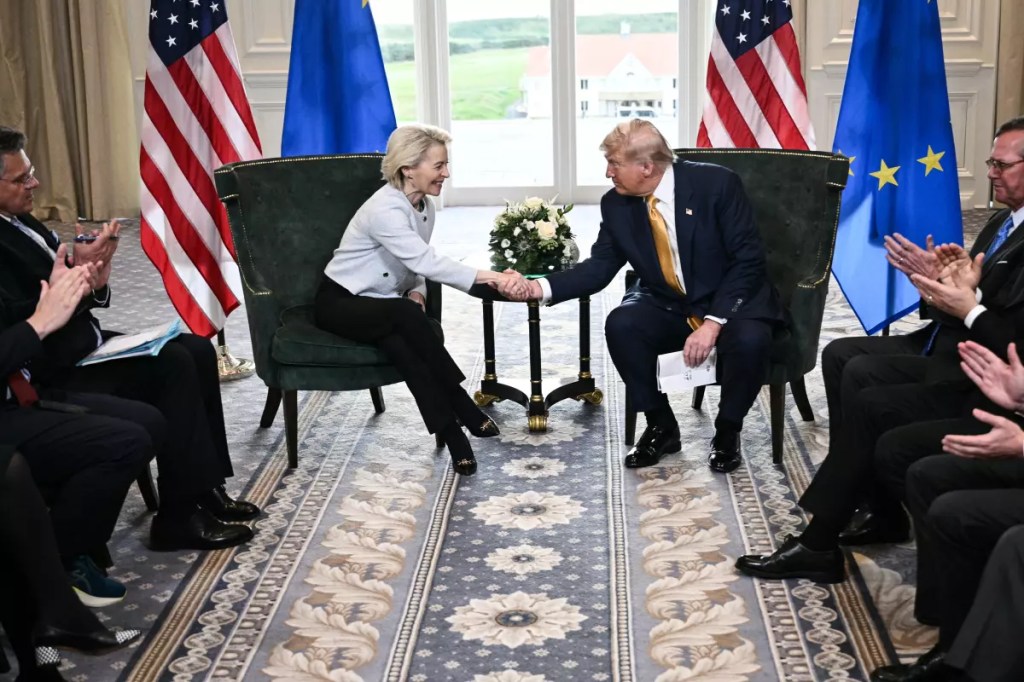
    After months of building tensions and simmering negotiations, the United States and the European Union have secured a sweeping trade agreement that averts what could have become a damaging economic rift between the two largest trading blocs in the world. The accord, announced Sunday by President Donald Trump and European Commission President Ursula von der Leyen following last-minute talks in Scotland, sets a baseline 15% tariff on EU goods entering the U.S. and commits the EU to massive American energy and military purchases, totaling more than $1.3 trillion over the coming years.

    This deal comes just days before the Trump administration’s hard deadline to impose 30% tariffs on all European imports—an ultimatum that had galvanized negotiations and sent shockwaves through both political and corporate circles in Europe. With the EU’s transatlantic exports valued at over €530 billion annually, and the U.S. trade deficit with Europe hitting $235 billion in 2024, the stakes could hardly have been higher.

    Terms of the Agreement

    Under the new deal, EU goods will face a 15% import tariff—a compromise figure well above Europe’s desired “zero-for-zero” model, yet notably lower than Trump’s threatened 30%. The agreement also includes a commitment from the EU to purchase $750 billion worth of U.S. energy exports, including LNG and oil, as well as a $600 billion pledge toward military procurement and U.S.-based investment. Notably, steel and aluminum products will remain under a 50% tariff, while pharmaceuticals are excluded from the framework.

    Automobiles, a politically sensitive export for Germany and other EU nations, will also be taxed at 15%, the same level applied to other goods under the agreement. In contrast to the EU’s earlier negotiating position, which called for tariff reductions or eliminations in strategic sectors, the deal essentially locks in a new minimum tariff structure for future U.S. trade relationships.

    Diplomatic Context

    The agreement followed a tense standoff. Just two weeks prior, EU trade negotiators had activated a €93 billion retaliatory tariff package targeting a wide swath of U.S. exports—from Kentucky bourbon and soybeans to Boeing aircraft. Those countermeasures, due to take effect on August 7, are now ultimately suspended following the breakthrough in Scotland.

    Von der Leyen, who flew to Scotland at short notice to meet Trump at his Turnberry resort, described the process as “heavy lifting.” She was accompanied by EU Trade Commissioner Maroš Šefčovič and top Brussels negotiators. Trump was joined by Commerce Secretary Howard Lutnick, who made clear that the U.S. would move ahead with tariffs unless an agreement was finalized. Their one-hour meeting marked the first high-level trade engagement between the U.S. and EU since Trump imposed global steel tariffs in April.

    The deal represents a rare moment of convergence between the Trump administration’s “America First” trade strategy and the EU’s desire to preserve economic stability and avoid an all-out trade war. Yet European officials were quick to temper any celebration, pointing out that the agreement had only narrowly avoided a more severe rupture.

    European industry groups, particularly in the auto, luxury, and cosmetics sectors, expressed relief but also frustration at what many see as an asymmetric outcome. German carmakers like BMW and Mercedes, which manufacture vehicles in the U.S. for re-export to Europe, feared they would be penalized on both sides of the Atlantic. Meanwhile, executives in sectors such as French beauty products and aerospace warned that further tariffs could devastate transatlantic supply chains.

    France had pushed for a tougher stance, with President Emmanuel Macron publicly supporting the EU’s readiness to impose countermeasures. Germany, meanwhile, favored a more conciliatory approach to protect its export-heavy economy. In the end, the EU managed to present a relatively united front, but not without internal friction.

    No joint statement or finalized deal text has yet been published. A formal briefing of EU ambassadors was scheduled for Monday in Brussels. Some negotiators emphasized the need to codify the verbal commitments swiftly, particularly given Trump’s past record of abrupt reversals.

    Analysis:

    While the deal brings temporary relief to rattled markets and companies on both sides of the Atlantic, analysts warn that it falls short of solving the deeper trade imbalances that have fueled tensions. For Trump, the agreement represents another notch in a growing portfolio of 15%-based trade pacts—similar frameworks were recently announced with Japan, Vietnam, Indonesia, and the Philippines. The UK, still finalizing its own agreement, has negotiated a more favorable 10% tariff baseline.

    Yet the transatlantic deal is by far the largest and most symbolically significant. It underscores Trump’s willingness to use hard deadlines and tariff threats to force concessions, and it signals the emergence of a new global trade architecture shaped not by multilateral norms but by bilateral brinkmanship.

    From the European side, the deal may have averted economic catastrophe, but at the cost of conceding to a more protectionist global order. The EU’s once-lofty ambitions of championing rules-based trade now face the harsh reality of adapting to a world led by transactional geopolitics.

    Ultimately as of now, the Trump-von der Leyen agreement is more of a detente than a diplomatic triumph. It stabilizes their immediate diplomatic and economic relationship, but with trust frayed and tariff structures now codified, the era of transatlantic trade friction is far from over.

  • Protests Erupt in Ukraine as Zelenskyy Passes Bill Centralizing Power

    7/25 – International News & Analysis

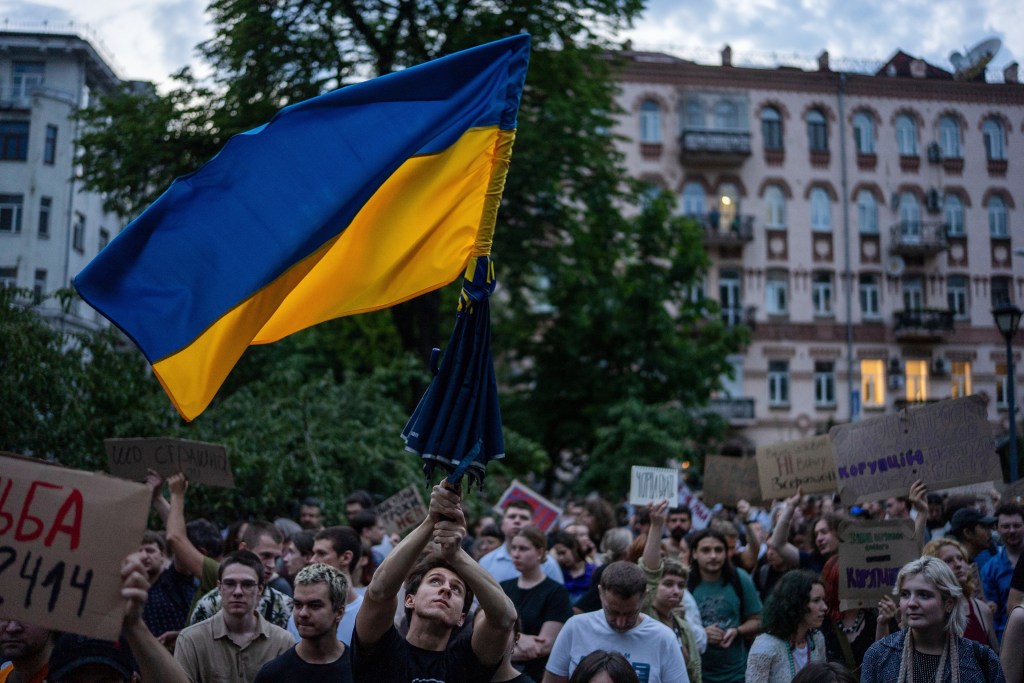
    President Volodymyr Zelenskyy has signed into law a controversial bill that strips Ukraine’s flagship anti-corruption agencies of their independence, triggering the largest domestic protests since Russia’s 2022 full-scale invasion. The move, defended by Zelenskyy as a wartime safeguard against alleged Russian infiltration, has sent shockwaves through Ukrainian civil society, fueled rare public rebuke from Western allies, and raised grave concerns over Ukraine’s democratic backsliding.

    On July 22, the Verkhovna Rada — Ukraine’s parliament — passed legislation that grants sweeping powers to the country’s prosecutor general, a presidential appointee, over the National Anti-Corruption Bureau (NABU) and the Specialized Anti-Corruption Prosecutor’s Office (SAPO). Within hours, Zelenskyy signed the bill into law, sparking outrage from anti-corruption watchdogs, war veterans, students, civil society, and international donors.

    The law empowers the prosecutor general to reassign or quash investigations initiated by NABU and SAPO—agencies specifically created in 2015 under EU and U.S. guidance to investigate and prosecute corruption free from political interference. Under the new legislation, their independence is effectively dissolved, and oversight is returned to the presidential administration.

    Despite curfews and wartime restrictions on assembly, protests erupted across Ukraine. Hundreds rallied in Kyiv, Odesa, Lviv, and Dnipro. Protesters included civilians, law students, veterans, and even soldiers on leave—many disillusioned by what they view as a betrayal of the very values they are fighting to defend.

    The Justification and the Fallout

    Zelenskyy has insisted that the reform is necessary to root out Russian infiltration within the anti-corruption agencies. His team pointed to the recent arrests of NABU officials allegedly compromised by Moscow. But critics say these claims are unsubstantiated and amount to a pretext for a political power grab. Even European Commission officials labeled the rationale “deeply concerning,” warning that undermining judicial independence would derail Ukraine’s EU accession hopes.

    Adding to the alarm, Ukraine’s domestic intelligence agency (SBU) raided NABU and SAPO offices shortly after the law passed. Simultaneously, efforts were made to block the appointment of an IMF-endorsed candidate to head the State Bureau of Economic Security—again on vaguely defined “national security” grounds. Civil society activists argue that such actions increasingly mirror the authoritarian tactics Ukraine claims to oppose.

    Until now, the West has largely muted criticism of Zelenskyy, wary of emboldening Moscow or undermining Ukraine’s war effort. But this latest episode proved a tipping point.

    European Commissioner for Enlargement Marta Kos publicly warned that the law jeopardizes Ukraine’s EU future. G7 ambassadors in Kyiv issued a rare joint statement urging the Ukrainian government to uphold rule-of-law standards. Ursula von der Leyen, president of the European Commission, demanded clarification from Zelenskyy. Defense Commissioner Andrius Kubilius warned that in war, trust in leadership is paramount—and easy to lose.

    Centralization of Power

    Civil society experts say Law No. 12414 is not an isolated development but part of a broader pattern under Zelenskyy’s wartime leadership. Since the invasion, the president has increasingly concentrated authority in the hands of a narrow circle of advisers, led by his powerful chief of staff Andriy Yermak.

    Recent government reshuffles removed key independent officials, including Foreign Minister Dmytro Kuleba and Armed Forces Commander Valery Zaluzhny, further fueling accusations of “CEO-style” governance that sidelines institutional checks and balances. This vacuum of accountability, critics say, could embolden authoritarian tendencies that jeopardize the country’s long-term stability.

    NABU and SAPO were established not just as symbols of reform but as vital mechanisms for securing Western military and financial aid. Their independence is a benchmark of democratic credibility. If Ukraine backslides into a model resembling the pre-2014 oligarchic system, it risks losing not only institutional integrity but also the moral high ground in its existential struggle against Russia.

    Analysis:

    Support for Ukraine in the West is already under strain. With U.S. leadership shifting and European governments grappling with economic fatigue, politicians need continued justification to fund the war. A Ukraine perceived as sliding into autocracy undermines that case—and plays directly into Moscow’s narrative that democracy is a myth in post-Soviet space.

    Under mounting domestic and international pressure, Zelenskyy pledged on Wednesday to introduce new legislation ensuring the independence of NABU and SAPO. But observers remain skeptical. The president’s vague assurances, coupled with the speed of the original bill’s passage, leave many doubting his sincerity. The Kyiv Independent’s editorial summed up the mood bluntly: “Zelenskyy just betrayed Ukraine’s democracy — and everyone fighting for it.”

    NABU chief Semen Kryvonos and SAPO head Oleksandr Klymenko confirmed that their institutions are now vulnerable to political interference. Eighteen MPs who voted for the law are themselves reportedly under NABU investigation, raising further questions about the motivations behind the legislation.

    Zelenskyy’s decision to override institutional safeguards may offer short-term control, but it risks long-term harm. It weakens the legitimacy of his presidency, alienates Ukraine’s most loyal international backers, and fractures the trust of the very citizens holding the frontlines.

    Russia does not need a battlefield victory to destabilize Ukraine. It only needs to watch the country undermine its own institutions from within. As seen in countries like Georgia, democratic erosion from internal missteps can achieve what external forces cannot.