IRinFive

Tag: politics

  • Poland Shoots Down Russian Drones, NATO on High Alert

    9/10 – Geopolitical News & Analysis

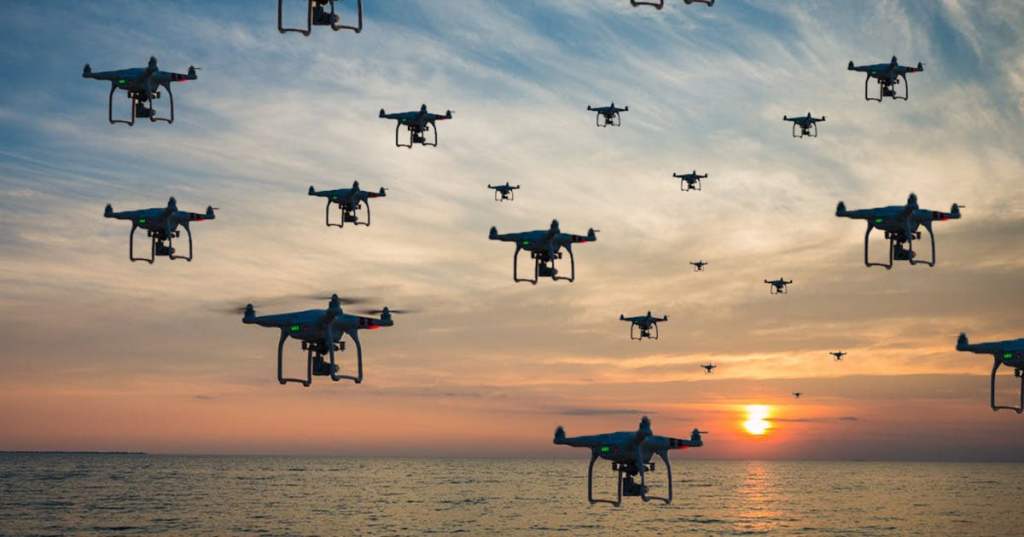
    In one of the most serious breaches of NATO territory since the alliance’s founding in 1949, at least 19 Russian drones entered Polish airspace overnight between September 9 and 10. The incursion, which triggered temporary airport closures and prompted Poland to invoke NATO’s Article 4, marks a major escalation in the ongoing conflict between Russia and Ukraine, with increasingly direct consequences for neighboring NATO states.

    The drones were part of a wider Russian aerial assault on Ukraine, but several crossed deep into Poland, with one crashing over 300 kilometers inside the country. Polish F-16s, supported by Dutch F-35s deployed earlier this month, scrambled to intercept the drones, shooting down around four or five. At least one drone ripped the roof off a residential house in Wyryki-Wola. No casualties were reported.

    Poland’s Prime Minister Donald Tusk addressed parliament hours later, declaring the situation a perilous moment as his country had never been this close to open conflict since WWII. In an emergency meeting, Poland formally requested NATO consultations under Article 4 of its treaty, which allows for emergency dialogue when a member state’s territorial integrity or security is threatened.

    A New Phase of Confrontation

    Drone and missile spillovers into NATO airspace are not new. In recent years, both Romania and Finland have reported Russian airspace violations. In 2022, two Polish civilians were killed by what was later found to be a misfired Ukrainian missile. However, the scale of this latest event dwarfs previous incidents. Polish officials confirmed that the breach involved at least 19 aerial objects, while other reports cited up to 23. For the first time, NATO warplanes directly engaged and destroyed Russian drones over an allied country.

    Multiple Polish airports were closed as a precaution, including Warsaw’s Chopin Airport, which is a vital hub for logistical and diplomatic operations related to Ukraine. Eastern Poland was placed on high alert. A NATO spokesperson confirmed that aircraft from several allied nations — including Italy, Germany, and the Netherlands — participated in the joint defense effort. An Italian surveillance plane and aerial refueler, along with German Patriot missile defense systems, were also deployed.

    Russia Denies Intent

    Moscow has denied responsibility, claiming the drones were not intentionally aimed at Poland and may have veered off course due to electronic warfare systems used by Ukraine. The Belarusian government issued a similar explanation, stating that jamming systems from both Russia and Ukraine might have disrupted the drones’ path.

    However, experts and Western officials are skeptical. Analysts from Polityka Insight and the International Institute for Strategic Studies argue that such a large number of drones — particularly the Gerbera model, often used for reconnaissance or as decoys — could not have simply gone off course by accident. Ukrainian military and electronic warfare specialists have noted that the range of drone spoofing technology is far too limited to explain how debris landed more than 100 kilometers inside Poland.

    Ukrainian President Volodymyr Zelensky stated that over 400 drones and 40 missiles had been launched by Russia into Ukraine during the same night, with at least eight drones appearing to be aimed directly at Poland. NATO Secretary-General Mark Rutte labeled the event “absolutely reckless and dangerous,” saying a full assessment is underway but early indicators suggest the incursion was intentional.

    NATO Response

    Despite the severity of the situation, NATO has refrained from invoking Article 5 — the alliance’s collective defense clause — which would be reserved for a clear armed attack on a member state. The alliance instead responded by convening emergency consultations through Article 4. Rutte emphasized that NATO is prepared to defend every inch of its territory, but cautioned against premature escalation without thorough intelligence assessments.

    Poland has made it clear it is reserving the right to escalate further, but for now, is focusing on strengthening coordination within the alliance. Poland’s defense minister stated that all potentially threatening aerial objects were tracked, intercepted, or neutralized.

    This latest development coincides with Russia’s scheduled “Zapad 2025” military exercises, set to begin on September 12 in Belarus, near Poland’s border. These war games are expected to involve far more than the officially stated 13,000 troops. The last Zapad exercises in 2021 saw 200,000 troops mobilized — and within months, Russia invaded Ukraine.

    In preparation, Poland has already closed its borders with Belarus and activated additional military protocols. Officials say some of the drones even entered Poland directly from Belarus rather than from Russian-occupied Ukrainian territory.

    The incident arrives at a tense geopolitical moment. The European Union has already been discussing expanding sanctions on Russia, including targeting oil shipments via “shadow fleets” and punishing third-party countries buying Russian oil. EU foreign policy chief Kaja Kallas called the drone incursion the most serious violation of European airspace since Russia’s invasion of Ukraine in 2022 and stated that indications point to a deliberate act.

    U.S. President Donald Trump, who hosted Vladimir Putin at a summit in Alaska in August, has publicly expressed interest in pushing forward a second wave of sanctions. This includes the possibility of sanctions targeting nations that facilitate Russian oil trade. For the first time since Trump returned to office in January 2025, coordinated transatlantic measures are under discussion.

    Belgium’s Prime Minister declared that Putin was not interested in diplomacy, calling the drone incursion a mockery of the West. He joined other European leaders in calling for greater support to Ukraine and tougher penalties for the Kremlin. 

    Testing NATO’s Resolve

    This event represents more than just a violation of Polish airspace. Many analysts see it as a direct test of NATO’s unity and response capability. Vladimir Putin has long sought to exploit divisions within the alliance, aiming to weaken its credibility through strategic provocations and military ambiguity.

    Military experts suspect the Gerbera drones used in the incursion may have served multiple purposes — not just to frighten, but to probe NATO’s radar and response times. Ukrainian sources confirmed that these drones are often used to overwhelm and study enemy air defenses. Their use in NATO territory suggests Moscow is expanding its strategy beyond Ukraine’s borders.

    Independent Russian military analyst Yuri Fyodorov stated that such an operation would require approval from the highest levels of the Kremlin, reinforcing the belief that this was not a mistake, but a deliberate provocation sanctioned by Putin himself.

    Analysis: 

    The incursion into Poland’s airspace has shaken assumptions about how insulated NATO members are from Russia’s war in Ukraine. For the first time since the war began, allied warplanes jointly downed Russian weapons over NATO soil. That precedent is both historically significant and strategically unsettling. 

    The response from NATO, while coordinated and cautious, sends a signal of resolve. But it also leaves open the question of what happens next time — especially if the incursion causes casualties, or if Belarus becomes more actively involved in the conflict.

    For now, the skies over Eastern Europe remain tense. Poland is mobilizing, NATO is being tested, and Russia is watching closely as it pedals on with its war in Ukraine.

  • France’s Prime Minister Ousted Amid Budget Crisis Deadlock 

    9/9 – International News & Political Analysis

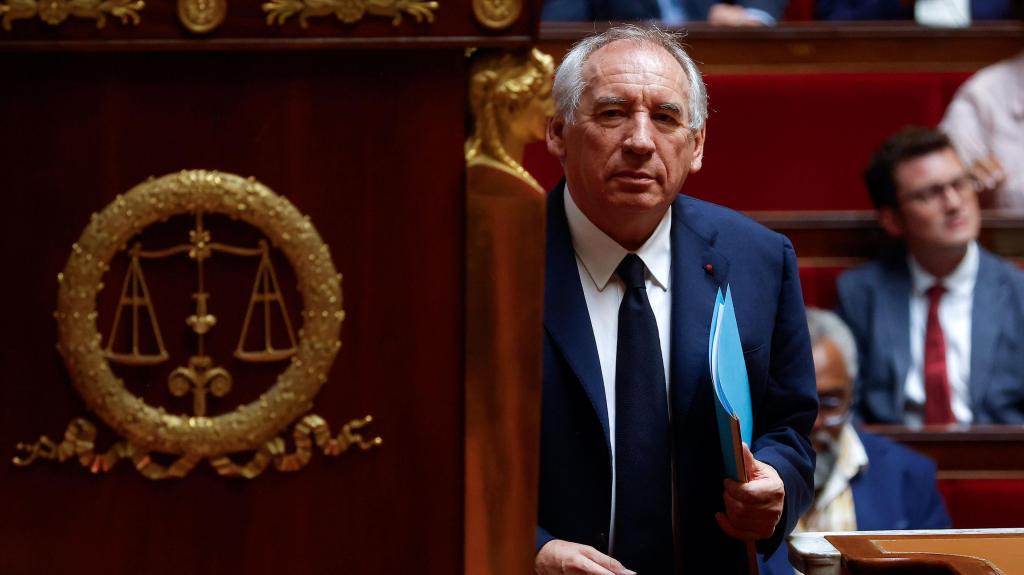
    In yet another one of their political shake-ups, France’s Prime Minister François Bayrou was ousted after a resounding no-confidence vote in parliament on September 8th. This latest collapse marks the fourth prime minister to fall in less than two years, plunging President Emmanuel Macron’s administration, and the country at large, into a deepening fiscal and political spiral.

    At the center of the crisis was Bayrou’s proposed €43.8 billion budget reduction plan for 2026, an ambitious effort aimed at curbing France’s ballooning deficit. Instead of support, the proposal triggered fierce opposition across the political spectrum—from Jean-Luc Mélenchon’s hard-left France Unbowed to Marine Le Pen’s far-right National Rally (RN), and even segments of the center-right Republicans who had previously contributed ministers to Bayrou’s cabinet. With just 194 votes out of 558, Bayrou’s plan was decisively rejected and he handed in his formal resignation today, at the Élysée Palace.

    President Macron has announced that he will yet again choose a new Prime Minister in the coming days. 

    Fiscal Discipline Meets Political Resistance

    Bayrou, a centrist and long-time fiscal conservative, had staked his credibility on delivering one of the most aggressive budget tightening plans in recent French history. The €44 billion in proposed cuts aimed to reduce France’s budget deficit, projected to hit 5.4% of GDP this year, to a more manageable level. He warned that the growing debt load, which now stands at €3.3 trillion (114% of GDP), posed a threat to France’s economic future.

    The political opposition chose not to heed his warnings and instead criticized the austerity plan as either regressive or insufficiently targeted, with Socialist leader Boris Vallaud accusing Bayrou of parroting Macron’s business-friendly policies. Meanwhile, Marine Le Pen described the moment as the inevitable reckoning for decades of mismanagement.

    The immediate fallout has rattled financial markets already wary of France’s trajectory. French 10-year bond yields, once seen as a relatively safe eurozone investment, have surged to levels close to those of Italy, long viewed as the bloc’s most vulnerable large economy. Remarkably, France now pays more to borrow long-term than Greece and Spain—two of the hardest-hit countries during the eurozone’s 2011 debt crisis.

    France’s Political Deadlock and Dismay

    The government’s collapse reflects a broader paralysis within French politics. The current National Assembly is sharply fragmented, and no party commands a clear majority. Macron, having suffered a setback after his last attempt to dissolve parliament in June 2024, appears reluctant to call snap elections again. Polls show that his centrist alliance would be pushed into third place, behind both the RN and the left-wing coalition.

    A recent survey revealed that 63% of French voters would support a return to the polls. But the outcome would likely cement the same impasse: Le Pen’s RN and its allies are projected to lead with 33% in the first round, the left with 25%, and Macron’s centrist bloc a distant third at 15%.

    Ironically, Le Pen herself is currently barred from standing in any election due to a campaign finance embezzlement conviction earlier this year, pending appeal in 2026. Should elections be called, her 29-year-old protégé, Jordan Bardella, is expected to lead the RN into the race for prime minister.

    Uncertainty Breeds Economic Stagnation

    For French households and businesses, the political dysfunction is already having tangible effects. Consumption and investment decisions are stalling as economic actors await clarity.

    This is especially dangerous for France, where slow growth is incompatible with high debt levels. Unlike Greece or Italy who run budget surpluses before interest payments, France has no such cushion. And with German investments poised to surge after years of fiscal restraint, France risks being left behind in the EU’s post-pandemic economic revitalization.

    As one Oxford Economics analyst put it: “France is becoming the new ugly duckling of Europe.” Once a dependable pillar of eurozone financial stability, it is now edging into the uncertain role previously assigned to Italy.

    President Macron faces a difficult choice. He can either call fresh elections and risk further losses, or appoint a new prime minister capable of crafting a budget palatable to an antagonistic parliament. Whispers in political circles suggest a possible pact with the Socialists, who hold 66 seats in the lower house. But their price is steep: a proposed wealth tax of at least 2% annually on fortunes exceeding €100 million.

    Macron is reportedly opposed to such a move, fearing it would undermine France’s image as a business-friendly nation. He had previously positioned France as a startup haven and reduced corporate taxes to attract foreign investment. Reversing that stance would be a dramatic shift, and one his political base may not forgive.

    Still, Macron’s room for maneuver is vanishing. Without a stable government in place, the country will struggle to meet its October 7 deadline to draft the 2026 budget. Finance Minister Eric Lombard has already signaled that any future proposal will be less ambitious than Bayrou’s failed blueprint.

    Protest Movements Loom

    What could escalate France’s crisis from dysfunction to outright chaos? One possibility is a market revolt, as borrowing costs rise and ratings agencies weigh downgrades. Another is mass civil unrest, a familiar feature of France’s volatile political climate.

    Already, two major protest dates have been announced. On September 10, a social media-led campaign titled “Bloquons tout” (“Let’s block everything”) aims to paralyze the country. More traditional labor strikes, coordinated by major unions, are planned for September 18. Although these actions may fizzle without a clear target, France’s history suggests that loosely organized protests can morph into powerful movements, as seen with the Yellow Vests in 2018.

    Analysis:

    France is entering dangerous territory. For decades, its large economy, sophisticated institutions, and central position in the EU granted it a level of financial insulation. That cushion is now eroding quickly. As its political institutions and social services falter along with soaring debt, the country is losing the market’s trust and its own sense of direction to get out of this hole.

    The fall of François Bayrou is just another symptom of a deeper malaise. Macron’s promise to modernize France is colliding with the limits of its institutions, the fatigue of its electorate, and the unforgiving arithmetic of public debt. Without unifying leadership and a credible fiscal plan, the country risks spiraling further into stagnation and potential bankruptcy .

    The clock is ticking on President Macron and whoever is selected to be the next Prime Minister, and inherit one of the most difficult and ill-fated jobs in all of Europe. 

  • U.S.-India Trade Relations Hit New Low as Trump Doubles Tariff Rate on Indian Goods

    8/8 – International Trade News & Analysis

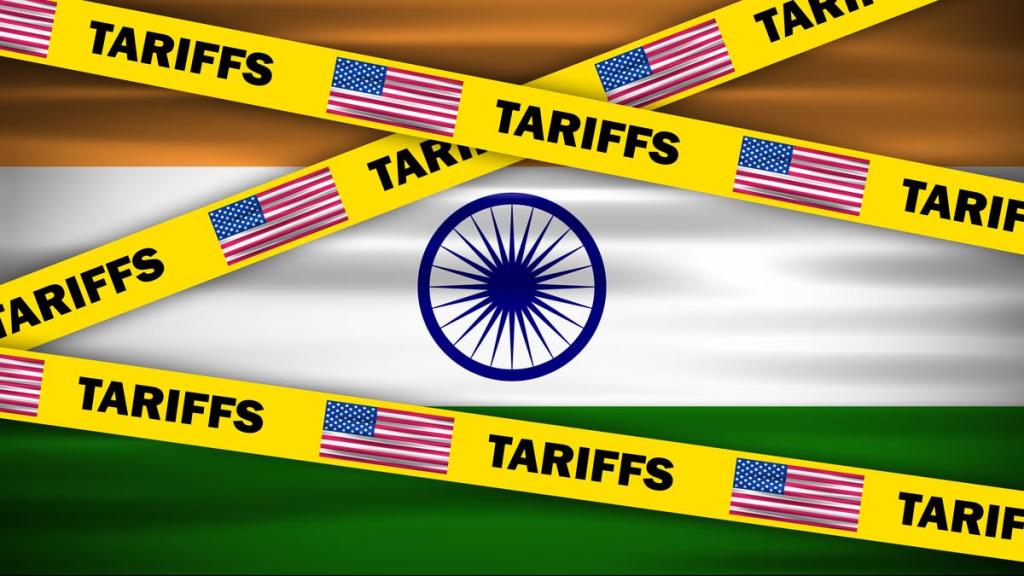
    U.S. President Donald Trump announced a 25% increase in tariffs on Indian imports, targeting the country’s continued purchase of Russian oil — a move that now threatens to disrupt nearly $87 billion worth of bilateral trade, undercut India’s economic momentum, and inject renewed volatility into global markets. Trump’s renewed use of aggressive trade tactics has thrust U.S.-India relations into their most contentious state in over a decade.

    The tariffs, set to take effect 21 days after August 7, raise duties on certain Indian goods to as high as 50% — among the steepest faced by any U.S. trading partner. This move marks a stark reversal from the cooperative tone set during the Trump-Modi meeting earlier this year. India, which has remained the largest buyer of Russian oil since 2022, currently imports around 2 million barrels per day of discounted Russian crude — nearly 40% of its total oil supply. The oil has enabled Indian refiners to boost profits by converting it into high-margin fuels for export, helping to keep their own domestic fuel prices relatively stable amid global volatility. 

    For three years, this approach went largely unchallenged by the West. But Trump’s frustration with Moscow’s refusal to agree to a Ukraine ceasefire has prompted a shift. By imposing new tariffs, he’s signaling an intent to apply economic pressure on Russia indirectly — by squeezing the markets and buyers that keep its oil revenues afloat.

    Collapse of Trade Talks

    According to U.S. and Indian officials, the trade fallout stems from five rounds of inconclusive negotiations that failed to bridge major divides. The U.S. had demanded greater access to India’s agriculture and dairy sectors, while India sought concessions on tech and manufacturing. The breaking point, however, was India’s refusal to scale back its Russian oil purchases — which hit a record $52 billion in 2024.

    Analysts suggest that both sides underestimated each other’s red lines. Indian negotiators misread Trump’s tolerance for strategic hedging, while the U.S. side overplayed its leverage, failing to account for India’s growing geopolitical independence and energy constraints.

    With a population of 1.4 billion and surging energy demand, India argues that its purchases are driven by market necessity, not political allegiance. Officials in New Delhi condemned the tariffs,  highlighting that many countries, including China, continue to import Russian oil.

    Yet it is India — not China — that has borne the brunt of Trump’s latest economic retaliation, though the White House has hinted that China may soon face similar measures. Treasury Secretary Scott Bessent warned that the expiration of the U.S.-China tariff ceasefire on August 12 could trigger a new wave of duties.

    The economic impact on India could be substantial. Roughly 55% of India’s exports to the U.S. are now exposed to steep new tariffs. Exporters fear a dramatic decline in competitiveness, especially against regional rivals like Vietnam, Bangladesh, and Japan, who now enjoy a substantial pricing advantage. 

    Some Indian officials have floated potential relief measures for exporters, such as subsidized credit and loan guarantees, but acknowledge these are only short-term solutions. With Indian GDP growth already expected to fall below the central bank’s forecast of 6.5%, the added pressure from falling exports could push growth below 6% this year.

    India’s Dilemma

    India now faces a delicate balancing act. While it has historically respected U.S. sanctions — as seen during Trump’s first term when it halted Iranian oil imports — this time may be different. The White House has reportedly demanded that India reduce Russian oil imports to zero, but such a robust transition is unlikely.

    Indian refiners have already reduced orders from Russia by up to 50%, according to industry estimates, but replacing the remaining supply won’t be easy. Middle Eastern producers have limited spare capacity and are tied up in long-term contracts with East Asian buyers. Meanwhile, African and Latin American options are more expensive or logistically complicated.

    Even if India manages to secure alternative sources, the loss of discounted Russian oil — which trades $5 to $10 cheaper per barrel than global benchmarks — will erode refining margins and raise fuel costs at home. This could trigger inflationary pressures, undercut India’s manufacturing competitiveness, and strain government subsidies.

    Compounding matters, Prime Minister Modi is preparing for a long-anticipated visit to China, his first in over seven years, raising speculation about a strategic pivot in response to Washington’s hardline stance. A more assertive China, meanwhile, could capitalize on the U.S.-India rift by offering more favorable terms to countries disillusioned with Trump’s economic nationalism.

    Global Oil Markets Risk

    Trump’s strategy aims to dry up Russia’s oil revenues to force a settlement in Ukraine, but the unintended consequences may ripple far beyond the Kremlin. By pressuring India and potentially China, the administration risks triggering a realignment in global energy markets, higher oil prices, and retaliatory trade measures.

    Preventing Russian oil from reaching global markets could send crude prices soaring above $80 per barrel, with knock-on effects for inflation and consumer spending. The Trump administration is reportedly considering waivers or phased restrictions to avoid a 2018-style repeat, when sanctions on Iran caused price shocks and forced a softening of U.S. policy.

    Analysis: The Fragility of Politicized Trade Policy

    The Trump administration’s strategy exposes the volatility of tying economic policy too closely to shifting foreign policy goals. Weaponizing trade for geopolitical leverage can backfire — eroding trust with long-term partners, destabilizing supply chains, and pushing neutral actors into the orbit of rival powers like China.

    Trump’s tariff offensive against India underscores a growing trend in U.S. foreign policy: the use of economic tools as instruments of geopolitical coercion. While such tactics may yield short-term gains — as in pushing allies to reconsider their Russia ties — they come at a cost.

    When trade becomes hostage to political goals, the stability and predictability of international commerce is undermined. Countries that once viewed the U.S. as a reliable economic partner may now turn elsewhere, lured by less conditional arrangements from China or other emerging players.

    Moreover, consumers and businesses ultimately bear the brunt of such tariffs, as costs rise and supply chains adjust. Instead of cultivating long-term cooperation, these moves risk isolating Washington and diminishing its influence in the very regions it seeks to lead.

  • China’s Critical Minerals Clampdown Exposes Fragile U.S. Defense Industry Supply Chains

    8/4 – Geoeconomics & National Security Analysis

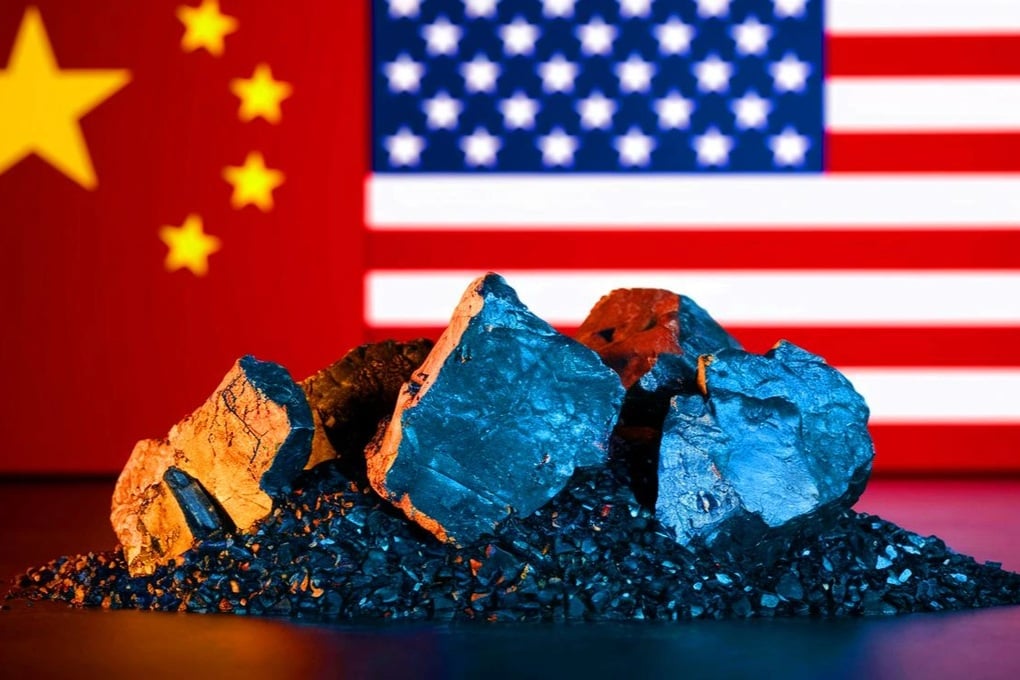
    The People’s Republic of China has recently moved to tighten its grip on global supplies of critical minerals, leaving Western defense manufacturers scrambling to keep production on track. From drone parts to jet fighter engines, the U.S. military’s reliance on rare earths and specialty metals—of which China dominates both production and processing—has become a clear strategic vulnerability. The unfolding mineral squeeze is reshaping industrial priorities and escalating tensions at a time when Washington is already engaged in complex trade negotiations with Beijing. 

    Earlier this year, amid deteriorating trade relations, China implemented stricter export controls on rare earth elements and other vital materials, significantly slowing shipments to Western defense contractors. Although some flows resumed in June after the Trump administration made concessions in ongoing trade talks, Beijing has maintained tight restrictions on any minerals deemed connected to military applications. As a result, U.S. manufacturers have been forced to delay orders, seek alternative suppliers, and pay staggering premiums for materials that were previously routine components of their supply chains.

    One U.S. drone motor manufacturer supplying the Pentagon reported up to two-month delivery delays after being cut off from Chinese magnet shipments. Prices for essential rare earths like samarium—used in high-temperature jet engine magnets—have skyrocketed, in one case being offered at sixty times normal rates. These bottlenecks are already inflating the cost of defense systems and worrying contractors across the board.

    Supply Chain Choke Points and Chinese Leverage

    China currently supplies approximately 90% of the world’s rare earth elements, and its dominance extends to germanium, gallium, and antimony—minerals essential for night vision, bullet hardening, guidance systems, and infrared targeting. In December, Beijing further escalated its restrictions, banning the sale of germanium and gallium to U.S. buyers, compounding the supply crunch..

    Complicating matters is China’s requirement that companies requesting export licenses provide detailed documentation—including product designs, manufacturing photos, and buyer lists—to prove that rare earths won’t be used in military applications. Western firms have refused to comply, resulting in stalled shipments and even formal denials. 

    Meanwhile, smaller defense startups—often lacking the capital and supply-chain expertise to stockpile or diversify—are especially vulnerable. Analysts estimate that over 80,000 parts used in U.S. weapons systems depend on critical minerals now under Chinese control.

    U.S. Counter-Strategy

    In response to growing concerns, the Pentagon has begun bolstering domestic production of rare earths and other niche materials. Among the most significant moves was the U.S. government’s $400 million investment in MP Materials, a key rare-earth mining and magnet manufacturing firm operating in North America. The aim is to ramp up local production capacity for use in F-35 jets and cruise missiles, reducing exposure to foreign supply chain disruptions.

    Other government efforts include a $14 million grant to a Canadian company for germanium production and the creation of the Critical Minerals Forum, an initiative to support projects that enhance mineral supply resilience across the U.S. and its allies. The Defense Department is also requiring all contractors to eliminate Chinese-sourced rare-earth magnets from their products by 2027—a move that has accelerated industry-wide investment in alternative sources.

    Major defense firms that previously relied on subcontractors to source these materials are now taking direct control, recognizing that unless they intervene, they may not secure the inputs required to meet Pentagon demands. 

    China’s intent to enforce its mineral embargo is more than rhetorical. Earlier this year, the United States Antimony Corporation tried shipping 55 metric tons of Australian-mined antimony to its smelter in Mexico via a Chinese port—something it had done without issue in the past. But in April, Chinese customs detained the shipment in Ningbo for three months, eventually releasing it only on the condition that it be rerouted to Australia instead of the U.S. When it arrived, the company found its security seals broken and had to assess whether the material had been tampered with.

    This incident highlights how China is actively weaponizing its mineral control as part of a broader strategy to limit U.S. military and technological capabilities. Industry insiders say shipping and logistics firms were stunned by the seizure, calling it unprecedented.

    Analysis: 

    Beijing’s grip on critical minerals has exposed a critical strategic vulnerability for the U.S. defense sector. The events of 2025 have made clear that decades of outsourcing, coupled with global dependence on Chinese processing capabilities, have created fragile supply chains unfit for prolonged geopolitical tension.

    Although the Biden and Trump administrations have each attempted to address the issue with various incentives and trade agreements, the speed at which China can choke access to vital materials has far outpaced Western efforts to reduce reliance. For all the investments being poured into domestic mining and magnet production, the reality is that scaling such capacity will take years, not months.

    The current mineral bottleneck is more than an economic challenge—it is a matter of national security. The Pentagon’s reliance on Chinese minerals for everything from satellite components to drone motors highlights the urgent need for diversification and long-term planning. As some industry executives note, unless the defense sector builds and secures its own upstream resources, it risks a future in which adversaries can halt production lines with a single regulatory notice.

    Beijing appears determined to use this leverage strategically. Its insistence on vetting end-users and blocking defense applications signals an understanding of the stakes involved. The rare earths dispute is no longer just about trade—it’s about who controls the material backbone of modern warfare.

    As tensions between the U.S. and China persist, the minerals conflict could well be a precursor to broader decoupling in critical technologies. For now, Western defense firms find themselves in a predicament to either build a resilient supply chain or continue to live at the mercy of a geopolitical rival.

  • Trump’s Unveils New Set of Global Tariffs on U.S. Trading Partners

    8/1 – Global Trade News & Analysis

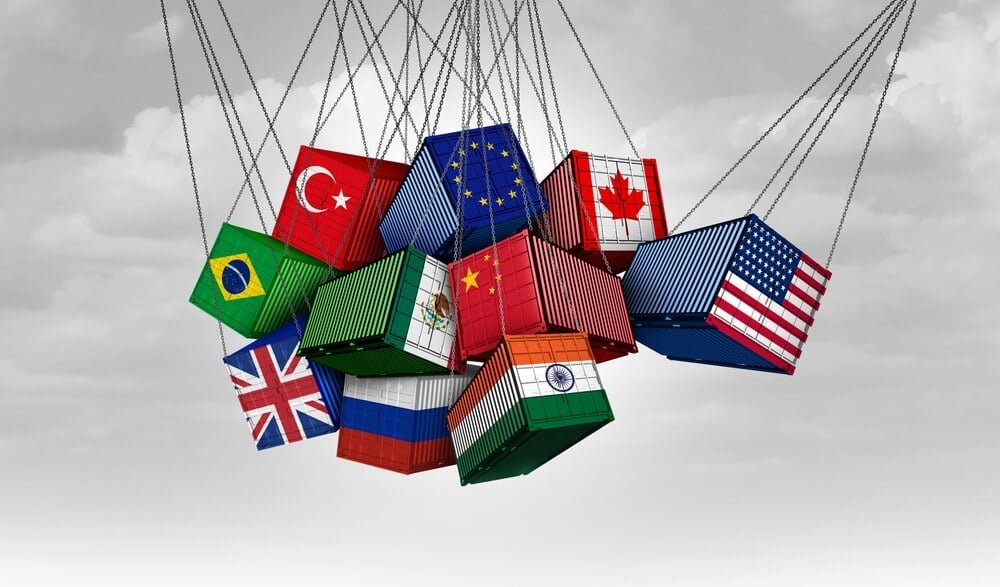
    President Donald Trump has once again signed an executive order imposing renewing and sweeping new tariffs on imports from over 60 countries. Framed as “reciprocal” and justified under emergency powers, the tariffs range from 10% to as high as 50%, signaling an aggressive escalation in Trump’s ongoing campaign to reorient the U.S. global trade system in favor of American producers.

    This latest round of tariffs comes after months of threats, deadline extensions, and last-minute negotiations. Although some countries managed to negotiate reduced rates or temporary reprieves, other key allies and major economies will now face significant financial pressure. 

    The New Tariff Map

    Canada: One of the harshest targets of the new tariffs, Canada will face a 35% levy on numerous exports starting August 1. The increase includes a fentanyl-linked penalty—up from a previous 25%—citing Ottawa’s alleged failure to cooperate on curbing narcotics inflows. The announcement came with no exemptions, prompting strong reactions from Canadian leaders, who promised to protect domestic industries and expand export options elsewhere.

    Brazil: Subject to a 50% tariff, Brazil’s treatment is tied not just to trade imbalances but also to personal political tensions—specifically the prosecution of former president and Trumpian ally Jair Bolsonaro. However, the order carved out exclusions for aircraft, energy products, and orange juice. These partial exemptions likely reflect the intertwined supply chains that connect Brazil and the U.S. in key sectors.

    India and Taiwan: India faces a 25% tariff amid deadlocked negotiations over access to its agricultural sector. Tensions have also been heightened by Trump’s criticism of India’s ongoing oil trade with Russia. Taiwan, on the other hand, has been hit with a 20% tariff, though its leadership framed the move as temporary and expressed hope for a revised deal in the near future. 

    South Korea and Japan: Goods from these longstanding U.S. allies will be subject to a 15% tariff. While this is substantially lower than the top-tier rates, it nonetheless triggered market panic, especially in South Korea, where their stock index fell nearly 4%. These countries had managed to reach partial agreements in the lead-up to the tariff rollout, but pressure on their export economies remains significant.

    Switzerland: Facing a 39% levy, Switzerland is among the most heavily targeted economies. Officials in Bern have said they will seek a negotiated resolution, with officials notably shocked by the announcement and highlighting the severity of the impact on their export-dependent economy.

    China: Though not among the hardest hit in this latest round, China continues to face high tariffs—currently set at 30%—following a series of tit-for-tat escalations earlier this year that saw rates peak at 145%. With a deadline of August 12 looming for a comprehensive trade agreement, both Washington and Beijing are scrambling to avert another escalation.

    European Union: Exports from the EU will face a 15% baseline tariff, matching the rate agreed upon in the bloc’s recent controversial trade deal with Trump. Though viewed as a compromise, it still places European exporters at a disadvantage compared to post-Brexit Britain, which secured a more favorable 10% rate. 

    United Kingdom: Benefiting from faster and more direct negotiations, British exports will be hit with only a 10% tariff. This outcome has led to renewed introspection in Brussels, where many officials now question whether Brexit offered unexpected leverage in trade talks with Washington.

    The announcement of the tariffs triggered an immediate downturn in global markets. Wall Street benchmarks fell sharply, while Asia-Pacific markets recorded their worst week in months. The U.S. dollar weakened against key currencies such as the yen, reflecting investor anxiety over the long-term implications of a potential global trade war.

    Compounding fears was new economic data from the U.S. Commerce Department showing rising prices across several consumer categories. Durable goods and home furnishings saw their steepest increases since early 2022, while clothing, footwear, and recreational products also recorded significant price hikes. These figures suggest the tariffs are already pushing up consumer costs, adding inflationary pressure to an already sensitive economy.

    Legal Powers and Pushback

    Trump’s justification for the sweeping tariffs rests on the 1977 International Emergency Economic Powers Act (IEEPA), which he invoked to declare an emergency over the U.S. trade deficit. The same legal mechanism has been used to support tariffs linked to the U.S. fentanyl crisis. This use of emergency powers is under legal scrutiny, with federal appeals court judges raising questions about its validity.

    Critics argue that the emergency justification circumvents the usual checks and balances that regulate trade policy. Yet for now, the administration continues to use the IEEPA to underpin its aggressive international posture, with further trade actions reportedly in the works.

    While some countries avoided worst-case outcomes by negotiating compromises, others were blindsided by sudden rate hikes or ran out of time. Among those spared, Mexico received a 90-day extension on increased tariffs after a direct call between Trump and President Claudia Sheinbaum. As a result, 85% of Mexico’s exports that comply with the USMCA will temporarily avoid the 30% hike. However, Mexican steel, aluminum, and autos still face steep duties, and a 25% fentanyl-related tariff remains in place. 

    Analysis: 

    Trump’s tariff offensive is a bold gamble aimed at reasserting U.S. dominance in global trade. By hitting both adversaries and allies with steep levies, the administration is making clear that even longstanding partnerships offer no protection from its new economic doctrine. Supporters argue that the moves are long overdue, designed to correct trade deficits and revive American industry. Trump himself has framed the policy as a defense of national economic security.

    Nevertheless the collateral damage will be hard to ignore. Supply chains are being disrupted, consumer prices are rising, and international goodwill is fraying. For many countries, even those spared the harshest penalties, the message is clear: cooperate quickly or face the consequences.

    The contrasting treatment of the U.K. and the EU also reveals a political undercurrent. Trump’s affinity for bilateral over multilateral negotiations—and his apparent personal preference for leaders like Britain’s Keir Starmer who will appease him directly—suggests that smaller, more flexible partners may fare better in future dealings with Washington. 

    We are still early into Trump’s presidency however, and must keep in mind that the longer-term costs of this strategy are difficult to ignore. The tariffs may achieve temporary leverage, but they risk alienating global partners, inviting retaliation, and undermining the multilateral trade order that has long underpinned the global economy which the United States has steered. 

    In reshaping the global trade landscape through tariffs, Trump has effectively bet that America’s economic gravity can force the rest of the world to fall in line. Whether that bet pays off—or backfires—will depend not just on market data, but on the durability of international trust and the resilience of U.S. alliances, as well as developments we are yet to see in domestic U.S. industry this administration is hedging so heavily on reviving. 

  • Initial Takeaways from the US-EU Trade Deal

    7/31 – International Trade Analysis

    The United States and the European Union recently announced a broad transatlantic trade deal that will significantly reshape economic relations between the two powers. While touted as a stabilizing move lowering threatened tariffs in uncertain global times, the deal has triggered widespread backlash in Europe for its lopsided structure, with critics accusing Brussels of capitulating to U.S. demands.

    The agreement, struck between President Donald Trump and European Commission President Ursula von der Leyen, imposes a baseline 15% tariff on most EU exports to the U.S. while committing the EU to vast purchases of American energy and increased investment in U.S. industries. By contrast, post-Brexit Britain secured a more favorable deal earlier this year, locking in a 10% tariff rate on most goods, fueling critical questions about the EU’s negotiating leverage.

    Effect on Sectors

    A key feature of the deal is a massive EU commitment to purchase $750 billion worth of U.S. energy over three years—including oil, liquefied natural gas, and nuclear fuel—equivalent to roughly $250 billion annually. Von der Leyen framed the move as a step toward ending EU reliance on Russian imports. However, energy experts have criticized the agreement as unrealistic, noting that it would require a tripling of current U.S. energy exports to Europe and a near-complete redirection of U.S. global energy flows.

    Critics also argue that Brussels lacks the mechanisms to enforce these purchases, which would need to be carried out by private firms rather than governments. This has led many analysts to conclude that the commitment is more symbolic than practical and difficult to implement at scale.

    Meanwhile, European industrial sectors are bracing for impact. German carmakers, long the backbone of Europe’s export economy, stand to lose heavily despite some concessions. While the EU will eliminate its 10% car import tariff, U.S. tariffs will remain at 15%, and vehicles produced in Mexico will continue facing a 25% duty. Industry experts warn of job losses as companies shift production to the U.S. to avoid tariffs—potentially costing up to 70,000 European jobs, according to Germany’s Center Automotive Research.

    One area of mutual relief is the aviation sector. The deal establishes zero-for-zero tariffs on all aircraft and component parts, providing breathing room for both Boeing and Airbus amid a fragile post-pandemic recovery. With aviation supply chains deeply globalized, avoiding renewed tariffs was crucial. The arrangement also prevents financial pressure on U.S. airlines operating Airbus fleets and transatlantic leasing firms.

    However, ambiguity remains in the pharmaceutical sector. While von der Leyen suggested the deal included drugs, Trump denied this. Brussels later clarified that tariffs remain at zero for now but could rise to 15% following the outcome of a U.S. national security investigation. Generics manufacturers, operating on thin profit margins, have raised alarms about the potential costs, while countries like Ireland—heavily invested in pharmaceuticals—are calling the agreement a surrender.

    In semiconductors, the EU secured a win by exempting chip equipment from tariffs. Dutch firm ASML, a global leader in chip printing machines, saw its stock rise following the announcement. Yet von der Leyen’s pledge to continue purchasing U.S. AI chips signals continued EU dependence on American tech, frustrating advocates of European technological sovereignty.

    While some sectors saw concessions, the EU successfully defended its digital regulatory autonomy. Despite pressure from U.S. tech giants and Trump’s administration, Brussels refused to make commitments on data governance or digital taxation. The Digital Markets Act (DMA) and Digital Services Act remain untouched, preserving the EU’s ability to regulate Big Tech.

    On defense, Trump claimed the deal included large-scale EU purchases of U.S. military equipment. But EU officials dismissed this, noting that arms procurement wasn’t negotiated and remains a national competence. Still, rising European defense budgets—especially post-NATO summit—may indirectly benefit American arms manufacturers.

    Agriculture remains a murky area. While von der Leyen hinted at zero-for-zero tariffs for select “non-sensitive” U.S. agricultural products like nuts, pet food, and bison, core exports such as beef will continue to face tariffs. Talks remain ongoing about where key goods like wine and spirits will fall under the final framework.

    Steel and aluminum discussions remain unresolved, with current 50% tariffs still in place. Trump and EU officials hinted at reviving quota systems reminiscent of past U.S. administrations. The two sides also agreed to explore a “ring fence” to block steel imports from China and other countries accused of unfair production practices. If successful, such a strategy could hit Chinese exporters hardest, while preserving limited access for European specialty products.

    Reactions Across Europe

    The agreement has ignited political discord and rebuke across the EU. French President Emmanuel Macron has been particularly vocal, arguing that the bloc failed to assert its economic strength and should have responded to Trump’s threats with countermeasures. He praised negotiators for salvaging short-term stability but lamented what he called a strategic failure. French Prime Minister François Bayrou echoed this, labeling the agreement a “dark day” and accusing the Commission of caving in to the U.S..

    France has since urged Brussels to invoke the EU’s Anti-Coercion Instrument to retaliate against the U.S. if necessary, especially to protect sectors like wine and spirits. Behind closed doors, French officials have criticized von der Leyen for lacking an aggressive posture during negotiations.

    By contrast, German Chancellor Friedrich Merz and Italian Prime Minister Giorgia Meloni welcomed the deal as necessary to protect their manufacturing-based, export-heavy economies from a potentially disastrous trade war. Merz had pushed for a quick resolution, dismissing notions that a better deal could have been achieved.

    U.K. Outpaces EU in Trade Diplomacy

    Adding insult to injury, Britain’s separate agreement with the U.S.—reached earlier this year—secured a lower tariff rate of 10% and fewer financial obligations. Prime Minister Keir Starmer’s government attributed the better terms to the U.K.’s independence from EU trade policy and its fast-track approach to talks with Trump. European commentators noted that Trump has consistently shown more enthusiasm for bilateral deals with Britain than for engaging with the EU bureaucracy.

    French and EU officials had previously dismissed the UK–U.S. trade pact as superficial. But in light of the Brussels deal, some are now rethinking that stance. Officials like the Swedish Trade Minister admitted that von der Leyen’s deal might have been the best outcome available, though he emphasized it brought little economic benefit for Europe.

    Analysis:

    Though branded as a stabilizing agreement, the Trump–von der Leyen trade pact has exposed deep rifts within the EU and revealed the bloc’s limited leverage in direct negotiations with Washington. From industrial losses and energy commitments to political backlash and diplomatic embarrassment, the EU emerges from this deal with bruised credibility and few tangible wins.

    While the avoidance of an all-out trade war offers some necessary relief, the cost of that peace has been steep: massive energy payments, job losses in key sectors, technological dependence, and the perception of European submission to U.S. economic power. In contrast, the UK—long maligned for Brexit—has seemingly reaped a short-term reward simply by operating outside of the EU’s constraints.

    This comes as yet another signal of the European Union’s pitfalls in trying to operate as a unified, open-market bloc in our new era of contentious geopolitical trade. The juxtaposition of this submissive trade agreement compared to the UK’s quicker and more beneficial bilateral terms offers yet another indicative win for the euro-skeptic members across Europe who believe the EU is not built to last. 

    The broader concern is that this trade episode reflects a weakening of Europe’s global standing, not just in its dealings with Washington but in its ability to chart an independent economic future. If the EU wishes to reclaim its influence, future negotiations must be conducted with greater unity, strategy, and resolve—less about appeasement and more about asserting the value of its enormous single market.

  • Britain & France Threaten to Recognize Palestinian Statehood as Israel Starves Out Gaza

    7/30 – International News & Geopolitical Analysis

    International diplomatic pressure continues to mount on Israel as Britain has joined France in pledging to recognize a Palestinian state by September unless Israel moves swiftly to halt its military campaign in Gaza, end the humanitarian catastrophe by allowing more aid in, and commit to a long-term peace process. This coordinated Western shift marks a significant climax thus far in the nearly two-year-long war between Israel and Hamas, which has resulted in the deaths of over 60,000 Palestinians and a widespread humanitarian crisis that seems to be entering its darkest phase yet.

    Humanitarian Catastrophe and Famine

    The Gaza conflict, ignited in October 2023 by a Hamas attack on southern Israel that left 1,200 Israelis dead and 251 taken hostage, has since spiraled into a grinding and devastating war. Israel’s military response has razed much of the densely populated Gaza Strip and displaced more than two million people. According to the Integrated Food Security Phase Classification (IPC), Gaza has now crossed famine thresholds, with mounting hunger-related deaths and widespread malnutrition. At least 147 people—88 of them children—have died from starvation, with the toll rising daily. Gaza’s health authorities and global humanitarian agencies are sounding alarms that the situation is at risk of spiraling into a full-blown famine.

    Images of starving children have shocked the global community. The United Nations World Food Programme has reported significant difficulties in delivering aid, citing restricted access and lack of coordination from Israeli authorities. Despite Israel claiming that 5,000 aid trucks have entered Gaza in the past two months, major relief organizations argue that food and medical supplies remain severely insufficient and purposefully locked out of the enclave. Meanwhile, Israel maintains that it is not pursuing a policy of starvation, accusing Hamas of stealing aid—a claim the UN has not substantiated and is yet to be proven as fact.

    Britain and France Shift Policy Response

    UK Prime Minister Keir Starmer announced that Britain would formally recognize a Palestinian state at the United Nations General Assembly in September unless Israel implements several key measures: an immediate ceasefire, an end to plans for annexation of the West Bank, and a credible commitment to a two-state solution. France issued a similar pledge last week, prompting sharp rebukes from Israeli officials.

    Israel’s government reacted with outrage. Prime Minister Benjamin Netanyahu denounced the British proposal as a reward for terrorism, asserting that recognizing Palestinian statehood at this stage would only embolden Hamas. Trump, despite claiming neutrality during recent talks with Starmer, later told reporters that he did not believe Hamas should be rewarded with statehood recognition.

    Palestinian Authority President Mahmoud Abbas welcomed Starmer’s announcement as a bold and principled move, while UN officials noted that recognition alone would not alleviate the immediate suffering in Gaza nor produce any tangible progress toward peace at this stage.

    Stalled Ceasefire Talks and Mounting Civilian Deaths

    Despite intermittent talks led by Egyptian, Qatari, and U.S. mediators, efforts to broker a ceasefire have repeatedly broken down. The latest breakdown occurred after both Israel and the United States withdrew from negotiations, accusing Hamas of lacking coordination and refusing to compromise. Hamas demanded guarantees for a permanent ceasefire, Israeli military withdrawal, and an influx of humanitarian aid.

    Meanwhile, deadly airstrikes and ground assaults continue. Overnight Israeli attacks on the Nuseirat refugee camp killed at least 30 people, including women and children, while others were gunned down along the Salahudeen Road as they waited for humanitarian aid. Gaza’s death toll has now surpassed 60,000, making this the deadliest conflict involving Israel since the country’s founding in 1948.

    Observers argue that Netanyahu has little interest in ending the war or pursuing a two-state solution. His administration has increasingly moved toward permanent occupation of Palestinian territories, advancing controversial plans such as relocating Gaza’s population into a “humanitarian city” in Rafah, a move many critics label as forced displacement or ethnic cleansing.

    Defense Minister Israel Katz has spearheaded policies aimed at resettling Palestinians outside Gaza and intensifying military operations in the West Bank, under the justification of preempting future threats. Domestically, Netanyahu’s right-wing Likud party has doubled down on its rejection of Palestinian sovereignty. The Knesset— Israel’s parliament— recently passed laws opposing the creation of a Palestinian state and supporting the annexation of the West Bank. Netanyahu himself boasts of having spent decades blocking Palestinian statehood and has consistently framed such recognition as an existential threat to Israel.

    U.S. Caught Between Allies and Interests

    While European nations begin to pivot toward recognizing Palestinian statehood, the United States—Israel’s closest and seemingly unwavering ally—remains reluctant to follow suit. President Trump, though having occasionally clashed with Netanyahu on broader Middle East strategy, has mostly remained aligned and compliant with Israeli policy throughout the war.

    Since the start of the conflict, the U.S. has provided Israel with at least $22.7 billion in military and humanitarian aid, vastly exceeding the $3.8 billion annual cap set under the existing U.S.–Israel memorandum of understanding. Additionally, Washington has invested substantial diplomatic capital in shielding Israel from sanctions and stalling international recognition of Palestinian statehood.

    But this strategy is becoming increasingly untenable. Arab states, which were once open to normalizing relations with Israel, are now demanding Israel commit to recognizing Palestinian sovereignty before proceeding. Trump’s broader ambitions of brokering a regional peace agreement, including normalization with Saudi Arabia, will permanently hang in the balance the longer his administration allows Israel a free pass to do whatever they want in Gaza.

    Analysis:

    The convergence of mass civilian suffering in Gaza, mounting evidence of famine, and Israel’s hardline stance has created a geopolitical crisis that is forcing Western governments to reassess their Middle East policies. For the United States, continued unconditional support for Israel risks isolating Washington from its Arab partners and European allies alike. It also threatens to undermine Trump’s larger strategic efforts to reposition U.S. military engagement in the region.

    Trump’s previous willingness to engage diplomatically with actors like the Houthis in Yemen and Syria’s new leadership suggests he is capable of shifting away from traditional alliances. If he hopes to achieve a lasting regional peace and rehabilitate America’s role as a mediator, he will need to leverage his popularity in Israel to pressure Netanyahu into concessions that include winding down his ethnic cleansing and leveling of the Gaza Strip and eventual recognition of a sovereign Palestinian state.

    Netanyahu’s political future and ideological commitments are deeply tied to rejecting Palestinian statehood however, and he is unlikely to change course without substantial external pressure from only the United States, as they are the only guarantor of Israel’s actions that have enough sway to make him act. But if the U.S. fails to influence Israel decisively, the risk is not just the continued suffering of Palestinians but the long-term erosion of America’s credibility and influence in the region, as well as a worldwide questioning of the hegemon’s longtime commitment to humanitarian values.

    The growing international pressure for humanitarian intervention and a halt to Israel’s actions in Gaza, symbolized by threatened statehood recognition from Britain and France, signals a tectonic shift in the global consensus. While symbolic in nature, these actions reflect a broader abhorration with Israeli leadership current military doctrine and a desire to re-center the peace process on humanitarian foundations.

    Whether this results in meaningful change will depend largely on the United States. For now, the war rages on, the humanitarian crisis deepens, and the vision of a two-state solution remains distant as most of the territory that would make up this so-called Palestinian state lies in rubble.

  • Trump and EU Clinch High-Stakes Trade Agreement

    7/27 – International Trade News & Diplomacy Analysis

    After months of building tensions and simmering negotiations, the United States and the European Union have secured a sweeping trade agreement that averts what could have become a damaging economic rift between the two largest trading blocs in the world. The accord, announced Sunday by President Donald Trump and European Commission President Ursula von der Leyen following last-minute talks in Scotland, sets a baseline 15% tariff on EU goods entering the U.S. and commits the EU to massive American energy and military purchases, totaling more than $1.3 trillion over the coming years.

    This deal comes just days before the Trump administration’s hard deadline to impose 30% tariffs on all European imports—an ultimatum that had galvanized negotiations and sent shockwaves through both political and corporate circles in Europe. With the EU’s transatlantic exports valued at over €530 billion annually, and the U.S. trade deficit with Europe hitting $235 billion in 2024, the stakes could hardly have been higher.

    Terms of the Agreement

    Under the new deal, EU goods will face a 15% import tariff—a compromise figure well above Europe’s desired “zero-for-zero” model, yet notably lower than Trump’s threatened 30%. The agreement also includes a commitment from the EU to purchase $750 billion worth of U.S. energy exports, including LNG and oil, as well as a $600 billion pledge toward military procurement and U.S.-based investment. Notably, steel and aluminum products will remain under a 50% tariff, while pharmaceuticals are excluded from the framework.

    Automobiles, a politically sensitive export for Germany and other EU nations, will also be taxed at 15%, the same level applied to other goods under the agreement. In contrast to the EU’s earlier negotiating position, which called for tariff reductions or eliminations in strategic sectors, the deal essentially locks in a new minimum tariff structure for future U.S. trade relationships.

    Diplomatic Context

    The agreement followed a tense standoff. Just two weeks prior, EU trade negotiators had activated a €93 billion retaliatory tariff package targeting a wide swath of U.S. exports—from Kentucky bourbon and soybeans to Boeing aircraft. Those countermeasures, due to take effect on August 7, are now ultimately suspended following the breakthrough in Scotland.

    Von der Leyen, who flew to Scotland at short notice to meet Trump at his Turnberry resort, described the process as “heavy lifting.” She was accompanied by EU Trade Commissioner Maroš Šefčovič and top Brussels negotiators. Trump was joined by Commerce Secretary Howard Lutnick, who made clear that the U.S. would move ahead with tariffs unless an agreement was finalized. Their one-hour meeting marked the first high-level trade engagement between the U.S. and EU since Trump imposed global steel tariffs in April.

    The deal represents a rare moment of convergence between the Trump administration’s “America First” trade strategy and the EU’s desire to preserve economic stability and avoid an all-out trade war. Yet European officials were quick to temper any celebration, pointing out that the agreement had only narrowly avoided a more severe rupture.

    European industry groups, particularly in the auto, luxury, and cosmetics sectors, expressed relief but also frustration at what many see as an asymmetric outcome. German carmakers like BMW and Mercedes, which manufacture vehicles in the U.S. for re-export to Europe, feared they would be penalized on both sides of the Atlantic. Meanwhile, executives in sectors such as French beauty products and aerospace warned that further tariffs could devastate transatlantic supply chains.

    France had pushed for a tougher stance, with President Emmanuel Macron publicly supporting the EU’s readiness to impose countermeasures. Germany, meanwhile, favored a more conciliatory approach to protect its export-heavy economy. In the end, the EU managed to present a relatively united front, but not without internal friction.

    No joint statement or finalized deal text has yet been published. A formal briefing of EU ambassadors was scheduled for Monday in Brussels. Some negotiators emphasized the need to codify the verbal commitments swiftly, particularly given Trump’s past record of abrupt reversals.

    Analysis:

    While the deal brings temporary relief to rattled markets and companies on both sides of the Atlantic, analysts warn that it falls short of solving the deeper trade imbalances that have fueled tensions. For Trump, the agreement represents another notch in a growing portfolio of 15%-based trade pacts—similar frameworks were recently announced with Japan, Vietnam, Indonesia, and the Philippines. The UK, still finalizing its own agreement, has negotiated a more favorable 10% tariff baseline.

    Yet the transatlantic deal is by far the largest and most symbolically significant. It underscores Trump’s willingness to use hard deadlines and tariff threats to force concessions, and it signals the emergence of a new global trade architecture shaped not by multilateral norms but by bilateral brinkmanship.

    From the European side, the deal may have averted economic catastrophe, but at the cost of conceding to a more protectionist global order. The EU’s once-lofty ambitions of championing rules-based trade now face the harsh reality of adapting to a world led by transactional geopolitics.

    Ultimately as of now, the Trump-von der Leyen agreement is more of a detente than a diplomatic triumph. It stabilizes their immediate diplomatic and economic relationship, but with trust frayed and tariff structures now codified, the era of transatlantic trade friction is far from over.

  • Protests Erupt in Ukraine as Zelenskyy Passes Bill Centralizing Power

    7/25 – International News & Analysis

    President Volodymyr Zelenskyy has signed into law a controversial bill that strips Ukraine’s flagship anti-corruption agencies of their independence, triggering the largest domestic protests since Russia’s 2022 full-scale invasion. The move, defended by Zelenskyy as a wartime safeguard against alleged Russian infiltration, has sent shockwaves through Ukrainian civil society, fueled rare public rebuke from Western allies, and raised grave concerns over Ukraine’s democratic backsliding.

    On July 22, the Verkhovna Rada — Ukraine’s parliament — passed legislation that grants sweeping powers to the country’s prosecutor general, a presidential appointee, over the National Anti-Corruption Bureau (NABU) and the Specialized Anti-Corruption Prosecutor’s Office (SAPO). Within hours, Zelenskyy signed the bill into law, sparking outrage from anti-corruption watchdogs, war veterans, students, civil society, and international donors.

    The law empowers the prosecutor general to reassign or quash investigations initiated by NABU and SAPO—agencies specifically created in 2015 under EU and U.S. guidance to investigate and prosecute corruption free from political interference. Under the new legislation, their independence is effectively dissolved, and oversight is returned to the presidential administration.

    Despite curfews and wartime restrictions on assembly, protests erupted across Ukraine. Hundreds rallied in Kyiv, Odesa, Lviv, and Dnipro. Protesters included civilians, law students, veterans, and even soldiers on leave—many disillusioned by what they view as a betrayal of the very values they are fighting to defend.

    The Justification and the Fallout

    Zelenskyy has insisted that the reform is necessary to root out Russian infiltration within the anti-corruption agencies. His team pointed to the recent arrests of NABU officials allegedly compromised by Moscow. But critics say these claims are unsubstantiated and amount to a pretext for a political power grab. Even European Commission officials labeled the rationale “deeply concerning,” warning that undermining judicial independence would derail Ukraine’s EU accession hopes.

    Adding to the alarm, Ukraine’s domestic intelligence agency (SBU) raided NABU and SAPO offices shortly after the law passed. Simultaneously, efforts were made to block the appointment of an IMF-endorsed candidate to head the State Bureau of Economic Security—again on vaguely defined “national security” grounds. Civil society activists argue that such actions increasingly mirror the authoritarian tactics Ukraine claims to oppose.

    Until now, the West has largely muted criticism of Zelenskyy, wary of emboldening Moscow or undermining Ukraine’s war effort. But this latest episode proved a tipping point.

    European Commissioner for Enlargement Marta Kos publicly warned that the law jeopardizes Ukraine’s EU future. G7 ambassadors in Kyiv issued a rare joint statement urging the Ukrainian government to uphold rule-of-law standards. Ursula von der Leyen, president of the European Commission, demanded clarification from Zelenskyy. Defense Commissioner Andrius Kubilius warned that in war, trust in leadership is paramount—and easy to lose.

    Centralization of Power

    Civil society experts say Law No. 12414 is not an isolated development but part of a broader pattern under Zelenskyy’s wartime leadership. Since the invasion, the president has increasingly concentrated authority in the hands of a narrow circle of advisers, led by his powerful chief of staff Andriy Yermak.

    Recent government reshuffles removed key independent officials, including Foreign Minister Dmytro Kuleba and Armed Forces Commander Valery Zaluzhny, further fueling accusations of “CEO-style” governance that sidelines institutional checks and balances. This vacuum of accountability, critics say, could embolden authoritarian tendencies that jeopardize the country’s long-term stability.

    NABU and SAPO were established not just as symbols of reform but as vital mechanisms for securing Western military and financial aid. Their independence is a benchmark of democratic credibility. If Ukraine backslides into a model resembling the pre-2014 oligarchic system, it risks losing not only institutional integrity but also the moral high ground in its existential struggle against Russia.

    Analysis:

    Support for Ukraine in the West is already under strain. With U.S. leadership shifting and European governments grappling with economic fatigue, politicians need continued justification to fund the war. A Ukraine perceived as sliding into autocracy undermines that case—and plays directly into Moscow’s narrative that democracy is a myth in post-Soviet space.

    Under mounting domestic and international pressure, Zelenskyy pledged on Wednesday to introduce new legislation ensuring the independence of NABU and SAPO. But observers remain skeptical. The president’s vague assurances, coupled with the speed of the original bill’s passage, leave many doubting his sincerity. The Kyiv Independent’s editorial summed up the mood bluntly: “Zelenskyy just betrayed Ukraine’s democracy — and everyone fighting for it.”

    NABU chief Semen Kryvonos and SAPO head Oleksandr Klymenko confirmed that their institutions are now vulnerable to political interference. Eighteen MPs who voted for the law are themselves reportedly under NABU investigation, raising further questions about the motivations behind the legislation.

    Zelenskyy’s decision to override institutional safeguards may offer short-term control, but it risks long-term harm. It weakens the legitimacy of his presidency, alienates Ukraine’s most loyal international backers, and fractures the trust of the very citizens holding the frontlines.

    Russia does not need a battlefield victory to destabilize Ukraine. It only needs to watch the country undermine its own institutions from within. As seen in countries like Georgia, democratic erosion from internal missteps can achieve what external forces cannot.