10/8 – International News & Political Analysis
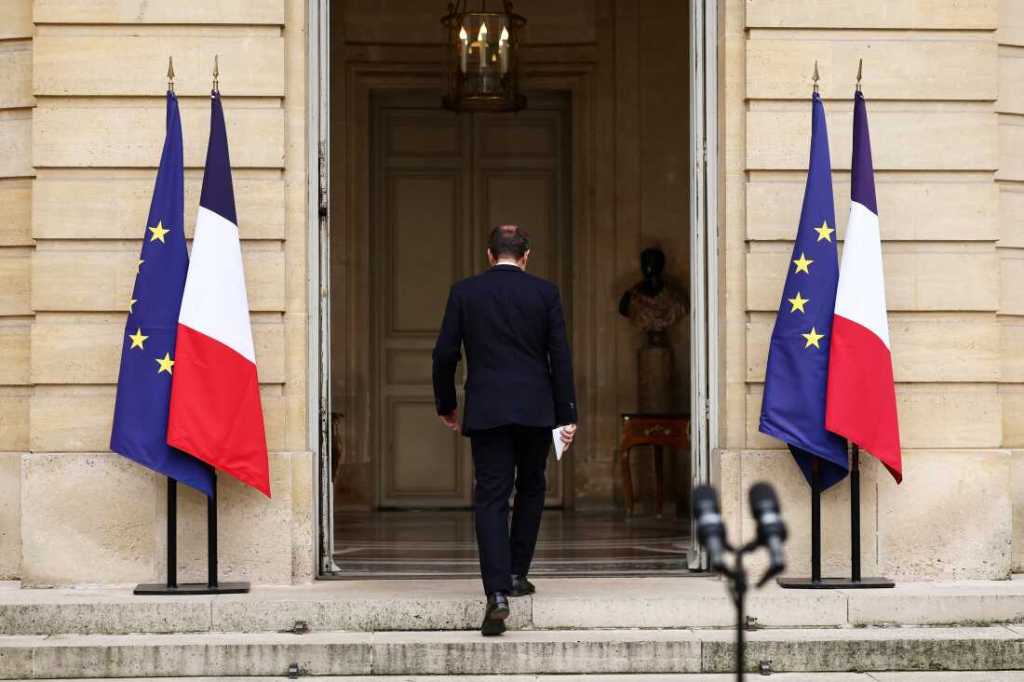
France is confronted with yet another government resignation amid renewed political crisis after Prime Minister Sébastien Lecornu stepped down on October 6, less than a day after revealing his new cabinet. The move abruptly ended what was already a short tenure for Lecornu, who took office only 27 days ago, and left France without a functioning government at a moment of fragile finances and mounting social and electoral pressures. Financial markets reacted immediately and sharply, underscoring how domestic political failure is now spilling over into Europe’s wider economic landscape.
Lecornu’s resignation arrived on Monday morning after he formally handed in the government’s resignation to President Emmanuel Macron. The cabinet had been announced on Sunday, following weeks of consultations between the president’s circle and other political forces.
Opponents and some would-be partners reacted with anger to the ministerial line-up. Some critics said it was too conservative. Others criticized it for being insufficiently different from previous administrations. The row exposed the underlying fragility of an already fractured parliament in which no party or coalition commands a majority. In public and in the corridors of power, deputies and party leaders warned that the arrangement could not win the support needed to pass critical legislation, especially the 2026 budget that Macron’s government must deliver to reassure debt markets.
By midmorning, the resignation was official. Macron accepted it and charged Lecornu with a last-ditch mission to hold talks with political groups in a bid to find a path out of the impasse. The president has not resigned and has so far resisted dissolving the National Assembly, but the options available to him are narrowing fast.
Political Fallout and Calls for New Elections
The resignation amplified calls for decisive action from opposition forces. The far-right National Rally urged Macron to call immediate parliamentary elections. The hard left urged the president to step down. Many of Macron’s own allies privately expressed dismay, arguing that the new cabinet did not signal the fresh start required to stabilize governance.
Lecornu framed his resignation as the result of an inability to find compromise across the political spectrum. He blamed partisan posturing and the appetite among some parties to behave as if they already controlled a majority. That dynamic, he suggested, made it impossible for him to remain in office. The resignation marks Lecornu as the fifth prime minister to serve under Macron since the president’s re-election and the shortest serving prime minister in modern French history by a wide margin.
The opposition is not unified about what should happen next. Some actors prefer snap elections as the only route to restore legitimacy. Others, notably the Socialist Party and parts of the centre left, are open to negotiating a left-leaning executive rather than risk an immediate election that could hand power to the far right.
Markets reacted instantly. The Paris stock index plunged in early trading on Monday, banking shares were hit particularly hard and bond yields rose as investors recalibrated the risk of a political stalemate that could derail deficit reduction plans. The euro also fell against the dollar as confidence in France’s fiscal management weakened.
The broader worry among investors is not solely the chaos of ministers coming and going. It is the prospect that Paris will be unable to pass and implement the spending cuts and reforms needed to get public finances under control. France’s deficit has been running at a high level, and shortfalls in achieving savings this year already weigh on market confidence. If the government cannot secure parliamentary support for a credible consolidation plan, borrowing costs could rise further in ways that would stress public finances and feed a feedback loop of political turmoil.
Crisis Running Deep
The current crisis did not emerge overnight. Its roots lie in a dramatic shift in French politics that began with Macron’s risky call for snap parliamentary elections in 2024. The polls he sought in order to broaden his mandate instead produced a hung parliament. Since then, party fragmentation has sharpened. The far right and the hard left now occupy much larger positions in the legislature and on the national political stage than they did just a few years ago. Macron’s centrist movement is squeezed between these two forces and now struggles to command a reliable governing majority.
Parliamentary numbers matter because France’s Fifth Republic was created with the explicit aim of providing strong, stable governance under a president and a coherent parliamentary majority. That system assumes coalitions or majorities that can deliver swift legislative outcomes. The current reality of minority government means that France is operating without the steady center that once underpinned its political system.
Timing here matters as France faces urgent fiscal choices. The government must propose a budget that credibly reduces the deficit and reassures both domestic and international investors. Lawmakers know that the next budget will be politically painful. That reality has heightened partisan demands and made compromise harder to achieve.
Beyond immediate fiscal matters, the crisis has wide political stakes. Opinion polls show the traditional center has lost ground. The National Rally’s share of first-round support in parliamentary voting intentions has grown dramatically over recent years. The hard left has also expanded its base. If elections were held now, polls suggest the center would struggle to regain the initiative. For Macron, whose presidency was intended to lock the extremes out of power by reshaping the center ground, this is an existential test.
Some within the centrist camp still argue that pragmatic deals are possible on fiscal policy and that a narrow path to compromise remains open. But France lacks a deep culture of coalition making. Centrist and moderate parties have been weakened and face internal divisions over how to respond to migration, public spending, pensions and taxation. Those divisions make a durable agreement much harder to forge.
What’s Next for France?
President Macron faces a constrained range of choices. He can ask another figure to try to form a government. He can reappoint Lecornu with a new mandate and some political concessions. He can dissolve the National Assembly and call new elections, a hazardous option that could hand momentum to parties on the extremes. Or he can resign. So far Macron has rejected resignation. Behind the scenes there is urgent activity to explore cross-party agreements that could stabilize the budget process without elections.
The immediate period ahead looks likely to be one of muddling through. Short term stopgaps will remain the likely pattern unless one of the main parties shifts strategy to back a compromise cabinet. The bond market and public patience will be closely watching whether France can move beyond episodic collapses and deliver a credible plan to reduce the deficit.
Analysis:
France’s crisis is a symptom of deeper realignments in Western politics. The traditional bucket of centrist technocracy is under assault from movements that capitalize in clarity of grievance and identity. Macron’s entire project relied on creating a new center that could marshal technocratic competence to fend off populist extremes. Yet, his centrist project has run into brutal limits and seems to have rendered France ungovernable.
The Fifth Republic presumes a majority dynamic that allows a president to govern decisively. Once that majority evaporated, the institutional design that served France well in earlier eras has become brittle. Political communications and the media environment amplify the appeal of simple certainties. Populists trade in unapologetic priorities: control borders, promise security, offer immediate relief. Centrist technocrats sell competence and long term strategy. When the electorate is anxious and budgets are tight, the former political pitch resonates more easily than the latter.
What France needs if it is to escape the spiral is not merely another reshuffle. It needs a renewed commitment to cross-party bargaining and a credible fiscal plan that can be explained simply and fairly. That will require concessions from multiple sides, including some painful compromises from Macron’s center. It will also require an investment in messaging that links necessary fiscal prudence to concrete protections for citizens and growth strategies that feel inclusive.
If that cannot be achieved, France risks a prolonged period of unstable governments. That would not only erode domestic policy capacity, it would weaken France’s influence in Europe at a time when the continent faces many strategic challenges. The coming weeks will determine whether Paris can convert this crisis into a negotiated adjustment or whether the political center will continue to fragment, yielding ground to more extreme forces both on the Left and the Right.
 IRinFive