9/9 – International News & Political Analysis
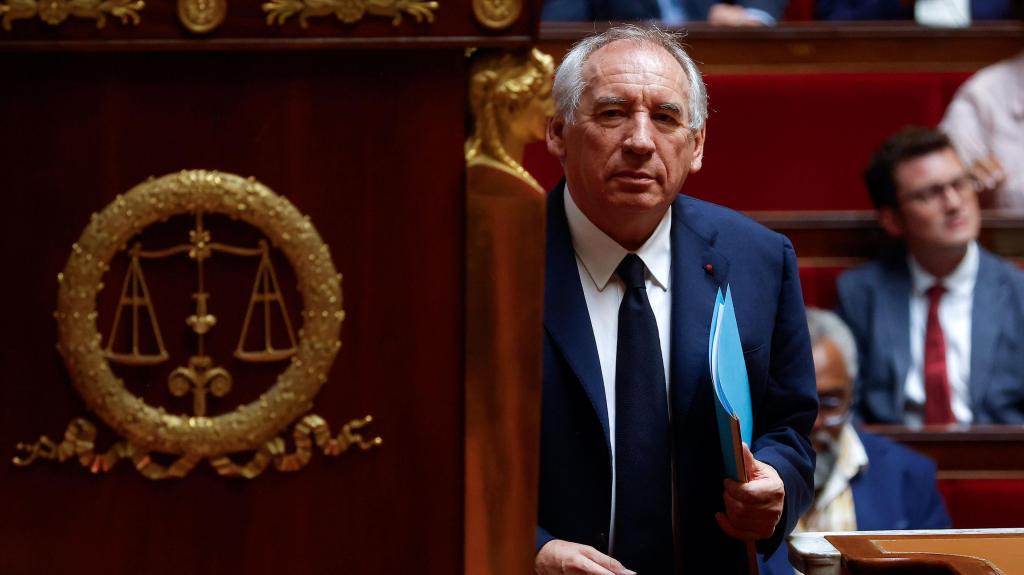
In yet another one of their political shake-ups, France’s Prime Minister François Bayrou was ousted after a resounding no-confidence vote in parliament on September 8th. This latest collapse marks the fourth prime minister to fall in less than two years, plunging President Emmanuel Macron’s administration, and the country at large, into a deepening fiscal and political spiral.
At the center of the crisis was Bayrou’s proposed €43.8 billion budget reduction plan for 2026, an ambitious effort aimed at curbing France’s ballooning deficit. Instead of support, the proposal triggered fierce opposition across the political spectrum—from Jean-Luc Mélenchon’s hard-left France Unbowed to Marine Le Pen’s far-right National Rally (RN), and even segments of the center-right Republicans who had previously contributed ministers to Bayrou’s cabinet. With just 194 votes out of 558, Bayrou’s plan was decisively rejected and he handed in his formal resignation today, at the Élysée Palace.
President Macron has announced that he will yet again choose a new Prime Minister in the coming days.
Fiscal Discipline Meets Political Resistance
Bayrou, a centrist and long-time fiscal conservative, had staked his credibility on delivering one of the most aggressive budget tightening plans in recent French history. The €44 billion in proposed cuts aimed to reduce France’s budget deficit, projected to hit 5.4% of GDP this year, to a more manageable level. He warned that the growing debt load, which now stands at €3.3 trillion (114% of GDP), posed a threat to France’s economic future.
The political opposition chose not to heed his warnings and instead criticized the austerity plan as either regressive or insufficiently targeted, with Socialist leader Boris Vallaud accusing Bayrou of parroting Macron’s business-friendly policies. Meanwhile, Marine Le Pen described the moment as the inevitable reckoning for decades of mismanagement.
The immediate fallout has rattled financial markets already wary of France’s trajectory. French 10-year bond yields, once seen as a relatively safe eurozone investment, have surged to levels close to those of Italy, long viewed as the bloc’s most vulnerable large economy. Remarkably, France now pays more to borrow long-term than Greece and Spain—two of the hardest-hit countries during the eurozone’s 2011 debt crisis.
France’s Political Deadlock and Dismay
The government’s collapse reflects a broader paralysis within French politics. The current National Assembly is sharply fragmented, and no party commands a clear majority. Macron, having suffered a setback after his last attempt to dissolve parliament in June 2024, appears reluctant to call snap elections again. Polls show that his centrist alliance would be pushed into third place, behind both the RN and the left-wing coalition.
A recent survey revealed that 63% of French voters would support a return to the polls. But the outcome would likely cement the same impasse: Le Pen’s RN and its allies are projected to lead with 33% in the first round, the left with 25%, and Macron’s centrist bloc a distant third at 15%.
Ironically, Le Pen herself is currently barred from standing in any election due to a campaign finance embezzlement conviction earlier this year, pending appeal in 2026. Should elections be called, her 29-year-old protégé, Jordan Bardella, is expected to lead the RN into the race for prime minister.
Uncertainty Breeds Economic Stagnation
For French households and businesses, the political dysfunction is already having tangible effects. Consumption and investment decisions are stalling as economic actors await clarity.
This is especially dangerous for France, where slow growth is incompatible with high debt levels. Unlike Greece or Italy who run budget surpluses before interest payments, France has no such cushion. And with German investments poised to surge after years of fiscal restraint, France risks being left behind in the EU’s post-pandemic economic revitalization.
As one Oxford Economics analyst put it: “France is becoming the new ugly duckling of Europe.” Once a dependable pillar of eurozone financial stability, it is now edging into the uncertain role previously assigned to Italy.
President Macron faces a difficult choice. He can either call fresh elections and risk further losses, or appoint a new prime minister capable of crafting a budget palatable to an antagonistic parliament. Whispers in political circles suggest a possible pact with the Socialists, who hold 66 seats in the lower house. But their price is steep: a proposed wealth tax of at least 2% annually on fortunes exceeding €100 million.
Macron is reportedly opposed to such a move, fearing it would undermine France’s image as a business-friendly nation. He had previously positioned France as a startup haven and reduced corporate taxes to attract foreign investment. Reversing that stance would be a dramatic shift, and one his political base may not forgive.
Still, Macron’s room for maneuver is vanishing. Without a stable government in place, the country will struggle to meet its October 7 deadline to draft the 2026 budget. Finance Minister Eric Lombard has already signaled that any future proposal will be less ambitious than Bayrou’s failed blueprint.
Protest Movements Loom
What could escalate France’s crisis from dysfunction to outright chaos? One possibility is a market revolt, as borrowing costs rise and ratings agencies weigh downgrades. Another is mass civil unrest, a familiar feature of France’s volatile political climate.
Already, two major protest dates have been announced. On September 10, a social media-led campaign titled “Bloquons tout” (“Let’s block everything”) aims to paralyze the country. More traditional labor strikes, coordinated by major unions, are planned for September 18. Although these actions may fizzle without a clear target, France’s history suggests that loosely organized protests can morph into powerful movements, as seen with the Yellow Vests in 2018.
Analysis:
France is entering dangerous territory. For decades, its large economy, sophisticated institutions, and central position in the EU granted it a level of financial insulation. That cushion is now eroding quickly. As its political institutions and social services falter along with soaring debt, the country is losing the market’s trust and its own sense of direction to get out of this hole.
The fall of François Bayrou is just another symptom of a deeper malaise. Macron’s promise to modernize France is colliding with the limits of its institutions, the fatigue of its electorate, and the unforgiving arithmetic of public debt. Without unifying leadership and a credible fiscal plan, the country risks spiraling further into stagnation and potential bankruptcy .
The clock is ticking on President Macron and whoever is selected to be the next Prime Minister, and inherit one of the most difficult and ill-fated jobs in all of Europe.

 IRinFive