3/18 – Geopolitical News & Analysis
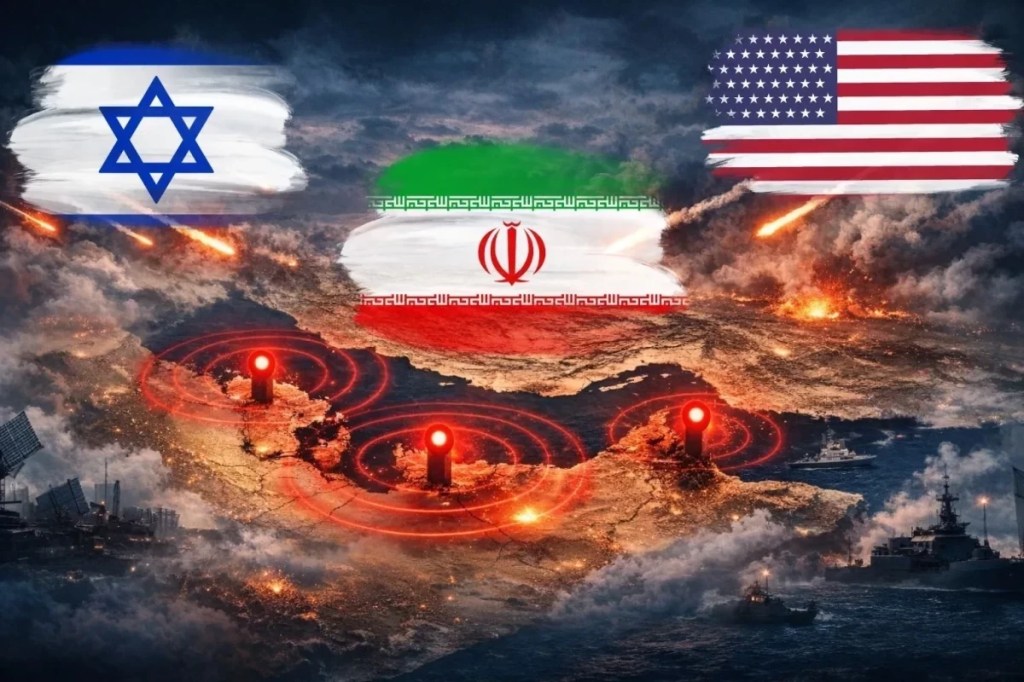
The war between the United States, Israel, and Iran has entered a more volatile stage, with the military balance shifting in some areas even as the wider political and economic fallout continues to deepen. What began on February 28 as a large-scale U.S.-Israeli assault on Iranian military infrastructure and senior leadership has now developed into a multi-front regional conflict stretching from Iran and Israel to the Gulf, Iraq, and Lebanon. The war has already caused heavy casualties, disrupted maritime trade through the Strait of Hormuz, and widened tensions between Washington and several of its traditional allies.
The initial strikes were among the most consequential attacks ever carried out against the Iranian state. According to the Council on Foreign Relations’ conflict tracker, the opening phase targeted senior leadership, major military assets, and strategic facilities, killing Supreme Leader Ali Khamenei and triggering a succession process that elevated his son Mojtaba Khamenei to the top of the political system. The conflict quickly expanded beyond a bilateral exchange. Iran responded with missile and drone attacks on U.S. positions and on energy and civilian infrastructure in Gulf states, while Israel broadened its military campaign against Hezbollah in Lebanon after the group entered the war in support of Tehran.
Context and Leadup to All-Out War
The roots of the conflict lie in a longer nuclear and regional rivalry. Iran’s nuclear program dates back to the 1950s, but the most consequential modern phase began after evidence of undeclared facilities emerged in 2002. Diplomatic efforts led to the 2015 nuclear agreement, which sharply constrained Iran’s stockpile of enriched uranium and centrifuge capacity in exchange for sanctions relief. That framework never resolved wider disputes over ballistic missiles, regional militias, and Iran’s projection of power across the Middle East. The first Trump administration withdrew from the deal in 2018 and restored a maximum-pressure strategy, after which Iran gradually moved beyond the agreement’s limits. Over time, the confrontation widened through tanker incidents, militia attacks, the killing of Qassem Soleimani, and repeated rounds of Israeli and Iranian escalation. (Council on Foreign Relations)
That path accelerated after the October 2023 Hamas attack on Israel and the regional crisis that followed. Iran-backed groups in Iraq, Syria, Lebanon, and Yemen increased attacks on U.S. and Israeli targets, while Israel’s direct exchanges with Iran in 2024 moved the two states from shadow war to overt confrontation. By 2025, Israel had significantly weakened parts of Iran’s regional network, including Hamas and Hezbollah leadership, while the Trump administration returned to office combining a renewed pressure campaign with intermittent attempts at nuclear diplomacy. The turning point came in June 2025, when the International Atomic Energy Agency found Iran in violation of its non-proliferation obligations, Israel launched direct strikes on Iranian nuclear and military sites, and the United States later joined by attacking key locations at Fordow, Isfahan, and Natanz. That earlier round ended in a fragile ceasefire, but it did not settle the core dispute.
The present war is not an isolated eruption but rather the culmination of years of failed deterrence, broken diplomacy, and repeated military signaling. Since February 28, the Trump administration has issued shifting and at times contradictory explanations for what it seeks to achieve. At various points, the White House has described the campaign as an effort to cripple Iran’s military capacity, destroy the infrastructure supporting missile and drone warfare, suppress maritime threats in the Gulf, and prevent any future nuclear breakout. Trump has also suggested the conflict could end soon, even as administration officials and Israeli planners indicate operations may continue for weeks. The president has delayed a planned trip to China in order to focus on the war, highlighting how central the conflict has become to his presidency.
On the battlefield, the U.S.-Israeli coalition appears to have made significant progress against one of Iran’s missile and drone arsenal. Reporting drawn from battlefield assessments indicates that a large share of Iranian launchers have been destroyed or rendered unusable, and that Iranian attack volumes have declined significantly since the opening days of the war. The logic behind their campaign is straightforward. Iranian strategy has long relied on imposing pain rather than winning conventional dominance. By striking U.S. facilities, Gulf energy infrastructure, shipping lanes, and Israeli population centers, Tehran appears to be trying to generate enough economic and political pressure to force Washington and Jerusalem to stop short of their goals. Current assessments suggest that effort has been degraded but not eliminated. Iran is still launching attacks, and even a much smaller number of successful strikes can continue to produce outsized political and global market effects. (New York Post)
Recent reporting also points to the war widening within Iran itself. Combined U.S. and Israeli strikes are now reaching deep into Iranian territory, including eastern sites associated with drone operations and the broader defense industrial base. Targets in and around Tehran have included intelligence and internal security infrastructure, while air defense systems and air bases across the country have also come under sustained attack. Analysts assessing recent strike patterns argue that these operations indicate growing coalition freedom of action inside Iranian airspace and an attempt not only to blunt immediate attacks but also to weaken Iran’s capacity to regenerate them over time. At the same time, information from inside Iran has become harder to verify as the authorities tighten internet restrictions, restrict VPN access, and reportedly target Starlink users while expanding checkpoints and internal surveillance. (New York Post)
The succession inside Iran has added another layer of uncertainty. Mojtaba Khamenei’s rise appears to have been backed by senior figures in the Islamic Revolutionary Guard Corps, suggesting continuity in the regime’s hardline orientation rather than a move toward pragmatic stabilization. Reuters reported on March 17 that Iran’s new supreme leader had rejected proposals aimed at reducing tensions with the United States, demanding instead that Iran’s adversaries first be weakened decisively (Reuters). Separate battlefield and analytical reporting indicates that his political base is closely tied to long-serving IRGC commanders who have historically favored securitization, internal repression, and confrontation with the West.
There is lots of current ambiguity coming out of Iran’s current diplomatic messaging. On the one hand, Iranian officials have signaled they are willing to discuss safe access to the Strait of Hormuz with countries that want maritime transit restored. On the other hand, Tehran has made clear that it does not consider itself close to a ceasefire and is prepared to continue the war. At the same time, Iranian officials have publicly rejected claims by Trump that meaningful negotiations are imminent. Taken together, those positions suggest that Iran is open to transactional arrangements around shipping and third-country access while refusing to frame those discussions as a strategic retreat against the U.S. and Israel. (AP News)
Expanding War, Economic Shock, and Strategic Strain
The Strait of Hormuz has become the conflict’s most consequential global pressure point. Roughly one-fifth of the world’s oil supply normally passes through the waterway, and although the strait is not fully sealed in a legal or physical sense, commercial traffic has sharply contracted under the weight of attacks, mining threats, insurance costs, and continued uncertainty. Reuters reported that Middle Eastern oil exports had fallen by at least 60%, while the UK maritime authorities have recorded more than 20 incidents in and around the strait and nearby waters since the war began (Reuters). Even where no attacks occur for several days, the risk environment remains severe enough to suppress normal shipping patterns. The International Energy Agency has already responded by releasing hundreds of millions of barrels from strategic reserves to soften the shock.
The pattern of maritime disruption has also become more selective. Recent reporting suggests Iran has permitted some tankers linked to countries such as China, India, and Pakistan to transit more safely while continuing to threaten or deter shipping associated with the United States and its partners. That approach fits Tehran’s broader attempt to weaponize access rather than simply close the waterway indiscriminately. It also allows Iran to maximize political leverage by driving wedges between energy importers, Gulf producers, and the America-led coalition. Even if the U.S. Navy ultimately reopens the route operationally, the commercial recovery may lag because markets, insurers, and shipping firms will respond to perceived risk rather than purely military assurances. (Reuters)
The wider regional picture remains volatile. In the Gulf, Iran continues to fire missiles and drones toward energy sites, airports, and other infrastructure. Recent attacks have struck or damaged facilities near Dubai and Fujairah and caused casualties in Abu Dhabi, while Gulf air defense systems in Bahrain, Kuwait, Qatar, Saudi Arabia, and the United Arab Emirates have intercepted many incoming projectiles. In Iraq, militia attacks have continued against sites linked to the United States, including areas near Baghdad International Airport and other infrastructure associated with U.S. interests. Israeli and coalition strikes have in turn hit Iraqi militia targets. These exchanges underline the fact that the war is no longer confined to three states but is now radiating through the full geography of Iran’s regional network. (Reuters)
Lebanon has emerged as another major theater in recent days. Hezbollah resumed attacks across the Israel-Lebanon front in support of Iran, prompting a significant Israeli escalation. Israeli operations now include continued airstrikes and what officials describe as limited and targeted ground action in southern Lebanon aimed at Hezbollah infrastructure and forward positions. Western governments have called for de-escalation as the humanitarian toll rises. Reports indicate that hundreds of thousands have been evacuated from southern Lebanon, while other reporting places the death toll there nearing 1000 and the displacement burden at over a million. What began as a support front has increasingly taken on the characteristics of a separate war layered on top of the Iran conflict.
Humanitarian costs are mounting across the region. Fatalities now number well into the thousands, with Iran suffering the heaviest losses but Lebanon, Israel, Iraq, and Gulf states also affected. U.S. military casualties have risen beyond the earliest reported totals, with CNN reporting approximately 200 U.S. troops injured across seven countries and 13 service members killed in action (AP News). Civilian harm has become a major point of contention, including scrutiny surrounding the strike on an Iranian school that reportedly killed around 150 schoolchildren. Civilian infrastructure, energy systems, airports, and urban neighborhoods have all been drawn into the conflict’s widening footprint.
For Washington, the military campaign is now colliding with harder political questions. Trump has argued that the United States can break Iran’s pressure on Hormuz with or without allies, yet his administration has openly lobbied NATO states and major Asian economies to contribute naval support to the mission. The response has been hesitant at best. Japan and Australia have indicated they are not planning deployments, while several European governments have made clear they do not want to be drawn into a wider war that began without their backing or consultation. France has gone further, explicitly ruling out participation in military operations to reopen the strait during active hostilities. Britain has supported efforts to restore navigation but stopped short of committing to U.S.-led combat operations. The result is that Washington faces the conflict’s biggest energy chokepoint with limited visible allied participation. (Reuters)
The war’s economic impact is increasingly visible. Oil and gas prices have remained elevated, and the rise in U.S. gasoline prices has become a domestic political vulnerability for a president who campaigned heavily on affordability. The current average U.S. gasoline price has risen sharply over the course of the conflict, and analysts say the political danger is less the existence of war itself than the way prolonged disruption could affect daily living costs. A short aerial campaign can be defended politically more easily than a drawn-out conflict that keeps energy expensive, distracts from domestic priorities, and raises the possibility of direct American entanglement with boots on the ground.
This is the central strategic dilemma now facing Trump. If the United States limits itself to air and naval operations and declares success once Iranian launch capacity is sufficiently reduced, Tehran may still retain enough capability to harass shipping, unsettle markets, and claim it outlasted its opponents. If Washington escalates further by using more naval assets or even ground forces to secure chokepoints, terminals, or sensitive infrastructure, it risks entering the kind of long regional military commitment that much of the American public has grown weary of after two decades of Middle East wars. The White House insists the operation is moving in the right direction while military reporting supports the view that Iranian missile and drone capabilities are being steadily degraded. But that does not automatically answer the harder question of whether battlefield success will translate into a stable political end state.
Analysis
The emerging picture is one of tactical progress paired with strategic uncertainty. From a strictly military perspective, the U.S.-Israeli campaign is degrading Iran’s capacity to conduct the mass missile and drone attacks that underpin its coercive doctrine. Launch rates have declined, key infrastructure has been struck, and coalition air operations are extending deeper into Iranian territory with increasing freedom of action. Maritime pressure also suggests that Tehran is under sustained strain, even if its capabilities have not been fully neutralized. On these narrow operational terms, it is premature to characterize the campaign as a failure.
However, the war cannot be evaluated solely through battlefield metrics. Iran does not require conventional parity to impose meaningful costs. Its strategy is asymmetric and political in nature. Even a reduced but persistent capacity to disrupt shipping, target energy infrastructure, and unsettle global markets may be sufficient to sustain leverage. If oil prices remain elevated and maritime risk continues to deter normal trade flows, Tehran can still shape outcomes indirectly by increasing the perceived cost of prolonging the conflict. In that sense, limited but sustained disruption may allow Iran to retain strategic relevance despite clear military setbacks. This dynamic is reinforced by the internal political shift following the rise of Mojtaba Khamenei. The consolidation of power among entrenched IRGC hardliners points toward a more securitized and rigid regime that is less inclined toward rapid de-escalation and more likely to interpret the conflict in existential terms.
A second layer of analysis is geopolitical rather than military. The United States has demonstrated that it can project force decisively, but it has struggled to translate that dominance into broad diplomatic alignment. While many allies share Washington’s concerns regarding Iran’s regional conduct and nuclear ambitions, far fewer are willing to endorse the methods employed in this campaign or participate in securing the Strait of Hormuz. This divergence matters. It suggests that even if the United States and Israel prevail militarily, they may face difficulty shaping the regional order that follows. The conflict therefore becomes a test not only of coercive capability, but of whether overwhelming force can yield an outcome that is economically sustainable, diplomatically supported, and politically durable. At present, none of those conditions appears guaranteed.
An additional layer of risk lies in second-order strategic consequences, particularly for U.S. relationships in the Gulf. While Gulf Cooperation Council states broadly support the weakening of Iran, they are also bearing the brunt of retaliatory strikes against energy infrastructure, logistics hubs, and civilian areas. This creates an imbalance in which the benefits of Iranian degradation are paired with immediate and tangible costs for regional partners. Over time, this could prompt Gulf states to reassess the meaning of U.S. security guarantees if alignment with Washington and Israel consistently translates into exposure rather than insulation. The economic implications extend further. Sustained damage to Gulf infrastructure or prolonged disruption to energy flows could begin to affect global investment patterns, including capital flows from Gulf sovereign wealth funds into key U.S. sectors such as advanced technology and artificial intelligence. While such a shift remains contingent, it represents a non-trivial vulnerability if the conflict escalates or endures.
The most significant strategic inflection point concerns the trajectory of U.S. war aims. If the objective remains limited to degrading Iran’s military capabilities, the current air and naval campaign may prove sufficient over the next few weeks. If, however, the implicit or explicit goal shifts toward absolute regime change, the logic of the conflict changes fundamentally. Airpower alone is unlikely to achieve that outcome, raising the possibility of ground operations. Such a scenario would carry far greater risks. Iran’s geography, population size, and entrenched security apparatus make it a significantly more complex operational environment than previous U.S. interventions in the Middle East. A ground campaign could evolve into a prolonged conflict characterized by insurgency, high casualties, and regional destabilization, including potential refugee flows that would disproportionately affect Europe.
There is also a credible argument that previous diplomatic efforts failed to constrain Iran’s nuclear trajectory or its regional proxy network, leaving military action as the remaining option. From this perspective, decisive intervention may reinforce U.S. credibility in the Gulf, limit Chinese strategic expansion by stabilizing key energy corridors, and signal that Washington remains willing to act where others hesitate. Some analysts further argue that the campaign reflects a broader recalibration of U.S. global posture, one that places less emphasis on European alignment and more on direct strategic outcomes.
Even under this slightly more favorable interpretation, structural risks persist. Iran’s leadership, now more ideologically consolidated and shaped by personal and institutional loss, may be more inclined to pursue escalation through indirect means. The IRGC could prioritize sustained economic disruption, particularly in and around the Strait of Hormuz, not because it can indefinitely close the waterway, but because even intermittent disruption can generate disproportionate global effects. The objective in such a scenario would be to erode international tolerance for the conflict and pressure external actors to push for de-escalation.
Finally, the domestic dimension in the United States introduces an additional constraint. The current trajectory sits uneasily alongside the political narrative that accompanied Trump’s return to office, which emphasized avoiding prolonged foreign entanglements. A conflict that extends in duration, drives up energy prices, and shifts public attention away from domestic economic concerns risks becoming politically costly, particularly as midterm elections approach. Rising fuel prices and broader cost-of-living pressures remain highly salient for voters, and sustained disruption in global energy markets could amplify those concerns.
Taken together, the central issue is no longer whether the campaign is achieving tactical military success. It is whether that success can be translated into a stable and acceptable political outcome before escalation dynamics, economic consequences, and shifting alliance perceptions begin to outweigh the desired military gains.