IRinFive

Tag: international politics

  • U.S.-Israeli War With Iran Enters  More Dangerous and Uncertain Phase 

    3/18 – Geopolitical News & Analysis

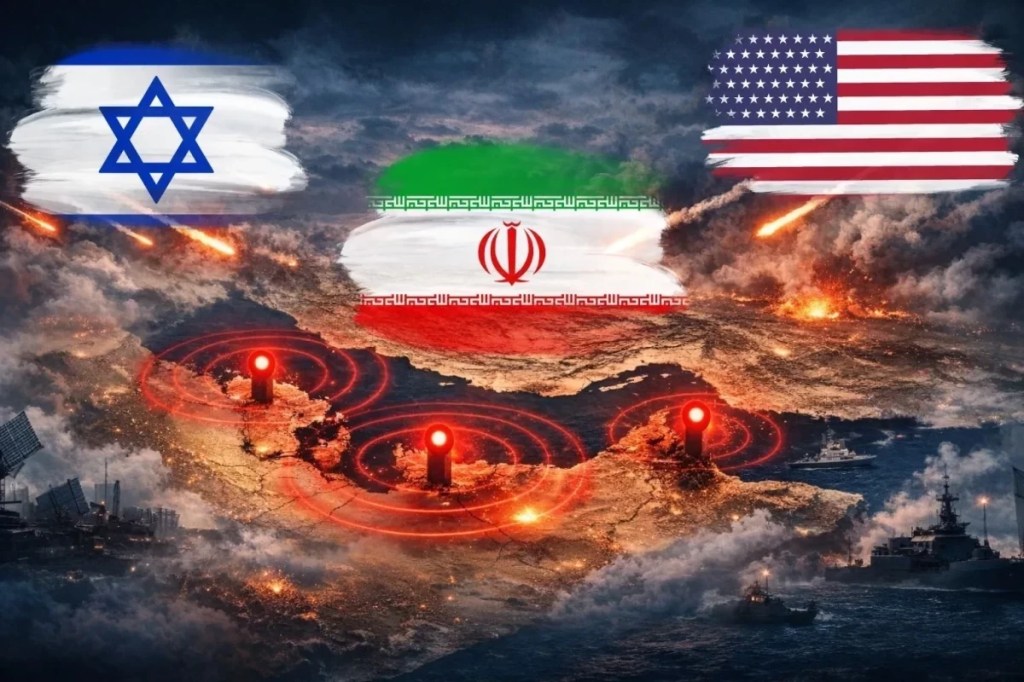
    The war between the United States, Israel, and Iran has entered a more volatile stage, with the military balance shifting in some areas even as the wider political and economic fallout continues to deepen. What began on February 28 as a large-scale U.S.-Israeli assault on Iranian military infrastructure and senior leadership has now developed into a multi-front regional conflict stretching from Iran and Israel to the Gulf, Iraq, and Lebanon. The war has already caused heavy casualties, disrupted maritime trade through the Strait of Hormuz, and widened tensions between Washington and several of its traditional allies. 

    The initial strikes were among the most consequential attacks ever carried out against the Iranian state. According to the Council on Foreign Relations’ conflict tracker, the opening phase targeted senior leadership, major military assets, and strategic facilities, killing Supreme Leader Ali Khamenei and triggering a succession process that elevated his son Mojtaba Khamenei to the top of the political system. The conflict quickly expanded beyond a bilateral exchange. Iran responded with missile and drone attacks on U.S. positions and on energy and civilian infrastructure in Gulf states, while Israel broadened its military campaign against Hezbollah in Lebanon after the group entered the war in support of Tehran. 

    Context and Leadup to All-Out War

    The roots of the conflict lie in a longer nuclear and regional rivalry. Iran’s nuclear program dates back to the 1950s, but the most consequential modern phase began after evidence of undeclared facilities emerged in 2002. Diplomatic efforts led to the 2015 nuclear agreement, which sharply constrained Iran’s stockpile of enriched uranium and centrifuge capacity in exchange for sanctions relief. That framework never resolved wider disputes over ballistic missiles, regional militias, and Iran’s projection of power across the Middle East. The first Trump administration withdrew from the deal in 2018 and restored a maximum-pressure strategy, after which Iran gradually moved beyond the agreement’s limits. Over time, the confrontation widened through tanker incidents, militia attacks, the killing of Qassem Soleimani, and repeated rounds of Israeli and Iranian escalation. (Council on Foreign Relations)

    That path accelerated after the October 2023 Hamas attack on Israel and the regional crisis that followed. Iran-backed groups in Iraq, Syria, Lebanon, and Yemen increased attacks on U.S. and Israeli targets, while Israel’s direct exchanges with Iran in 2024 moved the two states from shadow war to overt confrontation. By 2025, Israel had significantly weakened parts of Iran’s regional network, including Hamas and Hezbollah leadership, while the Trump administration returned to office combining a renewed pressure campaign with intermittent attempts at nuclear diplomacy. The turning point came in June 2025, when the International Atomic Energy Agency found Iran in violation of its non-proliferation obligations, Israel launched direct strikes on Iranian nuclear and military sites, and the United States later joined by attacking key locations at Fordow, Isfahan, and Natanz. That earlier round ended in a fragile ceasefire, but it did not settle the core dispute. 

    The present war is not an isolated eruption but rather the culmination of years of failed deterrence, broken diplomacy, and repeated military signaling. Since February 28, the Trump administration has issued shifting and at times contradictory explanations for what it seeks to achieve. At various points, the White House has described the campaign as an effort to cripple Iran’s military capacity, destroy the infrastructure supporting missile and drone warfare, suppress maritime threats in the Gulf, and prevent any future nuclear breakout. Trump has also suggested the conflict could end soon, even as administration officials and Israeli planners indicate operations may continue for weeks. The president has delayed a planned trip to China in order to focus on the war, highlighting how central the conflict has become to his presidency. 

    On the battlefield, the U.S.-Israeli coalition appears to have made significant progress against one of Iran’s missile and drone arsenal. Reporting drawn from battlefield assessments indicates that a large share of Iranian launchers have been destroyed or rendered unusable, and that Iranian attack volumes have declined significantly since the opening days of the war. The logic behind their campaign is straightforward. Iranian strategy has long relied on imposing pain rather than winning conventional dominance. By striking U.S. facilities, Gulf energy infrastructure, shipping lanes, and Israeli population centers, Tehran appears to be trying to generate enough economic and political pressure to force Washington and Jerusalem to stop short of their goals. Current assessments suggest that effort has been degraded but not eliminated. Iran is still launching attacks, and even a much smaller number of successful strikes can continue to produce outsized political and global market effects. (New York Post)

    Recent reporting also points to the war widening within Iran itself. Combined U.S. and Israeli strikes are now reaching deep into Iranian territory, including eastern sites associated with drone operations and the broader defense industrial base. Targets in and around Tehran have included intelligence and internal security infrastructure, while air defense systems and air bases across the country have also come under sustained attack. Analysts assessing recent strike patterns argue that these operations indicate growing coalition freedom of action inside Iranian airspace and an attempt not only to blunt immediate attacks but also to weaken Iran’s capacity to regenerate them over time. At the same time, information from inside Iran has become harder to verify as the authorities tighten internet restrictions, restrict VPN access, and reportedly target Starlink users while expanding checkpoints and internal surveillance. (New York Post)

    The succession inside Iran has added another layer of uncertainty. Mojtaba Khamenei’s rise appears to have been backed by senior figures in the Islamic Revolutionary Guard Corps, suggesting continuity in the regime’s hardline orientation rather than a move toward pragmatic stabilization. Reuters reported on March 17 that Iran’s new supreme leader had rejected proposals aimed at reducing tensions with the United States, demanding instead that Iran’s adversaries first be weakened decisively (Reuters). Separate battlefield and analytical reporting indicates that his political base is closely tied to long-serving IRGC commanders who have historically favored securitization, internal repression, and confrontation with the West. 

    There is lots of current ambiguity coming out of Iran’s current diplomatic messaging. On the one hand, Iranian officials have signaled they are willing to discuss safe access to the Strait of Hormuz with countries that want maritime transit restored. On the other hand, Tehran has made clear that it does not consider itself close to a ceasefire and is prepared to continue the war. At the same time, Iranian officials have publicly rejected claims by Trump that meaningful negotiations are imminent. Taken together, those positions suggest that Iran is open to transactional arrangements around shipping and third-country access while refusing to frame those discussions as a strategic retreat against the U.S. and Israel. (AP News

    Expanding War, Economic Shock, and Strategic Strain

    The Strait of Hormuz has become the conflict’s most consequential global pressure point. Roughly one-fifth of the world’s oil supply normally passes through the waterway, and although the strait is not fully sealed in a legal or physical sense, commercial traffic has sharply contracted under the weight of attacks, mining threats, insurance costs, and continued uncertainty. Reuters reported that Middle Eastern oil exports had fallen by at least 60%, while the UK maritime authorities have recorded more than 20 incidents in and around the strait and nearby waters since the war began (Reuters). Even where no attacks occur for several days, the risk environment remains severe enough to suppress normal shipping patterns. The International Energy Agency has already responded by releasing hundreds of millions of barrels from strategic reserves to soften the shock. 

    The pattern of maritime disruption has also become more selective. Recent reporting suggests Iran has permitted some tankers linked to countries such as China, India, and Pakistan to transit more safely while continuing to threaten or deter shipping associated with the United States and its partners. That approach fits Tehran’s broader attempt to weaponize access rather than simply close the waterway indiscriminately. It also allows Iran to maximize political leverage by driving wedges between energy importers, Gulf producers, and the America-led coalition. Even if the U.S. Navy ultimately reopens the route operationally, the commercial recovery may lag because markets, insurers, and shipping firms will respond to perceived risk rather than purely military assurances. (Reuters)

    The wider regional picture remains volatile. In the Gulf, Iran continues to fire missiles and drones toward energy sites, airports, and other infrastructure. Recent attacks have struck or damaged facilities near Dubai and Fujairah and caused casualties in Abu Dhabi, while Gulf air defense systems in Bahrain, Kuwait, Qatar, Saudi Arabia, and the United Arab Emirates have intercepted many incoming projectiles. In Iraq, militia attacks have continued against sites linked to the United States, including areas near Baghdad International Airport and other infrastructure associated with U.S. interests. Israeli and coalition strikes have in turn hit Iraqi militia targets. These exchanges underline the fact that the war is no longer confined to three states but is now radiating through the full geography of Iran’s regional network. (Reuters)

    Lebanon has emerged as another major theater in recent days. Hezbollah resumed attacks across the Israel-Lebanon front in support of Iran, prompting a significant Israeli escalation. Israeli operations now include continued airstrikes and what officials describe as limited and targeted ground action in southern Lebanon aimed at Hezbollah infrastructure and forward positions. Western governments have called for de-escalation as the humanitarian toll rises. Reports indicate that hundreds of thousands have been evacuated from southern Lebanon, while other reporting places the death toll there nearing 1000 and the displacement burden at over a million. What began as a support front has increasingly taken on the characteristics of a separate war layered on top of the Iran conflict. 

    Humanitarian costs are mounting across the region. Fatalities now number well into the thousands, with Iran suffering the heaviest losses but Lebanon, Israel, Iraq, and Gulf states also affected. U.S. military casualties have risen beyond the earliest reported totals, with CNN reporting approximately 200 U.S. troops injured across seven countries and 13 service members killed in action (AP News). Civilian harm has become a major point of contention, including scrutiny surrounding the strike on an Iranian school that reportedly killed around 150 schoolchildren. Civilian infrastructure, energy systems, airports, and urban neighborhoods have all been drawn into the conflict’s widening footprint.

    For Washington, the military campaign is now colliding with harder political questions. Trump has argued that the United States can break Iran’s pressure on Hormuz with or without allies, yet his administration has openly lobbied NATO states and major Asian economies to contribute naval support to the mission. The response has been hesitant at best. Japan and Australia have indicated they are not planning deployments, while several European governments have made clear they do not want to be drawn into a wider war that began without their backing or consultation. France has gone further, explicitly ruling out participation in military operations to reopen the strait during active hostilities. Britain has supported efforts to restore navigation but stopped short of committing to U.S.-led combat operations. The result is that Washington faces the conflict’s biggest energy chokepoint with limited visible allied participation. (Reuters)

    The war’s economic impact is increasingly visible. Oil and gas prices have remained elevated, and the rise in U.S. gasoline prices has become a domestic political vulnerability for a president who campaigned heavily on affordability. The current average U.S. gasoline price has risen sharply over the course of the conflict, and analysts say the political danger is less the existence of war itself than the way prolonged disruption could affect daily living costs. A short aerial campaign can be defended politically more easily than a drawn-out conflict that keeps energy expensive, distracts from domestic priorities, and raises the possibility of direct American entanglement with boots on the ground. 

    This is the central strategic dilemma now facing Trump. If the United States limits itself to air and naval operations and declares success once Iranian launch capacity is sufficiently reduced, Tehran may still retain enough capability to harass shipping, unsettle markets, and claim it outlasted its opponents. If Washington escalates further by using more naval assets or even ground forces to secure chokepoints, terminals, or sensitive infrastructure, it risks entering the kind of long regional military commitment that much of the American public has grown weary of after two decades of Middle East wars. The White House insists the operation is moving in the right direction while military reporting supports the view that Iranian missile and drone capabilities are being steadily degraded. But that does not automatically answer the harder question of whether battlefield success will translate into a stable political end state.

    Analysis

    The emerging picture is one of tactical progress paired with strategic uncertainty. From a strictly military perspective, the U.S.-Israeli campaign is degrading Iran’s capacity to conduct the mass missile and drone attacks that underpin its coercive doctrine. Launch rates have declined, key infrastructure has been struck, and coalition air operations are extending deeper into Iranian territory with increasing freedom of action. Maritime pressure also suggests that Tehran is under sustained strain, even if its capabilities have not been fully neutralized. On these narrow operational terms, it is premature to characterize the campaign as a failure.

    However, the war cannot be evaluated solely through battlefield metrics. Iran does not require conventional parity to impose meaningful costs. Its strategy is asymmetric and political in nature. Even a reduced but persistent capacity to disrupt shipping, target energy infrastructure, and unsettle global markets may be sufficient to sustain leverage. If oil prices remain elevated and maritime risk continues to deter normal trade flows, Tehran can still shape outcomes indirectly by increasing the perceived cost of prolonging the conflict. In that sense, limited but sustained disruption may allow Iran to retain strategic relevance despite clear military setbacks. This dynamic is reinforced by the internal political shift following the rise of Mojtaba Khamenei. The consolidation of power among entrenched IRGC hardliners points toward a more securitized and rigid regime that is less inclined toward rapid de-escalation and more likely to interpret the conflict in existential terms.

    A second layer of analysis is geopolitical rather than military. The United States has demonstrated that it can project force decisively, but it has struggled to translate that dominance into broad diplomatic alignment. While many allies share Washington’s concerns regarding Iran’s regional conduct and nuclear ambitions, far fewer are willing to endorse the methods employed in this campaign or participate in securing the Strait of Hormuz. This divergence matters. It suggests that even if the United States and Israel prevail militarily, they may face difficulty shaping the regional order that follows. The conflict therefore becomes a test not only of coercive capability, but of whether overwhelming force can yield an outcome that is economically sustainable, diplomatically supported, and politically durable. At present, none of those conditions appears guaranteed.

    An additional layer of risk lies in second-order strategic consequences, particularly for U.S. relationships in the Gulf. While Gulf Cooperation Council states broadly support the weakening of Iran, they are also bearing the brunt of retaliatory strikes against energy infrastructure, logistics hubs, and civilian areas. This creates an imbalance in which the benefits of Iranian degradation are paired with immediate and tangible costs for regional partners. Over time, this could prompt Gulf states to reassess the meaning of U.S. security guarantees if alignment with Washington and Israel consistently translates into exposure rather than insulation. The economic implications extend further. Sustained damage to Gulf infrastructure or prolonged disruption to energy flows could begin to affect global investment patterns, including capital flows from Gulf sovereign wealth funds into key U.S. sectors such as advanced technology and artificial intelligence. While such a shift remains contingent, it represents a non-trivial vulnerability if the conflict escalates or endures.

    The most significant strategic inflection point concerns the trajectory of U.S. war aims. If the objective remains limited to degrading Iran’s military capabilities, the current air and naval campaign may prove sufficient over the next few weeks. If, however, the implicit or explicit goal shifts toward absolute regime change, the logic of the conflict changes fundamentally. Airpower alone is unlikely to achieve that outcome, raising the possibility of ground operations. Such a scenario would carry far greater risks. Iran’s geography, population size, and entrenched security apparatus make it a significantly more complex operational environment than previous U.S. interventions in the Middle East. A ground campaign could evolve into a prolonged conflict characterized by insurgency, high casualties, and regional destabilization, including potential refugee flows that would disproportionately affect Europe.

    There is also a credible argument that previous diplomatic efforts failed to constrain Iran’s nuclear trajectory or its regional proxy network, leaving military action as the remaining option. From this perspective, decisive intervention may reinforce U.S. credibility in the Gulf, limit Chinese strategic expansion by stabilizing key energy corridors, and signal that Washington remains willing to act where others hesitate. Some analysts further argue that the campaign reflects a broader recalibration of U.S. global posture, one that places less emphasis on European alignment and more on direct strategic outcomes.

    Even under this slightly more favorable interpretation, structural risks persist. Iran’s leadership, now more ideologically consolidated and shaped by personal and institutional loss, may be more inclined to pursue escalation through indirect means. The IRGC could prioritize sustained economic disruption, particularly in and around the Strait of Hormuz, not because it can indefinitely close the waterway, but because even intermittent disruption can generate disproportionate global effects. The objective in such a scenario would be to erode international tolerance for the conflict and pressure external actors to push for de-escalation.

    Finally, the domestic dimension in the United States introduces an additional constraint. The current trajectory sits uneasily alongside the political narrative that accompanied Trump’s return to office, which emphasized avoiding prolonged foreign entanglements. A conflict that extends in duration, drives up energy prices, and shifts public attention away from domestic economic concerns risks becoming politically costly, particularly as midterm elections approach. Rising fuel prices and broader cost-of-living pressures remain highly salient for voters, and sustained disruption in global energy markets could amplify those concerns.

    Taken together, the central issue is no longer whether the campaign is achieving tactical military success. It is whether that success can be translated into a stable and acceptable political outcome before escalation dynamics, economic consequences, and shifting alliance perceptions begin to outweigh the desired military gains. 
  • United States Takes Control of Venezuela Through Overnight Capture of President Maduro

    1/3 – International Breaking News & Geopolitical Updates

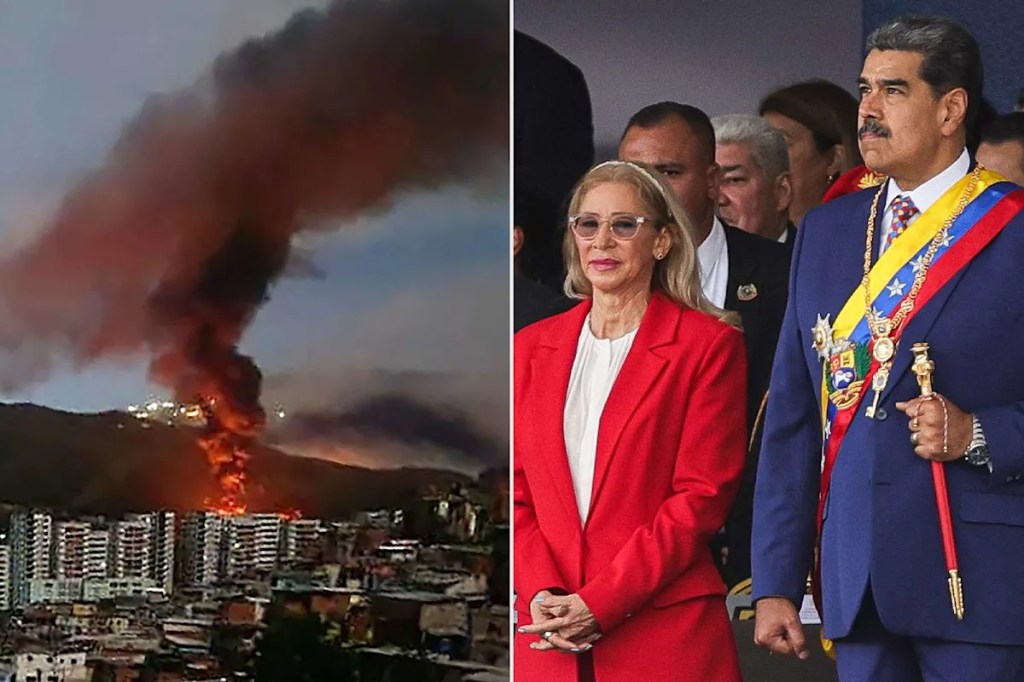
    In the early hours of January 3, the United States carried out a dramatic and unprecedented military operation in Venezuela that culminated in the capture and removal of President Nicolás Maduro and his wife, Cilia Flores. By sunrise, the Venezuelan leader had been flown out of the country aboard a U.S. Navy vessel, marking one of the most sweeping acts of forced regime change in modern American history.

    President Donald Trump announced the operation publicly just hours after explosions were reported across Caracas and surrounding strategic locations. The announcement confirmed weeks of speculation that Washington’s escalating pressure campaign against Venezuela had moved beyond maritime interdictions and covert pressure into direct military action on Venezuelan soil.

    Months of Escalation Lead to Direct Intervention

    The operation capped a five-month buildup of U.S. military assets across the Caribbean, the largest such naval concentration in the region since the Cuban missile crisis of 1962. Beginning in September, the Trump administration authorized dozens of strikes against vessels accused of transporting narcotics toward the United States. By December, those actions expanded to include a blockade of tankers carrying Venezuelan oil and a CIA-directed drone strike on a coastal port facility.

    Although administration officials repeatedly insisted during the fall that regime change was not the objective, President Trump publicly escalated his rhetoric in late December, warning that the campaign would soon move “on land.” Days later, Maduro attempted to reopen negotiations, offering concessions related to drug trafficking and security cooperation. Those efforts were rejected.

    Behind the scenes, U.S. intelligence agencies had already been preparing for a far more ambitious operation.

    The Night of the Operation

    Shortly after midnight on January 3, explosions rocked multiple military and infrastructure sites in and around Caracas. Targets included the Tiuna military base, headquarters of Venezuela’s defense ministry and a residential compound for senior officers, the port of La Guaira, the La Carlota airfield, and the communications hub at El Volcán, a heavily fortified antenna site overlooking the capital. Additional strikes were reported in Higuerote, a port and airfield east of Caracas, where secondary explosions lit up the night sky.

    American aerial refueling tankers were observed taking off from Puerto Rico as part of the operation, while more than 150 aircraft launched from 20 bases across the Western Hemisphere. These included advanced fighter jets and strategic bombers designed to overwhelm air defenses and disable command and control systems. Large portions of Caracas experienced power outages during the raid, which U.S. officials later attributed to cyber and electronic warfare tactics.

    The strikes themselves were brief, lasting less than half an hour, and notably left several major military installations untouched. U.S. officials later suggested that the bombardment served as cover for a more focused objective.

    The Capture of Maduro

    As air defenses were suppressed, U.S. special operations forces moved in. Helicopters from an elite night operations unit flew low over Caracas, firing on ground targets and landing near a fortified residence on a military base where Maduro was believed to be staying. Intelligence officials had spent months tracking his movements, eating habits, and sleeping locations. A small CIA team had been operating inside the country since August, supported by at least one human source close to Maduro who was able to relay his precise location in real time.

    Elite troops, including Delta Force operators, had rehearsed the mission using a full-scale replica of the residence. With those preparations complete and weather conditions deemed optimal, the operation proceeded. Maduro and his wife were seized without prolonged resistance and transported to the USS Iwo Jima before being flown toward New York.

    Whether elements within Maduro’s inner circle assisted the operation remains unclear.

    Venezuelan state television condemned what it called a grave act of military aggression and urged citizens to prepare for armed resistance. However, initial official statements conspicuously avoided confirming Maduro’s fate. Vice President Delcy Rodríguez later demanded proof that Maduro was alive and is now widely regarded as the acting authority, though the command structure of the Venezuelan state remains intact.

    Despite the operation, U.S. forces do not control Venezuelan territory, and domestic security forces, militias, and armed groups remain active across the country.

    Legal Justification and Criminal Charges

    Within hours of Trump’s announcement, U.S. federal prosecutors unsealed a revised indictment charging Maduro, his wife, and their adult son with narco-terrorism conspiracy, cocaine importation conspiracy, and weapons offenses. The indictment alleges that Maduro presided over a criminal network that used state power to facilitate drug trafficking, enriching his family and collaborating with armed groups operating across the region.

    Administration officials cited these indictments as legal justification for the operation. Vice President JD Vance argued that Maduro’s criminal status eliminated any protection associated with his position. Secretary of State Marco Rubio reiterated that the U.S. does not recognize Maduro as Venezuela’s legitimate president.

    Maduro and Flores are expected to stand trial in New York. It remains unclear whether their son has also been captured.

    Trump Declares Temporary U.S. Control

    Speaking from Mar-a-Lago later that day, President Trump declared that the United States would effectively run Venezuela until a leadership transition could be arranged. He suggested that a small group of senior U.S. officials would oversee the process and did not rule out deploying American troops on the ground if necessary.

    Trump also announced plans to open Venezuela’s oil sector to major U.S. energy companies, promising large-scale investment to restore production and infrastructure. While American firms expressed interest, analysts warned that years of neglect and sanctions would require tens of billions of dollars and at least a decade of sustained investment to reverse the industry’s decline. A full U.S. embargo on Venezuelan oil remains in place.

    Congressional Backlash and Domestic Criticism

    The operation triggered immediate outrage among Democratic lawmakers, who accused the president of bypassing Congress and launching an unauthorized war. Several lawmakers warned that Venezuela posed no imminent threat to the United States and likened the operation to the early stages of the Iraq war.

    Veterans of previous conflicts questioned the lack of planning for the aftermath and asked who now governs Venezuela. Polling shows that a strong majority of Americans oppose military intervention in Venezuela, including opposition among Venezuelan diaspora communities in Florida.

    While some Democrats welcomed Maduro’s removal in principle, they criticized the unilateral nature of the decision. Republicans were more divided, with several hawks praising the operation and others warning against deeper entanglement. Even some long-time opponents of U.S. intervention described the raid as tactically impressive while remaining skeptical of its long-term wisdom.

    The administration defended its secrecy by arguing that congressional notification could have compromised operational security.

    Governments across Latin America largely condemned the intervention, warning of violations of sovereignty and regional instability. Other global leaders expressed alarm, while a handful of U.S. allies praised the decisiveness of the operation.

    Trump framed the action as part of a revived Western Hemisphere doctrine, warning that foreign powers such as China and Russia would no longer be tolerated in what he described as America’s strategic backyard. He singled out Cuba and Colombia as future areas of concern, further raising fears of regional escalation.

    Analysis:

    Even if the removal of Maduro is initially successful, history suggests that the most dangerous phase of regime change begins after the leader is gone. Venezuela is not a small, centralized state like Grenada or Panama during past U.S. interventions. It is a vast country with rugged terrain, porous borders, and a dense ecosystem of armed actors, including pro-regime militias, criminal organizations, and transnational guerrilla groups. Many of these actors have little incentive to disarm and every incentive to exploit chaos.

    Research on foreign-imposed regime change consistently shows a heightened risk of civil war, insurgency, and prolonged instability. Armed forces that do not formally surrender often reemerge as insurgent networks, as seen in Iraq. Venezuela’s security apparatus, which still controls weapons and territory, may fragment rather than dissolve.

    Any successor government installed with U.S. backing would face acute legitimacy problems. Leaders elevated by external force are significantly more likely to be removed violently, especially when they are perceived as dependent on foreign power. While Venezuela’s democratic opposition commands genuine popular support, aligning that movement with a foreign military risks undermining its credibility and provoking nationalist backlash.

    The operation also exposes deep contradictions in President Trump’s foreign policy narrative. For years, he criticized the Bush administration for launching open-ended wars and campaigned as a leader opposed to foreign entanglements. A unilateral regime change operation, conducted without congressional authorization and with unclear exit plans, directly conflicts with those commitments.

    Strategically, the benefits are uncertain. Venezuela is not a major source of narcotics entering the United States, and intelligence assessments have downplayed the threat posed by Venezuelan-based criminal groups to U.S. homeland security. Further destabilization may accelerate refugee flows rather than reduce them.

    Perhaps most striking is that diplomacy was not exhausted. Maduro had reportedly offered sweeping economic and geopolitical concessions, including preferential access for U.S. companies and a realignment away from rival powers. Walking away from those talks in favor of military action raises questions about whether force was necessary to secure U.S. interests.

    By focusing intensely on how to remove Maduro while leaving the aftermath largely undefined, the administration risks repeating a familiar pattern. History offers repeated warnings that toppling a regime is often far easier than building a stable order in its place. Without a credible plan for governance, security, and legitimacy, the United States may find itself drawn into exactly the kind of prolonged conflict it once vowed to avoid.

  • Syria One Year After Assad: A Fragile Transformation

    12/8 – International Relations & Geopolitical Analysis

    Damascus prepares for the first anniversary of the coup that ousted long-time dictator Bashar al Assad’s flight from the capital. Visitors from across the country are filling the streets, eager to celebrate what they call their liberation from decades of authoritarian rule. Yet the jubilation is tempered by uncertainty, competing political experiments, and a growing sense that the revolution’s unraveling new chapter is proving more complex than the first. 

    From the earliest days of Syria’s uprising in 2011, the Assad regime framed the conflict as a choice between authoritarian stability and violent anarchy. The dynasty insisted that only its iron-fisted control prevented Syria from descending into chaos. That narrative collapsed on December 8th 2024, when a fast moving rebel offensive forced the ruler to abandon Damascus and flee into exile in Russia. His departure closed a brutal period defined by mass torture, indiscriminate bombardment, and deep social fragmentation. It also revealed that the true driver of Syria’s chaos had not been the prospect of Assad’s removal, but his refusal to accept it.

    In the year that followed, Syria has demonstrated a surprising degree of resilience. The state did not disintegrate, sectarian militias did not overwhelm the major cities, and the much warned collapse of public order never truly materialized. Instead, an unlikely figure emerged to hold the country’s fragile political center: Ahmed al Sharaa, a former jihadist commander once vilified by the Assad regime and foreign governments alike.

    The Rise of Ahmed al Sharaa

    Sharaa assumed power as interim president with a reputation that alarmed Syrians and outsiders. Assad had long warned that his possible ouster would open the door for extremist rule, portraying figures like Sharaa as the very threat his dictatorship was meant to prevent. Yet the new president has so far defied many of those predictions. Rather than imposing religious law or reviving the coercive apparatus of the old state, he has presented himself as a pragmatist intent on stabilizing the country and reintegrating it into regional and global politics.

    Sharaa’s most visible successes have appeared on the international stage. He has rapidly repaired Syria’s diplomatic isolation. Western governments, once committed to squeezing Assad’s Syria through sanctions, have begun to rethink their approach. President Donald Trump welcomed Sharaa to the White House in November, an event that drew global attention and solidified a growing personal rapport between the two leaders. Washington has temporarily suspended several sanctions on Syria and is preparing a broader review. 

    Gulf states, historically wary of Syria’s alignment with Iran, have responded with enthusiasm. Investment delegations from the United Arab Emirates and Saudi Arabia now travel regularly to Damascus. In December, executives from Chevron visited the capital to examine potential energy projects. DP World, a major Emirati firm, has secured a significant contract to operate the port of Tartus.

    All of this represents a profound geopolitical shift. A country once dependent on Tehran and Moscow now signals interest in joining the region’s pro Western economic and political axis. Instead of serving as a hub for illicit drug production, as it did in Assad’s final years, Syria is courting legitimate trade, infrastructure development, and foreign capital.  

    Rebranding the State

    At home, Sharaa has moved swiftly to erase symbols of the old order. The red Baathist flag was quickly replaced with the green revolutionary banner. Much of the intelligence network that terrorized the population for decades has been dissolved. Hundreds of prisons stand empty. Syrians now openly criticize their government in cafés and online platforms without fear of immediate reprisal. Women have even been recruited into the police, and life in Damascus’s old city continues with restaurants serving wine and bars operating late into the night. Contrary to the dire warnings once issued by Assad loyalists, the country has not transformed into an extremist sanctuary. 

    The new leadership has undone long standing structures of repression, but it has not yet been able to address the immense economic damage left by years of internal conflict and sanctions. The Syrian economy remains shattered. GDP has fallen more than 70 percent since 2011, public services are strained, and millions require housing and employment. Sanctions relief has not yet produced significant recovery. Hundreds of thousands of government workers have lost their jobs, fuel and food subsidies are being reduced, and reconstruction remains largely stalled.

    Emerging Problems

    While Sharaa has succeeded in preventing a return to civil war, serious governance issues are now jeopardizing Syria’s fragile revival. Instead of rebuilding state institutions, he has begun constructing parallel bodies that concentrate power among trusted loyalists. These entities operate outside constitutional frameworks and often supersede existing ministries.

    One of the most concerning examples is the recently created General Authority for Borders and Customs. Rather than restoring the finance ministry’s authority, the president handed control of customs revenue to a former jihadist associate and confidant. A sovereign wealth fund, similarly established by decree, functions with no public oversight. Lawyers in Damascus argue that such bodies possess no clear legal foundation.

    A new General Secretariat for Political Affairs has also emerged, headed by the foreign minister. Its influence is opaque yet far reaching. Civil society groups report cancelled events after venue owners received warnings from the secretariat. Others say it quietly screened candidates during the recent elections.

    For much of the year Syria has been governed through a confusing mixture of presidential directives and ministerial orders. Laws are announced, then revoked, or contradicted by competing authorities. A constitutional convention assembled in March granted Sharaa sweeping executive powers. In October, he implemented a highly restricted electoral process in which an approved electoral college selected two thirds of the new parliament from a prechosen roster. The president will appoint the remaining members. Whether the incoming legislature will serve as a meaningful check on executive authority remains uncertain.

    These developments have left many Syrians uneasy. The apparatus of Assad’s dictatorship has been dismantled, but the construction of a transparent, accountable state has yet to begin.

    A transitional justice body was established to address past crimes, but it remains unfunded and inactive. Many of Assad’s old officials continue to hold influence, and some have been absorbed into the new administration. Meanwhile, without a functioning judicial process, communities have resorted to revenge killings. These incidents occur frequently in mixed regions around Homs and the coastal areas, where memories of wartime atrocities still shape daily interactions.

    Syrians who fought for democratic values argue that the revolution was driven not only by economic hardship but by a desire for dignity, justice, and real citizenship. The persistence of extrajudicial violence and absence of accountability undermines those aspirations.

    The most serious challenge to Sharaa’s rule involves his fraught relationship with Syria’s minority groups. Although he speaks publicly about the importance of the country’s religious and ethnic diversity, his actions have not reassured those who fear domination by a Sunni majority under the leadership of a former jihadist.

    Twice in the past year security forces committed grave massacres while confronting local uprisings. In March they responded to an attempted insurrection by Alawite fighters loyal to the exiled Assad regime. In July they crushed a Druze uprising in Suwayda. Community leaders say trust has been shattered and that the wounds will last for generations. Alawite communities fear marginalization and express interest in renewed insurgency if exclusion continues.

    Sharaa has urged minority groups to disarm and integrate into the new state. Yet many argue that he has failed to understand why these communities feel vulnerable and distrustful. Concentrating authority among his relatives and loyalists only deepens their concerns.

    Despite these challenges, Sharaa has managed to keep Syria united during its most precarious transition since independence. He remains the only figure currently capable of balancing the competing factions that emerged during the war. His international diplomacy has revived Syria’s global relevance, and his initial social reforms have created space for personal freedoms that were previously absent for decades.

    However, the durability of Syria’s transformation will depend on whether he can evolve from a revolutionary leader into the head of a pluralistic state. The coming months will test whether he is willing to decentralize authority, empower ministries, engage civil society, and share governance with groups who historically feared Sunni Islamist rule.

    A newly seated parliament, expected in January, could either serve as a genuine legislative counterweight or revert to the symbolic function of Assad’s former rubber stamp assembly. The direction it takes will determine whether Syria moves toward institutional stability or renewed authoritarian improvisation.

    Analysis:

    One year after Assad’s departure, Syria presents a landscape of cautious optimism overshadowed by emerging authoritarian patterns. Sharaa has defied expectations by preventing state collapse, gaining Western support, and repositioning Syria within regional politics. His diplomacy has been surprisingly effective, and his dismantling of the old security state reflects a significant departure from decades of repression.

    Yet the concentration of power in new informal bodies, the lack of constitutional clarity, and the exclusion of minority communities reveal a governing approach still shaped by the habits of clandestine movements rather than statecraft. Sharaa appears more comfortable improvising through trusted networks than building transparent institutions capable of surviving beyond his tenure.

    The greatest risk ahead is not immediate conflict but a gradual slide into a new form of personalized rule that replaces the Baathist model without fundamentally transforming it. If Sharaa fails to understand the fears of minorities and continues to rely on loyalist structures outside the formal state, Syria may once again face internal fragmentation.

    For now, Syrians celebrate a future free of Assad’s brutal dynasty. Whether that future matures into a stable and inclusive state will depend on Sharaa’s willingness to transition from revolutionary commander to constitutional ruler. 

  • France in Turmoil as Yet Another Government Resigns

    10/8 – International News & Political Analysis

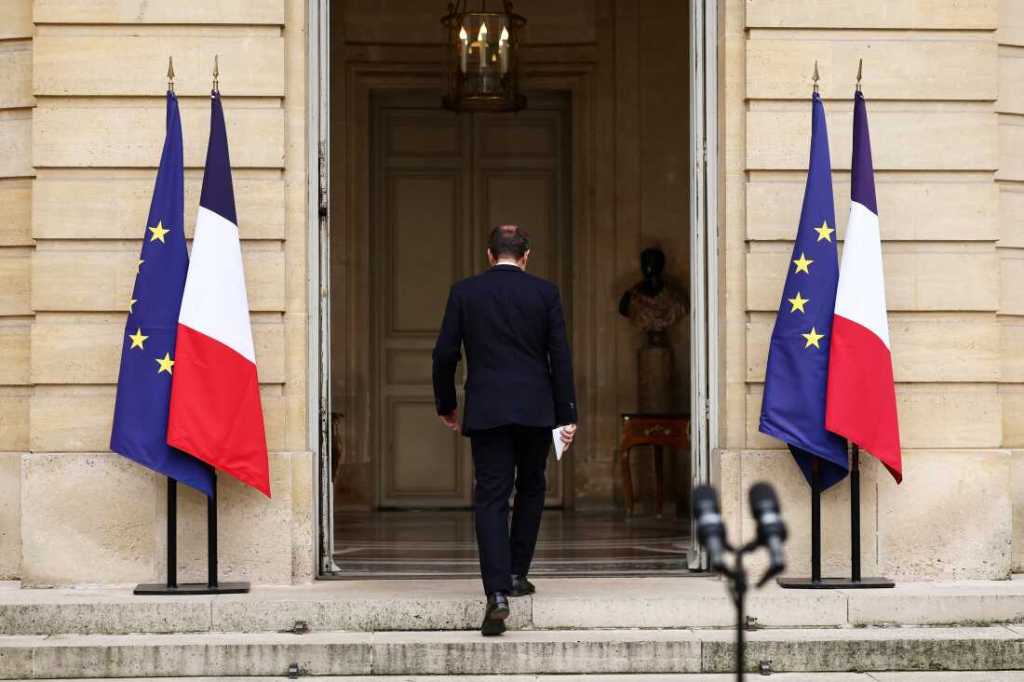
    France is confronted with yet another government resignation amid renewed political crisis after Prime Minister Sébastien Lecornu stepped down on October 6, less than a day after revealing his new cabinet. The move abruptly ended what was already a short tenure for Lecornu, who took office only 27 days ago, and left France without a functioning government at a moment of fragile finances and mounting social and electoral pressures. Financial markets reacted immediately and sharply, underscoring how domestic political failure is now spilling over into Europe’s wider economic landscape.

    Lecornu’s resignation arrived on Monday morning after he formally handed in the government’s resignation to President Emmanuel Macron. The cabinet had been announced on Sunday, following weeks of consultations between the president’s circle and other political forces. 

    Opponents and some would-be partners reacted with anger to the ministerial line-up. Some critics said it was too conservative. Others criticized it for being insufficiently different from previous administrations. The row exposed the underlying fragility of an already fractured parliament in which no party or coalition commands a majority. In public and in the corridors of power, deputies and party leaders warned that the arrangement could not win the support needed to pass critical legislation, especially the 2026 budget that Macron’s government must deliver to reassure debt markets.

    By midmorning, the resignation was official. Macron accepted it and charged Lecornu with a last-ditch mission to hold talks with political groups in a bid to find a path out of the impasse. The president has not resigned and has so far resisted dissolving the National Assembly, but the options available to him are narrowing fast.

    Political Fallout and Calls for New Elections

    The resignation amplified calls for decisive action from opposition forces. The far-right National Rally urged Macron to call immediate parliamentary elections. The hard left urged the president to step down. Many of Macron’s own allies privately expressed dismay, arguing that the new cabinet did not signal the fresh start required to stabilize governance.

    Lecornu framed his resignation as the result of an inability to find compromise across the political spectrum. He blamed partisan posturing and the appetite among some parties to behave as if they already controlled a majority. That dynamic, he suggested, made it impossible for him to remain in office. The resignation marks Lecornu as the fifth prime minister to serve under Macron since the president’s re-election and the shortest serving prime minister in modern French history by a wide margin.

    The opposition is not unified about what should happen next. Some actors prefer snap elections as the only route to restore legitimacy. Others, notably the Socialist Party and parts of the centre left, are open to negotiating a left-leaning executive rather than risk an immediate election that could hand power to the far right. 

    Markets reacted instantly. The Paris stock index plunged in early trading on Monday, banking shares were hit particularly hard and bond yields rose as investors recalibrated the risk of a political stalemate that could derail deficit reduction plans. The euro also fell against the dollar as confidence in France’s fiscal management weakened.

    The broader worry among investors is not solely the chaos of ministers coming and going. It is the prospect that Paris will be unable to pass and implement the spending cuts and reforms needed to get public finances under control. France’s deficit has been running at a high level, and shortfalls in achieving savings this year already weigh on market confidence. If the government cannot secure parliamentary support for a credible consolidation plan, borrowing costs could rise further in ways that would stress public finances and feed a feedback loop of political turmoil.

    Crisis Running Deep

    The current crisis did not emerge overnight. Its roots lie in a dramatic shift in French politics that began with Macron’s risky call for snap parliamentary elections in 2024. The polls he sought in order to broaden his mandate instead produced a hung parliament. Since then, party fragmentation has sharpened. The far right and the hard left now occupy much larger positions in the legislature and on the national political stage than they did just a few years ago. Macron’s centrist movement is squeezed between these two forces and now struggles to command a reliable governing majority.

    Parliamentary numbers matter because France’s Fifth Republic was created with the explicit aim of providing strong, stable governance under a president and a coherent parliamentary majority. That system assumes coalitions or majorities that can deliver swift legislative outcomes. The current reality of minority government means that France is operating without the steady center that once underpinned its political system.

    Timing here matters as France faces urgent fiscal choices. The government must propose a budget that credibly reduces the deficit and reassures both domestic and international investors. Lawmakers know that the next budget will be politically painful. That reality has heightened partisan demands and made compromise harder to achieve.

    Beyond immediate fiscal matters, the crisis has wide political stakes. Opinion polls show the traditional center has lost ground. The National Rally’s share of first-round support in parliamentary voting intentions has grown dramatically over recent years. The hard left has also expanded its base. If elections were held now, polls suggest the center would struggle to regain the initiative. For Macron, whose presidency was intended to lock the extremes out of power by reshaping the center ground, this is an existential test.

    Some within the centrist camp still argue that pragmatic deals are possible on fiscal policy and that a narrow path to compromise remains open. But France lacks a deep culture of coalition making. Centrist and moderate parties have been weakened and face internal divisions over how to respond to migration, public spending, pensions and taxation. Those divisions make a durable agreement much harder to forge.

    What’s Next for France?

    President Macron faces a constrained range of choices. He can ask another figure to try to form a government. He can reappoint Lecornu with a new mandate and some political concessions. He can dissolve the National Assembly and call new elections, a hazardous option that could hand momentum to parties on the extremes. Or he can resign. So far Macron has rejected resignation. Behind the scenes there is urgent activity to explore cross-party agreements that could stabilize the budget process without elections.

    The immediate period ahead looks likely to be one of muddling through. Short term stopgaps will remain the likely pattern unless one of the main parties shifts strategy to back a compromise cabinet. The bond market and public patience will be closely watching whether France can move beyond episodic collapses and deliver a credible plan to reduce the deficit.

    Analysis:

    France’s crisis is a symptom of deeper realignments in Western politics. The traditional bucket of centrist technocracy is under assault from movements that capitalize in clarity of grievance and identity. Macron’s entire project relied on creating a new center that could marshal technocratic competence to fend off populist extremes. Yet, his centrist project has run into brutal limits and seems to have rendered France ungovernable.

    The Fifth Republic presumes a majority dynamic that allows a president to govern decisively. Once that majority evaporated, the institutional design that served France well in earlier eras has become brittle. Political communications and the media environment amplify the appeal of simple certainties. Populists trade in unapologetic priorities: control borders, promise security, offer immediate relief. Centrist technocrats sell competence and long term strategy. When the electorate is anxious and budgets are tight, the former political pitch resonates more easily than the latter.

    What France needs if it is to escape the spiral is not merely another reshuffle. It needs a renewed commitment to cross-party bargaining and a credible fiscal plan that can be explained simply and fairly. That will require concessions from multiple sides, including some painful compromises from Macron’s center. It will also require an investment in messaging that links necessary fiscal prudence to concrete protections for citizens and growth strategies that feel inclusive.

    If that cannot be achieved, France risks a prolonged period of unstable governments. That would not only erode domestic policy capacity, it would weaken France’s influence in Europe at a time when the continent faces many strategic challenges. The coming weeks will determine whether Paris can convert this crisis into a negotiated adjustment or whether the political center will continue to fragment, yielding ground to more extreme forces both on the Left and the Right.