IRinFive

Tag: france

  • France in Turmoil as Yet Another Government Resigns

    10/8 – International News & Political Analysis

    France is confronted with yet another government resignation amid renewed political crisis after Prime Minister Sébastien Lecornu stepped down on October 6, less than a day after revealing his new cabinet. The move abruptly ended what was already a short tenure for Lecornu, who took office only 27 days ago, and left France without a functioning government at a moment of fragile finances and mounting social and electoral pressures. Financial markets reacted immediately and sharply, underscoring how domestic political failure is now spilling over into Europe’s wider economic landscape.

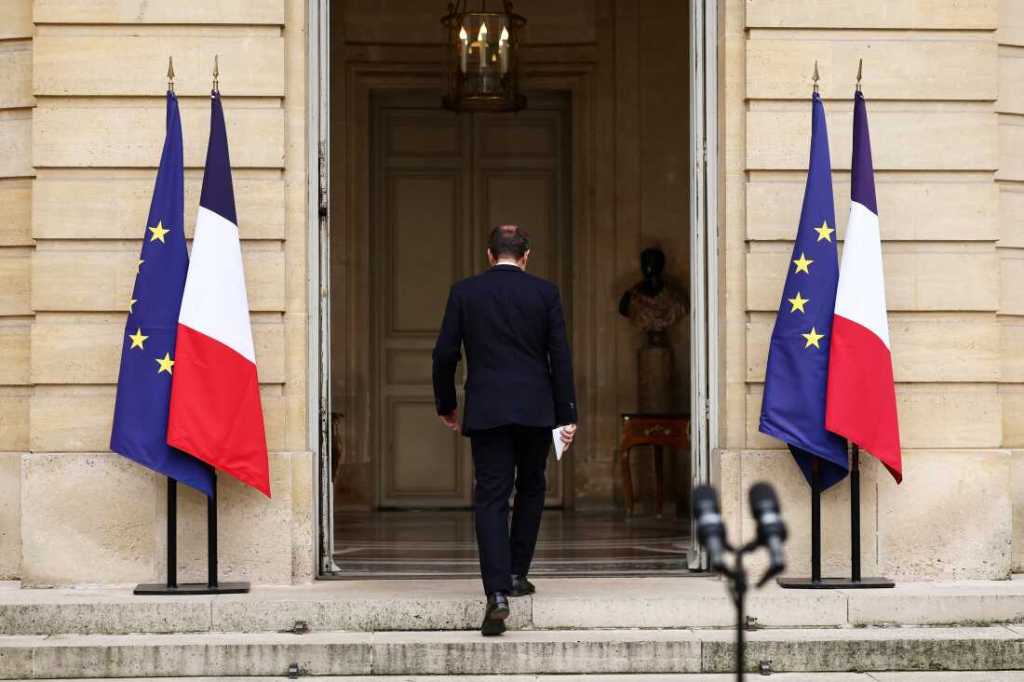
    Lecornu’s resignation arrived on Monday morning after he formally handed in the government’s resignation to President Emmanuel Macron. The cabinet had been announced on Sunday, following weeks of consultations between the president’s circle and other political forces. 

    Opponents and some would-be partners reacted with anger to the ministerial line-up. Some critics said it was too conservative. Others criticized it for being insufficiently different from previous administrations. The row exposed the underlying fragility of an already fractured parliament in which no party or coalition commands a majority. In public and in the corridors of power, deputies and party leaders warned that the arrangement could not win the support needed to pass critical legislation, especially the 2026 budget that Macron’s government must deliver to reassure debt markets.

    By midmorning, the resignation was official. Macron accepted it and charged Lecornu with a last-ditch mission to hold talks with political groups in a bid to find a path out of the impasse. The president has not resigned and has so far resisted dissolving the National Assembly, but the options available to him are narrowing fast.

    Political Fallout and Calls for New Elections

    The resignation amplified calls for decisive action from opposition forces. The far-right National Rally urged Macron to call immediate parliamentary elections. The hard left urged the president to step down. Many of Macron’s own allies privately expressed dismay, arguing that the new cabinet did not signal the fresh start required to stabilize governance.

    Lecornu framed his resignation as the result of an inability to find compromise across the political spectrum. He blamed partisan posturing and the appetite among some parties to behave as if they already controlled a majority. That dynamic, he suggested, made it impossible for him to remain in office. The resignation marks Lecornu as the fifth prime minister to serve under Macron since the president’s re-election and the shortest serving prime minister in modern French history by a wide margin.

    The opposition is not unified about what should happen next. Some actors prefer snap elections as the only route to restore legitimacy. Others, notably the Socialist Party and parts of the centre left, are open to negotiating a left-leaning executive rather than risk an immediate election that could hand power to the far right. 

    Markets reacted instantly. The Paris stock index plunged in early trading on Monday, banking shares were hit particularly hard and bond yields rose as investors recalibrated the risk of a political stalemate that could derail deficit reduction plans. The euro also fell against the dollar as confidence in France’s fiscal management weakened.

    The broader worry among investors is not solely the chaos of ministers coming and going. It is the prospect that Paris will be unable to pass and implement the spending cuts and reforms needed to get public finances under control. France’s deficit has been running at a high level, and shortfalls in achieving savings this year already weigh on market confidence. If the government cannot secure parliamentary support for a credible consolidation plan, borrowing costs could rise further in ways that would stress public finances and feed a feedback loop of political turmoil.

    Crisis Running Deep

    The current crisis did not emerge overnight. Its roots lie in a dramatic shift in French politics that began with Macron’s risky call for snap parliamentary elections in 2024. The polls he sought in order to broaden his mandate instead produced a hung parliament. Since then, party fragmentation has sharpened. The far right and the hard left now occupy much larger positions in the legislature and on the national political stage than they did just a few years ago. Macron’s centrist movement is squeezed between these two forces and now struggles to command a reliable governing majority.

    Parliamentary numbers matter because France’s Fifth Republic was created with the explicit aim of providing strong, stable governance under a president and a coherent parliamentary majority. That system assumes coalitions or majorities that can deliver swift legislative outcomes. The current reality of minority government means that France is operating without the steady center that once underpinned its political system.

    Timing here matters as France faces urgent fiscal choices. The government must propose a budget that credibly reduces the deficit and reassures both domestic and international investors. Lawmakers know that the next budget will be politically painful. That reality has heightened partisan demands and made compromise harder to achieve.

    Beyond immediate fiscal matters, the crisis has wide political stakes. Opinion polls show the traditional center has lost ground. The National Rally’s share of first-round support in parliamentary voting intentions has grown dramatically over recent years. The hard left has also expanded its base. If elections were held now, polls suggest the center would struggle to regain the initiative. For Macron, whose presidency was intended to lock the extremes out of power by reshaping the center ground, this is an existential test.

    Some within the centrist camp still argue that pragmatic deals are possible on fiscal policy and that a narrow path to compromise remains open. But France lacks a deep culture of coalition making. Centrist and moderate parties have been weakened and face internal divisions over how to respond to migration, public spending, pensions and taxation. Those divisions make a durable agreement much harder to forge.

    What’s Next for France?

    President Macron faces a constrained range of choices. He can ask another figure to try to form a government. He can reappoint Lecornu with a new mandate and some political concessions. He can dissolve the National Assembly and call new elections, a hazardous option that could hand momentum to parties on the extremes. Or he can resign. So far Macron has rejected resignation. Behind the scenes there is urgent activity to explore cross-party agreements that could stabilize the budget process without elections.

    The immediate period ahead looks likely to be one of muddling through. Short term stopgaps will remain the likely pattern unless one of the main parties shifts strategy to back a compromise cabinet. The bond market and public patience will be closely watching whether France can move beyond episodic collapses and deliver a credible plan to reduce the deficit.

    Analysis:

    France’s crisis is a symptom of deeper realignments in Western politics. The traditional bucket of centrist technocracy is under assault from movements that capitalize in clarity of grievance and identity. Macron’s entire project relied on creating a new center that could marshal technocratic competence to fend off populist extremes. Yet, his centrist project has run into brutal limits and seems to have rendered France ungovernable.

    The Fifth Republic presumes a majority dynamic that allows a president to govern decisively. Once that majority evaporated, the institutional design that served France well in earlier eras has become brittle. Political communications and the media environment amplify the appeal of simple certainties. Populists trade in unapologetic priorities: control borders, promise security, offer immediate relief. Centrist technocrats sell competence and long term strategy. When the electorate is anxious and budgets are tight, the former political pitch resonates more easily than the latter.

    What France needs if it is to escape the spiral is not merely another reshuffle. It needs a renewed commitment to cross-party bargaining and a credible fiscal plan that can be explained simply and fairly. That will require concessions from multiple sides, including some painful compromises from Macron’s center. It will also require an investment in messaging that links necessary fiscal prudence to concrete protections for citizens and growth strategies that feel inclusive.

    If that cannot be achieved, France risks a prolonged period of unstable governments. That would not only erode domestic policy capacity, it would weaken France’s influence in Europe at a time when the continent faces many strategic challenges. The coming weeks will determine whether Paris can convert this crisis into a negotiated adjustment or whether the political center will continue to fragment, yielding ground to more extreme forces both on the Left and the Right.
  • France’s Prime Minister Ousted Amid Budget Crisis Deadlock 

    9/9 – International News & Political Analysis

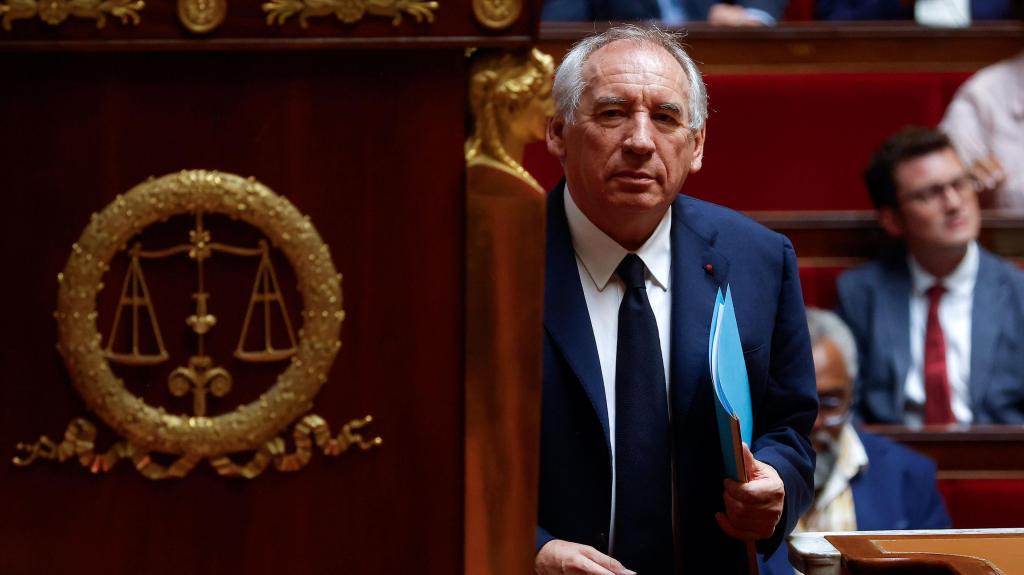
    In yet another one of their political shake-ups, France’s Prime Minister François Bayrou was ousted after a resounding no-confidence vote in parliament on September 8th. This latest collapse marks the fourth prime minister to fall in less than two years, plunging President Emmanuel Macron’s administration, and the country at large, into a deepening fiscal and political spiral.

    At the center of the crisis was Bayrou’s proposed €43.8 billion budget reduction plan for 2026, an ambitious effort aimed at curbing France’s ballooning deficit. Instead of support, the proposal triggered fierce opposition across the political spectrum—from Jean-Luc Mélenchon’s hard-left France Unbowed to Marine Le Pen’s far-right National Rally (RN), and even segments of the center-right Republicans who had previously contributed ministers to Bayrou’s cabinet. With just 194 votes out of 558, Bayrou’s plan was decisively rejected and he handed in his formal resignation today, at the Élysée Palace.

    President Macron has announced that he will yet again choose a new Prime Minister in the coming days. 

    Fiscal Discipline Meets Political Resistance

    Bayrou, a centrist and long-time fiscal conservative, had staked his credibility on delivering one of the most aggressive budget tightening plans in recent French history. The €44 billion in proposed cuts aimed to reduce France’s budget deficit, projected to hit 5.4% of GDP this year, to a more manageable level. He warned that the growing debt load, which now stands at €3.3 trillion (114% of GDP), posed a threat to France’s economic future.

    The political opposition chose not to heed his warnings and instead criticized the austerity plan as either regressive or insufficiently targeted, with Socialist leader Boris Vallaud accusing Bayrou of parroting Macron’s business-friendly policies. Meanwhile, Marine Le Pen described the moment as the inevitable reckoning for decades of mismanagement.

    The immediate fallout has rattled financial markets already wary of France’s trajectory. French 10-year bond yields, once seen as a relatively safe eurozone investment, have surged to levels close to those of Italy, long viewed as the bloc’s most vulnerable large economy. Remarkably, France now pays more to borrow long-term than Greece and Spain—two of the hardest-hit countries during the eurozone’s 2011 debt crisis.

    France’s Political Deadlock and Dismay

    The government’s collapse reflects a broader paralysis within French politics. The current National Assembly is sharply fragmented, and no party commands a clear majority. Macron, having suffered a setback after his last attempt to dissolve parliament in June 2024, appears reluctant to call snap elections again. Polls show that his centrist alliance would be pushed into third place, behind both the RN and the left-wing coalition.

    A recent survey revealed that 63% of French voters would support a return to the polls. But the outcome would likely cement the same impasse: Le Pen’s RN and its allies are projected to lead with 33% in the first round, the left with 25%, and Macron’s centrist bloc a distant third at 15%.

    Ironically, Le Pen herself is currently barred from standing in any election due to a campaign finance embezzlement conviction earlier this year, pending appeal in 2026. Should elections be called, her 29-year-old protégé, Jordan Bardella, is expected to lead the RN into the race for prime minister.

    Uncertainty Breeds Economic Stagnation

    For French households and businesses, the political dysfunction is already having tangible effects. Consumption and investment decisions are stalling as economic actors await clarity.

    This is especially dangerous for France, where slow growth is incompatible with high debt levels. Unlike Greece or Italy who run budget surpluses before interest payments, France has no such cushion. And with German investments poised to surge after years of fiscal restraint, France risks being left behind in the EU’s post-pandemic economic revitalization.

    As one Oxford Economics analyst put it: “France is becoming the new ugly duckling of Europe.” Once a dependable pillar of eurozone financial stability, it is now edging into the uncertain role previously assigned to Italy.

    President Macron faces a difficult choice. He can either call fresh elections and risk further losses, or appoint a new prime minister capable of crafting a budget palatable to an antagonistic parliament. Whispers in political circles suggest a possible pact with the Socialists, who hold 66 seats in the lower house. But their price is steep: a proposed wealth tax of at least 2% annually on fortunes exceeding €100 million.

    Macron is reportedly opposed to such a move, fearing it would undermine France’s image as a business-friendly nation. He had previously positioned France as a startup haven and reduced corporate taxes to attract foreign investment. Reversing that stance would be a dramatic shift, and one his political base may not forgive.

    Still, Macron’s room for maneuver is vanishing. Without a stable government in place, the country will struggle to meet its October 7 deadline to draft the 2026 budget. Finance Minister Eric Lombard has already signaled that any future proposal will be less ambitious than Bayrou’s failed blueprint.

    Protest Movements Loom

    What could escalate France’s crisis from dysfunction to outright chaos? One possibility is a market revolt, as borrowing costs rise and ratings agencies weigh downgrades. Another is mass civil unrest, a familiar feature of France’s volatile political climate.

    Already, two major protest dates have been announced. On September 10, a social media-led campaign titled “Bloquons tout” (“Let’s block everything”) aims to paralyze the country. More traditional labor strikes, coordinated by major unions, are planned for September 18. Although these actions may fizzle without a clear target, France’s history suggests that loosely organized protests can morph into powerful movements, as seen with the Yellow Vests in 2018.

    Analysis:

    France is entering dangerous territory. For decades, its large economy, sophisticated institutions, and central position in the EU granted it a level of financial insulation. That cushion is now eroding quickly. As its political institutions and social services falter along with soaring debt, the country is losing the market’s trust and its own sense of direction to get out of this hole.

    The fall of François Bayrou is just another symptom of a deeper malaise. Macron’s promise to modernize France is colliding with the limits of its institutions, the fatigue of its electorate, and the unforgiving arithmetic of public debt. Without unifying leadership and a credible fiscal plan, the country risks spiraling further into stagnation and potential bankruptcy .

    The clock is ticking on President Macron and whoever is selected to be the next Prime Minister, and inherit one of the most difficult and ill-fated jobs in all of Europe. 

  • Britain & France Threaten to Recognize Palestinian Statehood as Israel Starves Out Gaza

    7/30 – International News & Geopolitical Analysis

    International diplomatic pressure continues to mount on Israel as Britain has joined France in pledging to recognize a Palestinian state by September unless Israel moves swiftly to halt its military campaign in Gaza, end the humanitarian catastrophe by allowing more aid in, and commit to a long-term peace process. This coordinated Western shift marks a significant climax thus far in the nearly two-year-long war between Israel and Hamas, which has resulted in the deaths of over 60,000 Palestinians and a widespread humanitarian crisis that seems to be entering its darkest phase yet.

    Humanitarian Catastrophe and Famine

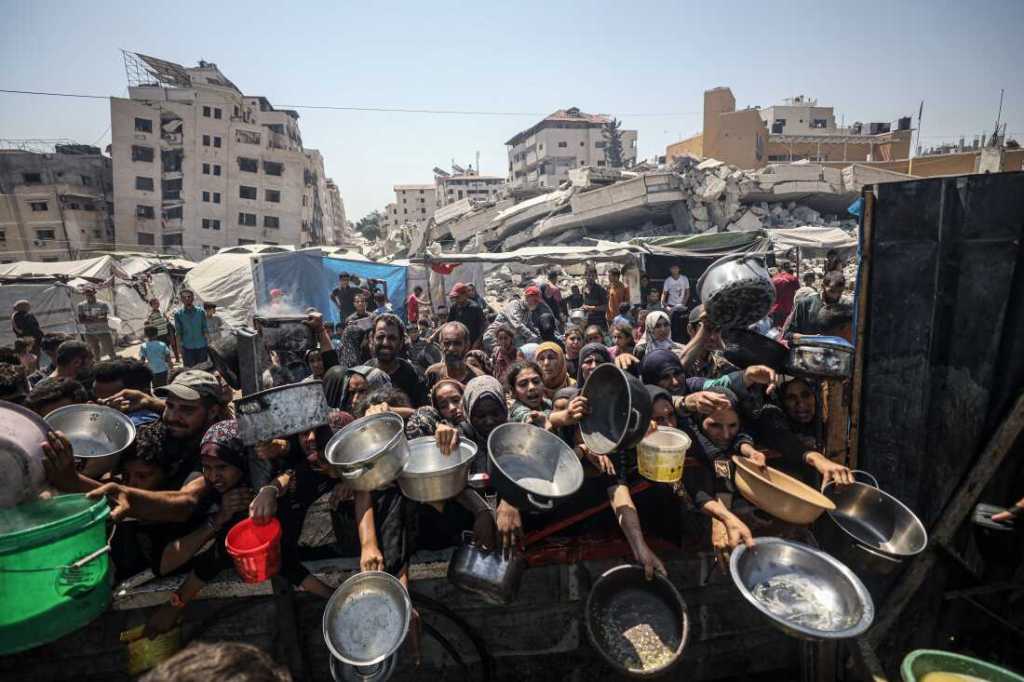
    The Gaza conflict, ignited in October 2023 by a Hamas attack on southern Israel that left 1,200 Israelis dead and 251 taken hostage, has since spiraled into a grinding and devastating war. Israel’s military response has razed much of the densely populated Gaza Strip and displaced more than two million people. According to the Integrated Food Security Phase Classification (IPC), Gaza has now crossed famine thresholds, with mounting hunger-related deaths and widespread malnutrition. At least 147 people—88 of them children—have died from starvation, with the toll rising daily. Gaza’s health authorities and global humanitarian agencies are sounding alarms that the situation is at risk of spiraling into a full-blown famine.

    Images of starving children have shocked the global community. The United Nations World Food Programme has reported significant difficulties in delivering aid, citing restricted access and lack of coordination from Israeli authorities. Despite Israel claiming that 5,000 aid trucks have entered Gaza in the past two months, major relief organizations argue that food and medical supplies remain severely insufficient and purposefully locked out of the enclave. Meanwhile, Israel maintains that it is not pursuing a policy of starvation, accusing Hamas of stealing aid—a claim the UN has not substantiated and is yet to be proven as fact.

    Britain and France Shift Policy Response

    UK Prime Minister Keir Starmer announced that Britain would formally recognize a Palestinian state at the United Nations General Assembly in September unless Israel implements several key measures: an immediate ceasefire, an end to plans for annexation of the West Bank, and a credible commitment to a two-state solution. France issued a similar pledge last week, prompting sharp rebukes from Israeli officials.

    Israel’s government reacted with outrage. Prime Minister Benjamin Netanyahu denounced the British proposal as a reward for terrorism, asserting that recognizing Palestinian statehood at this stage would only embolden Hamas. Trump, despite claiming neutrality during recent talks with Starmer, later told reporters that he did not believe Hamas should be rewarded with statehood recognition.

    Palestinian Authority President Mahmoud Abbas welcomed Starmer’s announcement as a bold and principled move, while UN officials noted that recognition alone would not alleviate the immediate suffering in Gaza nor produce any tangible progress toward peace at this stage.

    Stalled Ceasefire Talks and Mounting Civilian Deaths

    Despite intermittent talks led by Egyptian, Qatari, and U.S. mediators, efforts to broker a ceasefire have repeatedly broken down. The latest breakdown occurred after both Israel and the United States withdrew from negotiations, accusing Hamas of lacking coordination and refusing to compromise. Hamas demanded guarantees for a permanent ceasefire, Israeli military withdrawal, and an influx of humanitarian aid.

    Meanwhile, deadly airstrikes and ground assaults continue. Overnight Israeli attacks on the Nuseirat refugee camp killed at least 30 people, including women and children, while others were gunned down along the Salahudeen Road as they waited for humanitarian aid. Gaza’s death toll has now surpassed 60,000, making this the deadliest conflict involving Israel since the country’s founding in 1948.

    Observers argue that Netanyahu has little interest in ending the war or pursuing a two-state solution. His administration has increasingly moved toward permanent occupation of Palestinian territories, advancing controversial plans such as relocating Gaza’s population into a “humanitarian city” in Rafah, a move many critics label as forced displacement or ethnic cleansing.

    Defense Minister Israel Katz has spearheaded policies aimed at resettling Palestinians outside Gaza and intensifying military operations in the West Bank, under the justification of preempting future threats. Domestically, Netanyahu’s right-wing Likud party has doubled down on its rejection of Palestinian sovereignty. The Knesset— Israel’s parliament— recently passed laws opposing the creation of a Palestinian state and supporting the annexation of the West Bank. Netanyahu himself boasts of having spent decades blocking Palestinian statehood and has consistently framed such recognition as an existential threat to Israel.

    U.S. Caught Between Allies and Interests

    While European nations begin to pivot toward recognizing Palestinian statehood, the United States—Israel’s closest and seemingly unwavering ally—remains reluctant to follow suit. President Trump, though having occasionally clashed with Netanyahu on broader Middle East strategy, has mostly remained aligned and compliant with Israeli policy throughout the war.

    Since the start of the conflict, the U.S. has provided Israel with at least $22.7 billion in military and humanitarian aid, vastly exceeding the $3.8 billion annual cap set under the existing U.S.–Israel memorandum of understanding. Additionally, Washington has invested substantial diplomatic capital in shielding Israel from sanctions and stalling international recognition of Palestinian statehood.

    But this strategy is becoming increasingly untenable. Arab states, which were once open to normalizing relations with Israel, are now demanding Israel commit to recognizing Palestinian sovereignty before proceeding. Trump’s broader ambitions of brokering a regional peace agreement, including normalization with Saudi Arabia, will permanently hang in the balance the longer his administration allows Israel a free pass to do whatever they want in Gaza.

    Analysis:

    The convergence of mass civilian suffering in Gaza, mounting evidence of famine, and Israel’s hardline stance has created a geopolitical crisis that is forcing Western governments to reassess their Middle East policies. For the United States, continued unconditional support for Israel risks isolating Washington from its Arab partners and European allies alike. It also threatens to undermine Trump’s larger strategic efforts to reposition U.S. military engagement in the region.

    Trump’s previous willingness to engage diplomatically with actors like the Houthis in Yemen and Syria’s new leadership suggests he is capable of shifting away from traditional alliances. If he hopes to achieve a lasting regional peace and rehabilitate America’s role as a mediator, he will need to leverage his popularity in Israel to pressure Netanyahu into concessions that include winding down his ethnic cleansing and leveling of the Gaza Strip and eventual recognition of a sovereign Palestinian state.

    Netanyahu’s political future and ideological commitments are deeply tied to rejecting Palestinian statehood however, and he is unlikely to change course without substantial external pressure from only the United States, as they are the only guarantor of Israel’s actions that have enough sway to make him act. But if the U.S. fails to influence Israel decisively, the risk is not just the continued suffering of Palestinians but the long-term erosion of America’s credibility and influence in the region, as well as a worldwide questioning of the hegemon’s longtime commitment to humanitarian values.

    The growing international pressure for humanitarian intervention and a halt to Israel’s actions in Gaza, symbolized by threatened statehood recognition from Britain and France, signals a tectonic shift in the global consensus. While symbolic in nature, these actions reflect a broader abhorration with Israeli leadership current military doctrine and a desire to re-center the peace process on humanitarian foundations.

    Whether this results in meaningful change will depend largely on the United States. For now, the war rages on, the humanitarian crisis deepens, and the vision of a two-state solution remains distant as most of the territory that would make up this so-called Palestinian state lies in rubble.