IRinFive

Tag: europe

  • Europe Compromises on €90 Billion Ukraine Funding Loan as Plan to Use Seized Russian Assets Fails 

    12/22 – International Relations News & Diplomacy Analysis

    As 2025 draws to a close, the European Union finds itself confronting simultaneous pressures from a more transactional United States, an increasingly assertive China, and a war in Ukraine that has entered a more precarious financial and military phase. With American funding sharply reduced following Donald Trump’s return to the White House, Ukraine has been forced to rely more heavily on Europe to sustain its war effort against Russia. That shift has exposed unresolved questions about Europe’s willingness, unified cohesion, and capacity to act as a strategic power.

    Those tensions came to a head at a pivotal European Union summit in Brussels earlier this week, where leaders debated how to secure long-term financing for Ukraine. In recent months, the European Commission, led by Ursula von der Leyen, had advanced an ambitious proposal to use frozen Russian sovereign assets held in the EU as collateral for a large-scale loan to Kyiv. The plan envisioned mobilizing up to €210 billion in frozen Russian funds to underpin a €90 billion financing package that would keep Ukraine solvent and militarily supplied for more than a year. Beyond its financial utility, the proposal was designed to send a strategic signal to Moscow that Europe could sustain Ukraine’s resistance well into the future while imposing direct costs on the aggressor.

    The initiative quickly gained backing from several of Europe’s most powerful political figures, most notably Friedrich Merz, who argued that using Russian assets would strengthen Ukraine while sparing European taxpayers. However, despite weeks of negotiations, the proposal collapsed during the summit after overnight talks failed to resolve legal and political obstacles. The most significant resistance came from Belgium, where roughly €185 billion of the frozen Russian assets are held. Belgian Prime Minister Bart De Wever warned that repurposing those assets could expose his country to international legal challenges and targeted retaliation from Moscow.

    European leaders attempted to offer Belgium guarantees against potential financial and political consequences, but these assurances raised further legal questions that proved impossible to resolve under EU rules requiring unanimity. As discussions dragged into the early morning hours, it became clear that the reparations-based loan could not command the consensus needed to proceed.

    Faced with the risk that Ukraine could run out of money as early as April of next year, EU leaders pivoted to a fallback option. At approximately 3 a.m. in Brussels, the bloc agreed to jointly borrow €90 billion on international markets and lend it to Ukraine over the next two years. The borrowing will be backed by the EU budget, meaning that member states will ultimately bear the financial responsibility. Hungary, Slovakia, and the Czech Republic will not participate in the scheme, effectively turning the effort into a coalition of 24 willing countries rather than a fully unified bloc.

    For Ukraine, the immediate effect is largely the same. The funds are expected to prevent a fiscal collapse in Kyiv and to sustain basic state functions and defense spending through 2026. Ukraine’s leadership publicly welcomed the decision, emphasizing that the agreement significantly bolsters the country’s resilience at a moment of utmost need. International observers also noted that failure to reach any deal would have sent a damaging signal to both Kyiv and Moscow. 

    Nevertheless, the compromise carries important consequences. By abandoning the use of Russian assets, Europe has placed the financial burden squarely on its own taxpayers while forgoing an opportunity to directly weaken Russia’s financial position. Russian President Vladimir Putin responded by asserting that the EU stepped back because using the assets would have undermined trust in the euro zone and triggered serious repercussions, particularly among countries that store reserves in Europe.

    The funding debate unfolded against a broader backdrop of strategic anxiety. The EU has long depended on American military power for its security and relied heavily on U.S. financial support for Ukraine since Russia’s full-scale invasion in 2022. With that support now reduced, Europe has increased its contributions but not enough to fully fill the gap. According to the International Monetary Fund, Ukraine faces a projected financing shortfall of roughly €72 billion next year without sustained external aid.

    Data from the Kiel Institute highlight the uneven nature of Europe’s support. While countries such as Germany, France, and the United Kingdom have increased absolute contributions, Nordic states continue to lead when measured as a share of GDP. By contrast, Italy and Spain have contributed relatively little. Public opinion trends also raise concerns as polling in major European economies suggests growing fatigue among voters, with significant portions of the electorate in Germany and France favoring cuts to financial assistance for Ukraine.

    The divisions visible in the Ukraine funding debate were mirrored elsewhere at the summit. EU leaders also failed to finalize a long-delayed free trade agreement with Mercosur, the South American bloc that includes Brazil and Argentina. Supporters of the deal argue that it would help diversify Europe’s trade relationships away from China and the United States. Negotiations have stretched on for 25 years now, and Commission officials had hoped to finalize the agreement before the end of the year.

    Opposition from European farming interests and political hesitation once again derailed progress. French President Emmanuel Macron pressed for additional protections for European farmers, while Italian Prime Minister Giorgia Meloni withheld support at a critical moment. As a result, von der Leyen canceled a planned trip to Brazil to sign the agreement. Brazilian President Luiz Inácio Lula da Silva had previously warned that continued delays could cause his government to abandon the deal altogether, though last-minute assurances from Rome appear to have temporarily eased tensions.

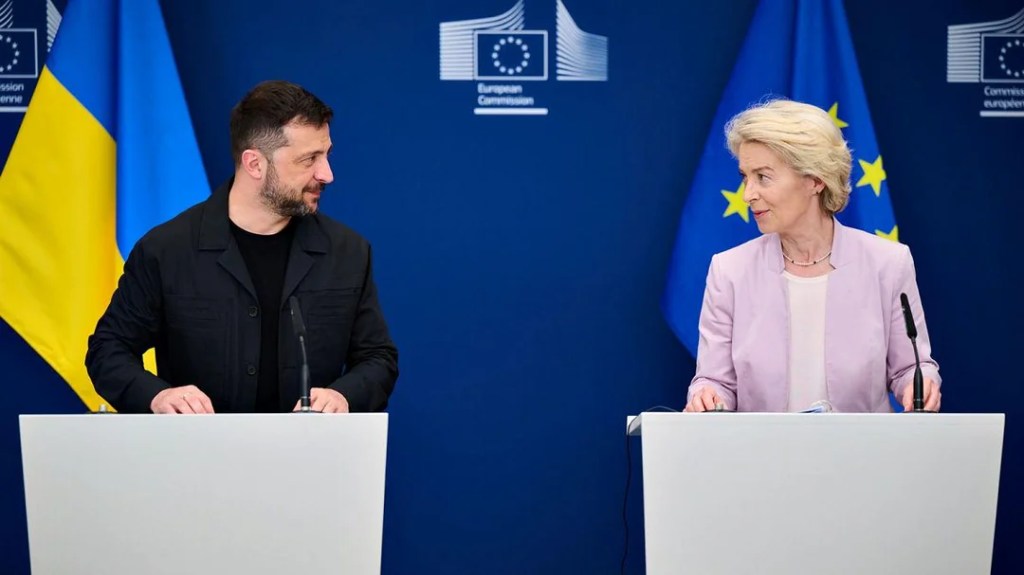
    By the summit’s conclusion, European Council President António Costa declared that the EU had delivered on its commitments to Ukraine. German Chancellor Merz echoed that sentiment, arguing that Europe had demonstrated its sovereignty and resolve. Ukrainian President Volodymyr Zelensky, who traveled to Brussels to advocate for the reparations loan, returned home with substantial financial support but without the stronger political message he had hoped Europe would send to Russia.

    Analysis:

    The EU’s decision to jointly borrow €90 billion for Ukraine averts an immediate financial crisis in Kyiv and prevents a potentially catastrophic failure of European credibility. In practical terms, the outcome may be close to the best Ukraine could reasonably expect heading into 2026, especially given declining American involvement and growing political fatigue within Europe itself.

    Yet the manner in which the decision was reached underscores deeper structural weaknesses. Months of public disagreement, followed by a last-minute retreat from an ambitious plan endorsed by the bloc’s most powerful leaders, reinforces perceptions of European indecision and dividedness. The inability to leverage frozen Russian assets, despite their clear strategic value, reflects legal caution, political fragmentation, and an enduring reluctance to fully confront the consequences of great-power conflict.

    Europe can plausibly claim that it has stepped into a void left by the United States. It cannot yet claim that it has seized the geopolitical moment. By choosing the path of least resistance, the EU secured short-term stability over a large reshape of the strategic balance. As the war drags on and financial needs resurface within a year, the same questions about burden-sharing, political will, and strategic purpose are likely to return with even greater urgency.

  • Germany Wants to Send Its Syrian Refugees Back Home

    11/11 – International News & Geopolitical Analysis

    Germany’s migration debate has taken a sharp turn. A decade after hundreds of thousands of Syrians found refuge in Germany during the worst years of the Syrian civil war, Chancellor Friedrich Merz has announced a new drive to encourage and in some cases enforce returns. The chancellor says the fighting that drove the original exodus has ended and that Germany should now work with Syria’s transitional authorities to facilitate reconstruction and repatriation. He has invited Syria’s interim president, Ahmed al-Sharaa, to Berlin to discuss practical steps, including the deportation of Syrians convicted of crimes.

    This policy shift is the product of converging political forces and changing geopolitics. It follows a dramatic reversal of fortunes in Syria, where the Al-Asad regime that dominated for years has been replaced by a transitional government headed by al-Sharaa and where international actors are reengaging with Damascus. It also reflects domestic pressure from the far-right Alternative für Deutschland, which has made mass returns and strict migration control its signature issue as it gains ground in polls and regional contests. Chancellor Merz frames his new stance as a correction of past open-door policies and as a response to voter concerns about migration and public safety.

    From 2011 to 2015, the Syrian conflict drove a sustained outflow of people. Germany became a major destination after the 2015 refugee wave, when Chancellor Angela Merkel’s government admitted large waves of asylum seekers. Over the following years Syrian nationals grew to become one of the largest foreign groups in Germany. Integration efforts and naturalisations proceeded unevenly but steadily.

    In 2024 and 2025, the military and political picture in Syria changed. Opposition forces and new transitional authorities overthrew the previous regime, and a transitional president was installed in early 2025. That new leadership immediately began courting foreign investment, aid and diplomatic recognition as it sought to rebuild. Western capitals started to reopen channels of engagement, and the White House planned meetings with Syria’s transitional president in November 2025. Those shifts opened the door in Berlin to new discussions about returns and reconstruction.

    Just recently Chancellor Merz made his most explicit public move by saying the civil war is over and that the grounds for asylum have therefore changed. He invited President al-Sharaa to Berlin to negotiate cooperation on repatriations and signalled that Germany will prioritize the deportation of Syrians with criminal convictions while pushing for broader voluntary return programs. Merz’s announcement followed visits by German officials to Syria and came as the migration issue climbed the domestic political agenda ahead of critical state elections.

    How realistic are mass returns?

    Germany hosts close to a million people of Syrian nationality and more than a million people of Syrian origin when second generation and naturalized citizens are counted. Hundreds of thousands arrived in 2015 and the subsequent years under Merkel’s asylum policy. Many have since entered the German labour market, taken up skilled and system-relevant jobs and in recent years large numbers have become naturalised citizens following changes to the nationality law. Official labor market data show several hundred thousand Syrians in employment and a rising employment rate among Syrians as integration progresses. In 2024 more than 80,000 Syrians were naturalized, and employment figures for Syrians approached three hundred thousand in official counts.

    Those figures explain why large scale forced returns would be difficult to carry out. A substantial share of Syrians in Germany are employed, pay into the social system and some are fully naturalized citizens. Many have built lives in German cities. With this in mind, legal barriers, human rights obligations, and logistical hurdles combine to limit how far Berlin can push blanket repatriation. In the short term the government appears to be focused on deporting people with criminal convictions and on creating incentives for voluntary return rather than immediate mass expulsions. Official returns so far remain a tiny fraction of the Syrian population in Germany.

    Berlin’s tougher posture clashes with repeated assessments about the conditions Syrians would face on return. German foreign ministry officials who visited devastated areas of Syria described widespread destruction and stressed that many parts of the country are not yet able to host returnees with dignity and security. The UN and humanitarian organizations caution that large parts of Syria remain aid dependent and unstable, and they warn against repatriation policies that do not meet international protection standards. Those assessments create both legal and moral constraints on any rapid program to repatriate refugees.

    Domestic political fissures. The Merz initiative has exposed divisions inside the government and within his own conservative ranks. Some ministers and lawmakers flagged the practical impossibility for many refugees to return quickly because of broken infrastructure and ongoing insecurity. Others argue that integration has limits and that Germany must rebalance its migration and citizenship policies after a decade of large inflows. Coalition politics also complicate matters. The chancellor governs in alliance with the center-left Social Democratic Party, which has urged caution and emphasized humanitarian obligations and integration gains.

    Electoral dynamics and the AfD effect

    Political incentives are central to understanding the current push for repatriation. The AfD’s surge in several state polls and its consistent focus on migration have put migration at the center of national debate. Merz’s shift is intended in part to reclaim votes on the right by adopting a tougher tone and concrete measures while avoiding the AfD’s most extreme rhetoric. The AfD, however, is demanding faster and more sweeping action and is prepared to promise forced mass deportations, a stance that continues to push the entire debate rightward. Analysts note that even a hardening of policy by the chancellor may not be sufficient to blunt the AfD’s momentum.

    The German government is emphasizing programs to encourage voluntary returns by linking reconstruction assistance to return, offering financial help and creating administrative pathways for people who choose to go home. That carrot approach mirrors earlier European experiences with returns, though the scale and political context make this episode unique.

    The government is also pursuing bilateral agreements to accept returns of people convicted of crimes. The invitation to President al-Sharaa is designed to secure practical cooperation from Syrian authorities for those targeted deportations. Human rights groups warn that such bilateral arrangements must ensure returnees will not face persecution, punishment or summary reprisals. Lessons from previous European repatriation initiatives show that returns without robust safeguards can have serious humanitarian and legal consequences.

    Analysis:

    For Syrian individuals and families the policy shift injects fresh uncertainty. Many have already integrated into the workforce, some have become citizens, and younger people born or raised in Germany have growing ties to German society. Efforts to encourage returns hit against those lived realities and risk social dislocation if not managed carefully. For Germany the debate poses a policy trade off between electoral politics and long term labour market and demographic needs. Syrians occupy roles in health care, transport and other sectors where labour shortages are acute. Large scale departures could exacerbate workforce gaps. At the same time, migration is now a core electoral issue and political leaders are using policy to signal responsiveness to voters.

    For now it seems Merz’s announcement is less a technical plan for immediate mass repatriations than a political gambit. It seeks to reframe conservative politics in Germany and to respond to a powerful challenger on the right. The chancellor is trying to walk a narrow line. He must appear decisive on migration to hold off the AfD while avoiding measures that would unravel coalition unity or contravene legal protections and humanitarian obligations.

    Three risks stand out. First, the humanitarian risk. A return program that is premature or poorly supervised risks sending people into shattered towns and insecure regions. That would produce human suffering and potential breaches of Germany’s international commitments. Second, the social risk. Pushing out people who are integrated into the economy and who have acquired rights through naturalization or long residence could damage local labour markets and public services that already rely on migrant labour. Third, the political risk. The policy could intensify polarization and give the AfD further leverage if voters see the measures as either too lax or too harsh.

    There are also pragmatic options the government has yet to exhaust. Investing in post-conflict reconstruction programs tied to voluntary return is a sensible long term strategy. Targeted cooperation with Syrian authorities on returns of convicted criminals is legally more defensible than mass expulsions. Strengthening integration programs at home and communicating realistic timelines for any repatriation program would reduce panic and should be part of the official narrative.

    Ultimately this episode reveals how migration policy is being reshaped by international events and domestic politics. The fall of the old Syrian regime and the emergence of a transitional authority changed the geopolitical calculus. At the same time the AfD’s electoral appeal is forcing mainstream parties to compete and finally speak up on migration. Germany now faces a test of governance to manage a politically fraught issue without abandoning international law, humanitarian standards and the social gains of integration.

  • France in Turmoil as Yet Another Government Resigns

    10/8 – International News & Political Analysis

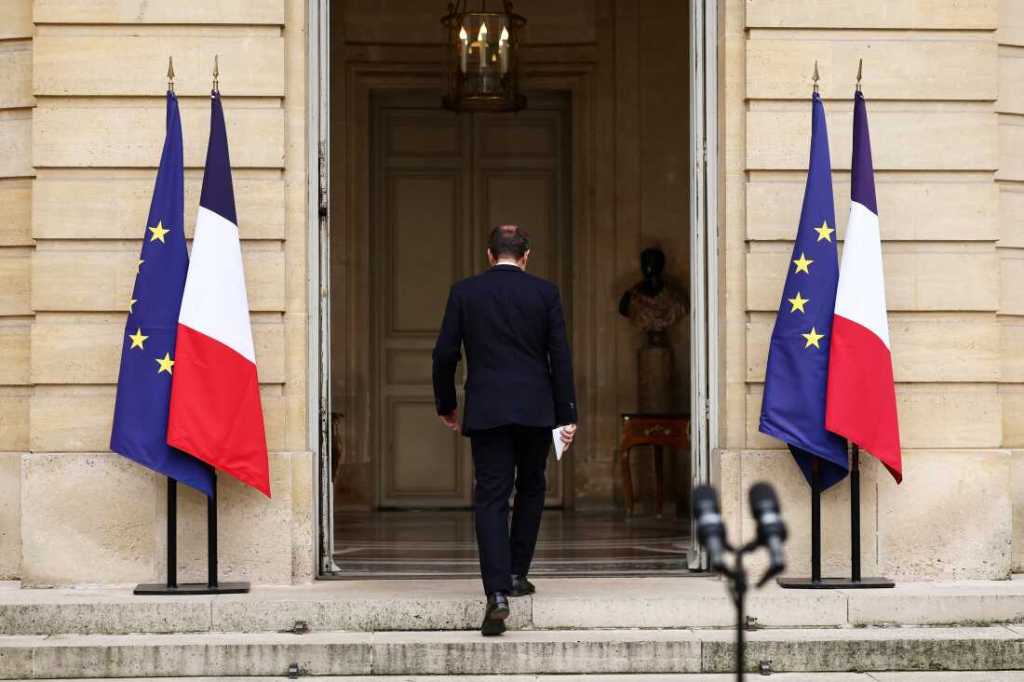
    France is confronted with yet another government resignation amid renewed political crisis after Prime Minister Sébastien Lecornu stepped down on October 6, less than a day after revealing his new cabinet. The move abruptly ended what was already a short tenure for Lecornu, who took office only 27 days ago, and left France without a functioning government at a moment of fragile finances and mounting social and electoral pressures. Financial markets reacted immediately and sharply, underscoring how domestic political failure is now spilling over into Europe’s wider economic landscape.

    Lecornu’s resignation arrived on Monday morning after he formally handed in the government’s resignation to President Emmanuel Macron. The cabinet had been announced on Sunday, following weeks of consultations between the president’s circle and other political forces. 

    Opponents and some would-be partners reacted with anger to the ministerial line-up. Some critics said it was too conservative. Others criticized it for being insufficiently different from previous administrations. The row exposed the underlying fragility of an already fractured parliament in which no party or coalition commands a majority. In public and in the corridors of power, deputies and party leaders warned that the arrangement could not win the support needed to pass critical legislation, especially the 2026 budget that Macron’s government must deliver to reassure debt markets.

    By midmorning, the resignation was official. Macron accepted it and charged Lecornu with a last-ditch mission to hold talks with political groups in a bid to find a path out of the impasse. The president has not resigned and has so far resisted dissolving the National Assembly, but the options available to him are narrowing fast.

    Political Fallout and Calls for New Elections

    The resignation amplified calls for decisive action from opposition forces. The far-right National Rally urged Macron to call immediate parliamentary elections. The hard left urged the president to step down. Many of Macron’s own allies privately expressed dismay, arguing that the new cabinet did not signal the fresh start required to stabilize governance.

    Lecornu framed his resignation as the result of an inability to find compromise across the political spectrum. He blamed partisan posturing and the appetite among some parties to behave as if they already controlled a majority. That dynamic, he suggested, made it impossible for him to remain in office. The resignation marks Lecornu as the fifth prime minister to serve under Macron since the president’s re-election and the shortest serving prime minister in modern French history by a wide margin.

    The opposition is not unified about what should happen next. Some actors prefer snap elections as the only route to restore legitimacy. Others, notably the Socialist Party and parts of the centre left, are open to negotiating a left-leaning executive rather than risk an immediate election that could hand power to the far right. 

    Markets reacted instantly. The Paris stock index plunged in early trading on Monday, banking shares were hit particularly hard and bond yields rose as investors recalibrated the risk of a political stalemate that could derail deficit reduction plans. The euro also fell against the dollar as confidence in France’s fiscal management weakened.

    The broader worry among investors is not solely the chaos of ministers coming and going. It is the prospect that Paris will be unable to pass and implement the spending cuts and reforms needed to get public finances under control. France’s deficit has been running at a high level, and shortfalls in achieving savings this year already weigh on market confidence. If the government cannot secure parliamentary support for a credible consolidation plan, borrowing costs could rise further in ways that would stress public finances and feed a feedback loop of political turmoil.

    Crisis Running Deep

    The current crisis did not emerge overnight. Its roots lie in a dramatic shift in French politics that began with Macron’s risky call for snap parliamentary elections in 2024. The polls he sought in order to broaden his mandate instead produced a hung parliament. Since then, party fragmentation has sharpened. The far right and the hard left now occupy much larger positions in the legislature and on the national political stage than they did just a few years ago. Macron’s centrist movement is squeezed between these two forces and now struggles to command a reliable governing majority.

    Parliamentary numbers matter because France’s Fifth Republic was created with the explicit aim of providing strong, stable governance under a president and a coherent parliamentary majority. That system assumes coalitions or majorities that can deliver swift legislative outcomes. The current reality of minority government means that France is operating without the steady center that once underpinned its political system.

    Timing here matters as France faces urgent fiscal choices. The government must propose a budget that credibly reduces the deficit and reassures both domestic and international investors. Lawmakers know that the next budget will be politically painful. That reality has heightened partisan demands and made compromise harder to achieve.

    Beyond immediate fiscal matters, the crisis has wide political stakes. Opinion polls show the traditional center has lost ground. The National Rally’s share of first-round support in parliamentary voting intentions has grown dramatically over recent years. The hard left has also expanded its base. If elections were held now, polls suggest the center would struggle to regain the initiative. For Macron, whose presidency was intended to lock the extremes out of power by reshaping the center ground, this is an existential test.

    Some within the centrist camp still argue that pragmatic deals are possible on fiscal policy and that a narrow path to compromise remains open. But France lacks a deep culture of coalition making. Centrist and moderate parties have been weakened and face internal divisions over how to respond to migration, public spending, pensions and taxation. Those divisions make a durable agreement much harder to forge.

    What’s Next for France?

    President Macron faces a constrained range of choices. He can ask another figure to try to form a government. He can reappoint Lecornu with a new mandate and some political concessions. He can dissolve the National Assembly and call new elections, a hazardous option that could hand momentum to parties on the extremes. Or he can resign. So far Macron has rejected resignation. Behind the scenes there is urgent activity to explore cross-party agreements that could stabilize the budget process without elections.

    The immediate period ahead looks likely to be one of muddling through. Short term stopgaps will remain the likely pattern unless one of the main parties shifts strategy to back a compromise cabinet. The bond market and public patience will be closely watching whether France can move beyond episodic collapses and deliver a credible plan to reduce the deficit.

    Analysis:

    France’s crisis is a symptom of deeper realignments in Western politics. The traditional bucket of centrist technocracy is under assault from movements that capitalize in clarity of grievance and identity. Macron’s entire project relied on creating a new center that could marshal technocratic competence to fend off populist extremes. Yet, his centrist project has run into brutal limits and seems to have rendered France ungovernable.

    The Fifth Republic presumes a majority dynamic that allows a president to govern decisively. Once that majority evaporated, the institutional design that served France well in earlier eras has become brittle. Political communications and the media environment amplify the appeal of simple certainties. Populists trade in unapologetic priorities: control borders, promise security, offer immediate relief. Centrist technocrats sell competence and long term strategy. When the electorate is anxious and budgets are tight, the former political pitch resonates more easily than the latter.

    What France needs if it is to escape the spiral is not merely another reshuffle. It needs a renewed commitment to cross-party bargaining and a credible fiscal plan that can be explained simply and fairly. That will require concessions from multiple sides, including some painful compromises from Macron’s center. It will also require an investment in messaging that links necessary fiscal prudence to concrete protections for citizens and growth strategies that feel inclusive.

    If that cannot be achieved, France risks a prolonged period of unstable governments. That would not only erode domestic policy capacity, it would weaken France’s influence in Europe at a time when the continent faces many strategic challenges. The coming weeks will determine whether Paris can convert this crisis into a negotiated adjustment or whether the political center will continue to fragment, yielding ground to more extreme forces both on the Left and the Right.

  • Poland Shoots Down Russian Drones, NATO on High Alert

    9/10 – Geopolitical News & Analysis

    In one of the most serious breaches of NATO territory since the alliance’s founding in 1949, at least 19 Russian drones entered Polish airspace overnight between September 9 and 10. The incursion, which triggered temporary airport closures and prompted Poland to invoke NATO’s Article 4, marks a major escalation in the ongoing conflict between Russia and Ukraine, with increasingly direct consequences for neighboring NATO states.

    The drones were part of a wider Russian aerial assault on Ukraine, but several crossed deep into Poland, with one crashing over 300 kilometers inside the country. Polish F-16s, supported by Dutch F-35s deployed earlier this month, scrambled to intercept the drones, shooting down around four or five. At least one drone ripped the roof off a residential house in Wyryki-Wola. No casualties were reported.

    Poland’s Prime Minister Donald Tusk addressed parliament hours later, declaring the situation a perilous moment as his country had never been this close to open conflict since WWII. In an emergency meeting, Poland formally requested NATO consultations under Article 4 of its treaty, which allows for emergency dialogue when a member state’s territorial integrity or security is threatened.

    A New Phase of Confrontation

    Drone and missile spillovers into NATO airspace are not new. In recent years, both Romania and Finland have reported Russian airspace violations. In 2022, two Polish civilians were killed by what was later found to be a misfired Ukrainian missile. However, the scale of this latest event dwarfs previous incidents. Polish officials confirmed that the breach involved at least 19 aerial objects, while other reports cited up to 23. For the first time, NATO warplanes directly engaged and destroyed Russian drones over an allied country.

    Multiple Polish airports were closed as a precaution, including Warsaw’s Chopin Airport, which is a vital hub for logistical and diplomatic operations related to Ukraine. Eastern Poland was placed on high alert. A NATO spokesperson confirmed that aircraft from several allied nations — including Italy, Germany, and the Netherlands — participated in the joint defense effort. An Italian surveillance plane and aerial refueler, along with German Patriot missile defense systems, were also deployed.

    Russia Denies Intent

    Moscow has denied responsibility, claiming the drones were not intentionally aimed at Poland and may have veered off course due to electronic warfare systems used by Ukraine. The Belarusian government issued a similar explanation, stating that jamming systems from both Russia and Ukraine might have disrupted the drones’ path.

    However, experts and Western officials are skeptical. Analysts from Polityka Insight and the International Institute for Strategic Studies argue that such a large number of drones — particularly the Gerbera model, often used for reconnaissance or as decoys — could not have simply gone off course by accident. Ukrainian military and electronic warfare specialists have noted that the range of drone spoofing technology is far too limited to explain how debris landed more than 100 kilometers inside Poland.

    Ukrainian President Volodymyr Zelensky stated that over 400 drones and 40 missiles had been launched by Russia into Ukraine during the same night, with at least eight drones appearing to be aimed directly at Poland. NATO Secretary-General Mark Rutte labeled the event “absolutely reckless and dangerous,” saying a full assessment is underway but early indicators suggest the incursion was intentional.

    NATO Response

    Despite the severity of the situation, NATO has refrained from invoking Article 5 — the alliance’s collective defense clause — which would be reserved for a clear armed attack on a member state. The alliance instead responded by convening emergency consultations through Article 4. Rutte emphasized that NATO is prepared to defend every inch of its territory, but cautioned against premature escalation without thorough intelligence assessments.

    Poland has made it clear it is reserving the right to escalate further, but for now, is focusing on strengthening coordination within the alliance. Poland’s defense minister stated that all potentially threatening aerial objects were tracked, intercepted, or neutralized.

    This latest development coincides with Russia’s scheduled “Zapad 2025” military exercises, set to begin on September 12 in Belarus, near Poland’s border. These war games are expected to involve far more than the officially stated 13,000 troops. The last Zapad exercises in 2021 saw 200,000 troops mobilized — and within months, Russia invaded Ukraine.

    In preparation, Poland has already closed its borders with Belarus and activated additional military protocols. Officials say some of the drones even entered Poland directly from Belarus rather than from Russian-occupied Ukrainian territory.

    The incident arrives at a tense geopolitical moment. The European Union has already been discussing expanding sanctions on Russia, including targeting oil shipments via “shadow fleets” and punishing third-party countries buying Russian oil. EU foreign policy chief Kaja Kallas called the drone incursion the most serious violation of European airspace since Russia’s invasion of Ukraine in 2022 and stated that indications point to a deliberate act.

    U.S. President Donald Trump, who hosted Vladimir Putin at a summit in Alaska in August, has publicly expressed interest in pushing forward a second wave of sanctions. This includes the possibility of sanctions targeting nations that facilitate Russian oil trade. For the first time since Trump returned to office in January 2025, coordinated transatlantic measures are under discussion.

    Belgium’s Prime Minister declared that Putin was not interested in diplomacy, calling the drone incursion a mockery of the West. He joined other European leaders in calling for greater support to Ukraine and tougher penalties for the Kremlin. 

    Testing NATO’s Resolve

    This event represents more than just a violation of Polish airspace. Many analysts see it as a direct test of NATO’s unity and response capability. Vladimir Putin has long sought to exploit divisions within the alliance, aiming to weaken its credibility through strategic provocations and military ambiguity.

    Military experts suspect the Gerbera drones used in the incursion may have served multiple purposes — not just to frighten, but to probe NATO’s radar and response times. Ukrainian sources confirmed that these drones are often used to overwhelm and study enemy air defenses. Their use in NATO territory suggests Moscow is expanding its strategy beyond Ukraine’s borders.

    Independent Russian military analyst Yuri Fyodorov stated that such an operation would require approval from the highest levels of the Kremlin, reinforcing the belief that this was not a mistake, but a deliberate provocation sanctioned by Putin himself.

    Analysis: 

    The incursion into Poland’s airspace has shaken assumptions about how insulated NATO members are from Russia’s war in Ukraine. For the first time since the war began, allied warplanes jointly downed Russian weapons over NATO soil. That precedent is both historically significant and strategically unsettling. 

    The response from NATO, while coordinated and cautious, sends a signal of resolve. But it also leaves open the question of what happens next time — especially if the incursion causes casualties, or if Belarus becomes more actively involved in the conflict.

    For now, the skies over Eastern Europe remain tense. Poland is mobilizing, NATO is being tested, and Russia is watching closely as it pedals on with its war in Ukraine.

  • France’s Prime Minister Ousted Amid Budget Crisis Deadlock 

    9/9 – International News & Political Analysis

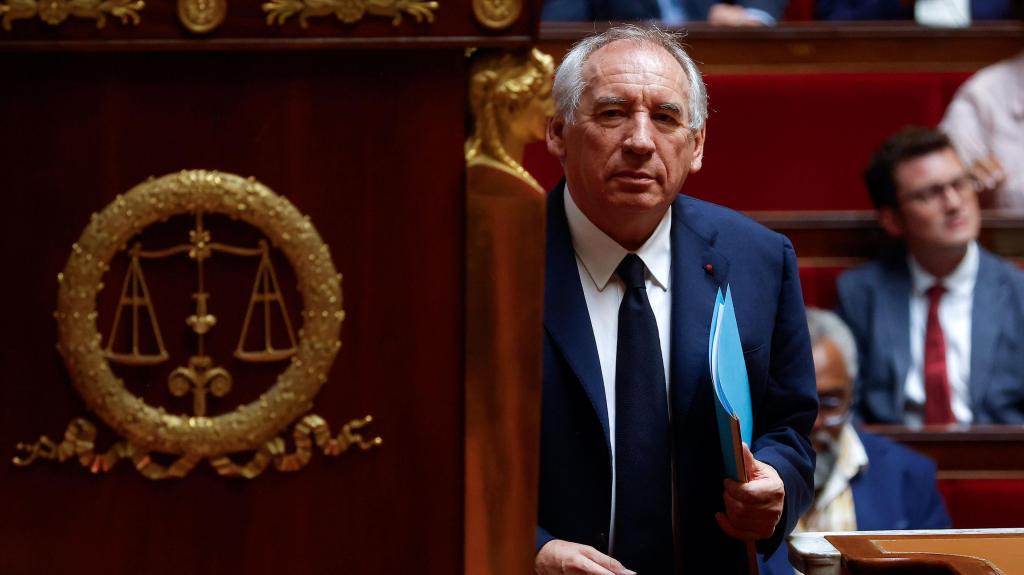
    In yet another one of their political shake-ups, France’s Prime Minister François Bayrou was ousted after a resounding no-confidence vote in parliament on September 8th. This latest collapse marks the fourth prime minister to fall in less than two years, plunging President Emmanuel Macron’s administration, and the country at large, into a deepening fiscal and political spiral.

    At the center of the crisis was Bayrou’s proposed €43.8 billion budget reduction plan for 2026, an ambitious effort aimed at curbing France’s ballooning deficit. Instead of support, the proposal triggered fierce opposition across the political spectrum—from Jean-Luc Mélenchon’s hard-left France Unbowed to Marine Le Pen’s far-right National Rally (RN), and even segments of the center-right Republicans who had previously contributed ministers to Bayrou’s cabinet. With just 194 votes out of 558, Bayrou’s plan was decisively rejected and he handed in his formal resignation today, at the Élysée Palace.

    President Macron has announced that he will yet again choose a new Prime Minister in the coming days. 

    Fiscal Discipline Meets Political Resistance

    Bayrou, a centrist and long-time fiscal conservative, had staked his credibility on delivering one of the most aggressive budget tightening plans in recent French history. The €44 billion in proposed cuts aimed to reduce France’s budget deficit, projected to hit 5.4% of GDP this year, to a more manageable level. He warned that the growing debt load, which now stands at €3.3 trillion (114% of GDP), posed a threat to France’s economic future.

    The political opposition chose not to heed his warnings and instead criticized the austerity plan as either regressive or insufficiently targeted, with Socialist leader Boris Vallaud accusing Bayrou of parroting Macron’s business-friendly policies. Meanwhile, Marine Le Pen described the moment as the inevitable reckoning for decades of mismanagement.

    The immediate fallout has rattled financial markets already wary of France’s trajectory. French 10-year bond yields, once seen as a relatively safe eurozone investment, have surged to levels close to those of Italy, long viewed as the bloc’s most vulnerable large economy. Remarkably, France now pays more to borrow long-term than Greece and Spain—two of the hardest-hit countries during the eurozone’s 2011 debt crisis.

    France’s Political Deadlock and Dismay

    The government’s collapse reflects a broader paralysis within French politics. The current National Assembly is sharply fragmented, and no party commands a clear majority. Macron, having suffered a setback after his last attempt to dissolve parliament in June 2024, appears reluctant to call snap elections again. Polls show that his centrist alliance would be pushed into third place, behind both the RN and the left-wing coalition.

    A recent survey revealed that 63% of French voters would support a return to the polls. But the outcome would likely cement the same impasse: Le Pen’s RN and its allies are projected to lead with 33% in the first round, the left with 25%, and Macron’s centrist bloc a distant third at 15%.

    Ironically, Le Pen herself is currently barred from standing in any election due to a campaign finance embezzlement conviction earlier this year, pending appeal in 2026. Should elections be called, her 29-year-old protégé, Jordan Bardella, is expected to lead the RN into the race for prime minister.

    Uncertainty Breeds Economic Stagnation

    For French households and businesses, the political dysfunction is already having tangible effects. Consumption and investment decisions are stalling as economic actors await clarity.

    This is especially dangerous for France, where slow growth is incompatible with high debt levels. Unlike Greece or Italy who run budget surpluses before interest payments, France has no such cushion. And with German investments poised to surge after years of fiscal restraint, France risks being left behind in the EU’s post-pandemic economic revitalization.

    As one Oxford Economics analyst put it: “France is becoming the new ugly duckling of Europe.” Once a dependable pillar of eurozone financial stability, it is now edging into the uncertain role previously assigned to Italy.

    President Macron faces a difficult choice. He can either call fresh elections and risk further losses, or appoint a new prime minister capable of crafting a budget palatable to an antagonistic parliament. Whispers in political circles suggest a possible pact with the Socialists, who hold 66 seats in the lower house. But their price is steep: a proposed wealth tax of at least 2% annually on fortunes exceeding €100 million.

    Macron is reportedly opposed to such a move, fearing it would undermine France’s image as a business-friendly nation. He had previously positioned France as a startup haven and reduced corporate taxes to attract foreign investment. Reversing that stance would be a dramatic shift, and one his political base may not forgive.

    Still, Macron’s room for maneuver is vanishing. Without a stable government in place, the country will struggle to meet its October 7 deadline to draft the 2026 budget. Finance Minister Eric Lombard has already signaled that any future proposal will be less ambitious than Bayrou’s failed blueprint.

    Protest Movements Loom

    What could escalate France’s crisis from dysfunction to outright chaos? One possibility is a market revolt, as borrowing costs rise and ratings agencies weigh downgrades. Another is mass civil unrest, a familiar feature of France’s volatile political climate.

    Already, two major protest dates have been announced. On September 10, a social media-led campaign titled “Bloquons tout” (“Let’s block everything”) aims to paralyze the country. More traditional labor strikes, coordinated by major unions, are planned for September 18. Although these actions may fizzle without a clear target, France’s history suggests that loosely organized protests can morph into powerful movements, as seen with the Yellow Vests in 2018.

    Analysis:

    France is entering dangerous territory. For decades, its large economy, sophisticated institutions, and central position in the EU granted it a level of financial insulation. That cushion is now eroding quickly. As its political institutions and social services falter along with soaring debt, the country is losing the market’s trust and its own sense of direction to get out of this hole.

    The fall of François Bayrou is just another symptom of a deeper malaise. Macron’s promise to modernize France is colliding with the limits of its institutions, the fatigue of its electorate, and the unforgiving arithmetic of public debt. Without unifying leadership and a credible fiscal plan, the country risks spiraling further into stagnation and potential bankruptcy .

    The clock is ticking on President Macron and whoever is selected to be the next Prime Minister, and inherit one of the most difficult and ill-fated jobs in all of Europe.