12/22 – International Relations News & Diplomacy Analysis
As 2025 draws to a close, the European Union finds itself confronting simultaneous pressures from a more transactional United States, an increasingly assertive China, and a war in Ukraine that has entered a more precarious financial and military phase. With American funding sharply reduced following Donald Trump’s return to the White House, Ukraine has been forced to rely more heavily on Europe to sustain its war effort against Russia. That shift has exposed unresolved questions about Europe’s willingness, unified cohesion, and capacity to act as a strategic power.
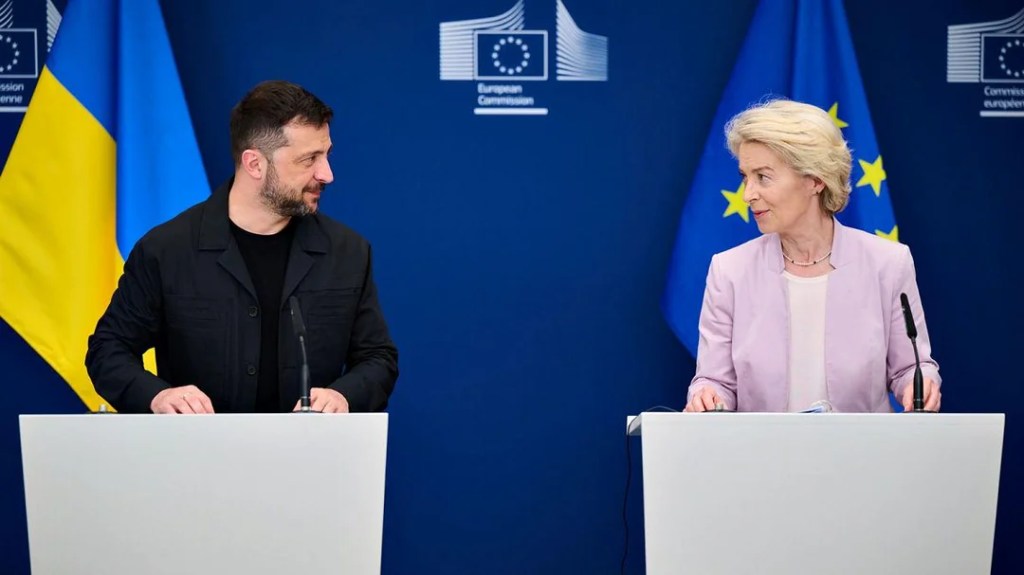
Those tensions came to a head at a pivotal European Union summit in Brussels earlier this week, where leaders debated how to secure long-term financing for Ukraine. In recent months, the European Commission, led by Ursula von der Leyen, had advanced an ambitious proposal to use frozen Russian sovereign assets held in the EU as collateral for a large-scale loan to Kyiv. The plan envisioned mobilizing up to €210 billion in frozen Russian funds to underpin a €90 billion financing package that would keep Ukraine solvent and militarily supplied for more than a year. Beyond its financial utility, the proposal was designed to send a strategic signal to Moscow that Europe could sustain Ukraine’s resistance well into the future while imposing direct costs on the aggressor.
The initiative quickly gained backing from several of Europe’s most powerful political figures, most notably Friedrich Merz, who argued that using Russian assets would strengthen Ukraine while sparing European taxpayers. However, despite weeks of negotiations, the proposal collapsed during the summit after overnight talks failed to resolve legal and political obstacles. The most significant resistance came from Belgium, where roughly €185 billion of the frozen Russian assets are held. Belgian Prime Minister Bart De Wever warned that repurposing those assets could expose his country to international legal challenges and targeted retaliation from Moscow.
European leaders attempted to offer Belgium guarantees against potential financial and political consequences, but these assurances raised further legal questions that proved impossible to resolve under EU rules requiring unanimity. As discussions dragged into the early morning hours, it became clear that the reparations-based loan could not command the consensus needed to proceed.
Faced with the risk that Ukraine could run out of money as early as April of next year, EU leaders pivoted to a fallback option. At approximately 3 a.m. in Brussels, the bloc agreed to jointly borrow €90 billion on international markets and lend it to Ukraine over the next two years. The borrowing will be backed by the EU budget, meaning that member states will ultimately bear the financial responsibility. Hungary, Slovakia, and the Czech Republic will not participate in the scheme, effectively turning the effort into a coalition of 24 willing countries rather than a fully unified bloc.
For Ukraine, the immediate effect is largely the same. The funds are expected to prevent a fiscal collapse in Kyiv and to sustain basic state functions and defense spending through 2026. Ukraine’s leadership publicly welcomed the decision, emphasizing that the agreement significantly bolsters the country’s resilience at a moment of utmost need. International observers also noted that failure to reach any deal would have sent a damaging signal to both Kyiv and Moscow.
Nevertheless, the compromise carries important consequences. By abandoning the use of Russian assets, Europe has placed the financial burden squarely on its own taxpayers while forgoing an opportunity to directly weaken Russia’s financial position. Russian President Vladimir Putin responded by asserting that the EU stepped back because using the assets would have undermined trust in the euro zone and triggered serious repercussions, particularly among countries that store reserves in Europe.
The funding debate unfolded against a broader backdrop of strategic anxiety. The EU has long depended on American military power for its security and relied heavily on U.S. financial support for Ukraine since Russia’s full-scale invasion in 2022. With that support now reduced, Europe has increased its contributions but not enough to fully fill the gap. According to the International Monetary Fund, Ukraine faces a projected financing shortfall of roughly €72 billion next year without sustained external aid.
Data from the Kiel Institute highlight the uneven nature of Europe’s support. While countries such as Germany, France, and the United Kingdom have increased absolute contributions, Nordic states continue to lead when measured as a share of GDP. By contrast, Italy and Spain have contributed relatively little. Public opinion trends also raise concerns as polling in major European economies suggests growing fatigue among voters, with significant portions of the electorate in Germany and France favoring cuts to financial assistance for Ukraine.
The divisions visible in the Ukraine funding debate were mirrored elsewhere at the summit. EU leaders also failed to finalize a long-delayed free trade agreement with Mercosur, the South American bloc that includes Brazil and Argentina. Supporters of the deal argue that it would help diversify Europe’s trade relationships away from China and the United States. Negotiations have stretched on for 25 years now, and Commission officials had hoped to finalize the agreement before the end of the year.
Opposition from European farming interests and political hesitation once again derailed progress. French President Emmanuel Macron pressed for additional protections for European farmers, while Italian Prime Minister Giorgia Meloni withheld support at a critical moment. As a result, von der Leyen canceled a planned trip to Brazil to sign the agreement. Brazilian President Luiz Inácio Lula da Silva had previously warned that continued delays could cause his government to abandon the deal altogether, though last-minute assurances from Rome appear to have temporarily eased tensions.
By the summit’s conclusion, European Council President António Costa declared that the EU had delivered on its commitments to Ukraine. German Chancellor Merz echoed that sentiment, arguing that Europe had demonstrated its sovereignty and resolve. Ukrainian President Volodymyr Zelensky, who traveled to Brussels to advocate for the reparations loan, returned home with substantial financial support but without the stronger political message he had hoped Europe would send to Russia.
Analysis:
The EU’s decision to jointly borrow €90 billion for Ukraine averts an immediate financial crisis in Kyiv and prevents a potentially catastrophic failure of European credibility. In practical terms, the outcome may be close to the best Ukraine could reasonably expect heading into 2026, especially given declining American involvement and growing political fatigue within Europe itself.
Yet the manner in which the decision was reached underscores deeper structural weaknesses. Months of public disagreement, followed by a last-minute retreat from an ambitious plan endorsed by the bloc’s most powerful leaders, reinforces perceptions of European indecision and dividedness. The inability to leverage frozen Russian assets, despite their clear strategic value, reflects legal caution, political fragmentation, and an enduring reluctance to fully confront the consequences of great-power conflict.
Europe can plausibly claim that it has stepped into a void left by the United States. It cannot yet claim that it has seized the geopolitical moment. By choosing the path of least resistance, the EU secured short-term stability over a large reshape of the strategic balance. As the war drags on and financial needs resurface within a year, the same questions about burden-sharing, political will, and strategic purpose are likely to return with even greater urgency.
 IRinFive