IRinFive

Tag: economics

  • Bulgaria Prepares to Enter the Eurozone as Public Opinion Remains Deeply Divided

    1/1 – International Economic Developments

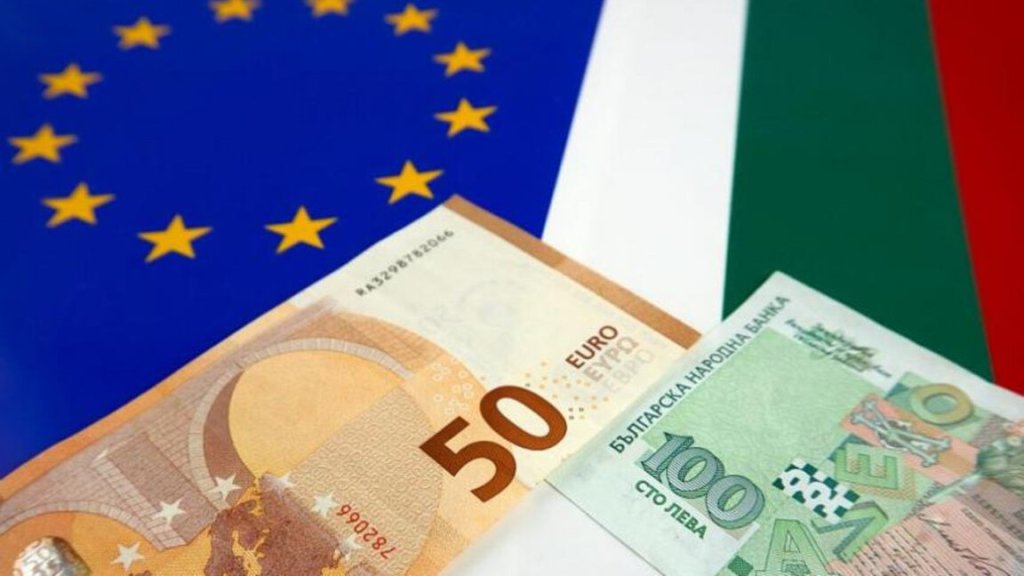
    As of today, January 1, 2026, Bulgaria is scheduled to adopt the euro, marking one of the most significant economic transitions since the country joined the European Union in 2007. The move will make Bulgaria the 21st member of the eurozone and extend the single currency to the Black Sea region for the first time. While the decision has been years in the making and follows formal approval from EU institutions in 2025, the final approach to accession has exposed sharp divisions within Bulgarian society, shaped by economic anxiety, political instability, and questions of national identity.

    Path to Eurozone Entry

    Bulgaria’s ambition to adopt the euro dates back to its EU accession, but progress was repeatedly delayed by political turbulence and concerns over corruption, governance, and macroeconomic readiness. Under the Maastricht Treaty, candidate countries must meet strict criteria on inflation, budget deficits, debt levels, exchange rate stability, and long-term interest rates. Bulgaria formally met these benchmarks in early 2025, prompting a sequence of approvals by the European Commission, the European Council, the EU’s finance ministers, and the European Parliament.

    The transition builds on decades of monetary alignment with Europe. Since 1997, Bulgaria has operated under a currency board regime, initially pegging the lev to the German mark and later to the euro. The fixed conversion rate of 1 euro to 1.95583 lev has been in place since Bulgaria entered the Exchange Rate Mechanism in 2020, and in practice even earlier. As a result, analysts note that monetary policy has already been heavily influenced by the eurozone, even without formal membership.

    From January, Bulgaria will gain a seat on the Governing Council of the European Central Bank, giving it a voice in setting interest rates and monetary policy across the currency union.

    In practical terms, the transition is designed to be gradual. Prices will continue to be displayed in both leva and euros until August 2026, and the lev will remain legal tender until the end of January. For six months, citizens will be able to exchange cash freely at banks, post offices, and the Bulgarian National Bank.

    Many businesses, particularly those engaged in cross-border trade, have already adapted. Dual pricing has become widespread, and companies that regularly deal in euros expect fewer administrative burdens once conversion costs and invoice adjustments are eliminated. More than 80 percent of Bulgarian imports have long been denominated in euros, limiting direct exposure to currency volatility.

    For consumers, especially those who travel or work elsewhere in the EU, the euro promises convenience. Supporters argue that everyday transactions abroad will become simpler, banking fees lower, and financial integration deeper.

    A Society Split on the Eve of Change

    Despite these technical preparations, public sentiment remains divided. Polling conducted in mid-2025 showed Bulgarians almost evenly split between support and opposition. Opposition is more prevalent among older citizens and residents of smaller towns and rural areas, while support is stronger among younger, urban, and business-oriented groups.

    The most common fear is inflation. Many Bulgarians point to recent price increases in food, housing, and utilities and worry that the currency switch will accelerate the erosion of purchasing power. Memories of the economic turmoil of the 1990s remain vivid, particularly among pensioners who fear that fixed incomes will not keep pace with rising costs.

    Concerns also extend beyond economics. For some, the lev represents sovereignty and continuity. Bulgarian banknotes feature prominent cultural figures, and the disappearance of the national currency is seen by critics as a symbolic loss of identity. Others worry that euro adoption will further centralize decision-making in Brussels, reducing national control over fiscal policy.

    Political distrust amplifies these anxieties. Bulgaria has held seven parliamentary elections in four years, and the most recent governing coalition collapsed in December following protests over proposed tax increases. The instability has fueled skepticism about the state’s ability to manage the transition fairly and transparently.

    President Rumen Radev called for a referendum on euro adoption earlier this year, arguing that the country was not ready. Parliament rejected the proposal, deepening political polarization. Opposition parties, including nationalist and pro-Russian groups, frame the euro as a threat to financial sovereignty and portray the move as imposed rather than chosen.

    Competing Narratives

    Supporters counter that Bulgaria effectively committed to the euro when it joined the EU and that postponing accession would only prolong uncertainty. They argue that the lev has long been tied to the euro in any case, limiting the risks often cited by critics. Economists point to studies suggesting that inflation linked directly to euro adoption is typically modest and short-lived.

    During a visit to Sofia, ECB President Christine Lagarde described the expected inflation impact as limited and emphasized benefits such as smoother trade, lower borrowing costs, and greater financial stability. Analysts at the Brussels-based think tank Bruegel estimate that price effects in similar transitions have generally remained below 1 percent.

    Yet opposition narratives resonate strongly amid broader European trends. Euroscepticism has risen across the continent, alongside the growth of far-right parties. In Bulgaria, these currents intersect with long-standing concerns about inequality, regional disparities, and elite accountability.

    Analysis:

    Bulgaria’s euro adoption illustrates a widening gap between institutional readiness and public confidence. From a macroeconomic and legal perspective, the transition is the culmination of a process that began decades ago. The currency board, euro-denominated trade, and ECB oversight have already constrained Bulgaria’s monetary autonomy.

    Socially and politically, however, the change arrives at a fragile moment. Inflation fears are not abstract in a country where wages remain the lowest in the EU and recent price shocks are still being felt. Nostalgia for the lev reflects not only cultural attachment but also a desire for stability in uncertain times. Distrust of political elites further undermines confidence that safeguards against price manipulation or speculative behavior will be enforced.

    The prevailing sentiment, while mixed, tilts toward caution rather than celebration. Even among those who accept euro adoption as inevitable, unease remains about its short-term impact on living standards and social cohesion. Supporters tend to frame the euro as a long-term structural benefit, while opponents focus on immediate costs and perceived losses of control.

    As Bulgaria enters the eurozone, the success of the transition will depend less on meeting formal criteria, which it already has, and more on whether institutions can maintain price stability, communicate clearly, and rebuild public trust. The euro’s arrival is not only a monetary change but a test of whether economic integration can proceed without deepening social divides in one of Europe’s most politically sensitive moments.

  • China’s Trade Surplus Surpasses $1 Trillion Despite Global Trade Tensions

    12/11 – International Trade News & Analysis

    China has reached a historic milestone in global commerce, recording an annual goods trade surplus that has exceeded 1 trillion dollars for the first time ever. Data released by China’s General Administration of Customs shows that in the first eleven months of the year, exports climbed to 3.4 trillion dollars, representing a rise of 5.4 percent from the same period a year earlier. Imports over that interval fell by 0.6 percent to 2.3 trillion dollars. The resulting surplus of 1.08 trillion dollars places China at an unprecedented level of export dominance and highlights how deeply embedded the country has become within global supply chains.

    This latest figure reflects more than forty years of economic transformation. China began its ascent in the late 1970s by shifting away from a primarily agrarian structure and adopting policies that encouraged industrial production. Through the 1980s and 1990s, the country became known for low-cost goods such as wigs, sneakers and holiday decorations, attracting foreign buyers with low prices and dependable manufacturing. What initially appeared to be a comparative advantage in low-value items soon evolved into a broad manufacturing ecosystem capable of climbing into high-value sectors.

    By the early 2000s, China had already become a central manufacturing hub, but recent years have seen the country achieve significant breakthroughs in advanced industries. Chinese companies have taken leading positions in solar technology, electric vehicles and key segments of the semiconductor supply chain. These developments have deepened China’s influence over global production networks while heightening concerns in capitals around the world.

    Last year, China posted what was then a record trade surplus of 993 billion dollars. Surpassing the 1 trillion dollar mark now casts the ongoing imbalances into sharper relief. Analysts note that the size of this gap means it is not only the United States or Europe that must account for the imbalance, but the entire global trading system.

    Rerouted Trade Amid U.S. Tariffs

    The milestone comes despite the policy actions of the United States, which remains the world’s largest economy and China’s largest individual trading partner. After returning to office in January, President Trump sharply increased tariffs on a wide range of Chinese goods. At one stage the tariffs briefly exceeded one hundred percent. Even after reductions, average tariffs remain elevated at approximately thirty seven percent.

    Rather than significantly reducing Chinese export volumes, the tariffs have primarily altered their destination. Chinese shipments to the United States dropped notably, with November exports to the U.S. falling twenty nine percent from a year earlier. Yet overall Chinese exports rose by nearly six percent over the same month, supported by strong growth to other regions. Exports to the European Union increased fifteen percent, shipments to Southeast Asia rose 8.2 percent and exports to Africa and Latin America grew by 26 percent and 7.1 percent respectively. Economists point out that this adjustment reveals a global reallocation of trade routes, which has helped offset the pressures created by U.S. tariffs.

    Despite geopolitical tensions and the stated intentions of many governments to reduce reliance on Chinese supply chains, forecasts indicate that China’s export performance is unlikely to weaken significantly. Analysts at Morgan Stanley expect the country’s share of global goods exports to rise from roughly 15 percent today to 16.5 percent by 2030. They attribute this trajectory to China’s strength in advanced manufacturing and its ability to scale production rapidly in sectors experiencing rising global demand.

    Europe Signals Growing Unease

    This momentum has sparked concern in various regions, particularly in Europe. Long-standing European strengths in automobiles, technology and high-end consumer goods face competitive pressure from Chinese producers who combine cost advantages with increasingly sophisticated engineering.

    These anxieties were highlighted during French President Emmanuel Macron’s recent comments following his visit to Beijing. While the trip had otherwise cordial elements, Macron cautioned that Europe could be compelled to act if China did not take steps to reduce its overwhelming export position. He indicated that Europe might consider measures similar to those adopted by the United States, including potential tariffs on Chinese goods.

    French officials have voiced particular frustration regarding the depreciation of the yuan, which has weakened by about ten percent against the euro this year, making Chinese goods more competitive in European markets. Concerns over currency dynamics have added to broader apprehensions about the long-term vitality of Europe’s industrial base.

    The unease is not limited to France. Across the European Union, and increasingly in parts of Southeast Asia, Latin America and the Middle East, governments are initiating more investigations and trade defense actions targeting Chinese products. 

    Some analysts argue that the trade imbalance is even more striking when measured in physical terms rather than monetary value. While China accounts for roughly 15 percent of global export value, the country’s share of global containerized exports is estimated to reach nearly 37 percent. For every container that Europe sends to China, approximately four return filled with Chinese goods. This imbalance in volume points to the structural depth of China’s manufacturing reach.

    Observers warn that if current trends continue, global economic pressures could rise significantly. There is growing speculation that trade relationships may reach a breaking point if adjustments are not made, particularly as more countries reassess the risks associated with concentrated supply chains.

    Analysis:

    China’s unprecedented 1 trillion dollar trade surplus reflects both the remarkable success of its long-term economic strategy and the mounting strain that this success places on global commercial relationships. The surplus demonstrates China’s unmatched ability to produce and export at scale, yet it also exposes the limits of a world economy that must absorb ever-growing volumes of Chinese goods.

    The international response is hardening. The United States has already taken aggressive action through tariffs. Europe, typically more hesitant to confront China directly, is now increasingly vocal about the need to defend its own industrial model. Emerging economies, once primarily focused on the benefits of inexpensive Chinese imports, are also beginning to question the sustainability of the current arrangement. 

    Although China’s export strength is likely to continue, it now faces a global environment less willing to tolerate large and persistent trade imbalances. The country’s ability to adapt, along with the willingness of other nations to recalibrate industrial and trade policies, will shape the next decade of global economic competition.

    For now, the world is watching a powerful manufacturing nation press further ahead. The milestone of a 1 trillion dollar surplus may be a symbol not only of China’s capacity to dominate global trade, but also of the geopolitical frictions that such dominance inevitably creates.