IRinFive

Tag: china

  • China’s Trade Surplus Surpasses $1 Trillion Despite Global Trade Tensions

    12/11 – International Trade News & Analysis

    China has reached a historic milestone in global commerce, recording an annual goods trade surplus that has exceeded 1 trillion dollars for the first time ever. Data released by China’s General Administration of Customs shows that in the first eleven months of the year, exports climbed to 3.4 trillion dollars, representing a rise of 5.4 percent from the same period a year earlier. Imports over that interval fell by 0.6 percent to 2.3 trillion dollars. The resulting surplus of 1.08 trillion dollars places China at an unprecedented level of export dominance and highlights how deeply embedded the country has become within global supply chains.

    This latest figure reflects more than forty years of economic transformation. China began its ascent in the late 1970s by shifting away from a primarily agrarian structure and adopting policies that encouraged industrial production. Through the 1980s and 1990s, the country became known for low-cost goods such as wigs, sneakers and holiday decorations, attracting foreign buyers with low prices and dependable manufacturing. What initially appeared to be a comparative advantage in low-value items soon evolved into a broad manufacturing ecosystem capable of climbing into high-value sectors.

    By the early 2000s, China had already become a central manufacturing hub, but recent years have seen the country achieve significant breakthroughs in advanced industries. Chinese companies have taken leading positions in solar technology, electric vehicles and key segments of the semiconductor supply chain. These developments have deepened China’s influence over global production networks while heightening concerns in capitals around the world.

    Last year, China posted what was then a record trade surplus of 993 billion dollars. Surpassing the 1 trillion dollar mark now casts the ongoing imbalances into sharper relief. Analysts note that the size of this gap means it is not only the United States or Europe that must account for the imbalance, but the entire global trading system.

    Rerouted Trade Amid U.S. Tariffs

    The milestone comes despite the policy actions of the United States, which remains the world’s largest economy and China’s largest individual trading partner. After returning to office in January, President Trump sharply increased tariffs on a wide range of Chinese goods. At one stage the tariffs briefly exceeded one hundred percent. Even after reductions, average tariffs remain elevated at approximately thirty seven percent.

    Rather than significantly reducing Chinese export volumes, the tariffs have primarily altered their destination. Chinese shipments to the United States dropped notably, with November exports to the U.S. falling twenty nine percent from a year earlier. Yet overall Chinese exports rose by nearly six percent over the same month, supported by strong growth to other regions. Exports to the European Union increased fifteen percent, shipments to Southeast Asia rose 8.2 percent and exports to Africa and Latin America grew by 26 percent and 7.1 percent respectively. Economists point out that this adjustment reveals a global reallocation of trade routes, which has helped offset the pressures created by U.S. tariffs.

    Despite geopolitical tensions and the stated intentions of many governments to reduce reliance on Chinese supply chains, forecasts indicate that China’s export performance is unlikely to weaken significantly. Analysts at Morgan Stanley expect the country’s share of global goods exports to rise from roughly 15 percent today to 16.5 percent by 2030. They attribute this trajectory to China’s strength in advanced manufacturing and its ability to scale production rapidly in sectors experiencing rising global demand.

    Europe Signals Growing Unease

    This momentum has sparked concern in various regions, particularly in Europe. Long-standing European strengths in automobiles, technology and high-end consumer goods face competitive pressure from Chinese producers who combine cost advantages with increasingly sophisticated engineering.

    These anxieties were highlighted during French President Emmanuel Macron’s recent comments following his visit to Beijing. While the trip had otherwise cordial elements, Macron cautioned that Europe could be compelled to act if China did not take steps to reduce its overwhelming export position. He indicated that Europe might consider measures similar to those adopted by the United States, including potential tariffs on Chinese goods.

    French officials have voiced particular frustration regarding the depreciation of the yuan, which has weakened by about ten percent against the euro this year, making Chinese goods more competitive in European markets. Concerns over currency dynamics have added to broader apprehensions about the long-term vitality of Europe’s industrial base.

    The unease is not limited to France. Across the European Union, and increasingly in parts of Southeast Asia, Latin America and the Middle East, governments are initiating more investigations and trade defense actions targeting Chinese products. 

    Some analysts argue that the trade imbalance is even more striking when measured in physical terms rather than monetary value. While China accounts for roughly 15 percent of global export value, the country’s share of global containerized exports is estimated to reach nearly 37 percent. For every container that Europe sends to China, approximately four return filled with Chinese goods. This imbalance in volume points to the structural depth of China’s manufacturing reach.

    Observers warn that if current trends continue, global economic pressures could rise significantly. There is growing speculation that trade relationships may reach a breaking point if adjustments are not made, particularly as more countries reassess the risks associated with concentrated supply chains.

    Analysis:

    China’s unprecedented 1 trillion dollar trade surplus reflects both the remarkable success of its long-term economic strategy and the mounting strain that this success places on global commercial relationships. The surplus demonstrates China’s unmatched ability to produce and export at scale, yet it also exposes the limits of a world economy that must absorb ever-growing volumes of Chinese goods.

    The international response is hardening. The United States has already taken aggressive action through tariffs. Europe, typically more hesitant to confront China directly, is now increasingly vocal about the need to defend its own industrial model. Emerging economies, once primarily focused on the benefits of inexpensive Chinese imports, are also beginning to question the sustainability of the current arrangement. 

    Although China’s export strength is likely to continue, it now faces a global environment less willing to tolerate large and persistent trade imbalances. The country’s ability to adapt, along with the willingness of other nations to recalibrate industrial and trade policies, will shape the next decade of global economic competition.

    For now, the world is watching a powerful manufacturing nation press further ahead. The milestone of a 1 trillion dollar surplus may be a symbol not only of China’s capacity to dominate global trade, but also of the geopolitical frictions that such dominance inevitably creates. 
  • China’s Critical Minerals Clampdown Exposes Fragile U.S. Defense Industry Supply Chains

    8/4 – Geoeconomics & National Security Analysis

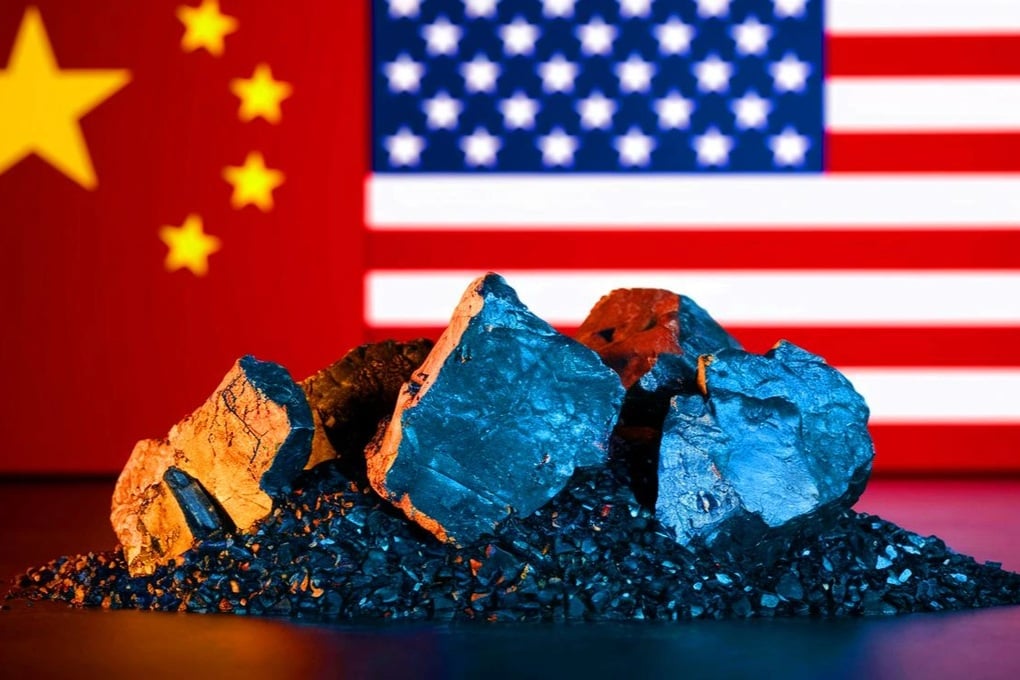
    The People’s Republic of China has recently moved to tighten its grip on global supplies of critical minerals, leaving Western defense manufacturers scrambling to keep production on track. From drone parts to jet fighter engines, the U.S. military’s reliance on rare earths and specialty metals—of which China dominates both production and processing—has become a clear strategic vulnerability. The unfolding mineral squeeze is reshaping industrial priorities and escalating tensions at a time when Washington is already engaged in complex trade negotiations with Beijing. 

    Earlier this year, amid deteriorating trade relations, China implemented stricter export controls on rare earth elements and other vital materials, significantly slowing shipments to Western defense contractors. Although some flows resumed in June after the Trump administration made concessions in ongoing trade talks, Beijing has maintained tight restrictions on any minerals deemed connected to military applications. As a result, U.S. manufacturers have been forced to delay orders, seek alternative suppliers, and pay staggering premiums for materials that were previously routine components of their supply chains.

    One U.S. drone motor manufacturer supplying the Pentagon reported up to two-month delivery delays after being cut off from Chinese magnet shipments. Prices for essential rare earths like samarium—used in high-temperature jet engine magnets—have skyrocketed, in one case being offered at sixty times normal rates. These bottlenecks are already inflating the cost of defense systems and worrying contractors across the board.

    Supply Chain Choke Points and Chinese Leverage

    China currently supplies approximately 90% of the world’s rare earth elements, and its dominance extends to germanium, gallium, and antimony—minerals essential for night vision, bullet hardening, guidance systems, and infrared targeting. In December, Beijing further escalated its restrictions, banning the sale of germanium and gallium to U.S. buyers, compounding the supply crunch..

    Complicating matters is China’s requirement that companies requesting export licenses provide detailed documentation—including product designs, manufacturing photos, and buyer lists—to prove that rare earths won’t be used in military applications. Western firms have refused to comply, resulting in stalled shipments and even formal denials. 

    Meanwhile, smaller defense startups—often lacking the capital and supply-chain expertise to stockpile or diversify—are especially vulnerable. Analysts estimate that over 80,000 parts used in U.S. weapons systems depend on critical minerals now under Chinese control.

    U.S. Counter-Strategy

    In response to growing concerns, the Pentagon has begun bolstering domestic production of rare earths and other niche materials. Among the most significant moves was the U.S. government’s $400 million investment in MP Materials, a key rare-earth mining and magnet manufacturing firm operating in North America. The aim is to ramp up local production capacity for use in F-35 jets and cruise missiles, reducing exposure to foreign supply chain disruptions.

    Other government efforts include a $14 million grant to a Canadian company for germanium production and the creation of the Critical Minerals Forum, an initiative to support projects that enhance mineral supply resilience across the U.S. and its allies. The Defense Department is also requiring all contractors to eliminate Chinese-sourced rare-earth magnets from their products by 2027—a move that has accelerated industry-wide investment in alternative sources.

    Major defense firms that previously relied on subcontractors to source these materials are now taking direct control, recognizing that unless they intervene, they may not secure the inputs required to meet Pentagon demands. 

    China’s intent to enforce its mineral embargo is more than rhetorical. Earlier this year, the United States Antimony Corporation tried shipping 55 metric tons of Australian-mined antimony to its smelter in Mexico via a Chinese port—something it had done without issue in the past. But in April, Chinese customs detained the shipment in Ningbo for three months, eventually releasing it only on the condition that it be rerouted to Australia instead of the U.S. When it arrived, the company found its security seals broken and had to assess whether the material had been tampered with.

    This incident highlights how China is actively weaponizing its mineral control as part of a broader strategy to limit U.S. military and technological capabilities. Industry insiders say shipping and logistics firms were stunned by the seizure, calling it unprecedented.

    Analysis: 

    Beijing’s grip on critical minerals has exposed a critical strategic vulnerability for the U.S. defense sector. The events of 2025 have made clear that decades of outsourcing, coupled with global dependence on Chinese processing capabilities, have created fragile supply chains unfit for prolonged geopolitical tension.

    Although the Biden and Trump administrations have each attempted to address the issue with various incentives and trade agreements, the speed at which China can choke access to vital materials has far outpaced Western efforts to reduce reliance. For all the investments being poured into domestic mining and magnet production, the reality is that scaling such capacity will take years, not months.

    The current mineral bottleneck is more than an economic challenge—it is a matter of national security. The Pentagon’s reliance on Chinese minerals for everything from satellite components to drone motors highlights the urgent need for diversification and long-term planning. As some industry executives note, unless the defense sector builds and secures its own upstream resources, it risks a future in which adversaries can halt production lines with a single regulatory notice.

    Beijing appears determined to use this leverage strategically. Its insistence on vetting end-users and blocking defense applications signals an understanding of the stakes involved. The rare earths dispute is no longer just about trade—it’s about who controls the material backbone of modern warfare.

    As tensions between the U.S. and China persist, the minerals conflict could well be a precursor to broader decoupling in critical technologies. For now, Western defense firms find themselves in a predicament to either build a resilient supply chain or continue to live at the mercy of a geopolitical rival.

  • Trump’s Unveils New Set of Global Tariffs on U.S. Trading Partners

    8/1 – Global Trade News & Analysis

    President Donald Trump has once again signed an executive order imposing renewing and sweeping new tariffs on imports from over 60 countries. Framed as “reciprocal” and justified under emergency powers, the tariffs range from 10% to as high as 50%, signaling an aggressive escalation in Trump’s ongoing campaign to reorient the U.S. global trade system in favor of American producers.

    This latest round of tariffs comes after months of threats, deadline extensions, and last-minute negotiations. Although some countries managed to negotiate reduced rates or temporary reprieves, other key allies and major economies will now face significant financial pressure. 

    The New Tariff Map

    Canada: One of the harshest targets of the new tariffs, Canada will face a 35% levy on numerous exports starting August 1. The increase includes a fentanyl-linked penalty—up from a previous 25%—citing Ottawa’s alleged failure to cooperate on curbing narcotics inflows. The announcement came with no exemptions, prompting strong reactions from Canadian leaders, who promised to protect domestic industries and expand export options elsewhere.

    Brazil: Subject to a 50% tariff, Brazil’s treatment is tied not just to trade imbalances but also to personal political tensions—specifically the prosecution of former president and Trumpian ally Jair Bolsonaro. However, the order carved out exclusions for aircraft, energy products, and orange juice. These partial exemptions likely reflect the intertwined supply chains that connect Brazil and the U.S. in key sectors.

    India and Taiwan: India faces a 25% tariff amid deadlocked negotiations over access to its agricultural sector. Tensions have also been heightened by Trump’s criticism of India’s ongoing oil trade with Russia. Taiwan, on the other hand, has been hit with a 20% tariff, though its leadership framed the move as temporary and expressed hope for a revised deal in the near future. 

    South Korea and Japan: Goods from these longstanding U.S. allies will be subject to a 15% tariff. While this is substantially lower than the top-tier rates, it nonetheless triggered market panic, especially in South Korea, where their stock index fell nearly 4%. These countries had managed to reach partial agreements in the lead-up to the tariff rollout, but pressure on their export economies remains significant.

    Switzerland: Facing a 39% levy, Switzerland is among the most heavily targeted economies. Officials in Bern have said they will seek a negotiated resolution, with officials notably shocked by the announcement and highlighting the severity of the impact on their export-dependent economy.

    China: Though not among the hardest hit in this latest round, China continues to face high tariffs—currently set at 30%—following a series of tit-for-tat escalations earlier this year that saw rates peak at 145%. With a deadline of August 12 looming for a comprehensive trade agreement, both Washington and Beijing are scrambling to avert another escalation.

    European Union: Exports from the EU will face a 15% baseline tariff, matching the rate agreed upon in the bloc’s recent controversial trade deal with Trump. Though viewed as a compromise, it still places European exporters at a disadvantage compared to post-Brexit Britain, which secured a more favorable 10% rate. 

    United Kingdom: Benefiting from faster and more direct negotiations, British exports will be hit with only a 10% tariff. This outcome has led to renewed introspection in Brussels, where many officials now question whether Brexit offered unexpected leverage in trade talks with Washington.

    The announcement of the tariffs triggered an immediate downturn in global markets. Wall Street benchmarks fell sharply, while Asia-Pacific markets recorded their worst week in months. The U.S. dollar weakened against key currencies such as the yen, reflecting investor anxiety over the long-term implications of a potential global trade war.

    Compounding fears was new economic data from the U.S. Commerce Department showing rising prices across several consumer categories. Durable goods and home furnishings saw their steepest increases since early 2022, while clothing, footwear, and recreational products also recorded significant price hikes. These figures suggest the tariffs are already pushing up consumer costs, adding inflationary pressure to an already sensitive economy.

    Legal Powers and Pushback

    Trump’s justification for the sweeping tariffs rests on the 1977 International Emergency Economic Powers Act (IEEPA), which he invoked to declare an emergency over the U.S. trade deficit. The same legal mechanism has been used to support tariffs linked to the U.S. fentanyl crisis. This use of emergency powers is under legal scrutiny, with federal appeals court judges raising questions about its validity.

    Critics argue that the emergency justification circumvents the usual checks and balances that regulate trade policy. Yet for now, the administration continues to use the IEEPA to underpin its aggressive international posture, with further trade actions reportedly in the works.

    While some countries avoided worst-case outcomes by negotiating compromises, others were blindsided by sudden rate hikes or ran out of time. Among those spared, Mexico received a 90-day extension on increased tariffs after a direct call between Trump and President Claudia Sheinbaum. As a result, 85% of Mexico’s exports that comply with the USMCA will temporarily avoid the 30% hike. However, Mexican steel, aluminum, and autos still face steep duties, and a 25% fentanyl-related tariff remains in place. 

    Analysis: 

    Trump’s tariff offensive is a bold gamble aimed at reasserting U.S. dominance in global trade. By hitting both adversaries and allies with steep levies, the administration is making clear that even longstanding partnerships offer no protection from its new economic doctrine. Supporters argue that the moves are long overdue, designed to correct trade deficits and revive American industry. Trump himself has framed the policy as a defense of national economic security.

    Nevertheless the collateral damage will be hard to ignore. Supply chains are being disrupted, consumer prices are rising, and international goodwill is fraying. For many countries, even those spared the harshest penalties, the message is clear: cooperate quickly or face the consequences.

    The contrasting treatment of the U.K. and the EU also reveals a political undercurrent. Trump’s affinity for bilateral over multilateral negotiations—and his apparent personal preference for leaders like Britain’s Keir Starmer who will appease him directly—suggests that smaller, more flexible partners may fare better in future dealings with Washington. 

    We are still early into Trump’s presidency however, and must keep in mind that the longer-term costs of this strategy are difficult to ignore. The tariffs may achieve temporary leverage, but they risk alienating global partners, inviting retaliation, and undermining the multilateral trade order that has long underpinned the global economy which the United States has steered. 

    In reshaping the global trade landscape through tariffs, Trump has effectively bet that America’s economic gravity can force the rest of the world to fall in line. Whether that bet pays off—or backfires—will depend not just on market data, but on the durability of international trust and the resilience of U.S. alliances, as well as developments we are yet to see in domestic U.S. industry this administration is hedging so heavily on reviving. 

  • Initial Takeaways from the US-EU Trade Deal

    7/31 – International Trade Analysis

    The United States and the European Union recently announced a broad transatlantic trade deal that will significantly reshape economic relations between the two powers. While touted as a stabilizing move lowering threatened tariffs in uncertain global times, the deal has triggered widespread backlash in Europe for its lopsided structure, with critics accusing Brussels of capitulating to U.S. demands.

    The agreement, struck between President Donald Trump and European Commission President Ursula von der Leyen, imposes a baseline 15% tariff on most EU exports to the U.S. while committing the EU to vast purchases of American energy and increased investment in U.S. industries. By contrast, post-Brexit Britain secured a more favorable deal earlier this year, locking in a 10% tariff rate on most goods, fueling critical questions about the EU’s negotiating leverage.

    Effect on Sectors

    A key feature of the deal is a massive EU commitment to purchase $750 billion worth of U.S. energy over three years—including oil, liquefied natural gas, and nuclear fuel—equivalent to roughly $250 billion annually. Von der Leyen framed the move as a step toward ending EU reliance on Russian imports. However, energy experts have criticized the agreement as unrealistic, noting that it would require a tripling of current U.S. energy exports to Europe and a near-complete redirection of U.S. global energy flows.

    Critics also argue that Brussels lacks the mechanisms to enforce these purchases, which would need to be carried out by private firms rather than governments. This has led many analysts to conclude that the commitment is more symbolic than practical and difficult to implement at scale.

    Meanwhile, European industrial sectors are bracing for impact. German carmakers, long the backbone of Europe’s export economy, stand to lose heavily despite some concessions. While the EU will eliminate its 10% car import tariff, U.S. tariffs will remain at 15%, and vehicles produced in Mexico will continue facing a 25% duty. Industry experts warn of job losses as companies shift production to the U.S. to avoid tariffs—potentially costing up to 70,000 European jobs, according to Germany’s Center Automotive Research.

    One area of mutual relief is the aviation sector. The deal establishes zero-for-zero tariffs on all aircraft and component parts, providing breathing room for both Boeing and Airbus amid a fragile post-pandemic recovery. With aviation supply chains deeply globalized, avoiding renewed tariffs was crucial. The arrangement also prevents financial pressure on U.S. airlines operating Airbus fleets and transatlantic leasing firms.

    However, ambiguity remains in the pharmaceutical sector. While von der Leyen suggested the deal included drugs, Trump denied this. Brussels later clarified that tariffs remain at zero for now but could rise to 15% following the outcome of a U.S. national security investigation. Generics manufacturers, operating on thin profit margins, have raised alarms about the potential costs, while countries like Ireland—heavily invested in pharmaceuticals—are calling the agreement a surrender.

    In semiconductors, the EU secured a win by exempting chip equipment from tariffs. Dutch firm ASML, a global leader in chip printing machines, saw its stock rise following the announcement. Yet von der Leyen’s pledge to continue purchasing U.S. AI chips signals continued EU dependence on American tech, frustrating advocates of European technological sovereignty.

    While some sectors saw concessions, the EU successfully defended its digital regulatory autonomy. Despite pressure from U.S. tech giants and Trump’s administration, Brussels refused to make commitments on data governance or digital taxation. The Digital Markets Act (DMA) and Digital Services Act remain untouched, preserving the EU’s ability to regulate Big Tech.

    On defense, Trump claimed the deal included large-scale EU purchases of U.S. military equipment. But EU officials dismissed this, noting that arms procurement wasn’t negotiated and remains a national competence. Still, rising European defense budgets—especially post-NATO summit—may indirectly benefit American arms manufacturers.

    Agriculture remains a murky area. While von der Leyen hinted at zero-for-zero tariffs for select “non-sensitive” U.S. agricultural products like nuts, pet food, and bison, core exports such as beef will continue to face tariffs. Talks remain ongoing about where key goods like wine and spirits will fall under the final framework.

    Steel and aluminum discussions remain unresolved, with current 50% tariffs still in place. Trump and EU officials hinted at reviving quota systems reminiscent of past U.S. administrations. The two sides also agreed to explore a “ring fence” to block steel imports from China and other countries accused of unfair production practices. If successful, such a strategy could hit Chinese exporters hardest, while preserving limited access for European specialty products.

    Reactions Across Europe

    The agreement has ignited political discord and rebuke across the EU. French President Emmanuel Macron has been particularly vocal, arguing that the bloc failed to assert its economic strength and should have responded to Trump’s threats with countermeasures. He praised negotiators for salvaging short-term stability but lamented what he called a strategic failure. French Prime Minister François Bayrou echoed this, labeling the agreement a “dark day” and accusing the Commission of caving in to the U.S..

    France has since urged Brussels to invoke the EU’s Anti-Coercion Instrument to retaliate against the U.S. if necessary, especially to protect sectors like wine and spirits. Behind closed doors, French officials have criticized von der Leyen for lacking an aggressive posture during negotiations.

    By contrast, German Chancellor Friedrich Merz and Italian Prime Minister Giorgia Meloni welcomed the deal as necessary to protect their manufacturing-based, export-heavy economies from a potentially disastrous trade war. Merz had pushed for a quick resolution, dismissing notions that a better deal could have been achieved.

    U.K. Outpaces EU in Trade Diplomacy

    Adding insult to injury, Britain’s separate agreement with the U.S.—reached earlier this year—secured a lower tariff rate of 10% and fewer financial obligations. Prime Minister Keir Starmer’s government attributed the better terms to the U.K.’s independence from EU trade policy and its fast-track approach to talks with Trump. European commentators noted that Trump has consistently shown more enthusiasm for bilateral deals with Britain than for engaging with the EU bureaucracy.

    French and EU officials had previously dismissed the UK–U.S. trade pact as superficial. But in light of the Brussels deal, some are now rethinking that stance. Officials like the Swedish Trade Minister admitted that von der Leyen’s deal might have been the best outcome available, though he emphasized it brought little economic benefit for Europe.

    Analysis:

    Though branded as a stabilizing agreement, the Trump–von der Leyen trade pact has exposed deep rifts within the EU and revealed the bloc’s limited leverage in direct negotiations with Washington. From industrial losses and energy commitments to political backlash and diplomatic embarrassment, the EU emerges from this deal with bruised credibility and few tangible wins.

    While the avoidance of an all-out trade war offers some necessary relief, the cost of that peace has been steep: massive energy payments, job losses in key sectors, technological dependence, and the perception of European submission to U.S. economic power. In contrast, the UK—long maligned for Brexit—has seemingly reaped a short-term reward simply by operating outside of the EU’s constraints.

    This comes as yet another signal of the European Union’s pitfalls in trying to operate as a unified, open-market bloc in our new era of contentious geopolitical trade. The juxtaposition of this submissive trade agreement compared to the UK’s quicker and more beneficial bilateral terms offers yet another indicative win for the euro-skeptic members across Europe who believe the EU is not built to last. 

    The broader concern is that this trade episode reflects a weakening of Europe’s global standing, not just in its dealings with Washington but in its ability to chart an independent economic future. If the EU wishes to reclaim its influence, future negotiations must be conducted with greater unity, strategy, and resolve—less about appeasement and more about asserting the value of its enormous single market.

  • Trump and EU Clinch High-Stakes Trade Agreement

    7/27 – International Trade News & Diplomacy Analysis

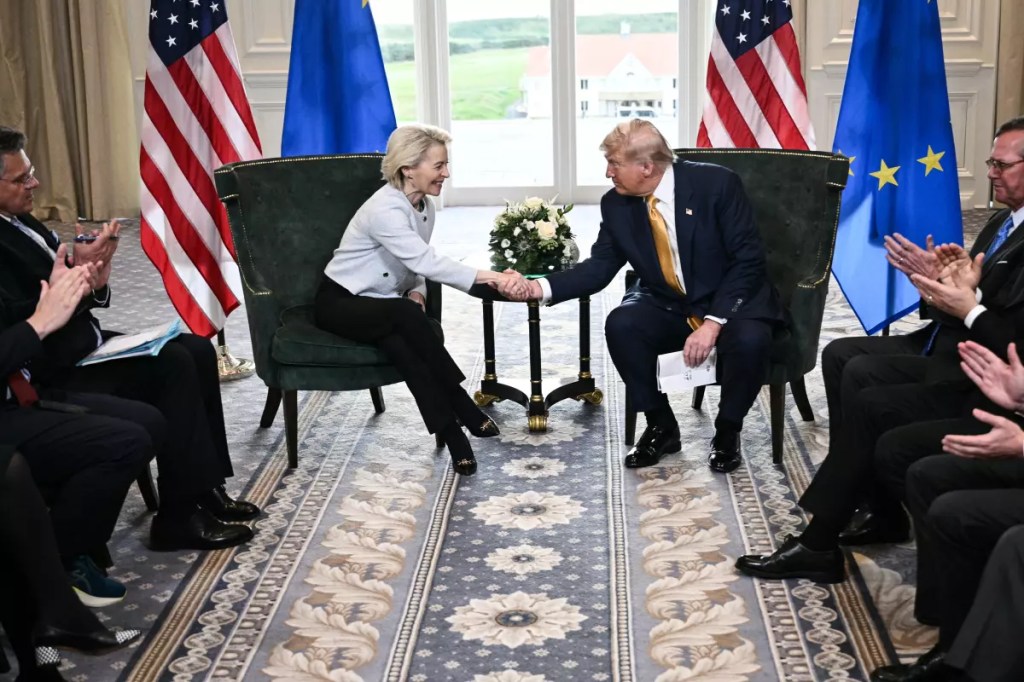
    After months of building tensions and simmering negotiations, the United States and the European Union have secured a sweeping trade agreement that averts what could have become a damaging economic rift between the two largest trading blocs in the world. The accord, announced Sunday by President Donald Trump and European Commission President Ursula von der Leyen following last-minute talks in Scotland, sets a baseline 15% tariff on EU goods entering the U.S. and commits the EU to massive American energy and military purchases, totaling more than $1.3 trillion over the coming years.

    This deal comes just days before the Trump administration’s hard deadline to impose 30% tariffs on all European imports—an ultimatum that had galvanized negotiations and sent shockwaves through both political and corporate circles in Europe. With the EU’s transatlantic exports valued at over €530 billion annually, and the U.S. trade deficit with Europe hitting $235 billion in 2024, the stakes could hardly have been higher.

    Terms of the Agreement

    Under the new deal, EU goods will face a 15% import tariff—a compromise figure well above Europe’s desired “zero-for-zero” model, yet notably lower than Trump’s threatened 30%. The agreement also includes a commitment from the EU to purchase $750 billion worth of U.S. energy exports, including LNG and oil, as well as a $600 billion pledge toward military procurement and U.S.-based investment. Notably, steel and aluminum products will remain under a 50% tariff, while pharmaceuticals are excluded from the framework.

    Automobiles, a politically sensitive export for Germany and other EU nations, will also be taxed at 15%, the same level applied to other goods under the agreement. In contrast to the EU’s earlier negotiating position, which called for tariff reductions or eliminations in strategic sectors, the deal essentially locks in a new minimum tariff structure for future U.S. trade relationships.

    Diplomatic Context

    The agreement followed a tense standoff. Just two weeks prior, EU trade negotiators had activated a €93 billion retaliatory tariff package targeting a wide swath of U.S. exports—from Kentucky bourbon and soybeans to Boeing aircraft. Those countermeasures, due to take effect on August 7, are now ultimately suspended following the breakthrough in Scotland.

    Von der Leyen, who flew to Scotland at short notice to meet Trump at his Turnberry resort, described the process as “heavy lifting.” She was accompanied by EU Trade Commissioner Maroš Šefčovič and top Brussels negotiators. Trump was joined by Commerce Secretary Howard Lutnick, who made clear that the U.S. would move ahead with tariffs unless an agreement was finalized. Their one-hour meeting marked the first high-level trade engagement between the U.S. and EU since Trump imposed global steel tariffs in April.

    The deal represents a rare moment of convergence between the Trump administration’s “America First” trade strategy and the EU’s desire to preserve economic stability and avoid an all-out trade war. Yet European officials were quick to temper any celebration, pointing out that the agreement had only narrowly avoided a more severe rupture.

    European industry groups, particularly in the auto, luxury, and cosmetics sectors, expressed relief but also frustration at what many see as an asymmetric outcome. German carmakers like BMW and Mercedes, which manufacture vehicles in the U.S. for re-export to Europe, feared they would be penalized on both sides of the Atlantic. Meanwhile, executives in sectors such as French beauty products and aerospace warned that further tariffs could devastate transatlantic supply chains.

    France had pushed for a tougher stance, with President Emmanuel Macron publicly supporting the EU’s readiness to impose countermeasures. Germany, meanwhile, favored a more conciliatory approach to protect its export-heavy economy. In the end, the EU managed to present a relatively united front, but not without internal friction.

    No joint statement or finalized deal text has yet been published. A formal briefing of EU ambassadors was scheduled for Monday in Brussels. Some negotiators emphasized the need to codify the verbal commitments swiftly, particularly given Trump’s past record of abrupt reversals.

    Analysis:

    While the deal brings temporary relief to rattled markets and companies on both sides of the Atlantic, analysts warn that it falls short of solving the deeper trade imbalances that have fueled tensions. For Trump, the agreement represents another notch in a growing portfolio of 15%-based trade pacts—similar frameworks were recently announced with Japan, Vietnam, Indonesia, and the Philippines. The UK, still finalizing its own agreement, has negotiated a more favorable 10% tariff baseline.

    Yet the transatlantic deal is by far the largest and most symbolically significant. It underscores Trump’s willingness to use hard deadlines and tariff threats to force concessions, and it signals the emergence of a new global trade architecture shaped not by multilateral norms but by bilateral brinkmanship.

    From the European side, the deal may have averted economic catastrophe, but at the cost of conceding to a more protectionist global order. The EU’s once-lofty ambitions of championing rules-based trade now face the harsh reality of adapting to a world led by transactional geopolitics.

    Ultimately as of now, the Trump-von der Leyen agreement is more of a detente than a diplomatic triumph. It stabilizes their immediate diplomatic and economic relationship, but with trust frayed and tariff structures now codified, the era of transatlantic trade friction is far from over.