IRinFive

Tag: britain

  • Is MAGA Sentiment Sweeping Through the UK? 

    9/21 – International Political Analysis

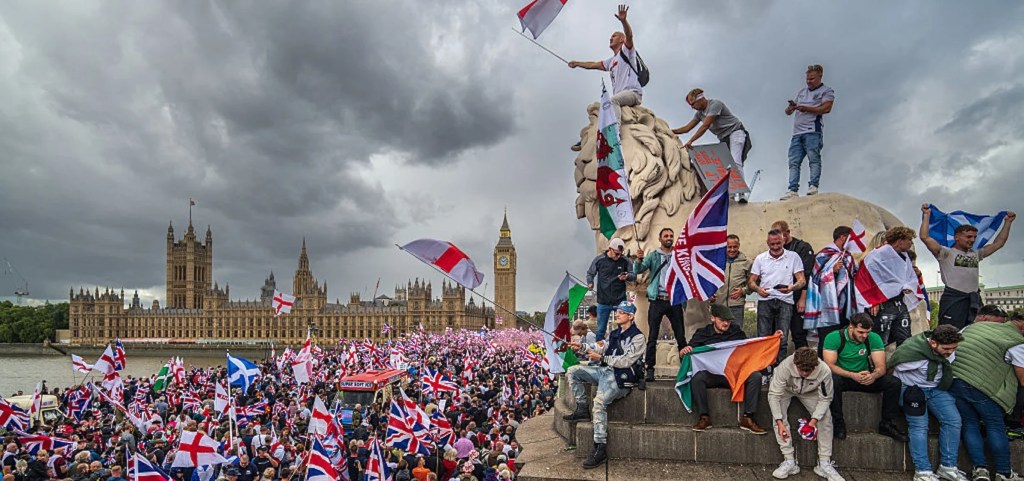
    On September 13, around 150,000 or more demonstrators gathered in the heart of the British capital under the banner of “Unite the Kingdom,” a sprawling protest movement that is captivating right-wing rhetoric, populist anger, and deep national disillusionment. The rally, fronted by Tommy Robinson, a figure long associated with Britain’s radical right, attracted a far broader crowd than expected. Among those who turned out were not only the typical fringe elements of the populus but also ordinary citizens who seem to have had enough with the shortcomings of their government.

    Although marked by some violence that left 26 police officers injured, the demonstration felt more like a populist carnival than a fringe political stunt. American-style slogans and paraphernalia, MAGA caps, “Make Britain Great Again” hats, and images of the late U.S. right-wing influencer Charlie Kirk were seen on display. Religious fervor also pulsed through the event, with evangelical preachers leading thousands in public prayer and crosses being propelled to the top of statues. The rally reached its dramatic climax outside Whitehall, where Elon Musk appeared on towering screens, delivering a provocative message warning the crowd that they must either fight back or perish. 

    This mass mobilization came just days before former U.S. President Donald Trump was scheduled to arrive in the United Kingdom for a second state visit—an unprecedented honor initiated by King Charles and coordinated by Prime Minister Keir Starmer’s government. The visit, replete with royal pageantry and formal diplomacy, is part of a broader strategy by Britain’s leadership to strategically maintain favorable ties with Trump, despite vast ideological divides and domestic opposition to his persona.

    Caught Between Tradition and Turmoil

    Trump’s arrival was reportedly greeted with ceremonial grandeur: carriage rides, military salutes, and a state banquet at Windsor Castle. He reportedly held bilateral talks with Prime Minister Starmer at Chequers, the official countryside retreat. The UK government discussed fresh U.S. investment deals in nuclear energy and artificial intelligence, looking to be presented as wins for working-class Britons.

    Trump’s visit was carefully insulated from the British public. This is likely purposeful and for many reasons as according to polling by YouGov, only 16 percent of Britons hold a favorable opinion of Trump, making him even less popular than Israeli Prime Minister Benjamin Netanyahu. But while Trump himself is disliked, many of the populist grievances that elevated him in the U.S. are taking firm root in Britain.

    The Rise of British MAGA

    The rally on September 13 may have appeared chaotic, but its underlying message was clear: a rejection of the political establishment, fueled by anger over immigration, free speech restrictions, cultural liberalism, and a perceived loss of national identity. Protesters rallied against government efforts on climate policy, demanded mass deportations of undocumented migrants, condemned diversity and inclusion programs, and warned of alleged indoctrination in schools.

    Many in attendance wore slogans and gear bearing the acronym MEGA—Make England Great Again—or its local variant, MBGA—Make Britain Great Again. Even if Donald Trump’s name was not chanted, the ideological qualities of his political movement were unmistakable.

    The British Election Study (BES) recently analyzed public opinion using 34 key indicators aligned with Trump-era MAGA themes: opposition to immigration and foreign aid, skepticism about transgender rights, hostility to government censorship, and support for unrestricted speech. While the percentage of Britons who share MAGA-like views dipped in 2020, that number has since rebounded. As of 2025, 36 percent of the population aligns with most of these positions, up from just over 25 percent five years ago.

    More concerning for Britain’s ruling class is the fact that this group is now significantly more politically engaged and disillusioned. In 2015, such voters gave the Conservative government a net approval rating of +21. In 2025, the same demographic rates the Labour government at –44. Distrust in the state is now endemic, as only 12 percent of Britons say they trust the government to act in the national interest, while nearly half say they “almost never” trust it, (an all-time high).

    Cultural Flashpoints and Political Opportunity

    This populist momentum has materialized in ways that closely mirror America’s own internal conflicts. There is growing outrage over what many perceive as restrictions on free speech, including the controversial categorization of “non-crime hate incidents.” According to the BES, a vast 70 percent of Britons believe people are too easily offended. Meanwhile, environmental skepticism has doubled since 2019, with many now arguing that the UK spends too much on climate change.

    Support for extreme immigration policies is also rising. Reform UK, the successor to the Brexit-era UKIP, has proposed deporting 600,000 migrants within five years. Nearly half the country supports the idea in principle. Reform UK, under the leadership of Nigel Farage, appears to be strategically positioning itself to appeal to MAGA-curious voters while maintaining distance from the extremism associated with figures like Tommy Robinson.

    The absence of official Reform UK representatives at Saturday’s protest was notable. Farage has consistently disavowed Robinson’s more provocative tactics and associations. Yet many attendees expressed that Farage remained the only politician they would consider voting for. The rally’s crowd was made up of a cross-section of society: Christian nationalists, disaffected Brexit campaigners, angry homeowners, and first-time protesters all joined together by a sense of national decline and political betrayal. “Keir Starmer’s a wanker” emerged as the unofficial chant of the day.

    Analysis:

    The effectiveness of the “Unite the Kingdom” rally lay partly in its intentional vagueness. The name allowed disparate movements and grievances to coalesce under a single banner of anti-establishment discontent. This tactic mirrors Trump’s own approach, building a coalition not through coherent policy but through shared resentment and spectacle.

    While the UK still lacks the deep political polarization and embedded conspiracy culture of the United States, that gap is narrowing. The conditions are fertile with economic stagnation, housing unaffordability, strained public services, and a growing cultural divide over immigration and identity have created a population increasingly ready to revolt against the mainstream elites.

    There is likely a deeper undercurrent sweeping through British politics and the Trumpification of Britain is no longer theoretical. It is manifesting in rallies, opinion polls, and a fundamental loss of public trust in democratic institutions. 

    What makes this movement potent is not just its ideology, but its adaptability. Just like in the United States, British populism now speaks the language of decline, nostalgia, and urgency. For some, these beliefs are rooted in genuine economic frustration or cultural alienation. For others, they reflect a deeper fear that traditional British identity is slipping away.

    But unlike in America, where Trump has built an entire party apparatus around himself, Britain’s populist right remains fractured. Farage has yet to fully capitalize on the anger Robinson has mobilized. Whether he does so—or whether a new figure emerges to channel this energy—may determine the outcome of the next election.

    For now, the message from the streets of London is clear. The British public may still dislike Donald Trump, but many have already embraced his worldview and are ready to fight in Britain’s own culture war. 
  • Britain & France Threaten to Recognize Palestinian Statehood as Israel Starves Out Gaza

    7/30 – International News & Geopolitical Analysis

    International diplomatic pressure continues to mount on Israel as Britain has joined France in pledging to recognize a Palestinian state by September unless Israel moves swiftly to halt its military campaign in Gaza, end the humanitarian catastrophe by allowing more aid in, and commit to a long-term peace process. This coordinated Western shift marks a significant climax thus far in the nearly two-year-long war between Israel and Hamas, which has resulted in the deaths of over 60,000 Palestinians and a widespread humanitarian crisis that seems to be entering its darkest phase yet.

    Humanitarian Catastrophe and Famine

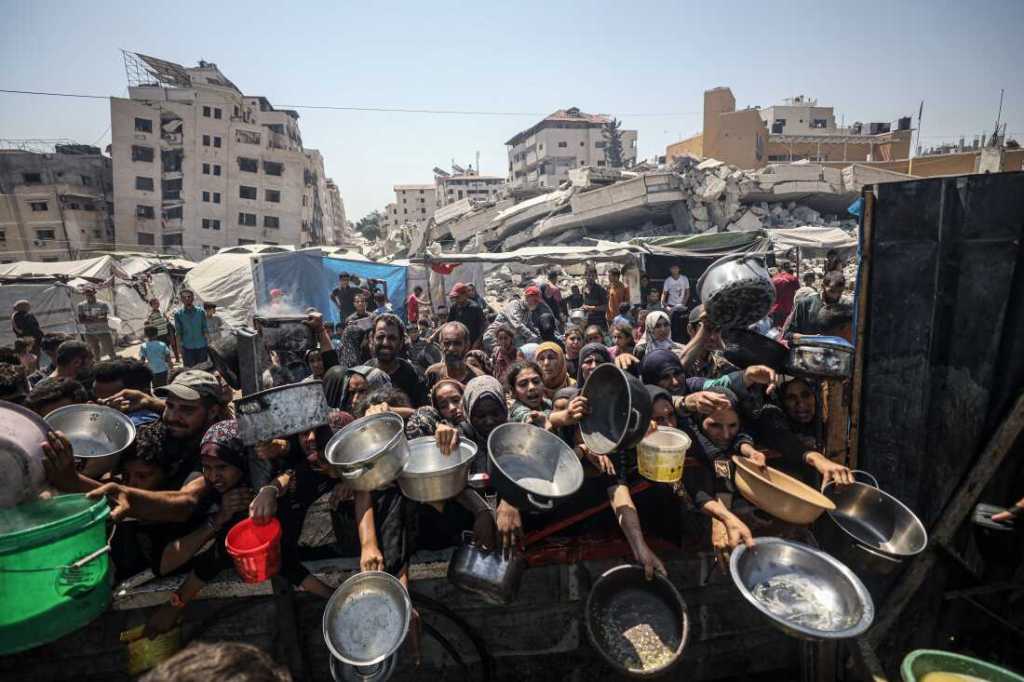
    The Gaza conflict, ignited in October 2023 by a Hamas attack on southern Israel that left 1,200 Israelis dead and 251 taken hostage, has since spiraled into a grinding and devastating war. Israel’s military response has razed much of the densely populated Gaza Strip and displaced more than two million people. According to the Integrated Food Security Phase Classification (IPC), Gaza has now crossed famine thresholds, with mounting hunger-related deaths and widespread malnutrition. At least 147 people—88 of them children—have died from starvation, with the toll rising daily. Gaza’s health authorities and global humanitarian agencies are sounding alarms that the situation is at risk of spiraling into a full-blown famine.

    Images of starving children have shocked the global community. The United Nations World Food Programme has reported significant difficulties in delivering aid, citing restricted access and lack of coordination from Israeli authorities. Despite Israel claiming that 5,000 aid trucks have entered Gaza in the past two months, major relief organizations argue that food and medical supplies remain severely insufficient and purposefully locked out of the enclave. Meanwhile, Israel maintains that it is not pursuing a policy of starvation, accusing Hamas of stealing aid—a claim the UN has not substantiated and is yet to be proven as fact.

    Britain and France Shift Policy Response

    UK Prime Minister Keir Starmer announced that Britain would formally recognize a Palestinian state at the United Nations General Assembly in September unless Israel implements several key measures: an immediate ceasefire, an end to plans for annexation of the West Bank, and a credible commitment to a two-state solution. France issued a similar pledge last week, prompting sharp rebukes from Israeli officials.

    Israel’s government reacted with outrage. Prime Minister Benjamin Netanyahu denounced the British proposal as a reward for terrorism, asserting that recognizing Palestinian statehood at this stage would only embolden Hamas. Trump, despite claiming neutrality during recent talks with Starmer, later told reporters that he did not believe Hamas should be rewarded with statehood recognition.

    Palestinian Authority President Mahmoud Abbas welcomed Starmer’s announcement as a bold and principled move, while UN officials noted that recognition alone would not alleviate the immediate suffering in Gaza nor produce any tangible progress toward peace at this stage.

    Stalled Ceasefire Talks and Mounting Civilian Deaths

    Despite intermittent talks led by Egyptian, Qatari, and U.S. mediators, efforts to broker a ceasefire have repeatedly broken down. The latest breakdown occurred after both Israel and the United States withdrew from negotiations, accusing Hamas of lacking coordination and refusing to compromise. Hamas demanded guarantees for a permanent ceasefire, Israeli military withdrawal, and an influx of humanitarian aid.

    Meanwhile, deadly airstrikes and ground assaults continue. Overnight Israeli attacks on the Nuseirat refugee camp killed at least 30 people, including women and children, while others were gunned down along the Salahudeen Road as they waited for humanitarian aid. Gaza’s death toll has now surpassed 60,000, making this the deadliest conflict involving Israel since the country’s founding in 1948.

    Observers argue that Netanyahu has little interest in ending the war or pursuing a two-state solution. His administration has increasingly moved toward permanent occupation of Palestinian territories, advancing controversial plans such as relocating Gaza’s population into a “humanitarian city” in Rafah, a move many critics label as forced displacement or ethnic cleansing.

    Defense Minister Israel Katz has spearheaded policies aimed at resettling Palestinians outside Gaza and intensifying military operations in the West Bank, under the justification of preempting future threats. Domestically, Netanyahu’s right-wing Likud party has doubled down on its rejection of Palestinian sovereignty. The Knesset— Israel’s parliament— recently passed laws opposing the creation of a Palestinian state and supporting the annexation of the West Bank. Netanyahu himself boasts of having spent decades blocking Palestinian statehood and has consistently framed such recognition as an existential threat to Israel.

    U.S. Caught Between Allies and Interests

    While European nations begin to pivot toward recognizing Palestinian statehood, the United States—Israel’s closest and seemingly unwavering ally—remains reluctant to follow suit. President Trump, though having occasionally clashed with Netanyahu on broader Middle East strategy, has mostly remained aligned and compliant with Israeli policy throughout the war.

    Since the start of the conflict, the U.S. has provided Israel with at least $22.7 billion in military and humanitarian aid, vastly exceeding the $3.8 billion annual cap set under the existing U.S.–Israel memorandum of understanding. Additionally, Washington has invested substantial diplomatic capital in shielding Israel from sanctions and stalling international recognition of Palestinian statehood.

    But this strategy is becoming increasingly untenable. Arab states, which were once open to normalizing relations with Israel, are now demanding Israel commit to recognizing Palestinian sovereignty before proceeding. Trump’s broader ambitions of brokering a regional peace agreement, including normalization with Saudi Arabia, will permanently hang in the balance the longer his administration allows Israel a free pass to do whatever they want in Gaza.

    Analysis:

    The convergence of mass civilian suffering in Gaza, mounting evidence of famine, and Israel’s hardline stance has created a geopolitical crisis that is forcing Western governments to reassess their Middle East policies. For the United States, continued unconditional support for Israel risks isolating Washington from its Arab partners and European allies alike. It also threatens to undermine Trump’s larger strategic efforts to reposition U.S. military engagement in the region.

    Trump’s previous willingness to engage diplomatically with actors like the Houthis in Yemen and Syria’s new leadership suggests he is capable of shifting away from traditional alliances. If he hopes to achieve a lasting regional peace and rehabilitate America’s role as a mediator, he will need to leverage his popularity in Israel to pressure Netanyahu into concessions that include winding down his ethnic cleansing and leveling of the Gaza Strip and eventual recognition of a sovereign Palestinian state.

    Netanyahu’s political future and ideological commitments are deeply tied to rejecting Palestinian statehood however, and he is unlikely to change course without substantial external pressure from only the United States, as they are the only guarantor of Israel’s actions that have enough sway to make him act. But if the U.S. fails to influence Israel decisively, the risk is not just the continued suffering of Palestinians but the long-term erosion of America’s credibility and influence in the region, as well as a worldwide questioning of the hegemon’s longtime commitment to humanitarian values.

    The growing international pressure for humanitarian intervention and a halt to Israel’s actions in Gaza, symbolized by threatened statehood recognition from Britain and France, signals a tectonic shift in the global consensus. While symbolic in nature, these actions reflect a broader abhorration with Israeli leadership current military doctrine and a desire to re-center the peace process on humanitarian foundations.

    Whether this results in meaningful change will depend largely on the United States. For now, the war rages on, the humanitarian crisis deepens, and the vision of a two-state solution remains distant as most of the territory that would make up this so-called Palestinian state lies in rubble.