IRinFive

Author: IRinFive

  • Geostrategic Daily Brief

    December 12, 2024 – Top Geopolitical Events & Security Developments

    NATO’s European Members Discuss 3% Target for Defense Spending

    NATO’s European members are discussing a significant increase in defense spending, aiming to raise the target from the current 2% of GDP to as high as 3% by 2030. This potential shift reflects growing recognition of the need for stronger military investment to support Ukraine, deter Russia, and prepare for a possible return of Donald Trump as U.S. president, whose previous demands for greater European defense contributions reshaped NATO dynamics. Though 23 of NATO’s 32 members are set to meet the existing 2% target this year, major economies like Italy and Spain remain below the benchmark, highlighting challenges for less-prepared nations.

    Preliminary talks, which began at a NATO foreign ministers’ meeting, suggest a phased approach—reaching 2.5% in the short term before progressing to 3% by the end of the decade. NATO Secretary-General Mark Rutte has advocated for increased spending, emphasizing the insufficiency of the current 2% threshold to meet modern defense demands. Countries like Germany, now meeting the 2% target for the first time, and the UK, which spends slightly above it, face difficulties balancing military modernization and fiscal constraints. Italy and Spain, with some of the lowest spending levels in the alliance, are under additional pressure to adapt to these proposed increases.

    The push for higher spending is partially driven by Trump’s previous insistence on more equitable defense burdens and the increased urgency following Russia’s invasion of Ukraine. Some officials see the proposed 3% target as a strategic signal to Washington, ensuring continued U.S. commitment to NATO. However, the ambitious goal faces resistance due to budgetary challenges across member states, with some leaders warning that meeting the new thresholds will require hard choices and significant fiscal sacrifices.

    Forging Firepower: Ukraine’s Race to Build Its Own Arsenal

    Facing potential reductions in Western military aid, Ukraine is intensifying efforts to develop its domestic arms industry, particularly long-range weapons. Central to these efforts is the expansion of its drone program, which has successfully targeted key Russian facilities hundreds of miles away. Recently, Ukraine introduced advanced drones like the “Peklo” and announced plans to produce over 30,000 next-generation “DeepStrike” drones in the coming year. Despite these innovations, analysts emphasize that drones alone are insufficient to address battlefield challenges. Ukrainian officials are also ramping up production of cruise and ballistic missiles, with successful tests and limited use of systems like the Neptune missile and Palianytsia hybrid drone-missile.

    Ukraine’s push for self-reliance stems from uncertainty about continued Western support, especially amid changing political dynamics in the United States and Europe. Western governments, while initially hesitant, have started funding Ukraine’s arms production. Notable contributions include $800 million from the U.S. for long-range drone development and $440 million from the EU. Despite this, Ukraine’s arms industry still lags far behind its needs, producing roughly $4 billion in weapons annually compared to tens of billions in Western aid.

    While progress in domestic arms production bolsters Ukraine’s capabilities, it does not resolve larger battlefield issues, including manpower shortages and command inefficiencies. Analysts argue that, while the development of advanced weapons is vital for Ukraine’s long-term security, addressing immediate challenges on the frontlines will require more comprehensive solutions and continued international support.

    Europe Urged to Lead Ukraine Cease-Fire Efforts

    President-elect Donald Trump’s initial approach to addressing the ongoing war in Ukraine is becoming clearer, emphasizing a larger European role in supporting Kyiv. In a Dec. 7 meeting in Paris with Ukrainian President Volodymyr Zelensky and French President Emmanuel Macron, Trump advocated for European nations to oversee a cease-fire and supply arms to Ukraine, while ruling out U.S. troop involvement. Trump also suggested leveraging tariffs on China to pressure Beijing into mediating with Russia. Despite these discussions, Trump has yet to commit to a specific strategy, and key decisions are pending the appointment of his national-security team and further consultations with allies and possibly Russian President Vladimir Putin.

    European leaders are divided on the idea of deploying troops to Ukraine as part of a peacekeeping force, with Macron reviving the proposal after earlier dismissals. However, significant hurdles remain, including concerns about European military capabilities, political backing, and the risk of provoking Russia, which has warned against NATO forces in Ukraine. Zelensky, while open to negotiations, continues to prioritize Ukraine’s long-term integration into NATO and the EU as part of any security guarantee.

    The broader challenge remains in reconciling Trump’s push for an immediate cease-fire with fears that Russia could use such an agreement to regroup and launch further attacks. While Trump has criticized recent U.S. moves to supply Ukraine with longer-range weapons, European and Ukrainian leaders are cautiously exploring options that balance the need for security with the complexities of involving foreign troops in the conflict. These discussions mark an early attempt to reshape international involvement in the war but face significant uncertainty and resistance from all sides.

    Tehran’s Defiant Strategy: Khamenei Rallies Support Amid Regional Security Collapse

    In a recent address, Iran’s Supreme Leader Ayatollah Ali Khamenei accused the United States and Israel of orchestrating the fall of Syrian President Bashar al-Assad, one of Tehran’s key allies. He condemned Israeli military actions in Syria following Assad’s ouster, including airstrikes and ground movements near the Syrian-Israeli border. Khamenei argued that these pressures would only strengthen regional resistance against Western and Israeli influence, despite setbacks to Iran’s “forward defense” strategy. The collapse of Assad’s regime represents a significant loss for Iran, severing key supply lines to Hezbollah and weakening other allies like Hamas.

    Khamenei’s remarks highlighted Iran’s broader regional struggles, including heavy losses sustained by Hezbollah in Lebanon and the diminished power of Hamas in Gaza after conflicts with Israel. Israeli officials responded by criticizing Iran’s investment in regional militias, emphasizing the financial strain this has placed on the Iranian people. Despite the challenges, Khamenei remained defiant, vowing that a new generation of resistance would rise in Syria, drawing inspiration from past anti-American campaigns in Iraq.

    This development underscores the shifting dynamics in the Middle East, as Iran grapples with the erosion of its alliances and influence. While Khamenei’s speech rallied his audience with calls for resilience, it also reflected the strategic and political setbacks Tehran faces in the wake of Assad’s downfall and its broader regional losses.

    Steps Toward Peace: Hamas and Israel Near Cease-Fire Deal Amid Hostage Negotiations

    Hamas has agreed to two key Israeli demands in a potential cease-fire deal mediated by Egypt and supported by the U.S., raising hopes of progress in the Gaza conflict. For the first time, Hamas has consented to allow Israeli forces to temporarily remain in Gaza and provided a list of hostages, including U.S. citizens, to be released under a cease-fire agreement. The proposed deal, built on momentum from a Lebanon cease-fire, includes a 60-day truce during which up to 30 hostages would be freed in exchange for Palestinian prisoners and increased humanitarian aid to Gaza.

    Negotiations have intensified, with high-level talks in Cairo, Jerusalem, and other regional capitals. Hamas has shown newfound flexibility on issues like Israel’s presence in strategic corridors and border control, reflecting its weakened position after heavy Israeli strikes and Hezbollah’s cease-fire agreement in Lebanon. The plan would see hostages released shortly after a deal is signed, with additional time granted to confirm the status of others.

    Challenges remain, including disagreements over Israel’s military presence in Gaza and the terms of prisoner exchanges. Despite past setbacks, mediators and officials express cautious optimism about reaching an agreement that could reduce hostilities and provide critical humanitarian relief. The conflict, sparked by Hamas-led attacks in October 2023, has caused immense casualties, with over 44,000 killed in Gaza and 96 hostages still held, most of whom are Israeli.

    U.S. Air Bases in Indo-Pacific Face Growing Threat from Chinese Missile Strikes

    Chinese missile strikes could severely disrupt U.S. military operations in the Indo-Pacific by targeting airbases, particularly within the “first island chain,” which includes Japan and the South China Sea. Strikes on these bases could disable runways for up to 12 days, while more distant bases, such as Guam, might face disruptions of about two days. This could significantly impact U.S. combat readiness, especially in conducting aerial refueling and sorties critical for operations in the region.

    To mitigate these threats, the U.S. is focusing on strategies like deploying inexpensive, uncrewed aircraft, enhancing runway repair capabilities, and strengthening alliances to gain access to alternative airfields. Distributed operations—spreading forces across the region—are central to these efforts, alongside initiatives like rapid runway repair programs and advanced missile defenses designed to protect key locations like Guam.

    Despite ongoing investments and preparations, the scale and precision of potential Chinese strikes could challenge U.S. defenses and complicate regional stability, especially in scenarios involving Taiwan or broader conflicts. These vulnerabilities highlight the urgency of bolstering airfield resilience and adapting military strategies to counter evolving threats.

    – F.J.

  • Syria Analysis: What Just Happened & What to Expect

    12/12 – Geopolitical Analysis

    For over fifty years, the Assad family maintained a tight grip on Syria, relying on a formidable security state, brutal suppression of dissent, and alliances with powerful allies like Russia, Iran, and Hezbollah. Despite enduring a catastrophic civil war, multiple uprisings, and years of international sanctions, President Bashar al-Assad managed to cling to power and even regain some diplomatic standing in recent years, marked by Syria’s reinstatement in the Arab League and discussions about easing sanctions. However, in December 2024, this seemingly stable regime collapsed in an astonishingly swift series of events. The Islamist group Hayat Tahrir al-Sham (HTS) launched an offensive that toppled Assad’s government in just two weeks, culminating in the capture of Damascus with minimal resistance. Assad fled to Moscow, signaling the definitive end of his rule and a stark contrast to the years of bloody conflict that had defined Syria’s civil war.

    The regime’s fall was the result of a confluence of factors that combined to dismantle its foundations. Regional dynamics played a significant role, as Israel’s military operations devastated Hezbollah, depleting its missile arsenal and undermining Iran’s regional influence. At the same time, Russia’s focus on its war in Ukraine limited its ability to support Assad, while Syria’s army, demoralized and underpaid, proved incapable of mounting meaningful resistance. Turkey, which had long protected the rebels in Idlib, appeared to greenlight HTS’s actions, especially after failed reconciliation talks between Ankara and Damascus. Against this backdrop, HTS capitalized on the regime’s vulnerabilities, launching a campaign that began with the capture of Aleppo on November 30 and quickly spread southward. The group’s momentum sparked uprisings in Sweida, Daraa, and Deir ez-Zor, as local populations rose up against Assad’s weakened rule.

    Within days, HTS had seized major cities, including Hama and Homs, culminating in its takeover of Damascus. This rapid advance underscored the regime’s eroded base of support and marked a tectonic shift in Middle Eastern geopolitics. The collapse of Assad’s government sent shockwaves through the region, disrupting alliances and prompting a recalibration of power. Russia and Iran, Assad’s key backers, withdrew their forces as it became clear that further support would be futile. Kurdish-led Syrian Democratic Forces (SDF) and other groups took advantage of the regime’s collapse to seize strategic areas, including Deir ez-Zor and the Albu Kamal crossing with Iraq, cutting off critical supply lines.

    For Russia, the retreat represented a significant blow to its regional influence, including the loss of military bases in Syria. Iran also suffered severe setbacks, as its “forward defense” strategy through Hezbollah crumbled. Conversely, Turkey emerged with heightened leverage, having backed HTS and reshaped the balance of power in northern Syria. While many Syrians, including millions of exiles, celebrated the regime’s fall, the post-Assad era has brought new challenges and uncertainties. The displacement of Kurds in northern Syria and tensions between various factions within the country threaten to undermine stability. HTS, a U.S.-designated terrorist group, must navigate the complexities of governing a fragmented nation while managing opposition from both local and international actors. Its leader, Abu Mohammed al-Jolani, has adopted a conciliatory tone, but the return of displaced Syrians and ongoing tensions over property and resources present formidable obstacles.

    The potential resurgence of the Islamic State poses an additional threat, while continued Israeli airstrikes and cross-border conflicts further complicate efforts to establish stability. Turkey’s growing influence risks escalating tensions with Kurdish groups, adding another layer of complexity to an already fragile situation. The fall of the Assad regime also highlights the interconnectedness of Middle Eastern conflicts and the dangers of neglecting them. The collapse of Syria’s authoritarian regime reflects broader regional shifts, challenging major international players to reevaluate their policies and responses. Western nations and Gulf states face a critical moment: they must engage with Syria’s new leadership to promote stability and prevent further chaos. Failure to act risks perpetuating the instability that has plagued Syria for over a decade. For Syrians, this moment represents both the end of tyranny and the beginning of a difficult path toward rebuilding a shattered nation.

    Iran comes out as perhaps the biggest loser amidst Assad’s fall and has notably seen its influence in the region steadily decline. The fall of their key ally marks a significant blow to Iran’s strategic positioning, following earlier setbacks with Hamas and Hezbollah being decimated by Israel in the past year. This has eroded its network of regional proxies, forcing Iran to retreat geographically from the Mediterranean to its western border with Iraq, losing its direct access to Israel’s border. Regional rivals, including Turkey, Israel, and Arab powers, are now filling the power void.

    – P.T.

  • Geostrategic Daily Brief

    December 11, 2024 – Top Geopolitical Events & Security Developments

    U.S. Transfers $20 Billion Loan to Ukraine Backed by Russian Assets

    The Biden administration has transferred a $20 billion loan to Ukraine, backed by interest earned from Russia’s frozen central bank assets. This move is a crucial step to sustain Ukraine’s economy amid ongoing conflict and uncertainty about future U.S. support with Donald J. Trump set to assume office. As part of a larger $50 billion package devised by the G7 nations, the loan ensures economic relief without imposing additional burdens on taxpayers, effectively making Russia financially accountable for the damage caused by its invasion of Ukraine. Treasury Secretary Janet Yellen described the transfer as a landmark policy achievement during her tenure.

    The funds, handled through the World Bank, were carefully structured to maintain aid flow despite dwindling U.S. enthusiasm for further financial assistance to Ukraine. The innovative use of Russian assets as collateral reflects a broader strategy to keep the pressure on Moscow while ensuring Ukraine’s stability. Yellen emphasized the loan as a testament to Western resolve, signaling to Vladimir Putin that the coalition remains committed to Ukraine’s cause.

    The initiative is also designed to withstand potential political shifts, as Trump and Congressional Republicans may be less inclined to extend similar levels of support. However, reversing the sanctions underlying the loan would be challenging, particularly given Europe’s unwavering commitment. This creative policymaking underscores a unified G7 effort to make Russia bear the economic weight of its actions, reaffirming international solidarity with Ukraine amidst a prolonged and costly conflict.

    Ukrainian Intelligence Plays Role in Assad’s Fall

    Ukraine played a key role in aiding Syrian rebels, particularly the Hayat Tahrir al-Sham (HTS) group, in their surprising capture of Damascus. Ukrainian intelligence reportedly provided about 150 drones and 20 experienced operators to the rebels a month prior to the offensive, as part of Kyiv’s broader strategy to weaken Russian influence worldwide. While this support played only a minor role in toppling Syrian President Bashar al-Assad, it is emblematic of Ukraine’s covert efforts to strike at Russian interests in the Middle East, Africa, and even within Russia itself.

    This effort aligns with Ukraine’s larger strategy to expand the battlefield against Russia. Ukrainian intelligence has conducted operations targeting Russian operatives elsewhere, such as aiding Malian rebels in a deadly ambush against Wagner Group mercenaries. These actions have occasionally drawn criticism from the U.S., reflecting concerns over the reach and aggressiveness of Ukraine’s intelligence tactics. Nevertheless, Russia appeared unprepared for the HTS offensive, a miscalculation that led to the downfall of its key Middle Eastern ally. Ukrainian support, while not decisive, contributed to the rebels’ success, marking another point in Ukraine’s ongoing campaign to undermine Russia on multiple fronts.

    Russia has acknowledged Ukraine’s involvement in Idlib and accused Kyiv of conducting “dirty operations,” though it has downplayed the extent of Ukrainian assistance. Ukraine’s willingness to assist Syrian rebels, despite limited acknowledgment from Western allies, underscores its commitment to counter Russian influence wherever possible, even in unexpected theaters like Syria.

    Israeli Airstrikes in Syria Aim at Chemical Weapons and Advanced Missile Stockpiles

    Israel has launched significant military actions in Syria, claiming to target chemical weapons caches and advanced armaments to prevent them from falling into the hands of Sunni Islamist rebels. These moves included seizing a demilitarized buffer zone along the Israeli-Syrian border, intensifying airstrikes, and bolstering defenses. Israeli leaders argue the actions are necessary for national security, especially following the October 7, 2023, Hamas attacks. Critics, including Arab nations, have condemned the incursions as violations of Syria’s territorial integrity and international law, sparking fears that temporary actions could lead to territorial entrenchment.

    The collapse of Bashar al-Assad’s regime has left a power vacuum in Syria, with Turkish-backed Islamist group Hayat Tahrir al-Sham (HTS) emerging as a key player. Israel views HTS, despite its attempts to moderate its image, with suspicion due to its al Qaeda-linked origins and support for Hamas. This has added urgency to Israel’s efforts to neutralize threats along the border and across Syria. The Israeli government is particularly concerned about chemical weapons, as Syria has a history of using sarin gas and other agents, and remnants of its stockpiles remain unverified by international authorities.

    These operations are part of Israel’s broader strategy to counter regional threats, including Iran’s influence in Syria and the potential formation of a Sunni Islamist corridor from Turkey to Egypt. However, the situation remains volatile and unpredictable, with uncertainty about Syria’s future leadership and the possibility of prolonged civil conflict that could destabilize the region further.

    Syria’s Post-Assad Void Serves as Battleground for Global Powers

    The unexpected fall of Bashar al-Assad’s regime in Syria has left a volatile power vacuum, with foreign powers scrambling to assert control. The U.S. has launched airstrikes against ISIS in central Syria while also supporting the Kurdish-led Syrian Democratic Forces (SDF) against Turkish-backed rebel offensives. Turkey has seized on the situation to expand its influence, capturing territory and targeting Kurdish groups it deems terrorists. The U.S. now faces the challenge of balancing its alliance with the SDF against its strategic partnership with Turkey, even as it works to prevent ISIS resurgence.

    Turkey’s actions, including capturing key cities and preparing for broader offensives, reflect its broader goal of preventing the creation of an autonomous Kurdish enclave in Syria. Meanwhile, Israel has launched extensive military strikes against Syrian targets, seeking to dismantle potential threats and weaken Iran’s presence in the region. These developments underscore the fragility of Syria’s post-Assad landscape, where rebel factions like Hayat Tahrir al-Sham, which spearheaded the regime’s downfall, struggle to consolidate control amid the ambitions of foreign powers.

    This geopolitical upheaval risks plunging Syria back into perennial internal conflict. While Assad’s collapse weakens Russia and Iran’s influence, it emboldens Turkey and creates tension between NATO allies and regional actors. The competing agendas of the U.S., Turkey, Israel, and other countries highlight the challenges of navigating a post-authoritarian Syria where foreign interests and local dynamics collide, threatening renewed instability.

    Pentagon Announces Successful Ballistic Missile Intercept Test in Guam

    The U.S. Missile Defense Agency achieved a significant milestone by successfully intercepting an air-launched intermediate-range ballistic missile target during a test off Guam, highlighting progress in defending the strategically vital U.S. territory. This test, known as Flight Experiment Mission-02 (FEM-02), utilized the advanced Aegis Guam System, equipped with the AN/TPY-6 radar and Standard Missile-3 Block IIA, to intercept a missile target near Andersen Air Force Base. The achievement underscores the Pentagon’s commitment to strengthening Guam’s defenses against evolving missile threats, especially given its proximity to China and its critical role in U.S. military strategy in the Pacific.

    The success marks a step forward in the development of the Guam Defense System (GDS), an initiative to create an integrated air and missile defense network for the island. Lt. Gen. Heath Collins, director of the Missile Defense Agency, highlighted the importance of this test in validating joint tracking systems and integrated defense capabilities. The data from the experiment will inform further refinement of the GDS, which aims to enhance Guam’s resilience against potential adversaries.

    This achievement reflects the broader U.S. strategy to maintain its presence and deter threats in the region. By advancing missile defense systems like the GDS, the Pentagon demonstrates its focus on adapting to emerging threats and ensuring the security of key strategic assets like Guam, a linchpin in the Indo-Pacific defense architecture.

    China Launches Largest Military Display in Decades Following U.S. Visit by Taiwan’s President Lai

    China recently conducted one of its largest military exercises near Taiwan and the Western Pacific since 1996, signaling an increasingly assertive stance in the region. Taiwanese officials reported the involvement of nearly 100 Chinese warships and vessels, spanning the South China Sea, the waters around Japan and South Korea, and near Taiwan itself. This large-scale operation combined efforts from China’s navy, coast guard, and multiple theater commands, showcasing Beijing’s ambitions to dominate the region’s key waterways and assert its claim over Taiwan. The maneuvers, criticized as coercive and provocative, align with China’s response to President Lai Ching-te’s international tour, which Beijing opposes as it staunchly rejects any official interactions between Taiwan and the U.S.

    The exercises also appear to test strategies for a potential blockade of Taiwan, including intercepting international shipping and preventing foreign militaries from aiding the island in the event of conflict. Observers noted that China’s military activities signal broader regional intimidation, targeting not just Taiwan but other nations like Japan and the Philippines. The drills coincided with sightings of Russian naval forces near Taiwan, underscoring the growing partnership between Beijing and Moscow to challenge Western influence. Analysts suggest the coordinated maneuvers serve as a reciprocal effort, with Russia supporting China’s regional goals as China backs Russia in its war in Ukraine.

    Taiwan responded with military readiness drills and emphasized the threat to regional stability posed by China’s actions. President Lai urged China to adopt a more cooperative approach, warning that intimidation tactics would not earn respect. Meanwhile, the U.S. continues to navigate its strategic ambiguity regarding Taiwan’s defense, with President Biden affirming support for Taiwan but maintaining official policy unchanged. As tensions escalate, China’s drills reinforce the potential for a conflict involving Taiwan, with implications for regional and global security.

    The Global Apparatus Fueling the Deployment of Colombian Mercenaries in Sudan’s War

    The ongoing civil war in Sudan between the country’s military and the Rapid Support Forces (RSF) has drawn foreign powers and mercenaries into the fray, deepening the crisis for Sudan’s 48 million people. Among the most notable foreign players is the United Arab Emirates (U.A.E.), which has supported the RSF through arms shipments and the deployment of Colombian mercenaries. These fighters, recruited under misleading contracts by UAE-linked private security firms, were routed through Libya to Sudan’s Darfur region, where videos surfaced of their capture by forces aligned with the Sudanese military. The U.A.E., motivated by strategic interests such as Red Sea trade routes and Sudan’s gold reserves, denies supporting the RSF, but evidence suggests otherwise, including links to weapons shipments and mercenary recruitment efforts.

    On the opposing side, Egypt has provided air support to the Sudanese military, driven by its concerns over Ethiopian control of the Nile. This proxy conflict has transformed Sudan into a battleground for regional powers vying for influence. The escalating violence has created a catastrophic humanitarian crisis, with an estimated 150,000 deaths, millions displaced, and widespread famine, particularly in Darfur.

    The involvement of Colombian mercenaries underscores the global reach of the conflict. Many were reportedly deceived into joining, unaware they would be fighting in an active war zone. The Colombian government is now working to repatriate its citizens. Meanwhile, Sudan continues to suffer as external powers exploit its internal strife, amplifying the devastation for its people.

    – F.J.
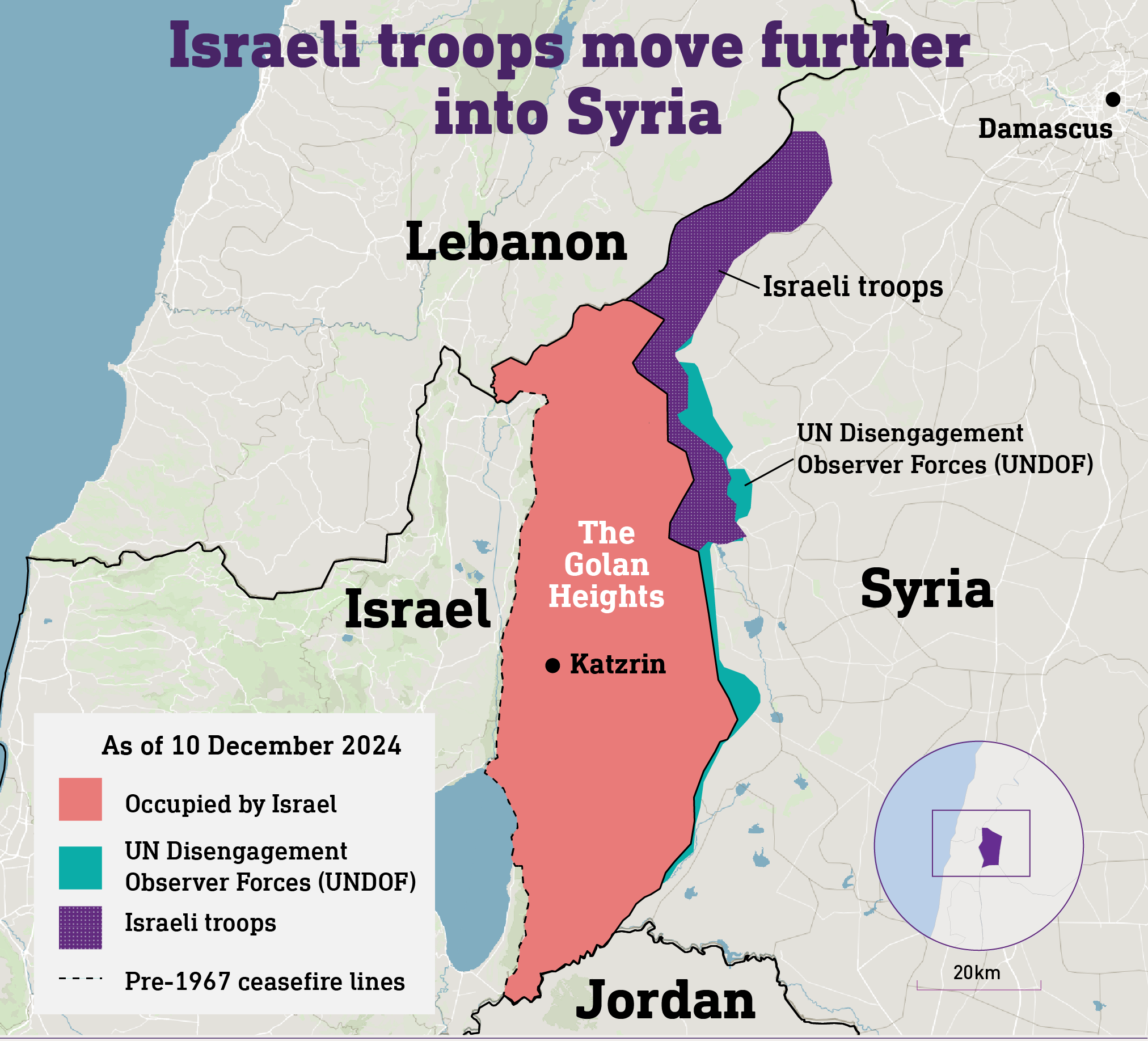
  • Israel Advances into Southern Syria to Establish Security Zone

    12/10 – International News Story & Update

    Promptly following Syrian President Bashar al-Assad’s ousting, Israel has announced the establishment of a “sterile defense zone” in southern Syria. Defense Minister Israel Katz stated that the purpose of the zone is to prevent terrorist organizations from gaining a foothold near the Israeli border, following the collapse of Assad’s government.

    Katz clarified that this zone would not involve a permanent Israeli presence but would act as a safeguard against security threats.He cautioned Syrian rebels against emulating Assad’s policies, warning that such actions would lead to dire consequences.

    Israeli military operations have surged since Assad’s removal, with airstrikes targeting critical Syrian military infrastructure, including chemical weapons facilities, missile systems, and combat aircraft. Israeli media reported that the air force conducted up to 250 strikes over the weekend. [Reuters]

    Prime Minister Benjamin Netanyahu confirmed that the strikes aimed to dismantle Assad’s remaining military assets to prevent their capture by extremist groups. Netanyahu reiterated Israel’s position of avoiding interference in Syria’s internal affairs but underscored the need to protect national security.

    Additionally, Israeli missile ships targeted the Syrian port of Latakia, destroying several vessels in an operation aimed at crippling Syria’s naval capabilities. Israel’s military also secured positions within the demilitarized buffer zone established after the 1973 Arab-Israeli War, including areas on Mount Hermon. Despite reports of an advance beyond the buffer zone, Israeli officials denied any significant push toward Damascus.

    Regional Condemnation

    Israel’s actions have drawn condemnation from several nations, including Egypt, Jordan, Saudi Arabia, and Turkey. These countries accused Israel of exploiting Syria’s instability to expand its influence in violation of international law. Turkey, a staunch supporter of the Syrian opposition, described Israel’s incursion as “occupational,” warning that such actions jeopardize emerging prospects for peace in the region.

    Amid these developments, Israeli officials maintained that their primary objective was to ensure border security and counter threats posed by extremist factions. While welcoming Assad’s departure, Netanyahu expressed caution about engaging with Syria’s leading rebel group, Hayat Tahrir al-Sham (HTS), due to its ties to al-Qaeda and Islamic State. Nevertheless, he expressed openness to establishing relations with Syria’s new government, provided it refrains from facilitating the transfer of Iranian weapons to Hezbollah or engaging in hostilities against Israel.

  • EU Signs Large Latin American Trade Deal, Angering France

    12/9 – International News Story

    European Commission President Ursula von der Leyen finalized a historic trade agreement with the South American Mercosur bloc (Brazil, Argentina, Paraguay, Uruguay, Bolivia) last week. Von der Leyen’s first major move in her second term as EU President marks a momentous step for EU trade policy but is now igniting tensions between France and Germany. The accord, 25 years in the making, establishes a free-trade zone encompassing over 700 million people, promising economic opportunities but fueling disagreements between the European Union’s heavyweight actors.

    “This is a truly historic milestone,” von der Leyen declared during a press conference in Montevideo, Uruguay, alongside leaders from the Mercosur countries.

    She emphasized the agreement is not just an economic initiative but a vital political statement in an increasingly polarized global landscape. “In an increasingly confrontational world, we demonstrate that democracies can rely on each other.”

    The deal has drawn starkly contrasting reactions from Germany and France. German leaders and industries, grappling with industrial stagnation, view the agreement as a lifeline for their exporters. Siegfried Russwurm, head of the Federation of German Industry, lauded the accord as a critical boost for the European economy. The influential German car lobby also called the deal a “central importance” for revitalizing the manufacturing sector.

    In France, however, the pact has provoked widespread outrage, particularly among agricultural stakeholders and farmers. Concerns about an influx of low-cost poultry and beef imports undercutting local farmers fuel French opposition. French President Emmanuel Macron has long resisted the deal, framing it as a threat to agricultural sovereignty. “Without letting up, we will continue to defend our agricultural sovereignty,” the Élysée Palace stated.

    The divide between Paris and Berlin underscores a broader rift over the EU’s approach to trade policy. France’s repeated vetoes against the deal have irked German policymakers, with some questioning whether trade negotiations should remain under the European Commission’s purview.

    France is working to assemble a coalition of EU member states to block the agreement during the ratification process. While Poland, Austria, and Ireland have joined France’s opposition, the outcome hinges on Italy’s stance. Italian Prime Minister Giorgia Meloni has expressed reservations, insisting that safeguards and compensation for agricultural imbalances must be ensured before signing. If Italy sides with France, it could wield enough influence to derail the deal.

    Macron has intensified diplomatic efforts, with Paraguayan President Santiago Peña planning a visit to Paris to discuss the agreement.

    Opinion:

    Von der Leyen’s decision to prioritize the Mercosur deal comes at a precarious time, coinciding with political upheaval in France, where the government collapsed just days before the summit. Critics in France have accused the Commission of exploiting the domestic crisis to advance its agenda, further inflaming anti-EU sentiment.

    Beyond internal EU politics, the agreement carries weight with Donald Trump poised to return to the U.S. presidency and reignite global trade tensions, as the EU-Mercosur pact signals a commitment to multilateralism and economic alliances. Proponents argue that deepening ties with South America strengthens the EU’s global credibility and counters protectionist tendencies.

    However, critics warn of domestic repercussions, particularly in France, where anti-EU sentiment is already strong, further fueling their political instability and possibly bolstering far-right leader Marine Le Pen.

    For von der Leyen, the Mercosur agreement represents both a triumph and a risk. Sealing the deal early in her second term cements her legacy as a champion of EU trade, but it also exposes fractures within the bloc. Should France and its allies succeed in blocking ratification, it would not only undermine von der Leyen’s leadership but also question the EU’s ability to act cohesively on the global stage.

    As the agreement’s details are set to be published next week, the coming months will determine whether this landmark deal strengthens the EU or exacerbates internal divisions.

  • Assad Regime Falls in Syria as Rebels Takeover Capital Damascus

    12/8 – International News Story and Update

    Syrian dictator Bashar al-Assad has fled the country and officially given up power after opposition forces seized the capital, Damascus, on Sunday. Assad’s departure signals the collapse of the Assad family’s five-decade grip on power and raises urgent questions about Syria’s future. Assad and his family have been granted asylum in Moscow, a long-time ally that has backed his regime through Syria’s brutal civil war.

    Rapid Rebel Advance

    The opposition rebels’ swift advances in recent weeks overwhelmed Syrian government forces, culminating in the takeover of Damascus after taking Aleppo, the second biggest city, just over a week ago. After meeting with rebel leaders, Assad reportedly resigned and called for a peaceful transfer of power. Syrian Prime Minister Mohammed Ghazi Jalali, speaking on state television, extended an olive branch to the opposition, offering to oversee a transitional government.

    Meanwhile, Russia called for an emergency UN Security Council meeting, urging a political resolution to Syria’s turmoil.

    The fall of the Assad regime has been celebrated worldwide. In cities like Berlin, London, and Paris, Syrians took to the streets to mark the historic moment with spontaneous gatherings. However, concerns remain over potential power vacuums and ongoing tensions among Syria’s fragmented factions, especially with Islamist extremism as a notable influence in the region.

    Possible Rebel Leadership

    Abu Mohammed al-Golani, a former al-Qaeda commander now leading Hayat Tahrir al-Sham (HTS), emerged as a key figure. Golani, who has rebranded his group as a nationalist movement, visited Damascus’ iconic Umayyad Mosque, calling Assad’s fall “a victory for the Islamic nation.” However, skepticism about HTS’s evolution persists, with critics questioning whether the group has truly left behind its extremist roots.

    Syria’s rebels face the daunting task of governing a country ravaged by war, still divided among competing factions. Rebel-led curfews, raids of national palaces, and the release of prisoners from notorious facilities like Saydnaya prison have highlighted the immediate need for stability.

    International Reaction

    Global Western leaders hailed Assad’s downfall as a blow to authoritarianism and a moment of opportunity for the Syrian people. U.S. President Joe Biden described the regime’s collapse as a “fundamental act of justice” but cautioned against new risks. French President Emmanuel Macron called the fall “the end of a barbaric state,” while European Union leaders highlighted the regime’s collapse as evidence of Russia’s diminishing influence.

    Russia’s strategic assets in Syria, including a naval facility in Tartus and an airbase in Latakia, face growing uncertainty. Satellite imagery revealed Russian military vessels leaving Tartus, and reports suggest Moscow has secured guarantees for its remaining facilities from Syrian insurgents.

    The collapse of the Assad regime has rippled across the region. In Israel, Prime Minister Benjamin Netanyahu seized the moment to bolster defenses along the Golan Heights, highlighting the weakening of Iran and Hezbollah. Iran, a key ally of Assad, has found its regional influence sharply curtailed, with anti-Iran sentiment flaring in Syria as the Iranian Embassy in Damascus was ransacked.

    Turkey, under President Recep Tayyip Erdoğan, stands poised to capitalize on the regime’s fall. Ankara-backed Islamist factions have gained ground, further marginalizing Kurdish groups in northeastern Syria. Erdoğan’s strategic goals include curbing Kurdish separatists and leveraging Syria’s reconstruction to benefit Turkish businesses.

    For Assad’s allies, the regime’s collapse is a strategic blow. Russia and Iran, once instrumental in propping up Assad, have faced setbacks on multiple fronts, including the Ukraine war and conflicts with Israel. Hezbollah, heavily reliant on Assad for resupply routes, now finds its position weakened. In contrast, Western governments see Assad’s fall as an opportunity to reshape the region, but caution against premature optimism given the complex dynamics on the ground amongst varying factions.

    Impact

    Syria’s civil war, which began in 2011, has left an estimated 600,000 dead and displaced over 13 million people. The Assad family’s reign was marked by brutal suppression, including chemical weapons attacks on civilians. For many Syrians, the end of the Assad era brings hope, but fears of prolonged instability loom large.

    In the context of the wave of authoritarian revolts in the Middle East and North Africa since 2011, known as the Arab Spring, the ousting of Assad can be regarded as the fifth national regime to fall following Tunisia, Libya, Egypt, and Yemen. Syrians and the region at large must now be wary as political instability and fractitious violence plagues many of these countries, as Islamist extremism remains a prominent threat to the wider Middle East.

    As Syria enters a new chapter, the world watches closely to see whether this moment heralds lasting peace or ushers in a new phase of conflict and uncertainty. The road ahead for the Syrian people remains fraught with challenges, but the hope for a brighter future endures.

  • Romanian Top Court Cancels Highly Contested Election

    12/7 – International News Story

    In a dramatic turn of events, Romania’s top constitutional court annulled its high-stakes presidential election on Friday, citing evidence of alleged Russian interference. The decision has plunged the EU and NATO member state into political turmoil, disrupting plans for a second-round vote and igniting fierce debates over the integrity of Romania’s democratic institutions.

    The court’s ruling comes after Romanian intelligence services, supported by U.S. assessments, identified what they described as “aggressive hybrid attacks” orchestrated by Moscow to influence the election. These declassified reports revealed that ultranationalist candidate Călin Georgescu, a political outsider, benefited from a TikTok-based campaign reminiscent of Kremlin-backed operations in Ukraine and Moldova. The campaign reportedly used 25,000 coordinated accounts to amplify pro-Georgescu messages in the weeks leading up to the vote. [Politico]

    The revelations prompted President Klaus Iohannis to release intelligence documents to the public, asserting that Romania’s electoral process had been “blatantly distorted” by foreign meddling.

    “Romania is a stable and solid ally of the EU and NATO,” Iohannis declared in a televised address, emphasizing the country’s commitment to democratic principles. He announced that he would remain in office beyond his term, which ends on December 21, until a new president is sworn in.

    Institutional Turmoil

    The court’s unprecedented decision to annul the election has thrown Romania into institutional chaos. Nearly 48,000 Romanians living abroad had already cast their votes before the process was halted. The annulment also forced the government to set a timeline for fresh elections, further delaying the transition of power.

    Critics from across the political spectrum have denounced the ruling. Elena Lasconi, a centrist candidate who came second in voting and was set to face Georgescu in the second round, called the decision “illegal” and a betrayal of democracy. Meanwhile, Social Democratic Prime Minister Marcel Ciolacu defended the annulment as “the only correct solution” given the extent of alleged interference.

    Nicolae Ciucă, the Senate president and a former presidential candidate, urged calm and emphasized the need for clarity in addressing suspicions of foreign influence. “This is a difficult test for our democratic institutions,” he said.

    Far-right figures, including George Simion, leader of the Alliance for the Union of Romanians (AUR) party, framed the annulment as a political conspiracy by Romania’s elite to undermine populist movements.

    Geopolitical Risks

    Georgescu, who emerged as a surprise first-round victor after previously polling in the single digits, has been a controversial figure. His platform includes ending Romania’s support for Ukraine and reevaluating the country’s NATO commitments—positions that align closely with Kremlin interests. Analysts warn that a Georgescu presidency could tilt Romania away from its pro-Western trajectory, aligning it with a bloc of Russia-friendly states in Central and Eastern Europe.

    The annulled election has broader implications for regional stability. Romania, a strategic ally of both the EU and NATO, has been a vocal supporter of Ukraine in its war against Russia. A shift in Romania’s foreign policy could disrupt Western efforts to maintain a unified front against Moscow.

    Romanian intelligence services also revealed alarming cyber threats during the election. They identified over 85,000 cyberattacks targeting official election systems, with login data allegedly shared on Russian cybercrime platforms. Although Russia has denied any involvement, these findings underscore the vulnerabilities in Romania’s democratic processes.

    What now?

    The Romanian government now faces the monumental task of restoring public trust in its electoral process. Anti-organized crime prosecutors have launched an investigation into Georgescu’s campaign, examining allegations of illicit funding and foreign influence. Meanwhile, President Iohannis has assured Romanians and international allies that the country remains committed to democratic principles and rule of law.

    The stakes could not be higher for Romania as they prepare for a rerun of this presidential election. The nation’s ability to navigate this crisis will serve as a critical test of its democratic resilience and its role as a steadfast ally in a volatile region.

  • Prime Minister Sacked in France as Financial Problems Loom

    12/6 – International News Update

    France plunges deeper into political and economic uncertainty following the dramatic ousting of Prime Minister Michel Barnier by the National Assembly on Wednesday night. The collapse of the government signals a critical moment for President Emmanuel Macron, who must now confront a crisis with far-reaching implications for both France and the eurozone.

    The Downfall of Michel Barnier

    331 of the 577 lawmakers in Parliament voted to pass a no-confidence motion against Barnier, following his controversial attempts to push through an austere budget aimed at curbing the country’s deficit. The prime minister’s resignation on Thursday makes him the shortest-serving leader in modern French history and the first to be ousted by parliament since 1962.

    Barnier’s proposed budget included €40 billion in spending cuts and €20 billion in tax hikes to address a deficit projected at 6.1% of GDP. His efforts, however, failed to rally support, with the fractured Assembly uniting across ideological divides to block his plans. The far-right National Rally, led by Marine Le Pen, and the hard-left France Unbowed, led by Jean-Luc Mélenchon, joined forces to reject the fiscal measures, branding them as oppressive and out of touch with voters’ struggles.

    Spotlight Back on Macron

    The political turmoil has intensified calls for Macron’s resignation, with opposition leaders blaming him for the crisis. Le Pen accused Macron of “sacrificing France” for his own political vanity, while hard-left leader Mathilde Panot declared the vote a rejection of Macron’s broader policies. Despite these calls, Macron reaffirmed his intent to stay in office until his term ends in 2027.

    In a televised address to the nation on Thursday, Macron announced plans to appoint a new prime minister “in the coming days.” He acknowledged the fractured political landscape, urging parties across the spectrum to cooperate with the incoming government or refrain from obstructing its efforts. The president placed immediate emphasis on adopting a 2025 budget, promising to introduce emergency measures by mid-December to prevent a fiscal gap.

    Macron’s decision to call a snap election earlier this year yielded a fragmented Assembly with no party or coalition commanding a majority. This gridlock has paralyzed the legislative process, leaving France at risk of entering 2025 without a clear fiscal plan.

    The political chaos could risk efforts to reduce France’s fiscal deficit. The country’s mounting debt—now at 110% of GDP—alongside sluggish economic growth of just 1% per year, has rattled financial markets. While France has so far avoided the sharp borrowing costs seen during the eurozone crisis, the current trajectory has drawn comparisons to the profligacy of nations like Greece and Italy.

    A Broader European Crisis

    France’s political crisis reflects a broader challenge facing Europe, where fragmented governments and polarized electorates hinder decisive action. Across the continent, rising defense expenditures, ageing populations, and external economic pressures are stretching national budgets. In France, the electorate’s reluctance to embrace fiscal discipline has fueled the rise of extremist parties, creating a volatile environment where centrist coalitions struggle to survive.

    The implications extend beyond France. Without stable leadership from Europe’s second-largest economy, the European Union faces difficulties in advancing collective solutions to shared challenges, including security and economic competitiveness.

    What now?

    Macron’s immediate task is to assemble a government capable of navigating the crisis and restoring confidence in France’s ability to govern effectively. However, achieving consensus in a deeply divided Assembly remains a formidable challenge. With new elections off the table until mid-2025, France faces the prospect of a series of fragile minority governments unable to enact significant reforms.

    The crisis has also raised the specter of further polarization. If centrist coalitions continue to falter, France risks an even sharper turn toward political extremes, with the potential for a far-right government or Le Pen presidency in the near future.

    As Macron prepares to unveil his next steps, the stakes for France and the broader eurozone have never been higher. Whether his leadership can steer the country through this tumultuous period will shape the trajectory of France’s political and economic future—and its role in Europe’s evolving landscape.

  • South Korean President Shockingly Declares Martial Law

    12/4 – International News Story & Update

    In a dramatic turn of events, South Korean President Yoon Suk Yeol declared martial law late Tuesday night in an unanticipated televised address. The announcement, aimed at combating what Yoon described as “pro-North Korean forces” threatening the nation’s constitutional democracy, sent shockwaves through the political establishment and raised concerns over the country’s evident democratic backsliding.

    Yoon, a conservative leader elected in 2022, accused the opposition-controlled National Assembly of paralyzing the government and aligning with Pyongyang. The Democratic Party, which secured a sweeping parliamentary victory earlier this year, has clashed with Yoon’s administration over budget bills and investigations into opposition figures. However, the martial law declaration marked an unprecedented escalation, drawing immediate backlash from across the political spectrum.

    President Yoon’s speech framed the move as essential to “rebuild and protect” the nation, but he offered few specifics on how martial law would restore order. “I will eradicate anti-state forces and normalize the country,” he asserted, while urging citizens to tolerate “some inconveniences.”

    Under South Korea’s constitution, martial law grants the military powers to restrict press freedom, suppress political gatherings, and suspend civil rights in times of war or comparable emergencies. Yet, the applicability of such measures to the current political standoff was widely questioned.

    Shortly after the declaration, Defense Minister Kim Yong-hyun called for heightened military vigilance, and Martial Law Commander General Park An-soo announced sweeping restrictions on political activities and media, emphasizing the need to combat “fake news and manipulation.”

    The announcement triggered immediate uproar. People Power Party leader Han Dong-hoon, a member of Yoon’s own party, condemned the decision as “wrong” and pledged to “stop it along with the people.” Meanwhile, National Assembly Speaker Woo Won Shik swiftly convened lawmakers, leading to a bipartisan vote rejecting martial law and declaring it invalid. Woo praised the military for withdrawing troops from the Assembly grounds without further incident, calling the moment a testament to the “maturity” of South Korean democracy.

    Television footage captured helmeted soldiers retreating from parliament in the early hours of Wednesday, as hundreds of protesters rallied outside, some clashing briefly with troops. By 4:30 a.m., the Cabinet officially rescinded the decree. [AP News]

    South Koreans are now widely calling for Mr. Yoon’s resignation. South Korean lawmakers are proposing impeaching him, citing his imposition of martial law as “unforgivable” and the likes of a failed coup attempt.

    Yoon’s declaration of martial law is the first since South Korea’s democratization in 1987, evoking memories of the country’s authoritarian past. Critics argue that the move reflects a broader pattern of heavy-handed governance. Since taking office, Yoon has faced declining approval ratings amid accusations of suppressing dissent, attacking press freedoms, and targeting political rivals. Under his leadership, South Korea fell from 47th to 62nd in the global press freedom index, with watchdogs citing defamation cases and restricted media access.

    Internationally, Yoon’s martial law announcement drew concern from key allies. The White House expressed “serious concern” over the situation, and U.S. Deputy Secretary of State Kurt Campbell emphasized the “ironclad” U.S.-South Korea alliance during a public event. However, questions lingered about the implications of Yoon’s actions for regional stability and democratic norms.

    Domestically, Yoon’s move has deepened the political gridlock. The Democratic Party accused the president of weaponizing state power to undermine opposition leaders and shield his administration from scrutiny. Allegations of influence-peddling involving Yoon and his wife have also fueled public discontent.

    Opinion:

    Yoon’s decision to impose and then swiftly rescind martial law underscores the fragility of South Korea’s democracy amid growing political polarization. While the swift parliamentary response reaffirmed institutional checks on executive overreach, the episode left many questioning the country’s future stability.

    In his closing remarks, Yoon defended his controversial actions, reiterating his commitment to combating threats to the state. “The forces of communist totalitarianism have disguised themselves as democracy advocates,” he warned, invoking Cold War-era rhetoric. However, with his approval ratings at historic lows and a resurgent opposition, Yoon’s presidency faces mounting challenges at home and abroad.

    As South Korea navigates this volatile period, the events of this week serve as a stark reminder of the delicate balance between maintaining national security and upholding democratic principles.

    Millions of people worldwide are watching this stark and unexpected episode unfold, serving as a sobering reminder of how swiftly chaos can erupt and civil liberties be stripped away without warning.

  • French Government on Brink of Collapse in Upcoming No-Confidence Vote

    12/3 – International News Story

    In a week of political turmoil, Prime Minister Michel Barnier’s government faces imminent collapse as France’s National Assembly gears up for a critical no-confidence vote. The crisis erupted after Barnier announced he would bypass parliamentary approval to pass the social security budget, invoking Article 49.3 of the French Constitution. This controversial move has set the stage for a battle that could see his fragile coalition ousted as early as Wednesday.

    Opposition is mounting from both ends of the political spectrum. Marine Le Pen’s far-right National Rally (RN) and the left-wing New Popular Front have each tabled no-confidence motions, uniting against Barnier’s budget. Le Pen, once seen as a potential kingmaker in Barnier’s coalition, has reversed course, accusing the prime minister of ignoring her party’s demands on purchasing power and immigration. “This budget will make the French pay for Macron’s incompetence over the past seven years,” Le Pen declared, signaling RN’s readiness to back the left’s motion alongside its own.

    For Barnier, this marks a dramatic turn of events. Appointed in September to stabilize France’s economy and rein in its growing deficit, the former EU Brexit negotiator now finds himself under siege. His coalition, a precarious alliance of centrists and conservatives, lacks a majority in the fractured National Assembly. With no snap elections possible until next summer, political gridlock looms large.

    Economic and Political Stakes

    The crisis has already sent shockwaves through financial markets. French 10-year sovereign borrowing costs soared to 12-year highs, reflecting investor anxiety over the eurozone’s second-largest economy. Comparisons to Greece’s debt crisis a decade ago have resurfaced, raising fears of broader instability in the currency bloc.

    Barnier’s budget proposal, aimed at reducing France’s deficit from 6.1% to 5% of GDP by 2025, includes €40 billion in spending cuts and €20 billion in tax hikes. While appeasing Brussels, the austerity measures have proven deeply unpopular domestically. The National Rally has demanded the government scrap several key provisions, including delays to inflation-based pension adjustments and cuts to medical aid for undocumented immigrants. Although Barnier conceded on some points, including the controversial electricity tax hike, these gestures have failed to placate his opponents.

    If the no-confidence motion passes, it would mark the first successful ousting of a French government since 1962. Barnier’s administration would transition to a caretaker role, but President Emmanuel Macron would face the daunting task of appointing a new prime minister capable of navigating a deeply divided parliament. The political uncertainty risks paralyzing legislative progress at a time when decisive action is needed to stabilize the economy.

    Context of a Fractured Political Landscape

    This crisis is rooted in the fallout from France’s June snap elections, where Macron’s centrists lost their majority, and the New Popular Front emerged as the largest bloc. Macron’s controversial decision to block the left from forming a government and appoint Barnier instead alienated many voters. By aligning with conservative forces, Macron hoped to secure tacit support from the National Rally, which has sought to project itself as a responsible governing force. However, Le Pen’s increasingly explicit threats to withdraw support have upended this strategy.

    Adding to the drama, Le Pen and her party face legal challenges that could further complicate their political calculus. French prosecutors have accused Le Pen and other RN officials of misusing European Parliament funds, with potential penalties including hefty fines, prison sentences, and bans from public office. Le Pen has denied any link between her party’s stance on the budget and the ongoing trial, but the shadow of the case looms large.

    What Happens Next?

    If Barnier’s government falls, France’s budgetary impasse will remain unresolved. While the constitution allows for stopgap measures to prevent a government shutdown, the path forward is fraught with uncertainty. A prolonged caretaker government could erode confidence at home and abroad, while the prospect of a fractured parliament attempting to navigate economic challenges raises questions about France’s ability to meet EU deficit targets.

    The stakes are high not only for France but for the stability of the eurozone. A government collapse could amplify fears of a larger financial crisis, with ripple effects across Europe. As markets react and political actors maneuver, France faces a moment of truth—one that will test the resilience of its institutions and the patience of its people.